Israel Faces a Strategic Crisis as the American Political Consensus Begins to Fracture
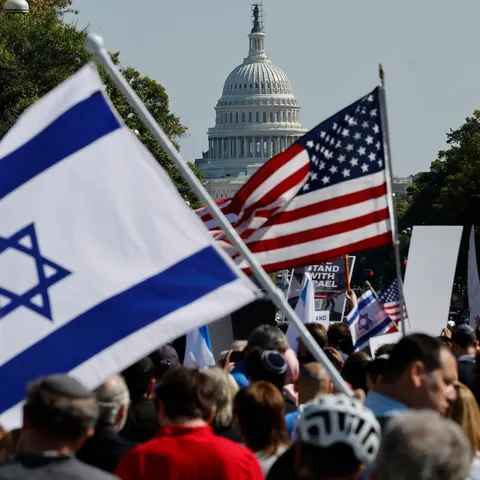
Washington’s decades old commitment to Israel is facing pressure from an extraordinary combination of forces: Democratic electoral gains, growing Republican dissent, hostility to the Iran war, declining public support for military aid and an increasingly anxious debate inside Israel itself.
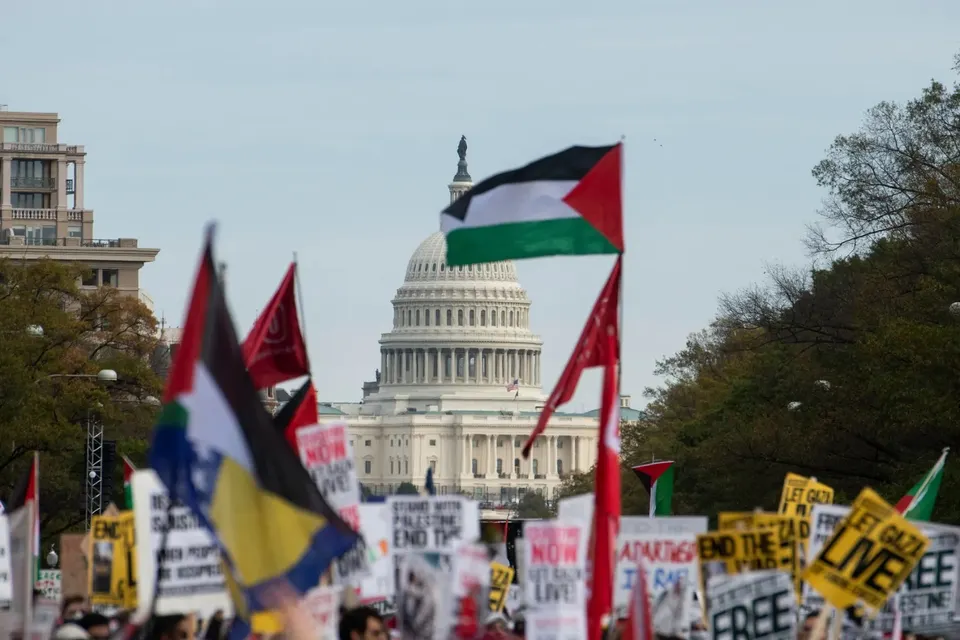
For generations, one assumption has sat at the centre of Israeli national security planning: whatever happened elsewhere in the world, Israel could ultimately depend upon the United States.
American administrations changed. Presidents came and went. Democrats and Republicans fought bitterly over almost everything. Yet Israel remained one of the rare subjects around which a remarkably durable bipartisan consensus survived.
That consensus has not disappeared. The United States and Israel remain deeply connected militarily, economically and strategically, and Israel continues to enjoy substantial support inside Congress and among large sections of the American political establishment.
But something significant has changed.
The results of the November 3, 2026 US midterm elections, combined with increasingly hostile American public opinion toward Israeli government policy, mounting opposition to the Iran war and unprecedented criticism from senior Republicans, have produced what some Israeli analysts now regard as a strategic warning.
The supplied commentary that formed the basis for this article describes Israel as being in a state of political “panic”, arguing that the danger no longer comes exclusively from progressive Democrats but from changes occurring within the Republican coalition itself.
That interpretation is partisan and deliberately dramatic. Yet several of the underlying developments are real.
Democrats have taken control of both chambers of Congress following sweeping midterm victories, while Vice President JD Vance has publicly said that Republican voters who defected from the party identified ending the Iran war and changing America's relationship with Israel among their priorities.
Perhaps more importantly, Israeli political figures and strategic analysts are openly discussing the possibility that the relationship with Washington is entering an era unlike anything Israel has experienced for decades.
The Republican rupture
One of the most striking developments came not from Bernie Sanders or the progressive wing of the Democratic Party, but from the Republican vice president.
Following the election defeat, Vance published an unusually frank analysis of what had gone wrong.
He said a pollster he respected had questioned voters who backed Trump in 2024 but switched to the Democrats in 2026. According to Vance, four issues dominated their responses: ending the war, addressing inflation and the cost of living, putting “America First” and changing the US relationship with Israel.
Vance went further, stating that the principal explanation for the Republican defeat was the war with Iran.
“The reason we lost is the war,” he wrote.
President Donald Trump himself acknowledged that Iran had contributed to the electoral backlash, although unlike Vance he continued to defend his decision to launch the conflict. Reuters reported that Vance had opposed the war before the United States and Israel began it on February 28.
Donald Trump Jr. then reposted Vance's argument with an emphatic endorsement.
This is important because criticism of unconditional American support for Israel has historically been much easier to find on the Democratic left than among senior Republican leaders.
The supplied source contrasts Vance's rhetoric with the language used by Trump's first vice president, Mike Pence, who told an AIPAC gathering in 2019 that America's alliance with Israel had never been stronger and portrayed the interests and values of the two countries as virtually inseparable.
Seven years later, the political language is markedly different.
The question is no longer simply whether progressive Democrats want restrictions placed on Israel.
It is whether part of the Republican movement is beginning to conclude that association with Israeli policy can carry an electoral price.
The midterms changed the balance of power
The November election delivered Democrats control of both the House of Representatives and Senate.
The Associated Press described the result as a broad repudiation of the Republicans, with voter concern centred heavily on prices, the Iran conflict and government corruption. Democrats flipped at least seven Senate seats and made major gains in the House, although some races remained unresolved immediately after election day.
This does not mean that a Democratic Congress can simply dictate American foreign policy.
Trump retains the presidency and therefore considerable control over diplomacy and the military. He also possesses the veto, severely restricting what Congress can accomplish without sufficiently large bipartisan majorities.
Nevertheless, Congress controls appropriations and possesses extensive investigative and oversight powers.
A Democratic majority can hold hearings, subpoena administration officials, investigate weapons transfers, challenge funding requests, scrutinise the conduct of the Iran war and attempt to impose conditions upon future military assistance.
Even legislation that cannot survive a presidential veto can force public votes that would have been politically almost unimaginable only a few years ago.
For Israel, that institutional shift matters.
Abdul El-Sayed and the Michigan warning
Perhaps no individual election result better illustrates the change than Michigan.
Progressive Democrat Abdul El-Sayed defeated Republican Mike Rogers for the state's open Senate seat, becoming the first Muslim American elected to the US Senate.
El-Sayed campaigned as an outspoken critic of Israeli policy and survived extraordinary amounts of outside spending against him. The Associated Press reported that AIPAC spent nearly $30 million opposing him during the Democratic primary.
His victory is politically significant beyond his individual Senate vote.
For years, candidates were warned that confronting the pro-Israel lobby, particularly in a competitive statewide contest, could be politically fatal.
El-Sayed has demonstrated that this is no longer universally true.
It would be wrong to extrapolate one Michigan election to the entire United States. American opinion remains divided, and strong support for Israel persists across significant parts of both parties.
Yet the political risk calculation has clearly changed.
American opinion is moving
The deeper problem for Israel is that these political developments are not occurring in isolation.
They coincide with an unmistakable deterioration in American public attitudes toward the Israeli government.
A September 2026 Marquette Law School national survey found that 55 percent of American adults believed the United States was providing too much military aid to Israel. Just 12 percent thought Washington was providing too little, while 33 percent regarded the existing level as approximately right.
Pew Research Center found an equally striking deterioration in attitudes toward the Israeli government.
In its May 2026 survey, only 32 percent of American adults expressed a favourable view of the Israeli government, while 62 percent viewed it unfavourably.
That compares with 41 percent favourable and 51 percent unfavourable in 2019.
The generational divide among Republicans may be even more consequential.
Among Republicans and Republican leaning Americans aged 50 and above, Pew found that 68 percent viewed the Israeli government favourably.
Among Republicans under 35, that number collapsed to just 28 percent.
That creates a long term problem that cannot easily be solved by lobbying individual members of Congress.
Israel has traditionally been able to withstand Democratic criticism because support among Republicans was so overwhelming that the relationship retained a powerful bipartisan foundation.
If younger Republicans increasingly question that relationship too, the political equation becomes fundamentally different.
Trump announces an end to direct aid
Then came perhaps the most symbolically important development of all.
On election day, Trump announced that the United States would stop providing roughly $4 billion in annual military assistance to Israel after the end of 2026.
Trump said he and Israeli Prime Minister Benjamin Netanyahu had reached the agreement months earlier, arguing that Israel had become sufficiently prosperous that it no longer required direct American financial assistance.
But Trump also explicitly linked the decision to American domestic politics, saying aid to Israel had become a damaging political argument used against Republicans.
That does not mean the financial relationship between Washington and Israel is about to disappear.
The existing military aid memorandum provides $3.8 billion annually, comprising $3.3 billion in Foreign Military Financing and $500 million for missile defence cooperation. The agreement covers fiscal years 2019 through 2028 and remains subject to congressional appropriations.
Trump provided little explanation of how assistance already scheduled through 2028 would be terminated early, and Congress has an important role in the process.
Furthermore, Israel will still be able to purchase American weapons, and other forms of military cooperation may continue or even expand.
The significance is therefore political as much as financial.
An American president who has repeatedly presented himself as one of Israel's greatest allies announced an end to direct military aid on the morning Americans were voting in a congressional election.
That would have been extraordinarily difficult to imagine during previous eras of the US Israel relationship.
Netanyahu saw the danger coming
Netanyahu himself appears to recognise the direction in which American politics is moving.
In an October television interview, he warned Israelis not to assume that Washington would indefinitely provide tens of billions of dollars in defence assistance.
“America has changed,” Netanyahu said, before arguing that the flow of money would eventually end.
He has previously advocated reducing Israel's dependence upon direct American assistance and building a relationship based more heavily upon joint defence production and investment.
That offers an important counterargument to claims that the aid reduction represents an immediate strategic catastrophe.
Israel remains a wealthy state with an advanced defence industry and close security relationships with Washington. A gradual transition away from direct grants could theoretically be absorbed.
An abrupt rupture would be considerably more difficult.
Israel has billions of dollars in outstanding American weapons orders, including advanced aircraft, while decades of integration with the American defence industry mean that replacing US military supply chains would not be straightforward.
Netanyahu has also warned that Israel must prepare for international sanctions, including possible financial and banking restrictions, and has spoken about developing economic mechanisms capable of reducing the country's vulnerability.
That is remarkable language from an Israeli prime minister.
It suggests that Jerusalem's strategic planning is no longer based simply upon preserving the existing Western political order.
It is increasingly considering what happens if that order turns against it.
Anxiety inside Israel
The anxiety is visible well beyond Netanyahu.
Michael Oren, Israel's former ambassador to Washington, wrote after the American election that “half a century of the US Israel relationship as we have known it” had ended.
Oren argued that Israel should diversify its diplomatic and defence relationships, strengthen ties with countries in Asia, Africa and South America and prepare itself to act independently if necessary.
Those comments are especially significant because Oren is hardly an opponent of the US Israel alliance.
They come from inside Israel's own foreign policy establishment.
The Institute for National Security Studies in Tel Aviv has offered a similarly sober assessment.
An analysis published on November 5 described the Democratic victory as likely to reshape the bilateral relationship and warned that the $3.3 billion annual Foreign Military Financing commitment could no longer be treated as guaranteed.
The authors said sanctions connected with settler violence or settlement construction, together with restrictions or conditions attached to weapons sales, could receive greater attention under Democratic congressional leadership.
They also emphasised an important limitation: Democratic lawmakers themselves remain divided, meaning many punitive measures could still be blocked by pro-Israel Democrats joining Republicans.
That qualification matters.
Israel is facing a serious political challenge in Washington, but it has not lost Washington.
AIPAC changes strategy
Another signal came shortly before the election.
In October, AIPAC announced that it would stop formally endorsing congressional candidates and end direct campaign contributions through its PAC.
Its political influence is not disappearing.
The organisation will continue operating its powerful United Democracy Project super PAC, while encouraging individual supporters to donate to candidates.
The significance lies in the retreat from visible candidate endorsements.
For decades, association with America's principal pro-Israel lobby could be presented as an electoral asset.
Increasingly, some candidates regard that association as something opponents can use against them.
The supplied source interprets AIPAC's decision as evidence that the organisation recognises the changing political atmosphere.
AIPAC itself presents the shift as a change in strategy rather than a retreat, and its ability to raise and deploy substantial political money remains formidable.
Yet even a tactical decision to make political support less visible says something about the environment in which the lobby now operates.
Gaza changed the political landscape
None of this can be understood without Gaza.
Israel's military campaign following the Hamas led attacks of October 7, 2023 transformed international attitudes toward the country.
The scale of Palestinian civilian death, destruction of Gaza's infrastructure, displacement of the population and repeated allegations of violations of international humanitarian law have driven protests across Western countries and generated sustained scrutiny of weapons supplied by Israel's allies.
Israel rejects accusations that it has deliberately targeted civilians or committed genocide and says its military operations have been directed at Hamas and other armed organisations.
At the same time, international institutions have taken actions of extraordinary gravity.
The International Criminal Court issued arrest warrants in 2024 for Netanyahu and former defence minister Yoav Gallant over alleged war crimes and crimes against humanity. Both men and the Israeli government rejected the allegations.
The political consequences have nevertheless continued to accumulate.
For many younger Americans in particular, Israel is no longer primarily understood through the historical framework that shaped previous generations: a small democratic ally surrounded by hostile states and protected by Washington after centuries of Jewish persecution.
Their formative images have instead come from Gaza.
That generational difference may prove far harder for Israel to overcome than any particular congressional resolution.
Iran deepens the backlash
The Iran war has compounded the problem.
The supplied commentary strongly argues that Israel helped drive Washington into the conflict and that the political and economic consequences of the war have accelerated hostility toward the relationship.
The extent of Israeli responsibility for Trump's decision remains contested and should not be reduced to a single explanation. The United States made its own decision to use force, and American officials have defended the war on national security grounds.
What is beyond dispute is that the war became a major issue in the midterm elections.
Vance publicly blamed it for Republican losses. Trump acknowledged that it played a role. Democratic candidates repeatedly connected the conflict with rising domestic costs.
That convergence creates a dangerous political association for Israel.
If voters increasingly connect Middle Eastern military involvement not simply with abstract foreign policy but with petrol prices, inflation and household finances, support for overseas commitments becomes much more difficult to defend.
Foreign policy has entered the supermarket aisle.
What a hostile Congress could actually do
Israel's immediate danger is not that America suddenly becomes an enemy.
The more realistic scenario is gradual erosion.
A Congress increasingly sceptical of Israel could begin by demanding greater transparency over American weapons.
Committees could summon Pentagon and State Department officials to explain targeting safeguards, civilian casualty assessments and compliance with American law.
Legislators could attempt to place human rights conditions on individual weapons systems.
They could investigate whether American supplied equipment had been used in alleged violations of international humanitarian law.
They could delay weapons transfers.
They could push sanctions against violent settlers or entities involved in settlement expansion.
They could demand greater scrutiny of intelligence sharing.
And they could begin debating what replaces the current military assistance arrangement after 2028.
Not all those measures would succeed.
Many could be vetoed. Others might fail because of divisions among Democrats themselves.
But the political significance would lie in the fact that questions previously confined to the margins of Washington could become part of routine congressional politics.
The old assumption that major military support for Israel would pass largely unquestioned could no longer be guaranteed.
Israel still possesses enormous advantages
Predictions of the imminent collapse of the American Israeli alliance should therefore be treated cautiously.
Israel retains powerful supporters inside Congress.
The countries possess deeply integrated intelligence and military relationships.
American law contains provisions designed to preserve Israel's qualitative military advantage.
The defence industries of both countries are tightly intertwined.
Israel also remains an important technology and intelligence partner for Washington.
A change of congressional control does not erase those structures.
Nor should declining support for the Israeli government be confused with hostility toward Israeli citizens or Jewish Americans. Pew's polling itself demonstrates an important distinction: Americans remain significantly more favourable toward Israeli people than toward the Israeli government.
The emerging argument is therefore not simply “America versus Israel”.
It is a battle inside American politics over what the alliance should require, how much it should cost and whether American support should continue without conditions.
The strategic danger is the direction of travel
This is why Israel's present difficulty may be more serious than any single election result suggests.
A Democratic Congress can eventually be replaced.
A hostile president can be followed by a friendly one.
A particular military aid package can be renegotiated.
Public opinion and generational change are different.
When only 28 percent of Republicans under 35 hold a favourable view of the Israeli government, when a majority of Americans tell pollsters the United States provides Israel too much military aid, when a Republican vice president says defecting Trump voters want the relationship changed and when Israel's own prime minister tells his country that American assistance will eventually disappear, a structural change is clearly underway.
The most dramatic claim in the source commentary is that this process will eventually end American facilitation of Israeli military policy altogether. The author explicitly acknowledges that this would not occur overnight and presents it as a prediction rather than an established fact.
There is no basis at present for treating that outcome as inevitable.
But something once considered nearly unthinkable has entered mainstream American political debate.
The argument is no longer simply about whether Washington should support Israel.
It is about whether that support should be unconditional, how much it should cost, whether American weapons should come with restrictions and whether involvement in Israel's regional conflicts serves American interests.
That debate is occurring among progressive Democrats.
It is occurring among ordinary voters.
Increasingly, it is occurring among Republicans.
And perhaps most significantly of all, it is occurring inside Israel itself.
For a state whose military and diplomatic strategy has rested for half a century upon extraordinary access to the world's most powerful country, that may be the clearest indication of the seriousness of the situation.
Israel has not lost America.
But the era in which Israeli governments could safely assume that American political support was permanent, bipartisan and largely insulated from public opinion appears increasingly difficult to take for granted.