Gaza Changed Everything: Did Israel's Genocide There Destroy the American Political Shield That Protected It?
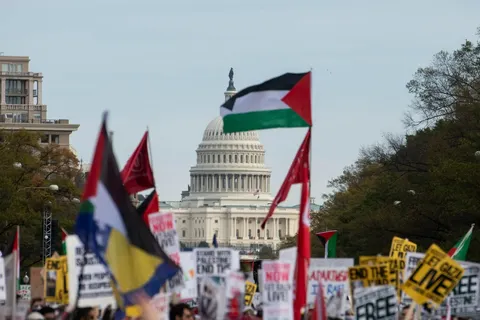
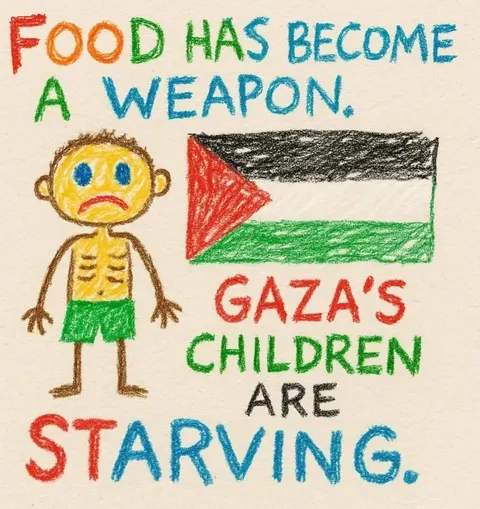
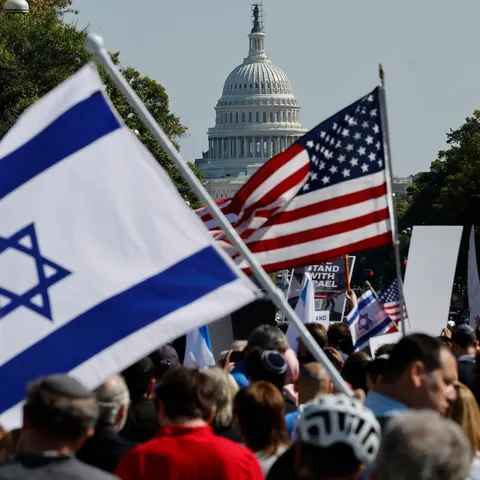
The war in Gaza has done more than devastate the Palestinian territory. It has transformed American attitudes towards Israel, turned military aid into an electoral issue and placed unprecedented pressure on AIPAC, once regarded as one of the most formidable forces in US politics. The question now is whether Gaza has begun dismantling the American political consensus that protected Israel for generations.
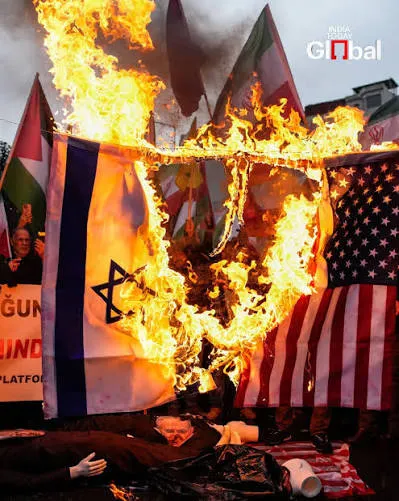
There is a danger in looking at the extraordinary political events of 2026 as though they happened independently of one another.
Israel's government is in crisis. Benjamin Netanyahu has lost his parliamentary majority. Palestinian citizens of Israel have gained unprecedented electoral influence. Western governments have recognised Palestine and imposed measures against Israeli policies.
International courts have become directly involved in allegations arising from Israel's conduct of the war.
In the United States, voters are increasingly demanding reductions in military support for Israel. Candidates openly opposing Israeli policy have won elections despite enormous spending intended to defeat them.
And AIPAC, for decades one of the most formidable names in Washington politics, has announced that it will stop publicly endorsing candidates and making direct PAC contributions.
There is a connecting thread running through almost all of it.
Gaza.
That does not mean every criticism of Israel began on October 7, 2023.
American attitudes had already been slowly changing, particularly among younger voters and Democrats.
But the war in Gaza appears to have transformed what had been a gradual political evolution into something far more disruptive.
The central argument is therefore not simply that Israel is experiencing a political crisis.
It is that Gaza kickstarted a chain reaction that has begun dismantling some of the political protections upon which Israel relied for generations.
The original commentary behind this article argues that “the Gaza genocide has changed American attitudes forever”, producing growing sympathy for Palestinians and opposition to continued support for Israel.
“Forever” is impossible to prove.
But the transformation itself is no longer speculative.
The polling is extraordinary.
The American mood changes
Gallup has measured American sympathies in the Israeli-Palestinian conflict for decades.
In 2018, 64 percent of Americans sympathised more with Israelis, compared with just 19 percent who sympathised more with Palestinians.
The gap subsequently began narrowing.
By 2023, Israelis still enjoyed a formidable advantage, with 54 percent of Americans saying they sympathised more with Israelis compared with 31 percent for Palestinians.
Then came Gaza.
By February 2026, that historic advantage had disappeared.
Only 36 percent sympathised more with Israelis.
Forty-one percent sympathised more with Palestinians.
Gallup noted that opinion had already been shifting since 2019, meaning Gaza cannot honestly be described as creating the trend from nothing.
But there is little mistaking the acceleration following October 2023 and the ensuing war.
Among Americans aged 18 to 34, the transformation has been even more dramatic.
By 2026, 53 percent sympathised more with Palestinians and only 23 percent with Israelis.
Among Americans aged 35 to 54, Palestinians led Israelis by 46 percent to 28 percent.
These are not minor polling fluctuations.
They represent the erosion of one of Israel's greatest strategic assets: broadly favourable American public opinion.
Israel becomes a domestic US political issue
For decades, support for Israel operated differently from most other foreign policy questions in Washington.
Presidents changed.
Congress changed.
Wars came and went.
But extensive military, diplomatic and political support for Israel remained remarkably durable.
Gaza has placed that consensus under sustained pressure.
Pew Research Center found in March 2026 that 60 percent of Americans held an unfavourable opinion of Israel, compared with 37 percent who viewed it favourably.
In 2022, before the Gaza war, the balance had been almost reversed: 55 percent viewed Israel favourably and 42 percent unfavourably.
The movement occurred particularly dramatically among Democrats, but it was no longer confined to them.
Pew found that 57 percent of Republicans under 50 held an unfavourable view of Israel in spring 2026.
By July, another Pew survey found unfavourable opinion of the Israeli government had reached 62 percent nationally.
Only 32 percent viewed it favourably.
That distinction matters.
Americans have not suddenly embraced Hamas, which remains overwhelmingly unpopular.
The transformation concerns Israel and, particularly, the conduct of the Israeli government.
That makes Gaza impossible to remove from the explanation.
Then Americans started questioning the money
The most dangerous development for Israel may not be declining popularity.
It may be what happened next.
Americans began asking why they were paying for it.
When Marquette Law School asked voters in November 2023 whether the United States was giving Israel too much support during the Gaza war, 28 percent said yes.
By November 2025, that had risen to 41 percent.
In July 2026, 52 percent said America was providing too much military aid to Israel.
By September, the figure had risen to 55 percent.
Only 12 percent said Israel was receiving too little.
The Chicago Council on Global Affairs produced a similarly striking result.
Its 2026 survey found 56 percent of Americans wanted US military aid to Israel either reduced or stopped altogether.
Thirty-five percent wanted it stopped completely.
This is where Gaza's consequences move beyond public relations.
Israel's relationship with America has historically rested not only upon sympathy, but upon material support.
Weapons.
Military financing.
Diplomatic protection.
Congressional votes.
Political lobbying.
Gaza has turned all of these into subjects of mainstream political argument.
The political danger for Israel is no longer simply that Americans dislike what is happening in Gaza. Increasing numbers are asking why Washington continues paying for it.
Then came AIPAC
Perhaps nowhere is the transformation clearer than in the changing position of the American Israel Public Affairs Committee.
For decades, politicians generally wanted AIPAC's support.
By 2026, some were running against it.
That difference is enormous.
AIPAC became directly involved in electoral politics relatively recently through its PAC and affiliated super PAC, United Democracy Project.
Its financial power was formidable.
OpenSecrets reported that by August 2026 United Democracy Project had already spent $53.6 million on independent expenditures, making it the largest outside spender in that year's election cycle at that stage.
AIPAC itself had contributed $30 million to the super PAC.
Then it ran into Michigan.
The election AIPAC was not supposed to lose
Abdul El-Sayed was almost a perfect test of AIPAC's political power.
He was Muslim.
He was outspoken about Gaza.
He wanted US military assistance to Israel reconsidered.
And AIPAC wanted him defeated.
Its affiliated super PAC poured almost $30 million into the Democratic Senate primary to support Haley Stevens and oppose El-Sayed.
The financial disparity was enormous.
Yet El-Sayed won.
The Washington Post subsequently reported that one Democrat familiar with the campaign believed Stevens had failed to understand the political transformation surrounding AIPAC.
The person described AIPAC as having become a:
“giant albatross”
for Stevens.
That phrase may turn out to describe something much larger than a Michigan primary.
The question is whether Gaza transformed one of Washington's most prestigious political endorsements into something candidates increasingly have to explain, hide or reject.
AIPAC changes course
Only days before the November midterms, something remarkable happened.
AIPAC announced that its PAC would no longer publicly endorse candidates, make direct candidate contributions or appear as an earmark on individual donations.
The organisation insisted that its mission remained unchanged.
Its super PAC would continue operating.
Its donor network would continue directing money towards candidates supportive of the US-Israel relationship.
AIPAC therefore did not shut down.
Nor did it abandon American politics.
But the public-facing mechanism changed dramatically.
AIPAC's own leadership acknowledged that the 2026 cycle had been:
“one of the most challenging environments in recent memory”
and warned supporters that:
“the challenges we are confronting will continue to grow.”
That admission matters.
AIPAC did not disappear.
But it decided that visibly putting its name beside candidates was no longer necessarily helping them.
That is a political transformation.
Has Gaza turned AIPAC into a liability?
The word “pariah” requires qualification.
AIPAC remains enormously wealthy.
Its affiliated super PAC remains operational.
Its donor network continues funding candidates.
Hundreds of candidates supported by its political network continued to win races.
Claims that AIPAC has literally been destroyed would therefore be premature.
But another conclusion is becoming much harder to avoid.
Its brand has been damaged.
The important question is no longer simply whether AIPAC still has money.
Of course it does.
The question is whether American voters respond to that money in the way AIPAC expects.
Michigan suggests they may not.
The $30 million warning
El-Sayed's victory was particularly damaging symbolically because AIPAC's spending itself became part of his argument.
Instead of being overwhelmed by the financial assault against him, he turned it into evidence for his campaign against outside political money.
After winning the Democratic primary despite being massively outspent, El-Sayed said:
“When you launch a campaign and you're trying to get money out of politics, that invites record amounts of spending against you.”
That reverses the traditional logic of political money.
Ordinarily, enormous spending against a candidate is intended to weaken him.
In Michigan, AIPAC's intervention became something El-Sayed could campaign against.
And he eventually won the Senate seat.
That does not prove voters chose El-Sayed because AIPAC opposed him.
Elections involve many issues, including healthcare, living costs, Donald Trump, Iran and the wider economy.
But the result demonstrates something that would once have been difficult to imagine.
AIPAC could spend tens of millions of dollars to defeat a candidate openly hostile to unconditional support for Israel, and the candidate could win anyway.
Did voters kill off the old AIPAC model?
This may ultimately be one of the most important questions raised by the 2026 elections.
Not whether AIPAC disappears.
Its donor network, lobbying organisation and super PAC remain powerful.
But perhaps American voters have damaged something more subtle and ultimately more important.
The assumption that open association with AIPAC is automatically politically beneficial.
That would represent a profound change.
Organisations such as AIPAC do not derive power solely from money.
They derive power from political deterrence.
Politicians must believe that opposing them carries a greater price than accepting their support.
That calculation is what Gaza may have changed.
When politicians begin fearing AIPAC's endorsement as much as they once feared its opposition, something fundamental has shifted.
When candidates openly reject its money, something has shifted.
When nearly $30 million cannot stop a candidate campaigning against military support for Israel, something has shifted.
And when AIPAC itself removes public endorsements and direct candidate contributions from its political model, something has unquestionably shifted.
The argument reaches the White House
The transformation is no longer confined to progressive Democrats.
After Republicans suffered sweeping losses in the November 2026 midterms, Vice President JD Vance issued an extraordinary political post-mortem.
Vance said Republicans needed to understand what voters who deserted them were demanding.
Among the messages he identified were ending the Iran war, dealing with living costs, putting America first and:
“Change our relationship to Israel.”
He then wrote:
“The reason we lost is the war.”
Vance was primarily referring to the Iran conflict.
That distinction is important.
But the Iran war did not emerge in a political vacuum.
The argument about American military commitments in the Middle East had already been transformed by Gaza.
Gaza forced millions of Americans to ask why their government was financing Israeli military operations.
Iran then widened that argument by connecting Middle East warfare directly to American casualties, fuel prices, government spending and domestic living costs.
Gaza opened the political breach. Iran widened it.
From Gaza to the American wallet
That may explain why Israel became so politically dangerous in 2026.
During the first stages of the Gaza war, the argument was largely moral.
Were Palestinian civilians being protected?
Was Israel using disproportionate force?
Was Washington doing enough to restrain Netanyahu?
Should American weapons continue flowing?
Once wider regional conflict began affecting American economic interests, however, the argument changed.
The question became much simpler:
Why are Americans paying for this?
That is potentially far more dangerous to the US-Israel relationship than criticism from traditional anti-war activists.
A foreign policy consensus can withstand demonstrations.
It can withstand university protests.
It can withstand angry newspaper columns.
It becomes much more difficult to maintain when ordinary voters begin associating that policy with their taxes, inflation, fuel prices and wars they do not want.
Gaza did something previous wars did not
Israel has faced accusations of excessive force before.
It has faced UN condemnation before.
It has fought devastating wars in Gaza and Lebanon.
There have been repeated waves of international protest.
Yet political support in Washington broadly survived.
The Gaza war that followed October 7 was different partly because of its duration and extraordinary visibility.
For years, Americans were exposed continuously to images and reporting from the territory.
The conflict became embedded in American domestic politics.
Universities erupted in protest.
Politicians were confronted at public meetings.
Democratic voters fought over the Biden administration's support for Israel.
Candidates were challenged over campaign donations.
AIPAC became part of the political argument itself.
And opinion polls began recording historic changes.
By 2026, Gallup found that Palestinians had erased the enormous sympathy advantage Israelis had maintained for more than two decades.
That is why Gaza belongs at the centre of this story.
Gaza did not create every problem. It connected them
Israel's internal political divisions existed before October 7.
Netanyahu's opponents had already mobilised against his judicial overhaul.
Arguments over ultra-Orthodox military exemptions predated Gaza.
American progressives criticised AIPAC before the war.
Palestinian activists had spent generations challenging US support for Israel.
None of that began in 2023.
What Gaza did was connect these previously separate pressures into one political crisis.
The occupation became connected to American military aid.
Military aid became connected to AIPAC.
AIPAC became connected to election spending.
Election spending became connected to candidates campaigning against the influence of outside money.
Gaza became connected to Iran.
Iran became connected to American fuel prices, inflation and public spending.
Suddenly, an issue Washington had traditionally treated as foreign policy became a domestic electoral issue.
That is the real transformation.
AIPAC may have won hundreds of races and still lost something bigger
AIPAC can correctly point to large numbers of candidates it supported who won in 2026.
It can point to its fundraising machine.
It can point to continuing bipartisan relationships inside Congress.
Its political operation has not vanished.
But its deeper source of power has always been deterrence.
Candidates understood that becoming a target of organised pro-Israel political spending could end their careers.
Michigan challenged that assumption.
The money arrived.
The advertisements ran.
The candidate survived.
Then he won.
That example will not have gone unnoticed by every other politician considering whether criticism of Israel is still electorally dangerous.
None of this can be separated from Gaza
This is where the story returns to its starting point.
Without Gaza, it is difficult to imagine American opinion moving this far, this quickly.
Without Gaza, it is difficult to imagine a majority of Americans saying their country provides Israel with too much military assistance.
Without Gaza, it is difficult to imagine candidates making rejection of pro-Israel lobbying money an electoral selling point on anything approaching today's scale.
Without Gaza, it is difficult to imagine AIPAC's name becoming sufficiently controversial that the organisation would abandon public candidate endorsements and direct PAC contributions only five years after beginning them.
These are counterfactual arguments and therefore cannot be proved mathematically.
But the chronology is powerful.
So is the polling.
Pew describes American attitudes towards Israelis and the Israeli government as having grown substantially more negative following the October 7 attack and the war that followed.
The political consequences are now visible at the ballot box.
What does this mean for Israel?
This brings us back to the larger question.
Could Gaza ultimately contribute to the end of Israel as we know it?
That should not be interpreted as a prediction that the Israeli state is about to physically disappear.
There is insufficient evidence for such a conclusion.
Israel remains militarily powerful.
It possesses a sophisticated economy.
The United States remains an ally.
AIPAC remains influential.
But states can undergo historic transformations without disappearing from the map.
What Gaza threatens is something different.
The political system that made Israel's existing trajectory sustainable.
The ability to maintain occupation while receiving extraordinary Western support.
The ability to fight repeated wars while retaining overwhelming American sympathy.
The ability to rely upon Washington regardless of which political party controlled Congress.
The ability of pro-Israel lobbying organisations to punish political dissent without becoming an electoral issue themselves.
Those assumptions look considerably weaker today than they did before Gaza.
The damage missiles could not inflict
Israel has spent decades preparing for military threats.
It built sophisticated air defences.
It accumulated enormous military power.
It developed one of the world's most formidable intelligence systems.
It secured the support of the world's most powerful military state.
But the threat emerging from Gaza is not primarily conventional.
It is political.
Israel can intercept missiles.
It cannot intercept opinion polls.
It can destroy military infrastructure.
It cannot bomb American voters into supporting military aid.
It can attack its regional adversaries.
It cannot force American candidates to accept AIPAC money.
It cannot order younger Americans to sympathise with Israel.
And it cannot erase the images and memories accumulated through years of warfare in Gaza.
That is why Gaza may eventually prove more consequential to Israel's long-term political position than any battlefield defeat.
Gaza changed the argument
Before Gaza, critics of American support for Israel were routinely portrayed as operating outside the political mainstream.
After Gaza, the question is being asked inside Congress, inside both major parties and by millions of ordinary voters.
Before Gaza, politicians worried about what would happen if AIPAC opposed them.
After Gaza, politicians increasingly have to calculate what happens if AIPAC supports them.
Before Gaza, Palestinian solidarity was largely treated as an activist cause.
After Gaza, a candidate advocating major changes to America's relationship with Israel has won a US Senate seat after surviving tens of millions of dollars intended to stop him.
And after the 2026 midterms, the vice president of the United States himself says Republicans need to “change our relationship to Israel”.
That is an extraordinary political transformation.
Gaza changed everything
The process did not begin entirely in Gaza.
But Gaza accelerated it, internationalised it and forced it into mainstream Western politics.
It turned Palestine from an issue governments believed they could manage into one that increasingly shapes elections.
It transformed US weapons transfers from routine foreign policy into contested domestic spending.
It transformed AIPAC from a name many politicians proudly advertised into one some candidates now seek to avoid.
And it helped create the political environment in which voters could watch tens of millions of dollars being spent against a candidate and elect him anyway.
Whether these changes prove permanent remains unknowable.
But they have already lasted long enough to produce political consequences.
AIPAC has not been destroyed.
Israel has not been abandoned by Washington.
The Israeli state is not demonstrably on the verge of physical collapse.
But something that protected all three for generations is being weakened.
The American political consensus around Israel.
If that consensus eventually collapses, historians may look back at Gaza not merely as another Israeli-Palestinian war, but as the event that started the chain reaction.
Because the greatest damage Gaza may ultimately have inflicted upon Israel was not military.
It was the loss of an assumption.
The assumption that whatever Israel did, America would always pay, always arm it, always protect it and always punish politicians who objected.
In 2026, American voters have begun testing every part of that assumption.
And that may prove to be the political earthquake that Gaza set in motion.