Myanmar Genocide Ruling Challenges Israel’s Defence of Its War in Gaza
Israel says it went to war to defeat Hamas and bring the hostages home. In its first judgment holding a state responsible for committing genocide, the International Court of Justice has explained how a military campaign can serve more than one purpose.
When Myanmar told judges in The Hague that its army had been fighting an insurgency, it could point to real attacks by an armed group. Some had taken place in the very areas where soldiers subsequently carried out what the military called “clearance operations”. What that explanation could not account for, the judges found, was why troops executed Rohingya men and boys, raped women, attacked families as they fled and systematically burnt their villages.
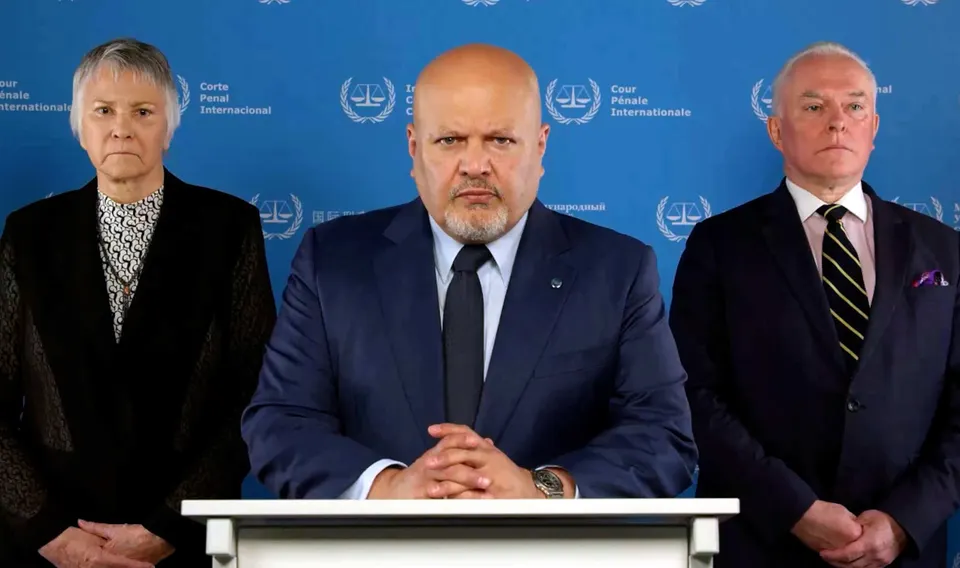
On 19 November, by nine votes to six, the International Court of Justice ruled that Myanmar had committed genocide against the Rohingya of northern Rakhine State in 2017. It was the first time the UN’s highest court had held a state responsible for committing genocide. For Palestinians awaiting judgment in South Africa’s case against Israel, much turns on how the judges reached that conclusion.
“Just because there are multiple motivations doesn’t somehow mean that genocidal intent cannot exist,” said Dr Mark Kersten, an assistant professor of criminology and criminal justice at the University of the Fraser Valley in Canada. His own assessment of Israel’s conduct in Gaza was unequivocal. “In my view, of course, it is a genocide,” he said. Whether South Africa will persuade the court is a question he left open.
What a military objective can explain
Israel denies the allegation. It says its operations were directed against Hamas after the killings and hostage-taking of 7 October 2023, and that its forces took steps to spare Palestinian civilians. Among the measures Benjamin Netanyahu has cited are telephone warnings, evacuation leaflets and corridors through which residents were urged to leave areas under attack.
The Myanmar judgment gives South Africa a way to test that defence on its own terms. Even if Israel establishes that a particular operation served a military purpose, the judges must still consider what its conduct towards Palestinians reveals when examined as a whole. An order to evacuate may show an effort to protect civilians. Where people were sent, whether they were attacked on the way and what happened to the homes they left behind also bear on what those issuing the order intended.
In Myanmar, the majority found that the way the military drove people out, including burning their homes and attacking those already fleeing, helped establish an intention to destroy a substantial part of the Rohingya population. As Kersten put it, “forced displacement can signal genocidal intent”.
The standard of proof remains demanding. Where judges infer intent from a pattern of conduct, genocide must be the only reasonable inference that accounts for the evidence as a whole. “The standard did not change,” Kersten said. The six dissenting judges disputed how the majority applied it. They considered that the evidence left room for other reasonable explanations, including expulsion and collective punishment.
Food, water and the means to survive
One of the most consequential findings for Gaza concerns an allegation The Gambia, which brought the Rohingya case in 2019, failed to prove. The judges found three forms of genocide established in Myanmar. Its forces had killed members of the group, caused serious bodily or mental harm, and imposed measures intended to prevent births. But the evidence about restrictions on movement, food and medical care fell short on a fourth count. It did not establish that the conditions Myanmar imposed were capable, over time, of killing a substantial part of the group.
Kersten expects that fourth count to receive far closer scrutiny in the Gaza case. He pointed to restrictions on fuel, the destruction of water treatment and desalination plants, and the repeated displacement of families within a strip of territory they could scarcely leave. Fuel deprivation bears directly on access to drinking water when pumps and treatment plants depend on it. An instruction to move again offers little protection to a family whose next shelter has neither safe water nor sanitation.
“But we have seen for years now a denial of adequate medicine, food, intentional use of starvation that has been credibly shown,” Kersten said. He described “forcible displacement with nowhere to go, multiple times” and families facing flooding without tents.
There is also a public record of what senior Israeli officials said those restrictions were meant to do. On 9 October 2023, the then defence minister, Yoav Gallant, announced a “complete siege” and specified “no electricity, no food, no fuel”. The following day, Major General Ghassan Alian, the Israeli officer who oversaw government activities in the occupied territories, addressed Hamas and the residents of Gaza in a video about the blockade. “You wanted hell, you will get hell,” he said.
The significance of those words, in Kersten’s view, lies partly in who spoke them and what followed. Gallant had the authority to order a siege. Alian headed the agency responsible for administering restrictions on Gaza. In March 2024, nearly six months later, the court ordered Israel to ensure that food, water, fuel and medical assistance could reach Palestinians throughout the territory at scale, including by opening more land crossings. The order was binding. A final judgment on genocide is still years away.
The evidence the judges can use
An important passage in the Myanmar judgment concerned witnesses who had escaped to Bangladesh. Myanmar had denied UN investigators access, but survivors could still describe what they had seen. A UN fact-finding mission conducted 1,294 interviews. The judges gave weight to factual findings they could check against other material, including satellite images and witness statements. They reserved the legal conclusions for themselves.
That distinction matters for Gaza. In September 2025, an independent UN commission of inquiry concluded that Israel had committed genocide against Palestinians there. Israel rejected its findings. The court will make its own determination, but the Myanmar judgment shows how it can use the evidence behind such a report.
Consider the shelling of Gaza’s Al-Basma fertility clinic in December 2023. The commission examined photographs of the embryology laboratory and satellite images of the surrounding area. It found that a large projectile, most probably an Israeli tank shell, had struck the laboratory, destroying the reproductive material stored there, including a reported 4,000 embryos. The Israeli military said it was unaware of the specific strike and denied deliberately targeting fertility clinics. The commission found no credible evidence of military use and concluded that the destruction was a measure intended to prevent Palestinian births. The photographs, the military’s account and the investigators’ reasons for reaching that conclusion are all material the judges can weigh.
South Africa has until 22 November 2027 to file its next written submission. Israel has until 22 May 2029 to respond. For families living through the events the court is examining, the Rohingya case offers some measure of what that wait means.
Rahama Khatun heard the Myanmar judgment on her phone in a refugee camp in Bangladesh. Her husband, Shaker Ahmed, her brother and her brother-in-law were among ten Rohingya men killed at Inn Din in September 2017. Nine years later, she was still in exile. The judges have now ordered Myanmar to facilitate families’ safe return, help find the disappeared and assist in recovering and reburying the dead according to Rohingya traditions.
For Kersten, those provisions carry implications for Palestinian families still waiting to recover or bury relatives. They also give the Rohingya a way to measure what the judgment delivers after the judges have left the courtroom. “They want to go home,” he said. “People want to go home.”
Sources and attributions
Owen Jones interviewed Dr Mark Kersten for The World Court Just Made History. Israel Should Be Terrified. Kersten’s quotations are drawn from the interview transcript. His academic affiliation is listed by the University of the Fraser Valley.
International Court of Justice, judgment in The Gambia v. Myanmar and summary of the judgment and dissenting opinions, 19 November 2026. The judgment sets out the findings on intent, counter-insurgency, displacement, witness evidence and reparations.
Israeli Prime Minister’s Office, statement on Israel’s war aims, 10 January 2024. The ICJ’s order of 26 January 2024 records Gallant’s siege announcement. The UN commission’s detailed findings on the military operations in Gaza document Alian’s video statement of 10 October 2023.
International Court of Justice, order on humanitarian assistance in Gaza, 28 March 2024, and order setting the timetable for written pleadings, 21 May 2026.
UN Independent International Commission of Inquiry, legal analysis of Israel’s conduct in Gaza under the Genocide Convention, 16 September 2025, particularly paragraphs 150–153 on Al-Basma. Israel’s Ministry of Foreign Affairs issued its response to the commission the same day.
Ruma Paul, Reuters, Rohingya widow hears Myanmar genocide ruling from refugee camp, 19 November 2026. Reporting from Cox’s Bazar on Rahama Khatun and the relatives she lost at Inn Din.