Gabor Maté: “Israel Is a Psychopath, Functioning in an Infrastructure of Impunity”
Drawing on his family’s experience of the Holocaust, physician and author Gabor Maté argues that Israel’s treatment of Palestinians reflects a destructive combination of trauma, national entitlement and Western protection. His warning reaches beyond the devastation in Gaza to the consequences of turning historical suffering into a justification for inflicting suffering on others.
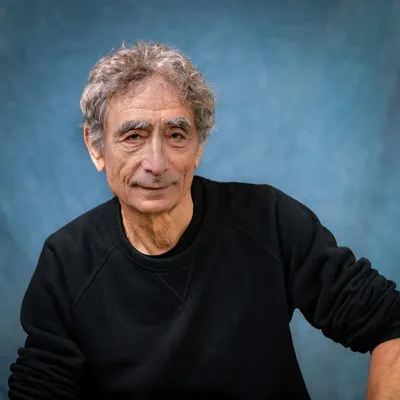
“Israel right now is a psychopath functioning in an infrastructure of impunity.”
With that accusation, Dr Gabor Maté brings together the psychological and political arguments running through his monologue on Israel, Palestine and the Western powers that have sustained the Israeli state.
His language is deliberately confrontational, using the terminology of psychopathology as a political metaphor for brutality exercised without effective restraint. Behind it lies an argument about how a society can acknowledge its own historical wounds while becoming increasingly indifferent to the wounds it inflicts.
Maté speaks as a physician whose work has focused on trauma, a Jewish survivor of the Holocaust and a critic of Zionism whose own family history includes attachment to the movement. He examines how memories of persecution can become bound up with national identity, how that identity can discourage moral scrutiny, and how powerful allies can shield a state from the consequences of its actions.
The central question is what happens when the experience of victimhood becomes a permanent claim to innocence, even when those invoking it possess overwhelming power over another people.
Auschwitz and the limits of inherited moral authority
Maté begins with a history he has carried throughout his life. His grandparents were murdered at Auschwitz, and he recalls that he and his mother could easily have been deported there while he was an infant.
That proximity to extermination gives his reflections their personal force, but he refuses to treat it as a certificate of moral authority.
“My mother and I easily could have ended up in Auschwitz when I was six months of age, as my grandparents did, but that doesn’t give me any authority,” he says.
What his experience can do, he argues, is challenge the claim that Jewish suffering provides a justification for the treatment of Palestinians. It can also undermine the assumption that Jews constitute a single political constituency whose views can be announced by an Israeli prime minister, a religious leader or a communal institution.
Neither Benjamin Netanyahu nor the chief rabbi of England, he says, has the right to speak for all Jews.
This distinction is fundamental to his account. Jewish identity contains disagreement, competing ethical traditions and radically different understandings of what the Holocaust requires of those who remember it. His own opposition to Israeli policy belongs within that diversity.
He describes approaching his first visit to Auschwitz with considerable resistance. He had feared encountering what he calls a “Holocaust Disneyland”, a presentation of catastrophe shaped by the conventions of public commemoration.
The experience unsettled that expectation. He found himself moved by the evidence of what had happened and by standing where his grandparents would have arrived before being sent to their deaths.
“It’s a powerful experience being there,” he says, recalling the records of the killings and the physical proximity to his family’s final journey.
Yet the conclusion he drew was concerned with the living as much as the murdered. Those who make Auschwitz the entire essence of Jewish experience, he argues, risk becoming unable to recognise Palestinians as victims in their own right.
For Maté, remembrance carries an obligation to examine the suffering of others. When historical identification is organised exclusively around one’s own people as victims, that obligation can disappear.
How victimhood becomes entitlement
Maté calls the resulting mentality a “culture of entitled victimhood”.
“If you perceive yourself as a perpetual victim, then everything you do is justified, and everything that’s done to you is a crime,” he says.
The distinction he draws is between having suffered and building an identity in which suffering permanently exempts a person or a state from responsibility. The first describes an experience; the second becomes a way of interpreting every subsequent confrontation.
Within that outlook, actions taken against others can always be presented as necessary, defensive or unavoidable. Resistance to those actions becomes further proof of persecution.
“We’re always the victims, therefore we’re entitled to do anything we want,” he says, describing the logic he believes has taken hold.
He makes the argument through an unusually personal comparison, acknowledging that he has sometimes adopted a similar position in his marriage. Seeing himself as the injured party, he says, can allow him to avoid examining his own conduct.
“When I see myself as a victim, I don’t have to look at what I’m doing,” he explains.
The appeal lies in the relief from responsibility. A person who feels entirely wronged need not ask how their attitudes, expectations or behaviour have contributed to a conflict.
Maté argues that something comparable can happen collectively, with greater force and more destructive consequences. Shared historical trauma becomes part of a national account of innocence, reinforced by institutions, political leaders and public rituals.
This is his interpretation of collective behaviour, rather than an established clinical diagnosis of a population. Its political significance lies in the mechanism he describes: the more completely a state identifies itself with victimhood, the harder it may become for its supporters to acknowledge the suffering caused by its own power.
He does not deny the reality of Jewish persecution. His argument depends on recognising both its enormity and the danger of using it to close off scrutiny of present conduct.
The political use of Holocaust memory
Maté’s criticism of institutional Holocaust remembrance is among the sharpest passages in the monologue.
He attacks what he calls the “Holocaust industry”, accusing it of turning historical suffering into an instrument of Israeli state advocacy. Commemoration, in his account, can become a means of defending Israel’s actions while discouraging attention to Palestinian experiences.
His objection concerns the political purposes to which remembrance is put. He explicitly argues that the Holocaust must be remembered, including the distinctive character of its organised, industrial extermination.
At the same time, he insists that its broader lessons concern human behaviour beyond one historical setting: contempt for human dignity, the normalisation of brutality and the capacity of institutions to organise mass violence.
A commemoration that recognises those mechanisms only when Jews are their victims, he suggests, has failed to confront their wider meaning.
The danger is a moral division in which one people’s trauma demands recognition while another people’s trauma is denied, explained away or treated as a necessary consequence of security policy.
“The Jewish trauma, horrible as it was, is not denied,” he says, before contrasting that recognition with the treatment of Palestinian suffering.
His argument is directed at the political consequences of that unequal recognition. When one history becomes an overriding justification, evidence of another people’s dispossession or destruction can be filtered through a narrative that has already decided who is innocent.
Maté also invokes Jewish and Israeli critics who have themselves made comparisons between Israeli conduct and Nazi practices. Those comparisons remain contentious historical and political judgments, but their presence in his argument challenges the idea that Jewish memory produces a single authorised position on Israel.
For him, disagreement over the lessons of the Holocaust is itself part of Jewish moral life.
When allegiance to a state becomes a religion
The monologue moves from the use of historical memory to the relationship between nationalism and spirituality.
“For a lot of Jews today and a lot of Jewish institutions, including religious institutions, Israel has replaced Jewish spirituality,” Maté says. “It is the religion.”
He recalls attending a synagogue when his children were preparing for their bar mitzvahs and hearing a prayer for the state of Israel. The experience left him questioning the elevation of a political entity into an object of religious devotion.
“A state is just a political entity like every other state,” he says.
His objection is to the moral consequences of confusing allegiance to that entity with religious belief or spiritual identity. If loyalty to Israel becomes a test of Jewish belonging, criticism of the state can be experienced as an attack on the self, the community or Judaism.
In that situation, political judgment becomes harder to exercise. The question of what a government has done can be displaced by the question of whether its critics are loyal.
Maté sees this fusion as damaging to Jewish spirituality because it places the defence of state power above the ethical demands through which that power might otherwise be judged.
He illustrates the resulting compartmentalisation by describing people who are loving within their own families and considerate in their everyday lives, yet can watch Palestinians being killed and defend what they see.
The contradiction, in his account, is between the care people extend within their circle of identification and the moral distance they maintain from those outside it.
His charge is that Palestinians have been placed beyond that circle. Their suffering is visible, but the framework through which it is interpreted prevents it from making the same demands on conscience.
The hardening that follows unequal rights
Maté does not describe every early supporter of Zionism as motivated by cruelty. He acknowledges the idealism of some of its currents, including aspirations towards socialism, justice and a humane society.
His own grandfather was a Zionist leader in the region of southern Slovakia and northern Hungary. Maté remembers him as a humane person who, he believes, would have been appalled by what Israel has become.
The contradiction, he argues, was that the envisioned society did not extend equal recognition to the Palestinians already living in the land.
Once a political project assumes that one people’s needs and rights can override another’s, maintaining that arrangement requires increasing coercion. Those who lose land, freedom or political control resist; suppressing their resistance then demands further violence.
“You gradually have to harden your heart,” he says.
The process he describes is cumulative. Dispossession produces opposition, opposition is interpreted as hostility, and that hostility is used to justify harsher measures. People who initially imagine themselves building something humane become accustomed to practices they would once have found intolerable.
For Maté, the devastation in Gaza represents the culmination of that process. He describes it as the “predicted brutalization of Israeli society”, placing his argument within a history of warnings from Jewish thinkers.
The cultural Zionist Ahad Ha’am criticised the treatment of Arab inhabitants as early as 1891, rejecting the comforting assumption that Palestine was an empty land awaiting settlement. Decades later, Yeshayahu Leibowitz called for withdrawal from the territories occupied in 1967 and became an outspoken critic of the consequences of continued occupation. He subsequently used fierce comparisons between Israeli military practices and those of the Nazis. Grove Atlantic
Maté invokes these figures to argue that the danger was visible long before the present catastrophe. Their warnings concerned what domination would do both to those subjected to it and to the society enforcing it.
He points to soldiers’ celebratory recordings of their conduct and to support for Palestinian expulsion as contemporary expressions of the moral hardening he describes. These examples form part of his wider accusation that the normal restraints on violence have been weakened by decades of justification and protection.
Palestinian trauma did not begin on 7 October
The monologue’s psychological argument becomes particularly concrete when Maté turns to Palestinian children.
He rejects accounts that begin the history of their suffering with the Hamas led attacks of 7 October 2023. Children were experiencing serious traumatic symptoms long before that date, he says, and before Hamas took control of Gaza.
He refers to research published in 2004 documenting extensive psychological distress among Palestinian children. A contemporary account by Gaza mental health practitioners reported severe levels of traumatic stress in roughly one third of the children studied, moderate levels in almost half and lower levels in a further substantial group. These were findings about symptoms of varying severity in a study population, rather than evidence that virtually every Palestinian child had a confirmed diagnosis of severe PTSD. Humanitarian Practice Network
The chronology is central to his argument. The research predates Hamas’s rule in Gaza, although it does not predate the organisation itself. It also places the roots of childhood distress well before the most recent phase of destruction.
Maté lists the kinds of symptoms children can experience: nightmares, bedwetting, anxiety, panic, aggression and fear of death.
He then connects that discussion to his own childhood, saying that he wet his bed until the age of 13 and linking this, in his personal account, to what happened to him as an infant.
The comparison is intended to make the consequences of early terror tangible. An experience that an infant cannot later describe in ordinary autobiographical language may still become part of how that child grows up, relates to others and responds to danger.
For Maté, his own history removes any temptation to imagine that the effects on Palestinian children will end when the immediate violence subsides.
He is concerned with what survives beyond an attack or a period of displacement: the continuing fear, the difficulty of feeling safe and the strain carried into family life.
That concern also changes the timescale on which the destruction must be understood. The consequences cannot be measured only through what is damaged or lost on a particular day. They extend into the lives children will attempt to build afterwards.
Biological traces, denied suffering and the limits of resilience
Maté also invokes research among Syrian families to argue that the consequences of war may reach across generations.
A study published in February 2025 examined 131 people from 48 Syrian families and identified associations between exposure to violence and DNA methylation, chemical markings involved in the regulation of genes. Its findings concern possible biological traces of exposure, with important limits: the study did not demonstrate alterations to the DNA sequence, establish inevitable inherited illness or prove that the identified differences caused particular health outcomes. The researchers called for further work to clarify the mechanisms. PMC
The Palestinian childhood research and the Syrian epigenetic study address different questions. Together, they help frame Maté’s concern with the duration of harm, without establishing that the future of any traumatised population is biologically predetermined.
His account also places considerable weight on the response of the outside world. Suffering becomes more difficult to bear, he argues, when it is denied by those who could help bring it to an end.
“Not only is Palestinian trauma denied, even Palestinian existence is denied,” he says.
The injury he describes therefore has several dimensions. There is the direct experience of violence and loss, followed by the experience of seeing that suffering minimised or justified. Beyond both lies the denial of a people’s identity, history and claim to their own land.
Maté contrasts this with the recognition generally accorded to Jewish historical trauma. His question is why the understanding of one people’s wounds so often fails to produce an equivalent willingness to recognise another’s.
Yet he also insists on Palestinian resilience. His account includes people with whom he has worked, whose resourcefulness, relationships and endurance have impressed him. His own public biography records trauma work in the West Bank in 2022. Dr. Gabor Maté
“They have tremendous capacity,” he says, while warning that even such capacity can be overwhelmed.
That qualification matters. Resilience cannot reasonably become an expectation that people will absorb unlimited harm. In his account, the strength of Palestinian society makes its survival possible, while the continuation of violence places ever greater demands on that strength.
What makes impunity possible
Maté’s argument repeatedly returns to the institutions outside Israel that help determine what its government can do.
He credits the phrase “infrastructure of impunity” to the writer Arundhati Roy and uses it to describe an environment in which state violence is protected from meaningful consequences.
The emphasis is on the surrounding system. Military strength acquires a different political meaning when powerful allies provide support, excuse its use or prevent accountability from following.
Maté contrasts the grief and anger of ordinary people with what he describes as the conduct of the official Western world.
His words for that conduct are “compliance, complicity, collusion, collaboration, justification”, followed by denial and the refusal to look directly at what is happening.
These are sweeping accusations, but the distinction at their centre is clear. Public revulsion does not automatically change the decisions of governments, and widespread knowledge of suffering does not necessarily produce action to stop it.
His remarks sit within a wider dispute over responsibility for Gaza’s destruction. In September 2025, a United Nations commission of inquiry concluded that Israel had committed genocide against Palestinians in Gaza. Israel rejected the finding, stating that its military campaign aimed to dismantle Hamas and that it sought to minimise civilian harm. The commission’s conclusion is distinct from a final judgment by the International Court of Justice, where South Africa’s case remained in written proceedings in 2026. Question of Palestine
For Maté, the wider question is whether declarations of concern, legal scrutiny and public outrage can change the conditions under which force is exercised.
An infrastructure of impunity, as he describes it, persists whenever condemnation leaves those conditions substantially intact.
Britain, Zionism and the interests of empire
To explain the origins of external protection, Maté turns to Britain’s role in Palestine.
He describes the British Empire as Zionism’s first great patron and challenges the familiar presentation of that relationship as a straightforward expression of concern for persecuted Jews.
Arthur Balfour provides his central example. As prime minister, Balfour defended immigration restrictions during the 1905 debates over the Aliens Bill, when Jewish arrivals were a prominent focus of discussion. In 1917, as foreign secretary, he issued the declaration supporting a Jewish national home in Palestine. api.parliament.uk
Maté sees a contradiction between restricting Jewish immigration to Britain and supporting a national project elsewhere. He interprets the relationship through imperial interests, questioning the authority a European government claimed to determine the future of a territory inhabited by other people.
The Balfour Declaration itself included a commitment that the civil and religious rights of existing non Jewish communities should not be prejudiced. Its promise of a Jewish national home and its treatment of the existing population became enduring sources of political conflict. Question of Palestine
Maté also invokes Winston Churchill’s understanding of Zionism’s strategic value. In a 1920 essay, Churchill envisaged a Jewish state under British protection and described such an outcome as being “in harmony with the truest interests of the British Empire”. Wikisource, the free online library
The imperial calculation, in Maté’s account, helped create the conditions in which Zionist institutions could develop, while British force was used to suppress Palestinian opposition, particularly during the revolt of 1936–1939.
The relationship changed over time. Britain later restricted Jewish immigration to Palestine and fought Jewish insurgent organisations, an important qualification to any account of uninterrupted British support. Those changes also demonstrate how an external power’s commitments could be revised when its priorities shifted. National Army Museum
Maté’s broader argument is that the development of Israel cannot be understood solely through national ideals or the needs of a persecuted people. It must also be understood through the interests of the powers that helped make the project possible.
American support and the rejection of conspiracy
In Maté’s account, the United States subsequently assumed the role of principal external patron.
He considers three explanations for American support. The first is affection for Jewish people, which he dismisses as an inadequate way of understanding how states behave.
“States don’t love anybody,” he says.
The second is the antisemitic claim that Jews control the United States. Maté explicitly rejects it.
He distinguishes the influence exercised by political and communal organisations from control over the American state. That distinction is essential to his argument: influence can be examined through institutions, lobbying and political decisions, while claims of collective Jewish control substitute an ethnic conspiracy for analysis.
His preferred explanation is strategic interest. He argues that American support for Israel has served the purposes of American power in the region.
The material scale of that relationship is substantial. A military assistance agreement announced in 2016 pledged $38 billion over the financial years 2019 to 2028, providing one concrete measure of the longstanding American commitment. whitehouse.gov
Maté’s interpretation of the relationship is that Israel’s capacity to act with such confidence rests partly on the expectation that a much larger power will remain behind it.
That expectation is also the foundation of his warning. A state that treats external support as permanent may build its policies around assumptions that history will eventually overturn.
The danger of believing protection will last forever
Maté identifies two vulnerabilities in reliance on an imperial sponsor: great powers can decline, and they can change their policies.
He argues that American global dominance is weakening, pointing to military failures, economic competition and the emergence of challengers. This is his geopolitical assessment, rather than a settled forecast of American collapse.
The question he poses is what happens if Israel’s principal sponsor becomes less capable of sustaining the relationship or decides that its interests have changed.
In his view, overwhelming military power can conceal the insecurity created by domination. Each act that deepens hostility may be manageable while external protection remains dependable, yet leave the state more exposed if that protection weakens.
That possibility has acquired a concrete policy context. On 3 November 2026, President Donald Trump said the United States would stop roughly $4 billion in annual funding for Israel at the end of the year while continuing arms sales. The implementation remained unclear, including how the announcement would interact with existing commitments. A proposed funding change does not establish that the wider American relationship has ended. ReutersFeed
Maté’s warning is broader than any single funding decision. He argues that a political order maintained through force and external backing accumulates dangers that weapons alone cannot resolve.
He predicts that the hostility created by oppression will eventually return to threaten Israel’s security. That prediction forms part of his indictment of the state’s strategy; it does not establish an inevitable outcome or a justification for violence against civilians.
His conclusion is severe. History, he says, will look back on Zionism as “a complete spiritual, ethical, and historical disaster”.
The three terms reflect the structure of his argument: damage to Jewish moral life, suffering imposed on Palestinians and a political strategy whose apparent strength may conceal its long term fragility.
Whose suffering is allowed to matter?
Maté closes by challenging the way the conflict has been presented to the public.
“In the mainstream media, the perpetrator has been portrayed as the victim,” he says. “And the victims have been portrayed as the perpetrators.”
His complaint is that coverage can detach violence from the distribution of power, the taking of land and the conditions under which Palestinians live. When that happens, the history necessary to understand an event disappears behind the event itself.
He ends with an appeal for independent journalism capable of challenging those narratives.
Across the monologue, however, the deeper concern is the relationship between memory and responsibility. Maté believes that recognising the trauma of Jewish persecution should make Palestinian suffering more intelligible and more urgent.
His own account of Auschwitz, childhood distress and family loss is directed towards that recognition. He repeatedly refuses the idea that what happened to him or his relatives can excuse what is done to another people.
The responsibility he describes is practical as well as moral: acknowledge the suffering, examine the political conditions producing it and confront the institutions that allow it to continue.
For Maté, the unresolved question is whether the memory of catastrophe will deepen that responsibility or become a means of evading it.
Sources and attributions
Primary monologue: Dr Gabor Maté Psychoanalyzes Israel — THIS EXPLAINS EVERYTHING!, Double Down News, 8 November 2026. The publisher’s page carries the alternative main heading “ISRAEL REPLACED GOD”: Holocaust Survivor EXPOSES The Zionist Myth. Maté’s quotations and the account of his arguments are drawn from the transcript supplied for this feature. The publication date is confirmed by the publisher; the recording date is not established. The supplied transcript contains an unidentified inserted speaker whose remarks have not been attributed to Maté.
Professional background and work with Palestinians: About Dr Gabor Maté, official biography, undated; and When Trauma and Politics Intersect: Germany, Palestine and Israel, official event listing for 17–23 September 2026. These support his professional identification, his history as an infant Holocaust survivor and his trauma work in the West Bank in 2022.
Palestinian childhood trauma: Mental health needs in Palestine, Abdel Hamid Afana, Samir Qouta and Eyad El Sarraj, Humanitarian Practice Network, 18 November 2004. A contemporary account by Gaza mental health practitioners documenting traumatic stress of varying severity. The feature distinguishes symptoms in a research sample from universal clinical diagnoses.
Syrian epigenetic research: Epigenetic signatures of intergenerational exposure to violence in three generations of Syrian refugees, Connie J. Mulligan and colleagues, Scientific Reports, 27 February 2025. Supports the discussion of DNA methylation and the study’s limitations. This research concerns Syrian families; the Palestinian research cited separately concerns psychological symptoms.
Earlier Jewish criticism: A Truth from Eretz Yisrael, Ahad Ha’am, 1891, translated by Hilla Dayan and reproduced in the publisher’s excerpt from Wrestling with Zion, edited by Tony Kushner and Alisa Solomon, 2003; and Yeshayahu Leibowitz, Daniel Rynhold, Stanford Encyclopedia of Philosophy, first published 29 March 2011, revised 6 March 2019. Historical warnings have been paraphrased where the monologue compresses different texts and dates.
Balfour and British policy: Aliens Bill debate, House of Commons Hansard, 10 July 1905; Balfour Declaration, 2 November 1917, reproduced in the United Nations archive; and The British Army in Palestine, National Army Museum, undated. These support the immigration debate, the declaration and the changing relationship between Britain, Zionist organisations and Palestinian resistance.
Churchill’s imperial argument: Zionism versus Bolshevism, Winston S. Churchill, Illustrated Sunday Herald, 8 February 1920, available as a historical transcription. Supports the quotation concerning British imperial interests.
American military assistance: Memorandum of Understanding Reached with Israel, White House, 14 September 2016. Documents the $38 billion commitment. As Americans vote, Trump says US will stop $4 billion in aid to Israel, Reuters, 3 November 2026, supplies the subsequent announcement and its unresolved implementation.
Genocide findings, response and proceedings: Legal analysis of the conduct of Israel in Gaza pursuant to the Genocide Convention, UN Independent International Commission of Inquiry, 16 September 2025; Israel’s official response, Israeli Ministry of Foreign Affairs, 16 September 2025; and Order on fixing time limits: Reply and Rejoinder, International Court of Justice, 21 May 2026. These distinguish the commission’s findings, Israel’s rejection and the continuing court proceedings.