Former IDF Spokesperson’s Unit Staffer Says Army Manipulated Gaza Messaging and Labelled Innocent Palestinians ‘Terrorists’
Ayelet Kroizer, who served in the Israeli military’s Spokesperson’s Unit during the Gaza war, has publicly accused the unit of manipulating information released to journalists, tailoring messages to different audiences and applying the label “terrorist” to Palestinians she says were innocent civilians. Earlier social-media posts show that Kroizer had already hinted that she had witnessed things inside the military communications system that she felt unable to disclose.
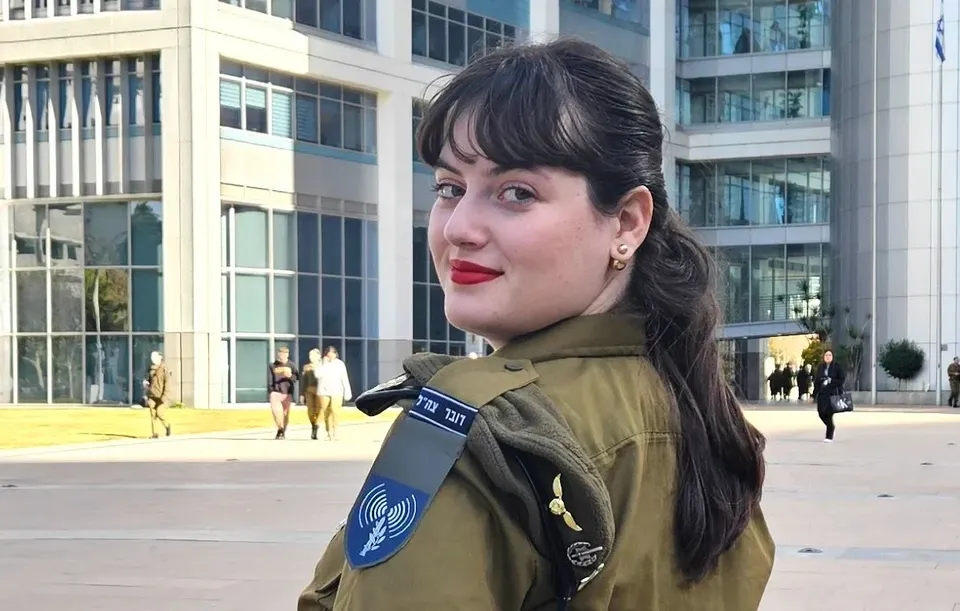
A former member of the Israeli military’s Spokesperson’s Unit has made a series of extraordinary allegations about the way information concerning Gaza and the occupied West Bank was presented to journalists and the public during the war.
Ayelet Kroizer published the allegations on X on November 2, 2026, while announcing that she was becoming the new spokesperson for Breaking the Silence, the Israeli veterans’ organisation that collects testimony from former soldiers concerning military service in the occupied Palestinian territories.
Her account is also reproduced on her LinkedIn profile, while Breaking the Silence published an English version of her statement.
Kroizer alleges that she personally took part in adjusting information released to journalists, witnessed innocent Palestinians being described as terrorists, and was taught to formulate military statements about attacks causing large numbers of deaths.
Her allegations are particularly significant because they concern the institution responsible for communicating the Israeli military’s version of events to both Israeli and international media.
‘The public’s right to know was secondary’
Kroizer said that joining the IDF Spokesperson’s Unit exposed her not only to events in Gaza and the West Bank but to the process through which those events were presented to the outside world.
She accused the unit of having enormous power to shape Israelis’ understanding of events and said she came to believe that it operated more like a public-relations organisation than a public institution accountable to citizens.
According to Kroizer, personnel were told that communications directed towards Israelis had a specific purpose: strengthening public trust in the IDF.
“The public’s right to know was secondary, at best,” she wrote.
Kroizer said the objective was different when the intended audience was outside Israel.
For international audiences, she said, the stated purpose was to strengthen and broaden international legitimacy for Israeli military operations.
Her accusation is that accuracy could become subordinate to that communications objective.
The English version subsequently circulated by Breaking the Silence similarly says the unit’s international messaging sought legitimacy for IDF actions and that this came at a cost to the truth.
Kroizer says she manipulated information going to the media
Kroizer then turned from criticism of the institution to an admission about her own involvement.
She said that during her service she personally “played around with” details that were released to journalists.
Anadolu Agency, reporting directly on her November 2 post, translated her account as an admission that she manipulated details released to the media.
That is an important distinction.
Kroizer is not merely claiming that she later concluded that military messaging was misleading. She says she participated in preparing information herself.
She alleges that the wording and details contained in statements could be shaped according to both the intended audience and the communications objective the unit was seeking to achieve.
Her description presents military communications as an exercise not simply in reporting what had happened, but in deciding how an event should be understood by those receiving the information.
Innocent Palestinians labelled ‘terrorists’
Perhaps the most serious allegation in Kroizer’s November 2 statement concerns the classification of Palestinians.
Kroizer said she saw the Hebrew word mechabel, generally translated in this context as “terrorist,” attached to Palestinians whom she regarded as innocent.
Her LinkedIn post says she witnessed the term being applied to innocent Palestinians while statements were being tailored according to the intended audience.
Anadolu reported the same allegation, saying Kroizer claimed innocent Palestinians were labelled terrorists as information was prepared for media release.
The allegation has obvious consequences for journalism.
Whether a person killed during a military operation is described as a civilian, militant, combatant or terrorist can profoundly affect the way an attack is reported and understood.
An incident initially presented as an operation that killed armed militants may generate a very different international response from an attack known to have killed civilians.
Kroizer’s account does not establish that every person identified by the Israeli military as a terrorist or militant was misclassified, nor does her post quantify how frequently she says the practice occurred.
Her allegation is nevertheless specific: she claims that during her own military service she witnessed the terrorist label being attached to innocent Palestinians.
‘Dozens dead in a single strike’
Kroizer also described preparing statements following Israeli attacks that caused large numbers of deaths.
She said she learned how to formulate announcements concerning dozens of people killed in one strike and then routinely add language expressing regret for harm to uninvolved civilians.
She characterised this process as part of the normal routine of her service.
The significance of that allegation extends beyond the wording of individual press releases.
Throughout the Gaza war, Israeli military statements following civilian casualty incidents have frequently stressed that operations were directed against Hamas or other armed groups, while adding that the military regretted civilian casualties or was examining reports of civilian harm.
Israel has repeatedly said it seeks to minimise civilian casualties and has accused Hamas of operating from civilian areas.
Kroizer’s account does not independently establish the circumstances of individual attacks. What it does offer is a former insider’s description of how statements concerning such attacks were constructed.
In her telling, expressions of regret became a familiar communications formula.
Kroizer said she had previously found it difficult to remain silent when confronted by injustice, but during her service found herself being required to “do PR for it.”
An earlier post suggested more was to come
Kroizer’s November allegations did not emerge entirely without warning.
About a month earlier, she published another LinkedIn post discussing her recent military service.
In that post, Kroizer said she had been a soldier only four months previously and had been “inside the system,” specifically inside the IDF Spokesperson’s Unit.
She said she had been exposed to information that she still did not feel capable of writing about.
More strikingly, Kroizer said that in some cases she was not even certain whether she was legally permitted to disclose what she had seen.
The post began with Kroizer saying she had been quiet for several days despite having a great deal to say, adding that she was afraid.
Seen in light of her November 2 statement, the earlier post is significant because it demonstrates that Kroizer had publicly raised concerns about what she witnessed inside the military communications system before accepting her role at Breaking the Silence.
She did not reveal in that earlier LinkedIn post precisely what undisclosed information she was referring to, and it would therefore be unsafe to assume that every matter she had in mind concerned the allegations she later published.
But the chronology is notable.
First she publicly said she had witnessed things inside the IDF Spokesperson’s Unit that she felt unable to reveal. Weeks later, she publicly accused that same communications system of manipulating information.
From the Haredi community to the IDF
Kroizer’s account is also notable because she says she joined the Israeli military voluntarily.
She grew up in Israel’s ultra-Orthodox community and had an exemption from military service.
According to her November post, she cancelled that exemption approximately three years earlier and enlisted during wartime because she believed she would be helping to defend Israel.
Earlier LinkedIn material supports the broad outline of that history.
In a post published months before her latest allegations, Kroizer described approaching the end of what she called significant full-time service in the IDF Spokesperson’s Unit. Another post described developing communications plans, working under pressure and gaining experience in strategic communications during her service.
Her November announcement therefore marks a dramatic change in her public assessment of the institution in which she served.
She said that when she enlisted she believed she was defending the country.
She now works as spokesperson for an organisation whose purpose includes publishing testimony critical of Israeli military practices.
Why her allegations matter to international journalism
Kroizer’s allegations arrive against an extraordinary background.
Foreign journalists are still not permitted to enter Gaza independently.
On October 19, 2026, the Israeli government told the High Court of Justice that journalists should continue to be barred from entering Gaza without military escort, citing security risks. The Foreign Press Association argues that escorted IDF visits cannot substitute for independent access because journalists cannot freely choose where they travel, whom they interview or what they investigate.
The restriction has been in place since the Gaza war began in October 2023.
In April 2026, editors and executives from more than two dozen major international news organisations, including AP, Reuters, the BBC, CNN, The New York Times and The Washington Post, called for the ban to be lifted.
Their statement stressed that reporting from the ground enables journalists to challenge official accounts from all sides and directly investigate events for themselves.
Palestinian journalists inside Gaza have consequently carried much of the responsibility for firsthand reporting, while international correspondents have had to work remotely using Palestinian reporting, humanitarian organisations, satellite imagery, eyewitness accounts and statements supplied by the parties to the conflict.
That makes Kroizer’s account particularly significant.
International journalists were being supplied information by the Israeli military while simultaneously being denied the independent physical access that could allow them to test many of those claims themselves.
If, as Kroizer alleges, information issued by the military was sometimes shaped according to strategic communications objectives, the inability of foreign reporters to conduct unrestricted investigations on the ground becomes an important part of the story.
IDF Spokesperson rejects Kroizer’s account
The Israeli military has rejected Kroizer’s portrayal of the Spokesperson’s Unit.
Following her announcement, IDF Spokesperson Brigadier General Effie Defrin issued a letter to commanders that was intended to be circulated among members of the unit.
Defrin said Kroizer’s remarks did not reflect the people serving in the unit, its values or its professional and ethical approach.
He said the unit was composed of people from across Israeli society who shared a common ethical and professional compass and urged personnel not to allow Kroizer’s remarks to diminish their sense of purpose.
The response is important because Kroizer’s allegations remain allegations.
Her social-media posts provide first-person testimony concerning her own experience inside the IDF Spokesperson’s Unit, but they do not independently prove the accuracy or frequency of every practice she describes.
Where possible, individual incidents and communications would need to be examined against original military statements, internal records and other testimony.
‘I’m not staying silent’
Kroizer concluded her November 2 announcement by explicitly connecting her new role at Breaking the Silence with her experience in the military.
“So I’m not staying silent,” she wrote.
She then appealed to other people who served during the war to speak about their experiences as well.
That appeal may ultimately become one of the more consequential elements of her statement.
The significance of Kroizer’s testimony does not rest solely on whether one former soldier says information was manipulated.
If other former members of the military communications system independently produce comparable accounts, documents or examples, it could allow journalists to establish whether the practices Kroizer describes were isolated experiences or reflected something more systematic.
For now, her own social-media record establishes several things clearly.
She served in the IDF Spokesperson’s Unit.
She publicly says she manipulated details supplied to journalists.
She says she witnessed innocent Palestinians being labelled terrorists.
She says statements were tailored according to the audience and the objective the military wanted to achieve.
She says the objective of international communications was to increase legitimacy for military action.
And she says that preparing statements concerning attacks in which dozens of people had died became routine.
Coming from a former member of the organisation responsible for communicating the Israeli military’s account of the Gaza war to the world, those allegations warrant serious journalistic scrutiny.
They are made still more consequential by the fact that, more than three years after the beginning of the war, foreign journalists remain unable to independently enter Gaza and investigate the reality on the ground for themselves.
------
Ayalet Kroizer, a former member of the Israeli army spokesperson’s unit, pens an open letter about her experience as she joins Breaking the Silence
Reposted from Ayelet Kroizer’s Twitter/X, November 2, 2026
I’m proud to share that I’m stepping into the role of the new spokesperson for Breaking the Silence!
Three years ago, I canceled my exemption and enlisted in the IDF during wartime. I grew up in the ultra-Orthodox community, and I enlisted to take part in what I thought at the time was defending the country. I never imagined that upon completing my military service, instead of heading off on a big trip or starting studies, I would break the silence—and I certainly never dreamed I’d be chosen to take on an even more significant role in the organization and start working there.
In the IDF Spokesperson’s Unit, I was exposed not only to the reality in the West Bank and Gaza, but also to the way the IDF chooses to present it to the public. I saw just how vast the control of the IDF Spokesperson has in shaping our perception of reality, and the problematic game it plays with the truth—as if it were just another PR firm and not, heaven forbid, a body accountable to the public. The goal of the Spokesperson’s work with the Israeli public was defined for us as strengthening public trust in the IDF. The public’s right to know was secondary, at best. The goal of the work with the international audience was defined as strengthening and expanding legitimacy for military actions. Here too, the price was the truth.
During my service, I played around with the details that went out to the media, I saw how the word “terrorist” gets attached even to innocent Palestinians, and how the message is tailored to fit the target audience and the objective set before it.
I was never good at staying silent in the face of injustices, and here I was being asked to do PR for them. I learned how to phrase dozens dead in a single strike and automatically add that we regret any harm to non-combatants. That was the routine of my service.
So I’m not staying silent.
If you served in wartime, don’t stay silent either.