Two Sisters Killed at Home as Gaza Counts 16 Schoolchildren Slaughtered by Israel Through November Ceasefire
One boy went to football training after lunch. Another asked his father if he could come with him to pay condolences. Their families describe the circumstances in which Gaza’s pupils are being killed during the ceasefire, as a UN tribunal and an Israeli human rights organisation examine the evidence used against a Palestinian teacher and detainees in Israeli custody.
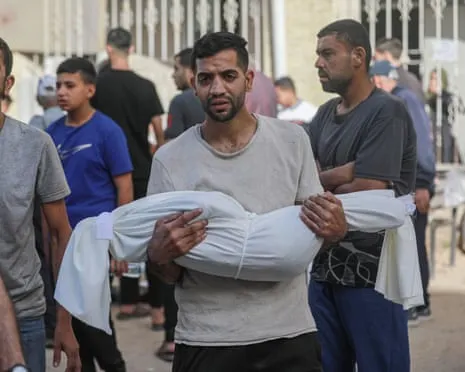
Yusra Abu al-Ouf, 15, attended Kafr Qasim school. Her sister Jana, 13, went to al-Manar private school. In the early hours of 25 November, an Israeli airstrike hit their family’s apartment in al-Shati refugee camp in western Gaza City. Both girls died with their mother, Noura Ezzat Abu al-Ouf, 41, and their father, Mohammed Majed Abu al-Ouf, 47. Several other Palestinians were injured. At al-Shifa hospital, the girls’ paternal aunt mourned over Jana’s body.
Gaza’s education ministry said it was the third time in less than 24 hours that Palestinian pupils had come under attack. The sisters brought to at least 16 the number of schoolchildren killed since the beginning of November, more than a year into the ceasefire. The ministry described attacks on pupils, teachers and civilian officials as a systematic assault on Palestinian education.
The girls’ father directed Hamas’s internal security service in northern Gaza. The Israeli military said he had helped prepare attacks against soldiers and civilians and worked to rebuild the group’s capabilities during the ceasefire. Its public account gave no indication of what commanders knew about the presence of his wife and daughters when they authorised the strike. International humanitarian law requires forces attacking a military target to take feasible precautions to spare civilians. It also prohibits an attack if the expected civilian harm would be excessive in relation to the concrete and direct military advantage anticipated.
A day later, an Israeli strike on another apartment, in Deir al-Balah, killed Gaza’s deputy education minister, Khaled Abu Nada, and his wife. Hamas confirmed that Abu Nada sat on its political bureau. Israel said he managed a banking and investment network that financed the group’s military activities. Medics reported at least ten Palestinians killed across Gaza on 26 November.
Mohammed wanted to play for Liverpool
After lunch on 6 November, Mohammed Nidal Barbakh left for football training at 1.30pm. He was 15, a tenth-grade pupil at Muscat school and a player at the Stars Football Academy. His father, Dr Nidal Mohammed Barbakh, remembered a boy who was talented on the pitch and excelled in class. His cousin Yasser remembered how precisely Mohammed had mapped out his future. He wanted to play for Al Ahly in Egypt, then for Liverpool, following his hero Mohamed Salah. He had returned to Gaza from Egypt about five months earlier.
The academy trained in the Bir 19 area of al-Mawasi, near Khan Younis. Mohammed’s coach, Islam Abu Arida, said the academy had already moved its training ground because the previous site was exposed to gunfire. He estimated that about 65 children were on the pitch that afternoon. Many of them saw their teammate shot.
Dr Barbakh said an Israeli tank advanced onto a nearby hill and fired two rounds towards the pitch. In his account, one struck a metal object and ricocheted, entering Mohammed’s back and exiting through his neck. Mohammed’s body was taken to Nasser hospital, where relatives gathered to say goodbye.
For his father, it mattered that this had happened on a sports pitch in al-Mawasi, an area where civilians had been told to go for safety. “I do not absolve the Israeli army of responsibility for what happened,” he said. He described what the killing had taken from the children who survived as well as from his son. It extinguished “every ambition within us”, he said, before children had a chance to realise their dreams.
Ahmed ran back to his father
On 13 November, Alaa Abu Daher, 38, was heading to a condolence gathering in al-Qastal, east of Deir al-Balah. His wife, Walaa, said their 12-year-old son, Ahmed, had asked his father if he could go with him. Ahmed wanted to become an Arabic teacher, like his grandfather Saleh.
Walaa described what happened after the artillery fire began. Ahmed ran to the other people attending the gathering to ask for help. He then turned and hurried back towards his father. A second shell was fired as he was returning. Fragments struck him in the legs, abdomen and head. Both he and his father were killed.
Field researchers who investigated the attack recorded that people were already evacuating the wounded when an artillery shell struck the street outside the third tower of the al-Qastal residential complex. They identified the third person killed as Samar Hussein Abu Sittah, 35, and recorded 20 others injured. Outside al-Aqsa hospital, mourners carried Ahmed’s body on a stretcher, wrapped in a blue sheet.
Walaa said she could find no words adequate to describe losing her husband and son together. “I feel as though my life stopped that day,” she said.
The Israeli military said it lacked enough information to comment on Mohammed’s or Ahmed’s death. It said its operations on the day Ahmed died had killed ten people it identified as terrorists and that it had taken precautions to reduce civilian casualties. Its response gave no specific account of the fire at the pitch or the shelling as Ahmed ran back to his father.
By 26 November, Palestinian medical authorities put the death toll in Gaza since October 2023 at 74,772, including 1,705 people killed since the October 2025 ceasefire. Among the dead whom Gaza’s health ministry had fully identified by 7 October 2026 were 21,976 children. Hundreds of education workers have also been killed.
In June, the UN’s independent commission of inquiry concluded that Israeli authorities and security forces had deliberately targeted Palestinian children and that their conduct in Gaza amounted to genocide, crimes against humanity and war crimes. Israel’s mission in Geneva rejected the findings and denied that its forces deliberately targeted children. The inquiry examined events preceding the November deaths.
For surviving pupils, finding a classroom remains difficult. UNICEF reported that nearly 98 per cent of Gaza’s school buildings had sustained damage, around 81 per cent had taken direct hits and more than 93 per cent needed major repairs or rebuilding. By November, humanitarian agencies estimated that about 200,000 children had no access to structured learning.
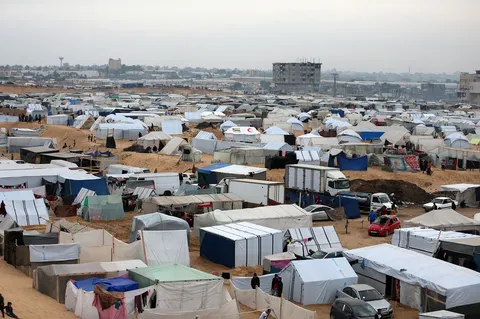
Families entering a fourth winter in tents and makeshift shelters were also struggling to find food, clean water and protection from flooding. On 24 November, Gaza’s health ministry issued a meningitis alert. The World Health Organization recorded 272 suspected viral cases in October alone. Between 1 October and 23 November, it recorded 692 suspected viral and bacterial cases, predominantly among infants. Local health officials linked the increase to overcrowding, damaged sewers, possible contamination of drinking water and inadequate washing facilities. Restrictions on aid and medical supplies have made the response harder. Only about four per cent of suspected cases had laboratory confirmation.
What two colleagues remembered about the school bus
On the morning of 7 October 2023, two UN employees took staff transport to school with Abdel Rahman Attiyah Abu Awad, a Gaza teacher and deputy headteacher. Both later gave written statements about that journey. Their recollections differed on one point. The first colleague remembered that the attacks began while they were still on the bus. The driver took them to school, he said, and they left almost immediately after the headteacher received an evacuation order. The second colleague remembered that they had already reached the school when the attacks began. Both placed Abu Awad with them.
Israel accused Abu Awad of being a platoon commander in Hamas’s military wing, the al-Qassam Brigades. Its specific allegation was that he had received intelligence updates and instructions by phone to monitor the attacks. It did not allege that he had crossed the border or physically participated. Abu Awad denied the allegation. The tribunal that later heard his case explained the limits of the colleagues’ evidence. Their testimony placed him on his journey to work. The question of who had answered the phone remained.
On 18 January 2024, a senior Israeli foreign ministry official met Philippe Lazzarini, then commissioner-general of UNRWA, the UN agency for Palestinian refugees. The official read from a dossier, wrote down 12 names and briefly described what each person was alleged to have done. Lazzarini said he was given no copy of the dossier. The agency checked the names against its payroll.
After consulting UN secretary-general António Guterres, Lazzarini dismissed Abu Awad on 26 January. His letter described the allegations as “very serious and credible” and invoked the agency’s responsibility to deliver aid to 2.2 million people in Gaza. Two days later, Guterres said nine of the 12 people named had been identified and immediately dismissed. One was confirmed dead, and the identities of two were still being clarified. He formally requested an investigation by the UN’s Office of Internal Oversight Services the following day.
Lazzarini called that sequence “reverse due process”. In February 2024, he said he had believed that, once the accusations became public, the agency had to act swiftly whether they ultimately proved true or false. Its ability to keep delivering humanitarian assistance was at stake.
Chris Gunness, a former UNRWA spokesman, believed the decision had made that danger worse. He called the Israeli allegations against the agency “the mother of all lies” and argued that the sackings had convinced journalists of the employees’ guilt before the evidence could be tested. He said the agency faced a financial crisis from which it might never recover.
Within 48 hours of UNRWA’s announcement, 16 donors, including the United States under President Joe Biden, suspended funding. The tribunal put the sum at approximately $450 million, then about £340 million. UNRWA’s annual report recorded $438 million, roughly half its expected income. All but one of those donors subsequently resumed support.
What investigators heard on the recordings
When UN investigators heard the recording relevant to Abu Awad, they could not verify that the caller was the Hamas operative Israel said he was. Nor could they establish that Abu Awad owned or possessed the receiving phone that day. The tribunal found no evidence that Lazzarini had heard the recording or seen a transcript before signing the dismissal letter.
Another employee’s case showed how a phone number could point investigators to the wrong person. Israeli authorities withdrew an accusation after concluding that the employee’s SIM card had probably been duplicated. Voice comparisons proved inconclusive. In other cases, UN investigators listened to the original Arabic, made their own translations and reached different conclusions from the Israeli analysts. Some messages showed that an instruction had reached a phone. They gave no indication that the presumed recipient had acted on it.
The UN investigation eventually covered 19 employees. Citing security concerns, investigators did not interview any of them. They obtained no supporting evidence in one case and insufficient evidence in nine. In the remaining nine, the material might indicate involvement if it could be authenticated and corroborated. The agency said those nine could no longer work for UNRWA.
Asked what evidence had informed Abu Awad’s dismissal, the agency submitted five documents. They included an Israeli government dossier from December 2024, a newspaper report dated 16 February 2024 and a September 2025 publication by UN Watch, a pro-Israel group that had campaigned against the agency. All five post-dated the decision they were supposed to explain.
On 11 November 2026, the UNRWA Dispute Tribunal rescinded Abu Awad’s dismissal. It allowed the agency to pay him 12 months’ net base salary in lieu of reversing the decision and separately ordered it to pay $5,000 for moral harm. The judge left Abu Awad’s alleged affiliation unresolved. The agency had failed to establish that the information available in January 2024 justified dismissing him.
In July, the same tribunal had upheld the dismissal of another employee, Yousef El Hawajri, whose file included an interview identifying him by name. Lazzarini, who left his post in March, declined to discuss Abu Awad’s case in detail because of a possible appeal. On 26 November, UNRWA confirmed that it was considering whether to appeal.
By then, the allegations had affected Palestinians far beyond the employees concerned. In October 2024, Israel’s parliament passed laws barring UNRWA from operating in territory Israel regards as its own and prohibiting official contact with the agency. The measures disrupted its work in occupied East Jerusalem, the rest of the West Bank and Gaza. In an October 2025 advisory opinion, the International Court of Justice found that Israel had failed to substantiate its wider claim that a significant proportion of UNRWA employees belonged to Hamas or other armed groups.
Two days before the Abu al-Ouf sisters died, an Israeli strike near a water well in Jabalia killed one UNRWA employee and injured three colleagues. They had been working to supply the community with water.
What a detainee told the judge
In February 2019, Israeli authorities arrested a Palestinian lawyer identified as T.B. Over the next 27 and a half days, Shin Bet interrogators questioned him for about 552 of the 660 hours he was held, an average of 20 hours a day. The longest session lasted nearly 48 hours. Some of the remaining 108 hours were spent travelling to court and attending hearings. The times came from the Israeli authorities’ own records.
At a hearing to extend his detention, T.B. told the court that questioning continued through the day and night. “I barely sleep... I suffer from very severe pains in my body,” he said. On 18 March, while the interrogations were still under way, lawyers filed a complaint asking the authorities to stop the questioning methods and open a criminal investigation.
Israel’s Supreme Court had ruled in 1999 that investigators could not deliberately deprive a suspect of sleep as an interrogation technique. The state inspector responsible for complaints against Shin Bet interrogators, known as Mavtan, acknowledged the intensity of T.B.’s questioning but concluded that officials had followed procedures. His appeal against closure of the complaint was rejected in August 2025. Information extracted during that period was used in the case against him. He was convicted of involvement in shooting attacks on soldiers and Israeli buses.
His was one of 42 complaints examined by the Public Committee Against Torture in Israel in a report published on 25 November. Thirty-five complainants described sleep deprivation, 24 reported other physical violence and 23 described being forced into painful stress positions. In 33 cases, almost four in five, the detainee confessed during or after questioning. Eleven files recorded information about other people or statements implicating them. In four cases, confessions were recognised as false. These were complaints the committee helped file over a decade. The figures cannot establish how often torture occurs across all Shin Bet interrogations.
Sari Bashi, the committee’s executive director, said the Israeli legal system “officially sanctions torture as a tool for extracting confessions, regardless of whether the content of those confessions is true”. The committee said that hundreds of detainee accounts collected over the years described beatings, threats, sexual violence, extreme sleep deprivation and prolonged stress positions. Judges rarely accepted Palestinian detainees’ testimony about torture, it said, even where the detainee had raised the alarm during questioning.
The report traced how a defence justified by the claimed need to obtain life-saving information became an official procedure. In what officials call a necessity or military interrogation, interrogators could consult superiors in advance, obtain authorisation for special measures and document what they subsequently did. The committee said this allowed officials to approve conduct amounting to torture while maintaining a formal prohibition. The Shin Bet has not publicly disclosed how often it uses such interrogations.
Between 2001 and 2024, Mavtan received more than 1,680 complaints about abuse during interrogation. Five were referred for criminal investigation. None resulted in an indictment, the committee said. Israel’s justice ministry rejected the report’s conclusions, saying complaints were thoroughly examined and reviews had led to disciplinary proceedings, criminal investigations and changes within the Shin Bet. The security service gave no response to requests for comment.
Rights organisations have also documented allegations of beatings, attacks with dogs, electric shocks, threats and rape by prison guards and soldiers since October 2023. The committee cited at least 103 Palestinian deaths in Israeli custody. Of ten postmortems reviewed by Physicians for Human Rights Israel, five showed signs of assault and six showed evidence of medical neglect. The findings can overlap. The Israel Prison Service said it held prisoners in accordance with the law.
The confession a camera disproved
A Palestinian man identified as R. described being passed repeatedly between Shin Bet interrogators and the police after his arrest in 2021. He said interrogators humiliated him, threatened his family and used physical violence. He confessed. When taken to a police station to sign the statement, he withdrew it. He was taken back for further questioning, confessed again and retracted it again in front of police. Eventually, he said, he signed so the violence would stop.
The distinction between those two rooms mattered. A court could assess whether the later statement to police had been voluntary, even after allegations of coercion during the original interrogation. Prosecutors could also seek to use evidence derived from a confession a judge had excluded. Article 15 of the UN Convention against Torture, which Israel has ratified, bars the use of a statement established to have been obtained by torture, except as evidence against the person accused of inflicting it.
R. spent months in prison before his defence obtained video footage showing that he had been somewhere else when the crime was committed. The authorities acknowledged the confession was false. He was released.
In March, the Knesset made death the default sentence in West Bank military courts for Palestinians convicted of intentionally causing death in a qualifying act of terrorism. Judges can impose life imprisonment in special circumstances. The provision excludes Israeli citizens and residents, meaning a Jewish Israeli settler who commits a comparable crime in the same territory does not face that military-court penalty. UN high commissioner for human rights Volker Türk warned that applying the law to residents of the occupied Palestinian territory would constitute a war crime.
A separate law passed in May empowered a special military tribunal to impose death sentences for offences arising from the 7 October attacks. Israel’s last execution was that of the Nazi war criminal Adolf Eichmann in 1962. Bashi warned that a system willing to admit confessions obtained through violence could now make an irreversible error. In R.’s case, the admission he had repeatedly tried to withdraw reached prosecutors. It took a recording made somewhere else entirely to establish that he could not have done what he had signed his name to.
Sources and attributions
The parents’ testimony. Seham Tantesh in Gaza and Lorenzo Tondo in Jerusalem reported Dr Nidal Mohammed Barbakh’s description of the shooting, Walaa Abu Daher’s account of the shelling, the children’s ambitions, the education ministry’s statements and the Israeli military’s responses. Abdel Kareem Hana photographed Ahmed’s body outside al-Aqsa hospital. The Guardian, 26 November 2026.
Mohammed’s coach and cousin. In separate filmed interviews on 6 November, Islam Abu Arida described relocating the pitch and the children present. Yasser described Mohammed’s return from Egypt and his wish to play for Al Ahly and Liverpool. The description of the round entering Mohammed’s back and exiting through his neck is specifically his father’s account. Anadolu interviews, distributed through Reuters Connect and Palestinian Football Association, 7 November 2026.
The shelling at al-Qastal and the mourning for Jana. The Palestinian Centre for Human Rights recorded the sequence of strikes, the names and ages of the three dead, and the number wounded. An AFP photograph identified Jana’s paternal aunt at al-Shifa hospital. Palestinian Centre for Human Rights field report and AFP photograph published by Ahram Online, 25 November 2026.
The November strikes and death toll. Reuters obtained the military’s accounts of the strike on the Abu al-Ouf family and the killing of Khaled Abu Nada. The initial report of nine deaths on 26 November rose to ten. WAFA published the updated medical tally of 74,772 deaths. The International Committee of the Red Cross sets out the rules on precautions and proportionality.
Schools, child deaths and public health. UNICEF’s education assessment and the UN humanitarian office’s November impact snapshot document school damage, access to learning and identified child fatalities. The 26 November situation report records the meningitis figures and the strike at the Jabalia well. The independent UN commission published its findings on Palestinian children in June. Reuters recorded Israel’s response.
The school bus witnesses and the UNRWA dismissals. Paragraphs 15 and 16 of Abu Awad v Commissioner-General reproduce the two colleagues’ statements. The judgment also identifies the February 2024 newspaper article submitted as evidence as a Times of Israel report. Julian Borger reported the comments by Chris Gunness and Philippe Lazzarini. The related judgment is El Hawajri v Commissioner-General. The New Arab obtained UNRWA’s response about a possible appeal.
The UN investigation, donor suspensions and restrictions on aid. The secretary-general’s 28 January 2024 statement records the nine immediate dismissals. UNRWA published the outcomes for all 19 employees and recorded the funding suspensions in its annual report. The International Court of Justice examined Israel’s wider allegations in its 22 October 2025 advisory opinion.
The detainees’ accounts and official responses. The Public Committee Against Torture in Israel reproduces T.B.’s words in court and documents R.’s repeated retractions in Tainted by Torture. Page 13 records 11 files involving information about others or incriminating statements, and four in which a confession was recognised as false. Emma Graham-Harrison and Lorenzo Tondo reported Bashi’s comments and the prison service’s response. The Times of Israel obtained the justice ministry’s response.
Torture evidence and capital punishment. Article 15 of the UN Convention against Torture governs statements obtained by torture. Volker Türk issued his warning about the March law on 31 March 2026. The International Bar Association’s Human Rights Institute examined the separate law establishing the October 7 tribunal.