Israel Reaches for Poison as the Destruction of Gaza Comes Home
A rodent crisis linked to the devastation of Gaza has prompted a chemical response in Israeli farmland. The product named in that response has already killed pregnant gazelles and contaminated retail wheat, raising urgent questions about safeguards and exposure.
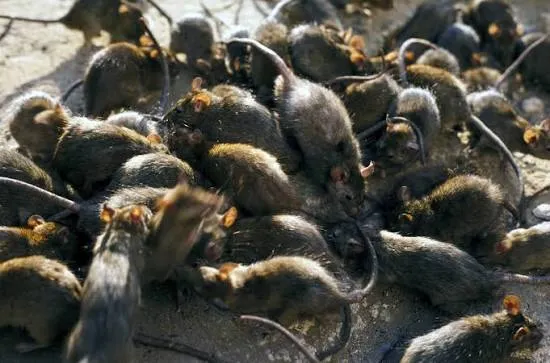
The wheat is dyed blue and delivered by drone. Around Israeli military positions inside Gaza, pesticide-soaked grains are being scattered to stop mice entering the places where soldiers sleep and work. The operation, reported in October, is a striking image of a war confronting the environmental consequences of its own destruction: an army using poison to keep a damaged ecosystem at bay. [1]
On the Israeli side of the border, an agricultural response names the product involved: Rosh-80. Its active ingredient is sodium fluoroacetate, also known as compound 1080, carried on whole wheat grains. Israeli authorities have previously linked the product to the deaths of seven gazelles, five pregnant. A separate incident in 2016 saw treated grains reach packaged wheat sold to consumers. [6–9]
No published measurements in these reports establish that the current programme has contaminated retail food or poisoned Israeli children. They document a widening environmental emergency and a response involving a product with serious, previously demonstrated hazards. That is sufficient reason to investigate the safeguards now being applied. [6, 8, 9]
The connection begins with the destruction of the systems that make densely populated places habitable. In June 2026, the UN humanitarian agency OCHA reported that both of Gaza’s sanitary landfills lay within an area subject to Israeli access restrictions. Waste could not be disposed of there, rubbish accumulated among the remaining populated areas, and risks associated with pests and rodents increased. Palestinians were enduring the consequences in places where they were also exposed to shooting and displacement. [5]
“Every day we suffer from gunfire, from shelling,” Umm Hussam told OCHA. At night, she added, “we can't sleep because of the dogs and rats…” Her account connects pest control with the destruction of everyday life: access to sanitation, functioning infrastructure and safe waste disposal. Conditions created inside Gaza have to be addressed there, as well as wherever their consequences appear across the border. [5]
By September, Israeli farmers were reporting extensive crop damage. Ynet described losses in peanuts, peppers and sweet potatoes, with concern for subsequent potato and wheat crops. A farmer in Nahal Oz said there had been mice throughout the war, “but now the situation is catastrophic”.
Agriculture Ministry specialist Dr Yoav Motro pointed to abandoned farmland in eastern Gaza: “There is now IDF infrastructure work there, and this is pushing rodents away.” He also identified construction and renovation in evacuated Israeli communities; the ministry cited heavy rainfall as another major contributor. The evidence describes interacting causes, with the war’s disruption among them. [2]
In October, Israel Hayom connected the spread with destroyed infrastructure, accumulated sewage and rubbish, and the interruption of farming in Gaza. Local authorities reported rodents entering Israeli homes and educational institutions, with some education settings having to close. The report also acknowledged rainfall, food availability and earthworks as factors. An environmental crisis that had devastated Palestinian living conditions was becoming an administrative and agricultural emergency inside Israel. [3]
On 20 October, the Times of Israel reported that the Environmental Protection Ministry was offering affected local authorities up to NIS 3 million. Environment reporter Sue Surkes wrote: “Rodents have crossed into Israel following the widespread disruption to ecosystems caused by military operations in the Gaza Strip.” The Agriculture Ministry and Tekuma Directorate were separately working on the increase in field mice across agricultural land. [4]
The response had already acquired a chemical name. A notice carried by Israel’s field-crop growers’ organisation in September said the Agriculture Ministry and Tekuma Directorate would tackle the agricultural outbreak through targeted drone application of Rosh-80. It initially identified land between Kissufim and Kerem Shalom, west of specified roads, and invited affected growers to seek treatment. This was a named programme for food-producing land, rather than an inference drawn from photographs of blue grain. [6]
The military operation is separately documented. Makor Rishon reported on 5 October that pesticide-soaked wheat was being distributed outside positions along Gaza’s “Yellow Line”. The army said drones allowed controlled application over defined areas, and soldiers were ordered to stay away from the treated ground. It also said different methods were being used at positions inside Israel because of nearby communities and farms. That report did not identify the active ingredient, so the confirmed Rosh-80 agricultural programme should not automatically be treated as proof of the chemical used at every military position. [1]
Rosh-80’s own label is blunt. “The product is fatal if swallowed or inhaled, fatal in contact with skin,” it warns in Hebrew. The label identifies sodium fluoroacetate in whole wheat grain and warns against exposure of children, pets, livestock and birds. It prohibits use at advanced crop stages when the grains could contaminate produce and requires a one-year exclusion of grazing animals from treated fields. These are precautions for a hazardous product, not evidence that every authorised application causes contamination. [7]
The cost of failed safeguards is already recorded in Israel’s wildlife. In February 2024, the Nature and Parks Authority reported seven gazelles poisoned in the northern Negev, including five pregnant females. Toxicology tests identified Rosh-80; negligent use was suspected.
“The gazelle poisoning case is particularly shocking because it also harmed the next generation,” the authority said. These deaths preceded the current campaign, providing a documented warning about unintended exposure. [8]
The authority also reported poisonings of foxes, jackals, birds and dogs. Describing the wider wave, its veterinarian Tomer Nisimian called it “very significant and widespread harm”. Those incidents included other poisons, such as methomyl, and cannot all be attributed to Rosh-80 or the Gaza-border response. [8]
The food supply offers another concrete precedent. In December 2016, Sugat recalled wheat after pesticide-coated grain from a farmer’s field entered packaged food. Ynet identified Rosh-80 and affected Sugat and Rami Levy products. Sugat believed only “a few packages” and small quantities were involved, while recalling the relevant stock. The episode was unrelated to the present war. [9, 10]
Poisoned bait had entered food sold to consumers. Establishing whether that has happened again requires sampling and traceable results from fields and products. [9, 10]
A second route runs through animals eating other animals. The US Department of Agriculture’s assessment recognises that scavengers can be exposed through the carcasses of animals poisoned with sodium fluoroacetate. That is secondary poisoning. The danger depends on the species, the amount ingested and the circumstances of exposure. An assessment of tightly controlled livestock-protection collars in the United States cannot, by itself, certify the safety of grain distributed across a different agricultural environment. [11]
Secondary poisoning must also be distinguished from long-term bioaccumulation. “Bioaccumulation is unlikely, given sodium fluoroacetate's rapid metabolism and excretion,” the USDA assessment states. It would therefore be misleading to describe the chemical as inevitably building up in Israeli bodies over the years. The supported concerns are direct ingestion, secondary exposure and possible harm from repeated exposure where a sufficient dose actually reaches an animal or person. [11]
For humans, the chemical’s danger lies in its attack on cellular energy production. Fluoroacetate is converted into fluorocitrate, which interferes with the metabolic cycle cells need to function. Severe poisoning can produce neurological and cardiac injury. The clinical evidence includes infants, although the documented cases are not connected to Israel or Gaza. [12]
The implications for children were raised during the 2016 recall. “The lower a person’s weight, or when children are involved, the more harmful the substance’s effects may be,” Hebrew University nutrition and biochemistry specialist Professor Oren Froy told Ynet. The amount swallowed relative to body weight matters when assessing exposure. [9]
A French case report published in 2023 described two cousins aged 11 and 12 months who had consumed bait prepared with a liquid rodenticide in 2021. Both developed severe digestive, neurological and cardiac symptoms.
“In both cases the outcome was fatal,” Camille Paradis and her colleagues wrote. Laboratory analysis confirmed sodium fluoroacetate. The packaging had initially suggested a different class of rat poison, complicating recognition. The authors warned that “there is currently no antidote”. These were acute bait-ingestion deaths, not illnesses attributed to trace residues in ordinary food. [12]
A separate report in the Mexican Journal of Paediatrics described a two-year-old boy with sodium fluoroacetate poisoning who developed seizures, cardiogenic shock, acute kidney injury and dysfunction of several organs. He received intensive care, including four days of renal replacement treatment.
“The patient progressively improved and was discharged without complications,” the authors reported. His case illustrates both the severity of the poisoning and the possibility of recovery. [13]
Pregnancy requires equally careful treatment. Britain’s UK Teratology Information Service says animal studies have reported congenital malformations after exposure during gestation. But it states: “There are no human data following acute exposure to fluoroacetate compounds during pregnancy”. That absence prevents an accurate evidence-based assessment; maternal toxicity is likely to be an important determinant of risk to the foetus. The deaths of pregnant gazelles are a powerful warning about wildlife exposure, but they do not establish a pattern of human birth defects. [14]
Repeated exposure has produced harm in controlled animal experiments. In a 90-day study, Charles Eason and Patricia Turck found damage to the heart and testes, with severe effects on sperm, in male rats receiving the highest dose tested. The two lower-dose groups did not show those microscopic or sperm-related effects. The study establishes a dose-dependent hazard. Assessing human risk requires evidence about actual exposure. [15]
More recent work has questioned whether existing workplace limits are protective enough. A 2025 paper in Annals of Work Exposures and Health proposed substantially lower limits for workers handling sodium fluoroacetate, drawing on animal toxicology and uncertainty factors. It was funded through consultancy work for a bait manufacturer. It was an exposure-limit analysis, not a study demonstrating chronic illness in an exposed human population. Its immediate relevance is to monitoring and protecting the people making and applying the bait. [16]
The agricultural dilemma is real. Farmers facing serious losses cannot simply ignore rodents, and alternatives need to be tested rather than romanticised. A 2025 Israeli study compared hunting perches for birds of prey, 1080 rodenticide and untreated plots in alfalfa. Perches attracted more raptors, but rodent activity increased across all three treatments. Neither intervention prevented the increase under those study conditions. The result supports measuring outcomes rather than assuming either poison or biological control will automatically solve an outbreak. [17]
That leaves practical questions about the current response. Which products are being applied in each location? What checks keep bait out of harvested grain? Are grazing restrictions being enforced? Are wildlife deaths being investigated, workers monitored and relevant food samples tested? Application records and published results would allow the public to judge whether the programme’s safeguards are working. [7]
The larger lesson fits the argument of How Gaza Broke Israel. Military power can demolish infrastructure and restrict access to land, but it cannot make the ecological consequences respect the boundary. Israeli reporting now describes damage to farms, disruption to communities and a costly response to conditions linked in part to that destruction. [2–5]
Israel’s turn to poison adds another hazard to a crisis its military actions helped create. The people who live and farm beside Gaza now need protection from the consequences of that destruction and from any avoidable dangers in the response. A government claiming to secure their future must account for what it is putting into the land on which that future depends. [6, 7]
Sources
Quotations from Hebrew sources are translated into English. Testimony and expert comments are drawn from published reporting and documents. Sources accessed 25 October 2026.
Makor Rishon — Drone operation against mice around Israeli military positions in Gaza, 5 October 2026.
Ynet — Rodent infestation and agricultural losses in communities around Gaza, 23 September 2026.
Israel Hayom — Rodents reaching homes and educational institutions near Gaza, 13 October 2026.
The Times of Israel — Environment ministry pledges funding for Gaza-border rodent problem, 20 October 2026.
OCHA — Humanitarian Situation Report, 26 June 2026.
Israeli field-crop growers’ organisation — Notice on agricultural rodent control near Gaza, September 2026.
Rimi — Rosh-80 product label, revised February 2022.
Israel Nature and Parks Authority — Wave of poisonings kills dozens of wild animals, 11 February 2024.
Ynet — Pesticide found in Sugat wheat, 6 December 2016; updated 7 December.
Israeli government-hosted Sugat recall notice, 5 December 2016.
USDA APHIS — The Use of Sodium Fluoroacetate in Wildlife Damage Management, peer-reviewed final, May 2023.
Paradis and colleagues — Fatal case of sodium fluoroacetate poisoning in two young children, Toxicologie Analytique et Clinique, 2023; 35:262–265.
Ramos-Gutiérrez and colleagues — Clinical approach and evolution of a preschooler with sodium fluoroacetate poisoning, Revista Mexicana de Pediatría, 2024; 91:188–192.
UK Teratology Information Service — Exposure to fluoroacetates in pregnancy, January 2023, version 2.
Eason and Turck — A 90-day toxicological evaluation of Compound 1080 in Sprague-Dawley rats, Toxicological Sciences, 2002; 69:439–447.
Robinson — Development of exposure limits for sodium fluoroacetate based on chronic health effects, Annals of Work Exposures and Health, 2025; 69:965–969.
Ronen, Brook and Charter — Assessing Birds of Prey as Biological Pest Control, Biology, 2025; 14:1108.