Israel’s Fall From Grace: How Gaza Turned Israel Into a Cultural Pariah
On May 8, 2026, at the Venice Biennale, the world’s most prestigious contemporary art exhibition, the doors of national pavilions were shut not because of technical failure, but because of Israel.
On the final day of the Biennale preview, around a dozen pavilions closed fully or partially in protest at Israel’s inclusion in the exhibition. Belgium, the Netherlands, Austria, Japan, North Macedonia and South Korea shut for the day, while the British, French, Spanish, Egyptian, Finnish and Luxembourg pavilions were among those affected by temporary closures or early shutdowns. The strike was organised by the Art Not Genocide Alliance, which demanded Israel’s exclusion over its war in Gaza.
Inside and outside the pavilions, artists made the message unmistakable. Palestinian flags appeared in artworks. Posters declared: “We stand with Palestine” and “Palestine is the future of the world.” The protest came after the Biennale’s jury resigned en masse, saying it would not judge entries from countries whose leaders were subject to international arrest warrants, a position that implicated both Russia and Israel.
The symbolism was devastating. The Venice Biennale has long represented the cultural prestige of the liberal international order. For Israel to face collective protest and partial boycott there marked something far deeper than a temporary political dispute. It reflected the accelerating collapse of Israel’s moral legitimacy in large parts of global public opinion.
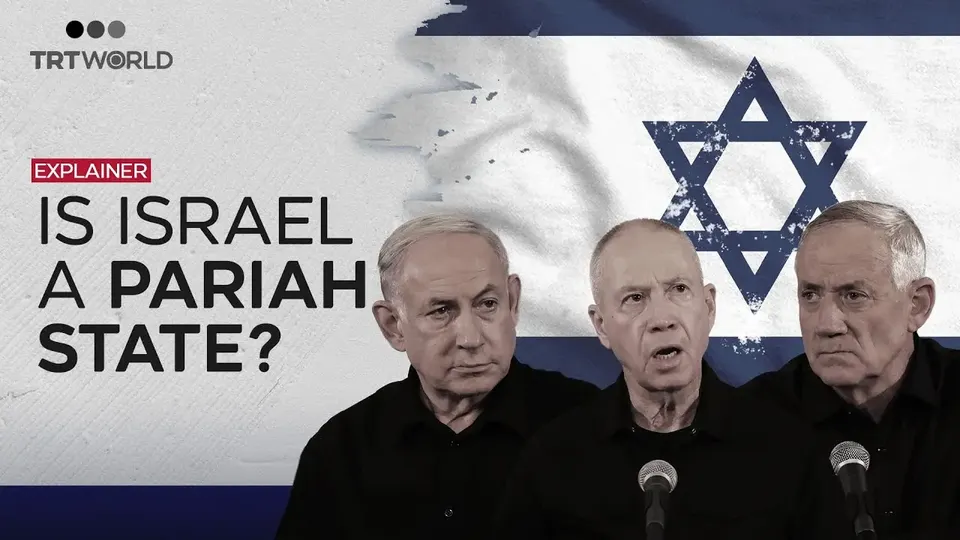
That broader collapse is the subject of historian Avi Shlaim’s review of Israel: What Went Wrong? by genocide scholar Omer Bartov. In the review, Shlaim presents Bartov’s work as a profound examination of Israel’s transformation from a state once viewed in the West as a democratic refuge after the Holocaust into what many critics now describe as an apartheid regime and international pariah.
Shlaim himself is among the most important revisionist historians of modern Israel. A professor emeritus of international relations at St Antony’s College, Oxford University, he is best known for works such as The Iron Wall: Israel and the Arab World and Israel and Palestine: Reappraisals, Revisions, Refutations, books that challenged official Israeli narratives about the country’s founding and regional conflicts.
His review of Bartov’s book arrives at a moment when Israel faces unprecedented condemnation over its actions in Gaza, Lebanon, Syria and Iran. Shlaim opens by arguing that Israel’s attack on Iran was only the latest example of its degeneration in recent decades, following years of occupation, bombardment, ethnic cleansing and regional military escalation. He writes that growing American involvement in Israeli military campaigns has reinforced the perception across the Middle East that Israel functions as an outpost of Western imperial power.
For decades, however, Israel enjoyed extraordinary international sympathy. The horrors of the Holocaust and the creation of a Jewish state after World War II generated enormous support in Europe and the United States. Israel’s Declaration of Independence promised “full social and political equality” regardless of race, religion or sex, helping establish the image of Israel as a progressive democratic society surrounded by authoritarian neighbours.
According to Bartov, the tragedy is that this moral image gradually disintegrated from within.
Bartov is not an outsider hostile to Israel. He was born on a kibbutz, served as an officer in the Israeli army, and built his academic career studying the Holocaust and genocide. His critique therefore carries unusual weight. As Shlaim notes, the book is written “more in sorrow than in anger.” It is not a rejection of Zionism in crude ideological terms, but an attempt to explain how what many liberal Zionists saw as a dream became, in his view, a nightmare.
One of the book’s key arguments concerns Israel’s failure to adopt a formal constitution after its founding in 1948. In a chapter titled The Missing Constitution, Bartov argues that Israel’s founders never resolved the central contradiction of the state: how it could remain both Jewish and democratic while governing a multi-ethnic population.
Bartov argues that if Israel had adopted a constitution rooted in the egalitarian principles of its Declaration of Independence, generations of Israelis might have been raised with a stronger commitment to universal human rights. In his view, this could have restrained the growth of racism within Israeli society and prevented what he describes as widespread indifference to the suffering of Palestinians in Gaza and the West Bank.
Shlaim partially agrees but also critiques Bartov for not going far enough historically. He argues that the deeper roots of Israeli racism lie in Zionism’s settler-colonial foundations. Zionism, he writes, was always a movement aimed at establishing a Jewish state in a land already inhabited by Palestinians. Like other settler-colonial movements, its logic involved displacement of the indigenous population in order to secure land and demographic dominance.
This brings the review back to 1948 and the Nakba, the mass displacement of Palestinians during Israel’s creation. Around 750,000 Palestinians became refugees and hundreds of villages were destroyed or depopulated. For Palestinians, Shlaim argues, the brutality now visible in Gaza is not new but part of a continuous historical process that began with the founding of the Israeli state itself.
Bartov and Shlaim both argue that Gaza represents the culmination of this trajectory.
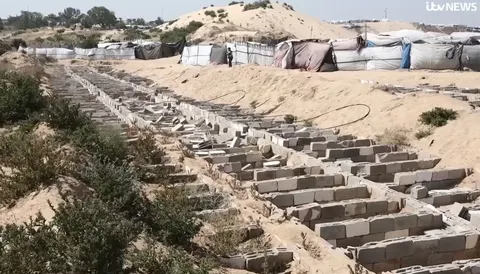
According to the review, Israel initially sought to depopulate Gaza after October 7 by forcing its 2.3 million inhabitants into Egypt’s Sinai Peninsula. When Egypt resisted the plan, Israel instead carried out the wholesale destruction of Gaza’s infrastructure and civilian environment, rendering much of the territory uninhabitable. Bartov warns that ethnic cleansing can escalate into genocide and argues that the devastation of Gaza occurred alongside intensified displacement and settler violence in the occupied West Bank.
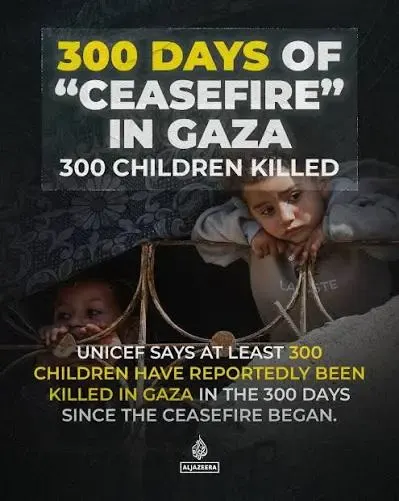
The international response has been extraordinary. Israel insists it acted in self-defence following the Hamas attacks, but global legal institutions increasingly rejected the scale and methods of the Israeli campaign. The International Court of Justice found there was a plausible risk of genocide in Gaza and ordered Israel to prevent genocidal acts. Israel ignored the ruling. A United Nations commission later concluded that Israel was guilty of genocide, while the International Criminal Court issued arrest warrants for Prime Minister Benjamin Netanyahu over alleged war crimes and crimes against humanity.
These developments have fundamentally altered how Israel is viewed internationally.
For decades, criticism of Israel in mainstream Western institutions was often constrained by the historical memory of the Holocaust and fears of anti-Semitism. Israel occupied a unique moral position in postwar Western consciousness. That exceptional status is now eroding rapidly.
The Venice Biennale protests illustrate how deep the shift has become. Cultural institutions that once avoided direct confrontation with Israel are increasingly willing to treat the country similarly to apartheid South Africa or modern Russia. Artists, academics and cultural workers are no longer simply criticising Israeli policies; many are questioning whether Israel should continue participating normally in international cultural life while Gaza remains in ruins.
This cultural rupture may prove historically significant. Governments often move slowly, constrained by alliances, military interests and domestic politics. Cultural opinion can change much faster. Universities, literary festivals, trade unions, museums and artistic institutions increasingly function as indicators of broader public moral sentiment.
The shuttered pavilions in Venice therefore carried immense symbolic force. Each closed gallery represented not only solidarity with Palestinians, but a refusal to continue granting Israel normal cultural legitimacy.
For Bartov, however, the purpose of confronting history is not revenge but understanding. Shlaim notes that Bartov believes any future reconciliation requires understanding the fears, aspirations and suffering of both peoples, alongside honest recognition of past crimes and injustices.
Bartov also suggests that Israel’s actions in Gaza may ultimately force the country to abandon the exceptionalism it has enjoyed since World War II. The Holocaust gave Israel enormous moral protection internationally, but Gaza may have fundamentally transformed that relationship forever.
Shlaim ultimately describes Bartov’s work as “perceptive, sophisticated, erudite, elegantly written and strikingly fair-minded.” For readers struggling to understand how Israel reached this moment of profound international isolation, he argues there is “no better guide.”
The protests in Venice on May 8, 2026, suggest that Bartov’s warning is no longer confined to academia. Israel’s crisis is no longer merely military or diplomatic. It has become moral, cultural and civilisational.
The silence of the shuttered galleries in Venice said something that governments are still reluctant to admit openly: much of the world no longer sees Israel as the embattled victim state of postwar memory. Increasingly, it sees a powerful state accused of imposing devastation, occupation and collective punishment on another people.
That transformation in perception may become one of the defining historical consequences of the Gaza war.