How Israel Turned a UNICEF Nutrition Survey Into a Weapon of Gaza Genocide Denial
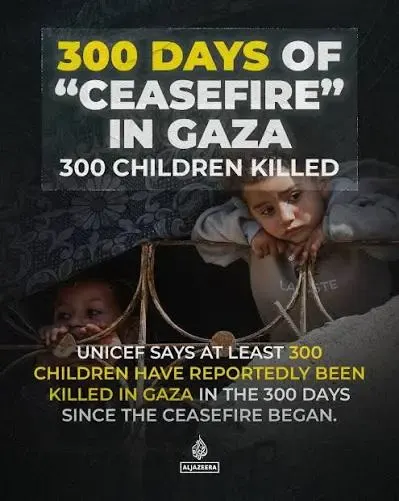
A post–ceasefire study showing that humanitarian aid had reduced acute child malnutrition was stripped of its dates, limitations and warnings, then presented as proof that Gaza’s famine never happened. The resulting propaganda storm has exposed both the machinery of Israeli denial and serious questions about UNICEF’s communications and internal accountability.
On 6 August 2026, Israel’s Foreign Ministry announced what appeared to be a remarkable reversal of nearly three years of reporting from Gaza.
“A new study commissioned by UNICEF shows that the nutritional situation in Gaza, contrary to all propaganda, is today better than in all neighbouring Arab states and even better than in some European countries,” the ministry declared.
Israel’s ambassador to the United Nations, Danny Danon, quickly turned the claim into an attack on humanitarian organisations, journalists and governments that had reported starvation in Gaza. “Once again, facts prevail over fiction,” he said. “UN bodies are acknowledging that the false narrative against Israel is falling apart.”
In Britain, government trade envoy to Israel Ian Austin circulated an article published by the Jewish Chronicle on 3 August 2026 headlined “How a United Nations study shatters the Gaza starvation narrative.” Austin told his followers that the study showed child malnutrition in Gaza was exceptionally low, adding: “As I said all along: the people starving in Gaza were the hostages.” US ambassador to Israel Mike Huckabee and a network of Israeli officials, commentators and sympathetic publications amplified variations of the same message.
The claim was explosive because UNICEF had been one of the international agencies warning that Palestinian children were dying from hunger, disease and the collapse of Gaza’s food and health systems. Now, Israel’s supporters suggested, UNICEF’s own evidence had exposed those warnings as fraudulent.
The underlying research, however, said nothing of the kind.
The survey was not an investigation into whether famine had existed during the height of Israel’s blockade in 2025. It was a nutritional assessment carried out in June 2026, eight months after an October 2025 ceasefire enabled a major expansion of humanitarian food deliveries, supplementary feeding and treatment for malnourished children. Its central finding was not that Palestinians had never starved, but that humanitarian intervention had successfully reduced the immediate prevalence of acute wasting among the people whom survey teams could reach.
Israel’s propaganda operation transformed evidence that aid works into an assertion that aid had never been necessary.
What the survey measured
The document at the centre of the controversy was presented at a State of Palestine Nutrition Cluster coordination meeting on 22 July 2026. The publicly circulated Google Drive file was confusingly named “Nutrition Cluster presentation 22.07.2025.pdf,” apparently carrying the wrong year, and appeared more like an operational slide deck than a polished UNICEF publication.
The Nutrition Cluster is led by UNICEF, but the assessment was carried out collectively by cluster partners using the Standardized Monitoring and Assessment of Relief and Transitions methodology, known as SMART. This is an internationally recognised system for measuring nutrition in humanitarian emergencies.
According to a detailed United Nations Office for the Coordination of Humanitarian Affairs report published on 7 August 2026, fieldwork took place between 2 and 16 June. Researchers assessed 1,335 children aged up to 59 months and 3,071 women of reproductive age, including 598 pregnant and breastfeeding women.
The survey covered accessible areas across Gaza’s five governorates, representing approximately 83 per cent of the population. About 17 per cent of the estimated population was outside the sampling frame because of military, security and humanitarian access restrictions. The assessment therefore did not claim to represent people living in inaccessible areas.
The survey found that 1.3 per cent of the children were acutely malnourished when three diagnostic criteria were considered: mid–upper arm circumference, weight for height and bilateral pitting oedema. Weight for height alone produced regional estimates ranging from 0.2 to 0.8 per cent, the figures selected by Israeli officials and the Jewish Chronicle.
Those figures were encouraging, but the rest of the results described a population in profound nutritional danger. Some 12.2 per cent of children were stunted, indicating long–term growth impairment. Maternal malnutrition affected 9.4 per cent of women who were not pregnant or breastfeeding and 7.2 per cent of those who were. More than 37 per cent of children had suffered diarrhoea during the previous two weeks, while almost 32 per cent had experienced fever.
Only 30.3 per cent of children between six and 23 months received the minimum dietary diversity considered necessary for healthy development. Just 22.4 per cent received what was classified as a minimum acceptable diet. Exclusive breastfeeding among infants below six months stood at only 20.4 per cent.
The presentation’s key messages stated that acute malnutrition remained low but nutritional vulnerability remained high; stunting was a leading concern; childhood illness was widespread; diets were poor; maternal malnutrition remained serious; and the gains depended on sustained food, health, nutrition, water and sanitation support.
OCHA was even more explicit. The low prevalence of acute malnutrition, it said, “should not be interpreted as an indication that the nutrition crisis has ended.” The findings instead suggested that humanitarian assistance had prevented a more severe outcome.
This was not a hidden caveat inserted in technical small print. It was the stated interpretation of the organisations that conducted the survey.
A snapshot taken after the famine
The most consequential distortion involved time.
The Jewish Chronicle article, published on 3 August by researcher Mark Zlochin, argued that June 2026 measurements destroyed the evidential basis for the famine classification issued almost one year earlier. It described the survey as a “final blow” to claims that Israel had deliberately starved Gaza.
This treated two radically different periods as if conditions had remained unchanged.
In August 2025, the UN–backed Integrated Food Security Phase Classification, or IPC, concluded that famine was occurring in Gaza Governorate during the period from July to mid–August. The finding followed months of severe Israeli restrictions, destruction of local food production and collapsing access to health care, clean water and nutrition treatment.
UNICEF reported on 11 September 2025 that one in five children screened in Gaza City during August was acutely malnourished. Across Gaza, the monthly number of children identified with acute malnutrition had risen to record levels.
The situation changed after the ceasefire of 10 October 2025. Food, commercial goods and humanitarian supplies entered in much larger quantities, while feeding and treatment programmes expanded. On 19 December, UNICEF, the World Food Programme, the Food and Agriculture Organization and the World Health Organization announced that famine had been pushed back.
Their joint statement of 19 December 2025 said that no area was still classified in famine following the ceasefire and improved access. It nevertheless warned that 77 per cent of the population continued to face high levels of acute food insecurity, with more than 100,000 children and 37,000 pregnant or breastfeeding women projected to suffer acute malnutrition through April 2026.
The famine designation was not quietly abandoned after being exposed as false. It was removed because conditions had changed.
The June 2026 survey recorded the effect of a further six months of intervention. In May alone, food parcels reportedly reached approximately 1.5 million people, cash assistance reached around 700,000, and nutrition support covered 60 per cent of children under five. In September 2025, by contrast, nutrition coverage for young children had been below one per cent.
UNICEF, WFP and FAO explained this directly in a statement published on 23 July 2026. The improvement in malnutrition, they said, was largely attributable to the rapid expansion of prevention programmes and increased access to treatment for severe and moderate malnutrition.
The logic of the Israeli argument is therefore circular. Humanitarian agencies warned of famine, demanded access, delivered food and treatment when access improved, and subsequently measured lower rates of acute wasting. Israeli officials then presented that improvement as proof that the original emergency had been invented.
It is the nutritional equivalent of pointing to a patient’s lower temperature after treatment and claiming that the patient had never been seriously ill.
An international comparison that the study never made
Israel’s Foreign Ministry claimed that Gaza’s children were now better nourished than children in neighbouring Arab countries and even parts of Europe. The Jewish Chronicle compared the survey’s weight for height figures with estimates of 2.9 per cent in Egypt and 2 per cent in Jordan. Other reports introduced comparisons with Iran, Germany and Finland.
None of these comparisons appeared in the Nutrition Cluster presentation itself. They were added by Israeli officials and supportive commentators using separate international datasets.
The comparisons also concealed significant methodological problems. UNICEF, WHO and World Bank country estimates for wasting are commonly drawn from national household surveys undertaken in different years, seasons and social conditions. UNICEF’s own methodological guidance warns that these are cross–sectional snapshots, often collected only once every three to five years, and cannot reliably capture rapid fluctuations or seasonal changes.
A June 2026 survey of accessible areas in a densely displaced population receiving large–scale supplementary feeding cannot simply be placed beside an older nationwide survey from Egypt, Jordan or Finland as though the numbers described identical populations under identical conditions.
The regional comparison also ignored the nature of the Gaza intervention. A lower prevalence of wasting in a population receiving emergency feeding does not demonstrate the absence of deprivation. It may demonstrate that scarce resources were directed towards the children most vulnerable to dying.
The survey itself recorded what remained behind the reassuring acute figure: one child in eight was stunted, fewer than one in four young children received a minimum acceptable diet, maternal malnutrition persisted, protein and fresh produce remained inconsistent, and childhood disease was widespread.
The dispute over famine thresholds
The Jewish Chronicle advanced a more technical argument concerning the two principal methods of assessing acute child malnutrition.
Weight for height compares a child’s weight with the expected weight for a child of the same height. Mid–upper arm circumference, known as MUAC, uses the circumference of the upper arm as a rapid indicator of wasting and mortality risk.
The IPC’s conventional famine threshold is a global acute malnutrition prevalence of 30 per cent when measured by weight for height. When reliable weight for height data are unavailable, IPC guidance permits a 15 per cent MUAC threshold for a “famine likely” classification when supported by other evidence and an understanding of how the indicators relate locally.
Zlochin argued that the IPC had assumed weight for height would identify approximately twice as many cases as MUAC, whereas the June survey found lower weight for height prevalence than MUAC. From this, he concluded that the statistical foundation of the 2025 famine finding had collapsed.
The IPC Famine Review Committee had already addressed this criticism in a technical statement published on 19 December 2025. It said an analysis of nine available Middle East surveys produced a median weight for height to MUAC ratio of 1.9, supporting the use of the default 15 per cent MUAC threshold.
More importantly, the committee said famine was never classified from a single percentage in isolation. Its assessment used a convergence of evidence concerning food availability, household access, nutrition, mortality, disease, water, sanitation, health services and the destruction of livelihoods.
The relationship between MUAC and weight for height in Gaza remains a legitimate subject for independent technical examination. International famine systems must be transparent, especially when access restrictions force analysts to rely on incomplete data. Yet a low–prevalence survey conducted after months of successful intervention cannot retrospectively measure conditions during the blockade period. It therefore cannot, by itself, invalidate the famine finding.
UNICEF’s communications failure
UNICEF did not author the Israeli interpretation. Its public statements repeatedly contradicted the suggestion that Gaza’s hunger crisis had been fabricated. Its executive director, Catherine Russell, declared in August 2025 that famine was a “grim reality” for Gaza’s children, describing wasted children too weak to cry or eat and babies dying from hunger and preventable disease.
The organisation’s July 2026 statements attributed the later improvement to increased aid and treatment while warning that families remained dependent on humanitarian support. Its own data projected that approximately 74,000 children would require treatment for acute malnutrition over the following year, including more than 11,000 severe cases.
Nevertheless, UNICEF has questions to answer about how the new assessment was communicated.
An operational slide deck, carrying an apparently incorrect year in its filename, was allowed to circulate without a prominent public explanation of its chronology. Its most easily extracted message, “acute malnutrition remains low,” was instantly separated from the qualifying words and the evidence showing long–term nutritional damage. The methodological warning that the survey represented only accessible areas was not placed at the centre of the public narrative.
By 10 August, no prominent UNICEF statement had been located that named the Israeli Foreign Ministry, Danon, Austin, Huckabee or the Jewish Chronicle and explicitly demanded that they stop presenting the June survey as proof that the 2025 famine was a hoax.
OCHA’s 7 August report provided a detailed corrective, but institutional clarifications rarely travel as quickly or as widely as propaganda. Once the “UNICEF disproves Gaza famine” claim had been transmitted by diplomats, newspapers and social media accounts, a technical warning buried in a humanitarian situation report was unlikely to reach the same audience.
This does not prove that UNICEF intended to assist Israel. It does suggest an institutional failure to anticipate the political weaponisation of highly sensitive data and to defend the meaning of its own research with sufficient speed and force.
An alleged Israeli source inside the United Nations
The controversy arrived in the same week as a separate scandal that has raised far more serious questions about UNICEF’s internal accountability.
On 4 August, Drop Site News published an investigation alleging that Yahav Lichner, now director of UNICEF’s Washington office, had repeatedly passed confidential United Nations information to Israeli diplomats while employed by the UN Population Fund in 2014 and 2015.
The report was based on a hacked archive of emails belonging to Ron Prosor, Israel’s UN ambassador between 2011 and 2015. The archive was obtained by Handala, a hacking group believed to be connected to Iranian intelligence, and published through Distributed Denial of Secrets.
According to Drop Site’s investigation, Lichner sent Prosor and other Israeli diplomats internal UN reports, private meeting accounts, unpublished correspondence and advance information about human rights proceedings concerning Gaza and the West Bank. Some documents were marked “strictly confidential” or “not for further dissemination.”
In one February 2015 message, Lichner reportedly supplied a confidential account of meetings held in Washington by Zeid Ra’ad Al Hussein, then UN high commissioner for human rights. Israel was facing a UN inquiry into its 2014 assault on Gaza, and the internal material included discussions with the White House, members of Congress and advocacy organisations. An Israeli diplomat replied that he intended to use the information in lobbying members of Congress.
Other messages reportedly showed Lichner forwarding an unpublished draft letter from Secretary–General Ban Ki–moon, internal deliberations over the killing of Palestinian teenagers in the West Bank and private information concerning the planned publication of a Gaza commission report.
The emails, if authentic and accurately presented, appear to describe serious breaches of UN staff rules requiring officials to act independently of national governments and to protect information obtained through their positions.
Lichner had previously worked for Israel’s embassy in London and its mission to the United Nations. He later joined UNICEF, served as an adviser to the UN Senior Humanitarian and Reconstruction Coordinator for Gaza and became director of UNICEF’s Washington office in January 2025.
Drop Site stated that Lichner, Prosor and former US ambassador to the UN Samantha Power did not respond to its detailed questions. The investigation also acknowledged important limits: its evidence concerned 2014 and 2015, it did not establish that Lichner continued passing information after joining UNICEF, and it did not show that UNICEF knew of the emails when it appointed him.
On 9 August, UN specialist publication PassBlue reported that Lichner had been placed on administrative leave. UNICEF said it was aware of serious allegations concerning an employee and was taking appropriate action. At a UN press briefing on 7 August, deputy spokesperson Farhan Haq said that the alleged conduct, if true, would be inconsistent with the UN Charter, staff regulations and the independence required of international civil servants.
There is presently no evidence connecting Lichner with the June 2026 nutrition survey. Presenting the personnel scandal as proof that the survey was manipulated would therefore go beyond the available facts. It nevertheless strengthens the case for an independent investigation into UNICEF’s recruitment, vetting, information security and handling of staff with previous positions in national diplomatic services.
Political connections and claims that outrun the evidence
The Crispin Flintoff Show interview also drew attention to UNICEF executive director Catherine Russell and her husband, Tom Donilon.
Russell’s political background is not secret. Before taking over UNICEF in February 2022, she served as director of the White House Office of Presidential Personnel under Joe Biden. She was previously ambassador at large for global women’s issues during the Obama administration and had longstanding connections to the Biden political network, as set out in UNICEF’s official biography.
Donilon served as Barack Obama’s national security adviser and is now vice chairman of BlackRock as well as chairman of the BlackRock Investment Institute, according to BlackRock’s leadership profile. The Investment Institute is BlackRock’s research and market analysis division; Donilon is not chairman of the entire company.
These relationships are legitimate subjects for scrutiny. BlackRock manages investments in major arms manufacturers and other companies benefiting from military expenditure. In a statement issued on 20 June 2024, UN human rights experts specifically warned financial institutions, including BlackRock, that involvement with arms companies supplying Israel could create risks of complicity in serious violations of international law.
No evidence has emerged, however, showing that Donilon influenced UNICEF’s Gaza reporting, that BlackRock controlled the Nutrition Cluster survey or that the company had been awarded a contract to rebuild Gaza. Claims that Russell and Donilon jointly manipulated humanitarian policy to benefit Israel remain allegations without a demonstrated documentary foundation.
The same problem applies to claims made during the interview about Gaza’s emergency polio vaccination campaign.
Poliovirus was detected in Gaza wastewater in July 2024 following the destruction of water, sanitation and health systems. Three children initially presented with suspected acute flaccid paralysis, but one case involving a ten–month–old child was ultimately confirmed. WHO and UNICEF supported the Palestinian Ministry of Health, UNRWA and other partners in a campaign intended to vaccinate more than 640,000 children twice, as explained in a WHO statement published on 16 August 2024.
The planned 1.6 million doses reflected the need for two rounds and contingency supplies. WHO called the situation an outbreak, not a Gaza–generated global pandemic. Its vaccine safety committee reviewed information from more than one billion doses of the novel oral type 2 vaccine administered internationally and reported no unexpected safety concerns.
No evidence was presented that the campaign was arranged to dispose of a pharmaceutical company’s unwanted stockpile or that it was designed to harm malnourished Palestinian children.
These unsupported claims risk obscuring the strongest parts of the case against UNICEF: its failure to prevent the misuse of its research, its opaque response to a serious staff scandal and the wider political structures within which senior UN appointments are made.
A nutrition survey cannot decide whether genocide occurred
Even if every figure promoted by Israel’s Foreign Ministry were accepted without qualification, the survey could not establish that genocide had not taken place.
Genocide is not defined by a single malnutrition percentage. It concerns prohibited acts committed with the specific intent to destroy, in whole or in part, a protected national, ethnic, racial or religious group. The alleged conduct in Gaza includes mass killing, serious bodily and mental harm, the destruction of homes and health services, attacks on reproductive care, forced displacement and the deliberate infliction of conditions of life calculated to bring about physical destruction.
In a report released on 16 September 2025, the UN Independent International Commission of Inquiry concluded that Israeli authorities and forces had committed and were continuing to commit genocide in Gaza. The commission reiterated its conclusion on 23 June 2026, finding that Palestinian children had been deliberately targeted as part of genocidal and other atrocity crimes. Amnesty International, B’Tselem, Physicians for Human Rights Israel and other organisations have reached similar conclusions.
Israel rejects the accusation and maintains that its military campaign has been directed against Hamas. South Africa’s genocide case against Israel remains before the International Court of Justice, which has yet to issue a final judgment on the merits.
The June 2026 survey addresses one narrow part of this much larger evidential record. It measures the nutritional condition of young children and women in accessible areas during a specific two–week period after a substantial aid expansion. It does not assess genocidal intent, military targeting, the overall death toll, the destruction of civilian infrastructure or the conditions imposed during earlier phases of the war.
OCHA reported on 7 August that approximately 82 per cent of Gaza’s structures had been damaged, with more than 134,000 assessed as destroyed. Nearly the entire population remained concentrated in less than half of the Strip. Gaza’s health, water, agriculture and sanitation systems remained devastated, while hostilities and Palestinian deaths continued despite the ceasefire.
Against that background, the claim that one post–ceasefire nutrition survey “shatters” the case concerning Gaza is not serious analysis. It is an attempt to take a carefully bounded humanitarian finding and make it answer a political and legal question it was never designed to address.
Evidence that aid worked, not that starvation was invented
The June survey contains genuinely positive news. Acute child malnutrition had fallen dramatically in the areas researchers could reach. Children who might otherwise have deteriorated were being identified and treated. Supplementary feeding, food assistance and improved commercial access had prevented further deaths.
Those gains should be acknowledged because they demonstrate the life–saving effect of humanitarian access.
They should not be used to erase what preceded them.
The factual record shows that famine was identified during a period of severe restriction and destruction, that the classification was withdrawn after a ceasefire allowed more food and treatment to enter, and that nutritional improvements remained dependent on continued outside assistance. The IPC assessment published on 23 July 2026 projects that 1.4 million people, approximately 67 per cent of Gaza’s population, will experience crisis or worse levels of acute food insecurity during the second half of 2026. More than 200,000 are expected to remain in emergency conditions.
UNICEF’s own interpretation is therefore clear: Gaza’s children improved because aid reached them, not because the warnings of starvation had been fabricated.
The organisation’s failure was not that it produced data showing humanitarian progress. Its failure was allowing that data to be circulated in a form so easily detached from its chronology and meaning, then failing to confront the resulting disinformation with the urgency it demanded.
The leaked emails involving Yahav Lichner add a grave but separate question about whether UNICEF’s internal safeguards are adequate and whether its leadership is prepared to provide genuine transparency when politically sensitive allegations arise. That investigation must follow the evidence rather than assumption, just as scrutiny of the nutrition survey must distinguish methodological limitations from claims of deliberate fraud.
Israel’s denial campaign depends on collapsing different times, places and measurements into a single deceptive message: children are less acutely malnourished now, therefore no one was deliberately starved before.
The UNICEF–led evidence supports a very different conclusion. When the blockade eased and humanitarian assistance expanded, children began to recover. That is not an exoneration of the policies that produced the emergency. It is evidence of how preventable the suffering had always been.