As Gaza’s Tents Flood and Claim Young Lives, Israel's Channel 14 Turns Palestinian Suffering into a Water Park Joke
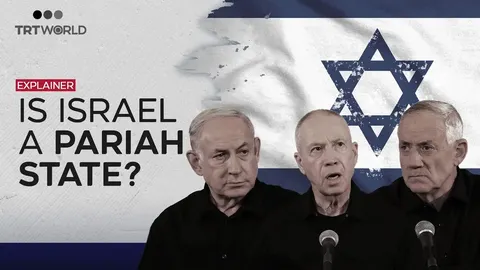
A television segment mocking flooded Palestinian shelters has brought the dehumanisation of Gaza’s civilians into focus, as Benjamin Netanyahu and Gadi Eisenkot confront questions about another military escalation against Iran and the limits of political change within Israel.
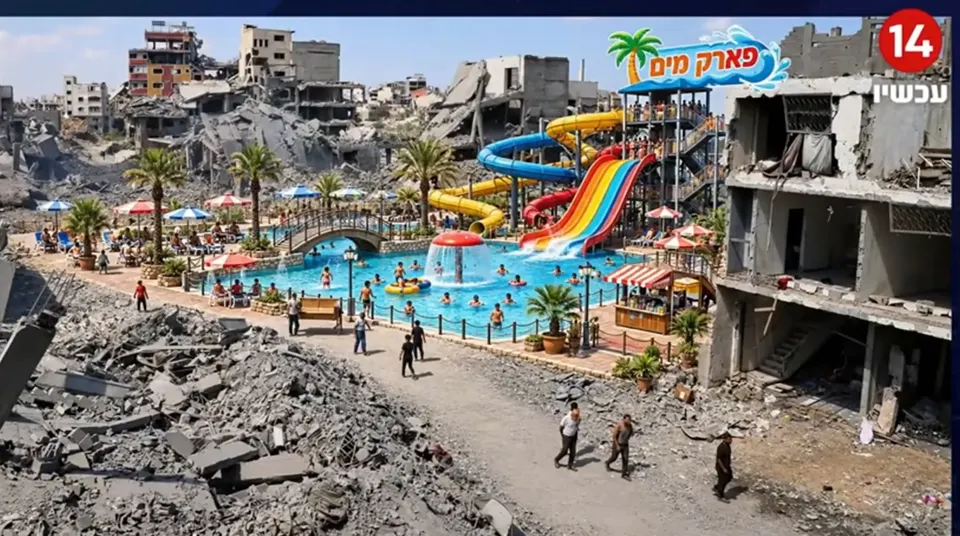
Palestinian families struggling to remove floodwater from their tents have become material for jokes on Israel’s Channel 14, where presenters proposed turning Gaza’s inundation into a water park amid the ruins.
The segment, featuring Noam Fathi and Shai Goldstein and circulating online by 11 November, treated the flooding of displacement camps as an opportunity for amusement. The broadcaster’s own promotional caption carried the suggestion: “Open a water park.” A translated account described the presenters imagining recreational attractions among Gaza’s destroyed buildings.
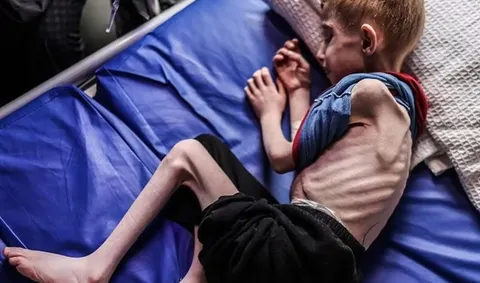
Behind that premise lies a humanitarian emergency in which families have lost shelters, children have died and essential equipment remains unavailable. The images invite a serious question about what happens when people enduring displacement cease to be presented as civilians entitled to protection and become objects of ridicule.
The controversy also coincides with a struggle over Israel’s next government and renewed concern about military action against Iran. Together, these developments raise the wider issue running through the commentary on the broadcast: how much would a change of political leadership alter the policies, institutions and public attitudes shaping Palestinian lives?
Turning desperation into entertainment
In a translation shared by commentator Shaiel Ben-Ephraim, the presenters describe water as a resource, suggest opening a water park and propose keeping the ruins. Ben-Ephraim also described artificial intelligence imagery showing slides, inflatable tubes and an Israeli cruise ship against Gaza’s devastated landscape, with the imagined attraction named “Gazaluna.”
The English commentary accompanying the clip describes another remark about families scooping water out of their tents with cups, suggesting that the task would take six years. It also describes music about rain accompanying the footage. Those additional details come from the commentator’s account; the water park proposal is separately supported by the broadcaster’s promotional wording.
The target of the humour is the effort to survive. People trying to protect their bedding, possessions and children from rising water are presented as figures whose predicament can be transformed into a comic spectacle.
That framing shifts attention away from the circumstances that make the flooding so dangerous. A family using a cup to empty a tent is displaying the limits of the equipment available to it. Treating that scene as evidence of incompetence obscures the destruction of housing and infrastructure, the shortage of pumps and the restrictions affecting the delivery of replacement shelters.
Concern about Channel 14’s treatment of Palestinians predates this particular segment. In findings published in June 2024, a UN commission of inquiry identified the station as a recurring platform for statements inciting violence. Its examples included remarks by commentator Eliyahu Yosian denying that there were innocent people in Gaza and treating women and children as enemies.
Responding to earlier complaints from Israeli human rights organisations, Channel 14 rejected allegations of incitement, describing them as politically motivated and arguing that statements had been taken out of context or made by guests who also appeared elsewhere. That response concerned earlier complaints, rather than the current water park segment.
The scrutiny belongs to identifiable editorial decisions: what presenters say, what producers broadcast and what a television channel chooses to promote. Those decisions can be examined directly without treating an entire population as sharing one opinion.
The emergency behind the images
Heavy rain beginning on 6 November damaged displacement sites across Gaza. By 8 November, humanitarian organisations had received appeals from more than 26,000 households whose shelters or belongings had been affected. Preliminary assessments recorded more than 6,000 family shelters destroyed and another 17,400 damaged.
On 9 November, UNICEF announced that three children, aged four, five and eight, had died with their mother after a sand dune collapsed onto their tent in Deir al-Balah. Executive director Catherine Russell said they had been killed “because they had nowhere safe to sleep.”
The agency estimated that 950,000 displaced people were living in areas exposed to flooding, including 400,000 in locations facing an extremely high risk. Almost half of that latter group were children.
A doctor confirmed that Kinan Ahmed Raqiq, aged nine months, died of hypothermia on 12 November.
The danger extends beyond exposure to cold. Damaged sanitation systems allow rainwater and sewage to mix, while inadequate drainage leaves shelters surrounded by contaminated water. At Gaza City’s Sheikh Radwan stormwater basin, only two of six pumps were working. UNICEF said it had been seeking Israeli approval for more than a year to bring in equipment needed to repair the facility.
Meanwhile, more than 150,000 tents purchased by humanitarian organisations and donor states were waiting outside Gaza, ready for dispatch. Humanitarian preparations had been constrained by Israeli restrictions on supplies and equipment, alongside funding shortages. The immediate requirements included pumps, hoses, spare parts and machinery to remove water and restore essential services.
These circumstances give the television jokes their particular cruelty. Flooding becomes a deadly emergency when families cannot obtain safe accommodation, drainage systems cannot be repaired and relief materials fail to reach the people who need them.
The practical answer to a flooded tent is access to shelter and functioning infrastructure. Imagining a leisure attraction on top of the destruction turns those unmet needs into a punchline.
Iran and the politics of a caretaker government
The political events discussed in the original commentary have also moved forward.
Following the 27 October election, Netanyahu remained caretaker prime minister while negotiations over a new government continued. On 8 November, President Isaac Herzog gave Eisenkot, leader of the Yashar party and a former military chief, the mandate to try to form the next government.
In his address to the newly sworn Knesset on 10 November, Netanyahu linked his appeal for a unity government to the Iranian threat. He argued that permanently removing the nuclear danger required overthrowing Iran’s ruling clerical regime, while attacking Arab parties as unacceptable partners for his political opponents.
Eisenkot’s party subsequently cancelled negotiations with Likud representatives scheduled for 11 November, condemning Netanyahu’s speech as divisive. This was a cancellation of party negotiations, distinct from the security briefing that followed.
Netanyahu and Eisenkot met on 12 November for a security and diplomatic briefing lasting more than two hours, attended by the prime minister’s military secretary. Their joint statement said Eisenkot had been briefed on the challenges facing Israel and that they would continue exchanging updates. No agreement to attack Iran or join a coalition was publicly announced.
Competing accounts of the closed meeting offered different interpretations. One unnamed source suggested that the intelligence would change Eisenkot’s assessment of Netanyahu’s motives. Another account said the military’s position was that there was no immediate urgency for Israel to strike Iran, although it favoured joining renewed American attacks if those occurred. These remain reported accounts of private discussions.
Netanyahu’s office denied that political considerations were driving security decisions, saying those decisions were based on security needs and coordinated with the defence establishment.
On 13 November, Eisenkot demanded strict oversight of the caretaker government and said Israel’s security should never be used to obtain a “political dividend.” He declined to disclose the contents of the briefing. His public position therefore provides no basis for concluding that Netanyahu had secured his support for another attack.
The political concern remains substantial. A caretaker leader retains the ability to make decisions with consequences extending far beyond negotiations over his successor. Claims of military urgency therefore require scrutiny, particularly when they emerge during a contested transfer of power.
Attendance at a briefing establishes that information was exchanged. Whether it produces support for military action must be judged from subsequent decisions and evidence.
The opposition’s own wartime record
Eisenkot’s opposition to Netanyahu also needs to be understood through his record in government.
After the Hamas attacks of October 2023, he joined the emergency government as a minister and served as an observer in the war cabinet. He was consequently part of the wartime political leadership, although he was no longer the serving military chief commanding the armed forces.
In a briefing to the Knesset’s Foreign Affairs and Defence Committee on 27 May 2024, Eisenkot argued that his party’s participation had helped unify Israeli society and strengthen Israel’s international legitimacy. That statement provides a documented basis for examining how politicians outside Netanyahu’s own bloc helped sustain the government’s authority during the war.
His disagreements with Netanyahu nevertheless included substantive policy differences. In the same briefing, Eisenkot advocated an alternative governing arrangement to Hamas and said the small war cabinet opposed Israeli military government and the establishment of settlements in Gaza. He also emphasised the obligation to secure the hostages’ release.
He resigned in June 2024, accusing political considerations of obstructing decisions needed to achieve the war’s objectives and improve Israel’s strategic position.
His earlier military outlook remains relevant. In 2008, while heading Northern Command, Eisenkot publicly advocated using “disproportionate force” against Lebanese villages from which attacks were launched, causing extensive destruction and treating those locations as military bases. His remarks became associated with the Dahiya doctrine, named after the Beirut district devastated during the 2006 war.
Eisenkot has also suffered profound personal losses. His son, Gal, and nephews Maor Cohen Eisenkot and Yogev Pazy were killed while serving in Gaza. Those deaths form part of his personal experience of the conflict, but they cannot establish what decisions he will make about Iran or his reasons for making them.
The relevant question is how an alternative government would exercise power. A politician can oppose Netanyahu’s conduct, object to his political calculations and still share significant elements of the security establishment’s approach to Palestinians.
Eisenkot’s own account of the legitimacy his participation brought to the wartime government makes that question especially pertinent.
Voting rights and the limits of equality
The commentary’s challenge to Israel’s democratic claims raises another issue that requires precision.
Palestinian citizens of Israel have the right to vote in national elections and elect representatives to the Knesset. The Basic Law governing the Knesset grants that right to Israeli citizens aged 18 and over, subject to the law. Their participation is an important part of the political system and cannot accurately be erased from an account of it.
The deeper dispute concerns the unequal status of people living under Israeli power.
Israeli citizens residing in West Bank settlements can vote for the government whose military operates in the territory. Palestinians living alongside them generally cannot vote in Israeli national elections. Palestinians in Gaza likewise have no equivalent electoral power over the Israeli government’s decisions affecting their lives.
The democratic criticism concerns the continuation of that unequal relationship alongside the denial of Palestinian self determination. It goes beyond the ordinary citizenship requirements that states apply to national elections.
Within Israel, the 2018 Nation State Basic Law reserves the right of national self determination to the Jewish people. That provision concerns national status and collective rights; it does not abolish Palestinian citizens’ individual voting rights. Nevertheless, it establishes an explicit constitutional distinction between the national position of Jewish and Palestinian citizens.
The current coalition dispute illustrates how formal participation can coexist with attempts to undermine the legitimacy of its results. Netanyahu has attacked reliance on Arab parties in forming a government. On 13 November, Eisenkot accused him of encouraging a “violent and racist” campaign against Arab citizens, while Eisenkot and most of his allies had themselves rejected Arab parties as coalition partners despite their support for his nomination.
The Israeli human rights organisation B’Tselem concluded in 2021 that the system governing the area between the Jordan River and the Mediterranean constituted apartheid. Its assessment examined differentiated rights, land policies, restrictions on movement and political exclusion across the territories under Israeli control. The argument concerned institutions and the distribution of power, rather than the personality of any single prime minister.
In its advisory opinion of 19 July 2024, the International Court of Justice found Israel’s continued presence in the occupied Palestinian territory unlawful. It also found that measures maintaining near complete separation between settlers and Palestinians in the West Bank and East Jerusalem breached Article 3 of the Convention on the Elimination of All Forms of Racial Discrimination, the provision addressing racial segregation and apartheid.
Those findings place the debate on firmer ground than a claim that elections alone settle the character of a political system. Competitive politics among citizens can exist alongside the prolonged exclusion of an occupied population from decisions determining its future.
Accountability beyond Netanyahu
The legal questions surrounding Gaza also extend beyond arguments over which Israeli politician presents the most acceptable face abroad.
Netanyahu is subject to an International Criminal Court arrest warrant issued on 21 November 2024 over alleged war crimes and crimes against humanity. The allegations include starvation as a method of warfare, murder and persecution. The warrant is not a conviction, and its charges should not be confused with a judgment establishing genocide.
Separately, the UN independent commission of inquiry concluded in September 2025 that Israel had committed genocide against Palestinians in Gaza. Its investigation examined conduct and statements from October 2023 to July 2025 and addressed the responsibility of the state. This was an investigative finding, distinct from an individual criminal conviction.
Israel rejected the commission’s findings, challenged its impartiality and maintained that its campaign targeted Hamas while seeking to minimise civilian harm.
These distinctions matter because accountability requires identifying decisions, conduct and responsibility. Replacing a leader does not automatically resolve the allegations arising from a government’s actions, repair the damage inflicted on civilians or end the institutional arrangements identified by human rights organisations and courts.
The same principle applies internationally. Humanitarian assistance can relieve suffering while leaving the policies producing vulnerability unresolved.
On 12 November, Britain, Qatar and Jordan led a joint appeal by more than 50 countries and organisations for greater humanitarian access to Gaza, including shelter materials, fuel, water and sanitation equipment. The statement acknowledged that the promised levels of assistance had still not been realised.
Britain also announced an additional £5 million for UNICEF’s winter response. Addressing Parliament, minister Stephen Doughty criticised Israeli restrictions that had prevented tents and other essential supplies from entering Gaza and called for machinery needed for drainage and rubble clearance to be admitted.
Those measures demonstrate an international response, but their effectiveness depends on whether supplies reach families and whether the conditions exposing them to repeated disaster change. The ICJ’s occupation opinion also identified obligations for other states, including duties not to recognise the unlawful situation as legal or assist in maintaining it.
The Channel 14 segment brings these larger questions back to a recognisable human scene: people trying to keep water out of the place where their children sleep.
Turning that effort into entertainment diminishes the people involved and distracts from decisions that could protect them. Any government claiming to offer a different course will ultimately have to be judged by whether those families gain safe shelter, meaningful rights and accountability for what has happened to them.
Sources and attributions
Original commentary supplied for this article: The transcript provided the initial account and political argument. The speaker’s identity and original upload link were not supplied. The description of the six year cup remark and accompanying music remains attributed to that commentary; the full broadcast and exact transmission date were not independently verified.
Channel 14 segment: The broadcaster’s Hebrew promotional caption, “Open a water park”, is preserved in an indexed feed linking to its Facebook reels. Shaiel Ben-Ephraim’s translated account and description of the segment, published 11 November 2026, identifies the presenters and describes the imagined attractions.
Earlier broadcasting concerns: UN Commission of Inquiry, Detailed findings on military operations and attacks in the occupied Palestinian territory, 10 June 2024, especially paragraph 46. Channel 14’s response to earlier complaints appears in Yona TR Golding’s The Time to Look, Columbia Journalism Review, 27 January 2025.
Flooding and humanitarian conditions: UN OCHA, Humanitarian Situation Report: Heavy Rains in the Gaza Strip, covering 8 November 2026, published 9 November; UNICEF, Three children killed as heavy rains batter displaced families in Gaza, 9 November 2026; Al Jazeera, with AFP and AP, Palestinian baby dies from cold, 12 November 2026.
Political negotiations and completed briefing: The Times of Israel, Yashar cancels scheduled negotiations with Likud, 10 November 2026; Ariela Karmel, Netanyahu repeats his call for a unity government and attacks Arab parties, 10 November 2026; Keshet Neev, Eisenkot meets Netanyahu for security briefing amid tensions over potential Iran strikes, The Jerusalem Post, 12 November 2026.
Iran accounts and subsequent statements: Stav Levaton and staff, Briefing reportedly told the military sees no urgent need to strike Iran, The Times of Israel, 12 November 2026; Eisenkot accuses Netanyahu of fuelling a racist campaign against Arabs, 13 November 2026. Accounts of the private briefing remain attributed reporting.
Eisenkot’s wartime role and military record: Knesset, Foreign Affairs and Defense Committee briefing from Minister Eisenkot, 27 May 2024; The Times of Israel, Eisenkot resigns from the government, 9 June 2024; Reuters, Israel warns Hizbullah war would invite destruction, published by Ynet, 3 October 2008; Emanuel Fabian and staff, Eisenkot loses a third close relative in the war, 17 November 2024.
Citizenship, voting and national rights: Knesset English translations of Basic Law: The Knesset, particularly section 5, and Basic Law: Israel — The Nation State of the Jewish People, adopted 19 July 2018, particularly section 1(c).
Apartheid assessment and occupation findings: B’Tselem, A regime of Jewish supremacy from the Jordan River to the Mediterranean Sea: This is apartheid, 12 January 2021; International Court of Justice, Summary of the advisory opinion on Israel’s policies and practices in the occupied Palestinian territory, 19 July 2024. The court found an Article 3 treaty breach without expressly distinguishing between its segregation and apartheid branches.
Criminal proceedings and genocide findings: ICC, Benjamin Netanyahu defendant information, recording the warrant issued 21 November 2024; UN Commission of Inquiry, Genocide findings concerning Gaza, 16 September 2025; Israel’s response to the commission, issued the same day and reproduced as a non-UN document.
International humanitarian response: UK Foreign, Commonwealth and Development Office, Joint statement on health and humanitarian access into Gaza and Stephen Doughty’s statement to the House of Commons, both 12 November 2026.