186,000 Arabic Posts Flagged, Five in Hebrew: The Fight Over Gaza’s Public Record
Israel’s own figures reveal an overwhelmingly Arabic focused removal programme. Broadcast bans, efforts to influence British newsrooms and documented losses of civilian reporting make transparency about what disappeared a matter of urgent public interest.
Israeli prosecutors asked six social media platforms to remove more than 186,000 items over approximately 28 months. The platforms recorded removing 137,059 items following those requests. Almost everything the government identified was in Arabic.
The disclosure establishes Israeli government involvement in online content removal at a substantial scale. What remains concealed is the content of the individual posts, the evidence used to classify them and the extent to which the programme swept up journalism, eyewitness testimony or other protected expression.
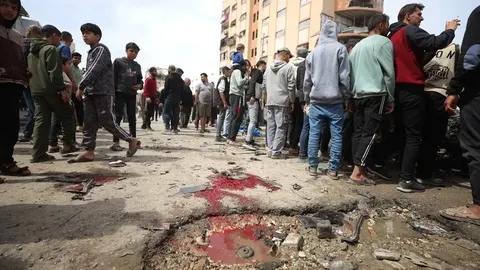
Those questions concern the public record of a war with devastating consequences for children and other civilians. By October 2026, the Palestinian Health Ministry was reporting that Israeli forces had killed more than 20,000 children in Gaza since October 2023. Photographs, videos, hospital reports and accounts from surviving families are among the materials through which people outside Gaza can understand what those figures mean.
There are documented examples of such material disappearing from major platforms. They include hospital casualties, reporting about an evacuation order, a news report about a child’s death and films documenting alleged abuse in Israeli detention.
Their removal histories differ. Some were acknowledged moderation mistakes. Some restrictions were temporary. A major deletion of Palestinian human rights archives was attributed by Google to US sanctions. An Israeli government connection is established for the blocking of Al Jazeera livestreams inside Israel.
Taken together, these cases show why the removal programme deserves scrutiny. They also demonstrate why identifying the cause of each restriction matters to an accurate account of how the public record has been narrowed.
What Israel’s figures establish
The Justice Ministry’s disclosure covers 7 May 2024 to 10 September 2026. It was released following a freedom of information request by the Association for Civil Rights in Israel, known as ACRI.
The rows reconcile with the totals. These are counts of requests and recorded removals, not a count of affected people or a verified total of unique videos.
The language breakdown contains a small inconsistency: it lists 186,160 Arabic items, five Hebrew items and two English items, adding up to six more than the platform table. The defensible description is therefore about 186,000 Arabic items, five Hebrew and two English. The disclosure does not establish how many of the five Hebrew requests resulted in removal.
The ministry classified approximately 99 per cent of its requests as involving suspected offences under counterterrorism provisions. That is a government classification, rather than a finding by a court that every item constituted unlawful incitement.
ACRI argues that the concentration on Arabic speech raises serious concerns about discriminatory enforcement, including the failure to address racist or violent expression in other languages.
The ministry says its work concerns the content and its suspected illegality rather than the identity of the person posting it. Its records, however, do not provide a public, itemised basis for testing that explanation against the material removed.
A government referral system with limited public visibility
The Cyber Unit’s voluntary referral system generally involves asking companies to act under their own rules. An individual court order is not required for every removal through this route.
Israel’s Supreme Court allowed the system to continue in a 2021 judgment. It recognised the referrals as governmental activity and addressed concerns about documentation, transparency and oversight. Its decision did not establish that every subsequent referral would be justified.
This arrangement gives the state a consequential role in selecting material for platform review, while companies retain the immediate decision about whether to remove it.
The ministry’s disclosed recordkeeping is also limited. It generally retains an English translation or description and, where applicable, an accompanying image or thumbnail. Those records may be insufficient to reconstruct deleted originals and their full context.
That matters because context can determine whether a post reports a threat, endorses it, condemns it or preserves evidence of it. A short description cannot always substitute for the original recording, caption, surrounding discussion and publication history.
The London meetings and the wider effort to influence coverage
There is documentary evidence that Israeli officials sought to influence the people deciding how major British news organisations covered the war.
A government supported mission brought former Israeli military chief Aviv Kohavi to London in November 2023. An official freedom of information disclosure identifies the Foreign Ministry as the initiator, with Defence Ministry coordination and approval. Planning documents described influencing Western audiences and strengthening support for Israel, with senior media figures among the intended audiences.
The itinerary covered meetings during 7–9 November. The BBC, Guardian and Financial Times subsequently confirmed encounters involving Richard Burgess, the BBC’s director of news content; Guardian editor Katharine Viner; and Financial Times editor Roula Khalaf.
The BBC said its journalists questioned Kohavi about Gaza and Israeli military tactics. The Guardian described its meeting as part of reporting and said it did not signify endorsement. The Financial Times confirmed that Kohavi accompanied the Israeli ambassador to a meeting at its London office. A meeting with Sky News chairman David Rhodes appeared on the itinerary, but was not confirmed in the investigation.
This establishes a concrete Israeli effort to gain access to senior British editors and cultivate support during the war. The available documents do not establish that the editors accepted instructions, promised favourable coverage or changed particular stories because of the meetings.
Other state interventions directly interrupted the flow of news.
On 21 May 2024, Israeli officials seized Associated Press equipment and stopped its live transmission showing Gaza, invoking the law used against Al Jazeera because the broadcaster was an AP customer. The equipment was returned that night, and the transmission subsequently resumed. The reversal limited the interruption without undoing the fact that the state had stopped an independent news feed.
Israel also restricted independent foreign press access to Gaza. In January 2026, the Committee to Protect Journalists was still urging the government to lift the prohibition, distinguishing independent reporting from visits conducted under military escort.
These actions belong in the same examination of the information environment as social media referrals. They demonstrate several different ways a government can seek favourable coverage, constrain independent observation or restrict distribution.
What the American free speech comparison actually shows
US law provides a useful benchmark for assessing the difference between reporting about terrorism and unlawfully supporting it. It does not provide a blanket entitlement to remain on a private platform.
Under the Supreme Court’s Brandenburg standard, government punishment for incitement requires advocacy directed towards producing imminent unlawful action and likely to produce it. Anger, denunciation, disturbing images and discussion of an armed organisation do not automatically meet that standard.
True threats are another category of potentially punishable speech. A news report describing someone else’s threat is different from the reporter issuing that threat.
Federal material support law can reach knowingly providing services to a designated foreign terrorist organisation. The Supreme Court has upheld its application to certain coordinated assistance, including assistance intended for peaceful purposes. The same decision distinguished independent advocacy from activity performed in coordination with, or under the direction of, such an organisation.
That distinction is essential when considering journalism. Interviewing an armed group’s member, reporting a hostage negotiation or documenting the consequences of a military operation does not, by itself, establish material support.
The available descriptions of the civilian reporting below disclose no basis for treating it as imminent incitement, a true threat or coordinated assistance merely because it concerns Palestinians, mentions Hamas or criticises Israeli conduct.
This remains a comparison of the documented content with US legal standards. No US court has adjudicated these individual posts, and an account restriction cannot establish the legal status of every item the account ever published.
Private companies also have their own editorial rights and rules. They may remove expression that the US government could not constitutionally punish. Graphic violence and nudity policies raise different questions from terrorism offences, although their mistaken application can still suppress important reporting.
Israeli law itself includes a protection for correct and fair reporting within its relevant counterterrorism provision. A terrorism label therefore cannot substitute for examining what a post actually said and why it was published.
The identifiable cases: what disappeared, why it mattered and what caused it
The following catalogue contains 18 examples, including individual posts, films, livestreams and account restrictions. It gives the outcomes documented in the sources, rather than claiming to establish the present availability of every item.
The twelve Facebook and Instagram examples predate the new disclosure’s May 2024 starting point. They demonstrate documented moderation failures; they are not identified entries in the newly disclosed Israeli request dataset.
Within this catalogue, the Al Jazeera livestream restriction has a confirmed Israeli order connection. Other causes, including US sanctions and admitted platform mistakes, are identified separately.
Facebook: four documented removals
1. A shared Al Jazeera report about an armed group’s ultimatum, May 2021.
An Egyptian user shared a news report concerning an ultimatum linked to Al Aqsa and Sheikh Jarrah. Facebook removed the post under its dangerous organisations rules and later restored it. The original news organisation’s post remained available.
The initial report against the user’s post came from another Egyptian user. Meta said it had received no valid legal government removal request for that post, while declining to answer broader questions about other forms of government contact.
Public interest: Reporting an armed group’s threat helps explain an escalation. Reproducing it in a news context does not automatically make the person sharing it the author or supporter of the threat.
2. A Washington Post chronology explaining the conflict, October 2023.
A user shared a news link without an additional caption. Its automatically generated preview mentioned Hamas. Facebook removed it under its dangerous organisations policy, then restored it after the Oversight Board took up the case.
Public interest: Historical context can help readers evaluate competing explanations of a war. Mentioning an organisation in a chronology does not establish incitement or material support.
3. A journalist’s recollection of reporting from Gaza, October 2023.
A post recalled a previous visit to Gaza and an interview with Hamas cofounder Abdel Aziz al Rantisi. It included photographs. Facebook removed it under its dangerous organisations rules before acknowledging its neutral, informative context and restoring it.
Public interest: A journalist’s account of an interview can illuminate an organisation’s history and political role. Interviewing someone is not, by itself, evidence of providing an unlawful service to that person’s organisation.
4. Reporting on negotiations to release hostages, January 2024.
A user shared an Al Jazeera video about negotiations between Israel and Hamas over hostage releases. Facebook removed it under its dangerous organisations policy and later restored it.
Public interest: Information about negotiations can help audiences understand diplomacy, proposed exchanges and efforts to free captives. Reporting on those negotiations does not itself endorse hostage taking.
Instagram: eight documented examples
5. Casualties at Al Shifa hospital, November 2023.
A video showed dead and injured people, including children, following an apparent strike on or near the hospital. The caption blamed the Israeli military. Instagram’s automated systems removed it under graphic violence rules and rejected an appeal automatically.
The video was restored with a warning and age restriction. The Oversight Board criticised its exclusion from recommendations.
Particularly important public interest: The recording documented casualties and conditions around a medical facility. It could help viewers assess civilian harm and the dangers confronting patients and medical workers. The moderation decision does not independently establish responsibility for the apparent strike.
6. A Channel 4 report about a Palestinian child’s death, February 2024.
An Instagram user shared a news report involving a child, the child’s family and humanitarian workers. It was removed under dangerous organisations rules despite a caption explaining its neutral purpose. Meta restored it after the case reached the Oversight Board.
Particularly important public interest: Reporting on an individual child’s death makes civilian casualties intelligible beyond aggregate statistics. The Board’s published description does not identify the child, so attaching a particular name would exceed the record.
7. Reporting about an evacuation order at Rantisi children’s hospital, October–November 2023.
A repost of a TRT Arabi report carried the Gaza Health Ministry’s statement that Israel had ordered the hospital evacuated before bombing it. Instagram removed the post under dangerous organisations rules. Its eventual restoration was not established in the documentation.
Particularly important public interest: Hospital evacuation reporting bears directly on patient safety, access to treatment and the feasibility of moving vulnerable people. The underlying allegation remained a claim carried in the report.
8. A photograph of a dead adult and child, October–November 2023.
Instagram removed a photograph showing a fully clothed dead man holding a dead girl under its nudity or sexual activity rules. Multiple users reported losing the same image; that makes this one content example, not several different photographs.
Public interest: The image concerned civilian death. The documented basis for removal was a sexual content rule, not a finding of terrorist support. The relationship between the two people was not established.
9. Video appearing to show abuse of Palestinians by Israeli soldiers, October–November 2023.
A video appearing to show humiliation or torture was removed under nudity or sexual activity rules. The available documentation does not establish its eventual restoration.
Particularly important public interest: Such material may contain evidence relevant to detention practices and possible criminal abuse. Authentication remains necessary, but that need makes preserving the recording important.
10. A photograph of a building containing a family’s apartments, May 2021.
A user posted an image and said their family had owned three apartments in a building struck on 15 May. Instagram removed it under hate speech or symbols rules and restored it after a complaint.
Public interest: A personal account of housing loss can document displacement and destruction. The family’s account should be attributed and checked; its subject is not inherently terrorist advocacy.
11. A screenshot of newspaper opinion articles, May 2021.
A post displayed three New York Times opinion headlines and accompanying images, with a comment about Palestinian rights. Instagram removed it under hate speech or symbols rules and subsequently restored it.
Public interest: Discussion of published commentary and political rights falls within ordinary political expression. The documented content provides no apparent basis for treating it as terrorism support.
12. A political cartoon about Palestinian oppression, May 2021.
Instagram removed and later restored a cartoon presenting the conflict in terms of Palestinian oppression rather than a religious war.
Public interest: The cartoon conveyed a political interpretation. Criticism of state conduct, including forceful or partisan criticism, is generally protected against US government punishment unless additional legal elements are present.
YouTube: an Israeli broadcast restriction and three films lost through a different mechanism
13. Al Jazeera livestreams blocked inside Israel, January 2026.
YouTube restricted access to Al Jazeera livestreams inside Israel following an Israeli order.
Israeli government connection: confirmed. This was a geographic restriction associated with the broadcaster ban. It was not a demonstrated worldwide deletion, and it has not been identified as one of the Cyber Unit entries in the new dataset.
Particularly important public interest: Blocking a broadcaster’s live output restricts access to ordinary news reporting as well as any disputed segments. It deprives viewers of the ability to evaluate particular reports for themselves.
A separate YouTube action involved the channels of Al Haq, Al Mezan and the Palestinian Centre for Human Rights, which disappeared in October 2025. An investigation documented the loss of more than 700 videos.
Google attributed that action to US sanctions. The organisations had been designated under a sanctions programme concerning the International Criminal Court. Those designations were distinct from US foreign terrorist organisation designations.
Three identifiable films illustrate the public interest material affected by that archive deletion:
14. “The Beach,” documenting children killed in Gaza.
Al Mezan’s film concerned children killed in an Israeli strike on a Gaza beach.
Particularly important public interest: It preserved material about the circumstances of civilian deaths and the experiences of those affected. Documenting children’s deaths does not itself establish incitement or material support.
15. The investigation into Shireen Abu Akleh’s killing.
The removed archives included work concerning the killing of journalist Shireen Abu Akleh, produced through collaboration involving Al Haq and Forensic Architecture.
Particularly important public interest: The investigation concerned accountability for the death of a journalist. This was a West Bank case, rather than a Gaza incident. Related investigative material remains available elsewhere.
16. “Shattered Futures: Testimonies of Torture and Genocide in Gaza.”
The Palestinian Centre for Human Rights published this film in May 2025, presenting accounts from Palestinians who had been held in Israeli custody.
Particularly important public interest: Testimony about detention conditions and alleged abuse can inform investigations, legal scrutiny and efforts to protect people still detained. The film’s title and allegations are those of its producers.
These three films were affected by the same archive removal episode. They should not be presented as three independently verified Israeli takedown orders.
The organisations said they retained backups. The documented loss concerned YouTube hosting, discoverability and access to the audience built there. Google’s sanctions explanation also does not establish that the films themselves promoted terrorism.
TikTok: a Gaza journalist’s temporary account restriction
17. Bisan Owda’s account, January 2026.
The Gaza journalist’s account was temporarily banned and then restored. Digital rights organisation 7amleh reported intervening to secure its return.
Owda subsequently said her videos were being excluded from recommendations. TikTok said the account was live and operating normally.
Particularly important public interest: An account used for eyewitness journalism can provide an ongoing record of civilian conditions. The documented account interruption deserves scrutiny, but does not establish an Israeli request or the legal status of every video the account contained. The later dispute about recommendations should remain attributed to the parties.
X / Twitter: live reporting interrupted
18. Mariam Barghouti’s account, May 2021.
Twitter temporarily restricted the Palestinian journalist while she was reporting near Beit El in the occupied West Bank. Her profile and recent reporting became obscured and she could not continue posting normally.
The company restored the account and acknowledged a mistake.
Particularly important public interest: Live reporting can document encounters between soldiers and demonstrators and allow others to follow a reporter’s situation. No individual Israeli request has been established for this restriction. It was temporary, rather than a demonstrated permanent deletion of her reporting.
Telegram: the disclosure provides a number, but no assessable examples
The ministry recorded 51 removals following 588 Telegram requests.
The available evidence does not identify a set of those items whose contents, removal histories and public interest value can be reliably assessed. Supplying ten examples would therefore require speculation or the substitution of unrelated material.
What a neutral reader stood to lose
The strongest public interest examples concern information that could change an observer’s understanding of what was happening to Palestinians and the choices available to them.
Hospital footage and evacuation reporting can help establish whether medical facilities were functioning, what dangers patients faced and what demands were being placed on staff. These questions matter to humanitarian access and the protection of people who cannot easily move.
Images and accounts of civilian deaths allow an audience to examine the human consequences behind official totals. They can also supply leads for further reporting. A caption may require verification, but removing the underlying material can make that verification more difficult.
Records of housing destruction help document displacement and the loss of shelter. They give substance to questions about where families could go and whether return was possible.
Detention testimony and recordings of apparent abuse can be relevant to identifying victims, locating witnesses and investigating possible crimes. Their value depends on careful verification and preservation.
Investigations into the killing of journalists concern the conditions under which the rest of the public record is produced. An audience cannot evaluate a war fully if the people documenting it are prevented from working or if evidence concerning their deaths becomes harder to find.
An impartial observer need not accept every allegation in a video or caption. Access to the original material allows claims to be questioned, compared and tested.
Temporary removal can also matter. A restored post may become available after the period in which it would have informed reporting, public debate or a practical decision. The cases do not establish that any particular takedown caused a death or prevented a rescue. They demonstrate interruptions in access to information about situations with direct consequences for people’s lives.
What can reasonably be inferred from the wider pattern
The scale and language concentration of Israeli referrals justify serious concern about their effects on Palestinian expression. The state’s own figures establish its participation in tens of thousands of removals.
Independent evidence also shows that platforms have mishandled legitimate Palestinian content.
A human rights assessment commissioned by Meta examined the May 2021 conflict and found overenforcement of Arabic content and underenforcement of Hebrew content, with adverse effects on Palestinian users. It did not find intentional bias.
A separate 2025 experiment by 7amleh found that 40 submitted Hebrew advertisements containing violent or eliminationist messages passed Meta’s review. The researchers did not actually publish the advertisements. The finding demonstrated a review failure in that test, rather than establishing the prevalence of such failures across the platform.
An investigation using leaked Meta records also alleged extensive compliance with earlier Israeli requests. In its June 2025 response, Meta disputed allegations of improper censorship and said it did not remove content simply because a government requested it, describing assessments under its policies and applicable legal processes.
These findings describe several mechanisms that can operate together: state referrals, platform policy choices, language disparities and automated mistakes.
The evidence supports an inference of substantial Israeli influence over the information environment, alongside repeated and identifiable losses of public interest reporting. It does not yet measure how much of the newly disclosed removal programme consisted of wrongful removals.
The scale cannot establish the contents of an unseen post. Equally, the absence of an accessible post ledger prevents the public from testing the government’s terrorism classifications.
A meaningful accounting would connect each referral to the original content, the stated reason, the platform’s response, the geographic scope of any restriction and the outcome of an appeal. Sensitive personal information could be protected while still allowing independent scrutiny.
For a government whose military conduct is the subject of serious international scrutiny, influence over the visibility of evidence carries an obvious accountability problem. The public should be able to examine how that influence was exercised, especially when the material at stake may help explain what happened to children, patients, families and detainees.
Sources and attributions
Original report and removal figures
Chen Maanit, Haaretz, 12 November 2026: “Israel Demands Social Media Platforms Censor 186,000 Posts in Arabic – and Only Five in Hebrew.” The supplied headline and opening prompted this feature. The numerical table was checked against the underlying disclosure rather than relying on the inaccessible full article.
Israeli Justice Ministry, 8 November 2026: Freedom of information response, in Hebrew. Primary source for the dates, platform totals, language discrepancy, classifications and recordkeeping description. ACRI: Statement concerning the disclosure. Source for the organisation’s discrimination and transparency concerns. 01368b10-57e4-4138-acc3-01373134d221.usrfiles.com
Israeli Supreme Court, 12 April 2021: Adalah v State Attorney’s Office—Cyber Unit, English translation. Explains the voluntary referral mechanism and the court’s treatment of it as governmental activity. versa.cardozo.yu.edu
Newsroom influence, civilian deaths and restrictions on reporting
Alex Morris and John McEvoy, Declassified UK, 27 February 2025: “BBC and Guardian editors held private meetings with Israeli General.” Documents the Kohavi mission and the news organisations’ responses. The accompanying IDF disclosure, dated 24 June 2024, supplies the government sponsorship, planning material and itinerary. These establish an influence effort, without establishing editorial compliance. declassifieduk.org
UN Human Rights Office, 12 October 2026: “One year after ceasefire announcement, killings continue across Gaza.” Cites the Palestinian Ministry of Health’s figure of more than 20,000 children killed by Israeli forces. This is a reported cumulative figure, distinct from the UN’s individually verified subsets. United Nations in Palestine
David Bauder, Associated Press, May 2024: Report on Israel’s interruption of AP’s Gaza transmission. Covers the equipment seizure, legal rationale and reversal. Committee to Protect Journalists, 26 January 2026: Call to lift restrictions on foreign journalists and broadcasters. Supports the dated account of independent press access restrictions. The Associated Press
Legal standards
US Supreme Court: Brandenburg v Ohio, 1969; Holder v Humanitarian Law Project, 2010; and Counterman v Colorado, 2023. Sources for imminent incitement, coordinated material support versus independent advocacy, and true threats. See also 18 USC §2339B. The application to the catalogue is analysis, not a judicial finding about those posts. govinfo.gov
US Supreme Court: Moody v NetChoice, 2024, and Manhattan Community Access Corp v Halleck, 2019. Relevant to platform editorial discretion and the distinction between private conduct and state action. Israel’s Counterterrorism Law: English translation, including section 24. Source for the relevant offences and fair reporting provision. supremecourt.gov
Facebook and Instagram cases
Oversight Board: Shared Al Jazeera Post, September 2021; Washington Post link case, April 2024; and journalist’s Gaza recollection, April 2024. Primary case records for examples 1–3, including removals and restorations. Oversight Board
Oversight Board, 4 June 2024: Combined decision concerning news reporting about the conflict. Source for the hostage negotiation report and the Channel 4 report in examples 4 and 6. Oversight Board
Oversight Board, 19 December 2023: Al Shifa Hospital decision. Source for example 5, including automated enforcement, restoration and recommendation restrictions. Oversight Board
Human Rights Watch, 21 December 2023: “Meta’s Broken Promises.” Documents examples 7–9. Human Rights Watch, 8 October 2021: “Israel/Palestine: Facebook Censors Discussion of Rights Issues.” Documents examples 10–12. These reports establish moderation histories; they do not independently prove every underlying allegation in the affected material. www.hrw.org
YouTube, TikTok and X
Al Jazeera Media Network, 29 January 2026: Statement concerning YouTube’s compliance with the Israeli broadcast restriction. Primary account of the restriction in example 13 and its geographic scope. Al Jazeera Media Network
Nikita Mazurov and Jonah Valdez, The Intercept, 4 November 2025: Investigation into the deletion of Palestinian human rights archives. Read through AURDIP’s republication. Source for Google’s explanation, the archive scale and identification of affected films. Aurdip
US Treasury, 4 September 2025: Sanctions designations. See also the formal State Department notice. These identify the ICC related sanctions programme and its stated grounds. Office of Foreign Assets Control
Palestinian Centre for Human Rights, 27 May 2025: “Shattered Futures.” Primary description of the film. Forensic Architecture: Investigation into Shireen Abu Akleh’s killing. Surviving investigative material. Al Mezan and partner organisations, November 2025: Statement confirming that their material was backed up. Palestinian Centre for Human Rights
ABC Radio National, 3 February 2026: “TikTok users claim censorship.” Includes Owda’s account and TikTok’s response. 7amleh: January–June 2026 report, documenting its intervention. Sources for example 17. ABC listen
Mariam Barghouti, Rest of World, 23 June 2021: First person account of restrictions on Palestinian reporting. See also the Trust and Safety Foundation case study, documenting Twitter’s acknowledgement of error. Sources for example 18. Rest of World
Evidence about systemic enforcement and company responses
BSR, September 2022: Human rights assessment of Meta’s May 2021 enforcement. Source for the language disparities, adverse effects and finding concerning intentional bias. 7amleh, September 2025: Report on its Hebrew advertising experiment. The test advertisements were approved but were not published. www.bsr.org
Drop Site News, 11 April 2025: Investigation based on leaked Meta records. Meta, 2 June 2025: Company response, published by the Business & Human Rights Resource Centre. These provide the earlier allegations and the company’s stated position; they do not identify the contents of every item in the new government disclosure. dropsitenews.com