Australian Journalist Accuses Media Giants of Shielding Israel and Silencing Palestinian Voices
Alex McKinnon says concentrated ownership, lobbying and political pressure have distorted coverage of Gaza, while urging communities to challenge media organisations through sustained, organised boycotts.
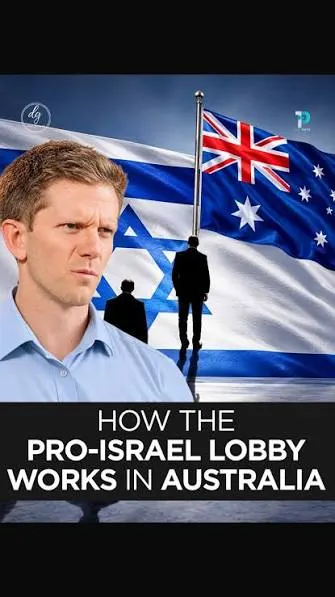
Australian journalist Alex McKinnon has accused major media organisations of giving Israeli government claims undue credibility while marginalising Palestinian testimony, arguing that newsroom culture, commercial interests and political pressure have weakened scrutiny of Israel’s actions in Gaza.
In an extensive interview, McKinnon described a media environment in which journalists, academics and ordinary members of the public can face damaging consequences for expressing solidarity with Palestinians. His criticism extended from the Murdoch press to Australia’s public broadcasters, which he said were vulnerable to pressure despite their public service responsibilities.
“Israel would not be able to do half of what it gets away with if it were not for Western media outlets essentially aiding and abetting them,” he said.
McKinnon, a journalist and editor who cofounded the independent publication Deepcut, argued that the problem reaches beyond individual headlines. It concerns who is treated as credible, whose suffering receives attention and whether institutions defend people subjected to organised complaints.
He also rejected the idea that audiences are powerless. Drawing on Liverpool’s enduring boycott of The Sun after the Hillsborough disaster, he called for communities to challenge the advertising, subscriptions and everyday distribution that sustain media organisations.
McKinnon is himself the campaign lead for Boycott The Daily Telegraph, making his appeal part of a wider organising effort against coverage he considers discriminatory.
A newsroom culture that rewards conformity
McKinnon placed concentrated ownership at the centre of his critique, describing Australia as a country where a small number of media businesses exercise substantial influence over political debate.
He reserved his sharpest criticism for News Corp, whose Australian newspapers include The Australian, The Daily Telegraph and the Herald Sun. He argued that its outlets repeatedly present migrants, refugees and religious minorities as threats, adapting similar themes to different national audiences.
In Australia, he said, Muslims and communities with African and Asian backgrounds have become recurring targets. He drew parallels with coverage of migration in Britain and the United States, including the output of The Sun and Fox News. Fox News belongs to the separate Fox Corporation, although both companies form part of the wider Murdoch media sphere.
McKinnon acknowledged that he had never worked inside News Corp himself. His description of its workplace culture, he said, came from conversations with former employees.
Those accounts suggested an environment in which journalists who did not share the prevailing political outlook struggled to remain, either leaving voluntarily or finding themselves pushed out. He described that culture as particularly difficult for women, journalists of colour and First Nations staff.
The significance, in his analysis, is that editorial conformity does not always require an explicit instruction about every story. Staff can learn which arguments are welcome, which sources attract suspicion and which subjects are likely to cause trouble.
Over time, he argued, those expectations narrow the range of perspectives that reach the public.
Netanyahu’s interview and the questions left unasked
McKinnon cited Sharri Markson’s interview with Benjamin Netanyahu, broadcast on Sky News Australia on 21 August 2025, as an example of access being secured without sufficiently challenging the interviewee.
Markson’s questioning included whether Netanyahu’s references to appeasement recalled Europe’s handling of Hitler in the 1930s, and whether leaders such as Anthony Albanese were displaying similar complacency.
She also described allegations that Israel was deliberately starving Palestinian children and committing genocide in Gaza as “libels”.
For McKinnon, that framing placed the accusations against Israel’s critics before the evidence against Israel’s government. He described the questions as “the easiest, most softball questions”, allowing Netanyahu to deliver his arguments without meaningful pressure.
The interview came after the International Criminal Court had issued an arrest warrant for Netanyahu on 21 November 2024 over alleged war crimes and crimes against humanity, including starvation as a method of warfare. That gave questions about humanitarian access and civilian suffering particular significance.
Experienced Australian journalists, including Ray Martin, Kerry O’Brien and former newspaper editor Michael Gawenda, also criticised the interview’s lack of challenging questions.
Markson defended the broadcast, saying Australians should hear Netanyahu explain Israel’s claimed efforts to avoid civilian casualties and deliver aid. Sky rejected criticism from the ABC, accused the public broadcaster of bias against Israel and challenged it to obtain its own interview.
McKinnon’s objection was that securing a prominent political figure carries a responsibility to test their claims, particularly when the consequences of government policy are being borne by civilians.
Sponsored trips and editorial independence
The interview also examined visits to Israel organised for journalists, editors, politicians and other influential Australians.
The Australia/Israel & Jewish Affairs Council, known as AIJAC, openly describes its Rambam Israel Fellowship as a programme sponsoring visits by senior journalists, politicians, advisers, public servants and student leaders. The organisation also identifies countering what it considers bias against Israel in public debate as part of its work.
McKinnon argued that travel, hospitality and carefully arranged access can shape how visitors understand the conflict, particularly when participants later occupy influential editorial positions.
Markson took part in an AIJAC visit in November 2015. A related delegation sponsored by the NSW Jewish Board of Deputies included Ben English of The Daily Telegraph, alongside journalists from other major outlets.
McKinnon recalled a photograph of journalists covered in Dead Sea mud as an illustration of the familiarity that such visits can encourage between media figures and the organisations arranging their access.
Supporters of the tours present them as opportunities to gain firsthand knowledge. The 2015 visit included meetings with Palestinian Authority officials in Ramallah, and participants described encountering different perspectives.
Participation in a sponsored visit does not establish that editorial decisions were purchased or directed. McKinnon nevertheless questioned whether news organisations apply sufficient scrutiny to the obligations and sympathies that hospitality may create.
His broader concern was whether an outlet could credibly scrutinise a government while accepting access arranged by organisations committed to defending that government’s position.
Palestinian testimony and the presumption of credibility
McKinnon argued that coverage of Gaza reveals a deeper imbalance in whose accounts are believed.
Israeli government statements, he said, are frequently granted an initial presumption of credibility, while Palestinian testimony encounters scepticism even when supported by substantial evidence.
He pointed particularly to accounts of sexual abuse and mistreatment of Palestinian detainees, arguing that the reluctance to confront such evidence reflects an unequal assessment of Palestinian suffering.
In March 2025, a United Nations commission of inquiry concluded that Israeli security forces had committed widespread sexual and gender based violence against Palestinians, including in detention, and documented acts it said amounted to war crimes and crimes against humanity.
Israel rejected the findings, accused the commission of bias and challenged its evidential methods. Its government said military rules prohibit such misconduct and that mechanisms exist to investigate allegations.
For McKinnon, the journalistic obligation is to examine the evidence rigorously and consistently. His criticism was that Palestinian accounts too often have to overcome barriers that official Israeli explanations do not face.
He described the resulting anger as a response to seeing people’s suffering dismissed, their efforts to survive disregarded and expressions of solidarity treated as suspect.
Public broadcasters under pressure
McKinnon distinguished the public service mission of the ABC and SBS from the priorities of commercial media organisations, saying many journalists inside both broadcasters remained committed to exposing injustice and serving their audiences.
He nevertheless argued that those commitments could be undermined by managers concerned about political criticism and complaints.
He said journalists had described material being weakened or removed because it might provoke opposition, including historical context about the Nakba, the mass displacement of Palestinians surrounding Israel’s creation in 1948.
These were accounts McKinnon attributed to people working inside the broadcasters. His argument was that pressure can operate through anticipation: editors may avoid material because they expect controversy, even before a complaint arrives.
He also pointed to parliamentary questioning of SBS over Eurovision as an example of the scrutiny applied to matters involving Israel.
At Senate estimates on 28 May 2026, Liberal senator Sarah Henderson questioned SBS about Israel receiving no Australian points from either the professional jury or the public allocation.
That did not mean nobody in Australia had voted for Israel. Eurovision awards points only to each country’s highest ranked entries, and Israel had finished outside Australia’s top ten. SBS executive Kathryn Fink also explained that the public vote operated through the international Eurovision system rather than being controlled by the broadcaster.
McKinnon questioned why a public broadcaster should be expected to account politically for an audience’s musical preferences.
What the Lattouf judgment established
The dismissal of journalist Antoinette Lattouf provided a more substantial example of institutional failure.
Lattouf had been engaged to present ABC Radio Sydney’s Mornings for five days in December 2023. She was removed after three days, following complaints about her views and an Instagram repost of Human Rights Watch material alleging that Israel was using starvation as a method of warfare.
On 25 June 2025, the Federal Court found that the ABC had unlawfully terminated her employment for reasons including her political opinion opposing Israel’s military campaign in Gaza.
Justice Darryl Rangiah found that the decision involved an effort to appease complainants whose objections were expected to escalate. He also found breaches of the ABC’s enterprise agreement and failures of procedural fairness.
The court rejected Lattouf’s separate allegation that her dismissal was motivated by race or national extraction.
She was awarded A$70,000 in compensation. On 24 September 2025, the court imposed a further A$150,000 in penalties, payable to her.
ABC managing director Hugh Marks apologised, acknowledging that the organisation had failed to follow the correct processes and had let down its staff and audiences.
For McKinnon, the case illustrated how a relatively small but persistent complaints campaign could provoke an institutional response with severe consequences for an individual journalist.
It also raised a wider question about whether employers defend their staff when political objections are presented as concerns about impartiality.
When Palestinian identity becomes a controversy
McKinnon described pressure extending beyond what people publish to their identities and backgrounds.
He recounted the experience of a junior journalist of Palestinian heritage at The Australian, alleging that Israeli diplomats had objected to her employment and that the newsroom had failed to protect her.
Veteran journalist John Lyons has publicly described a related episode involving Jennine Khalik, a Palestinian Australian journalist who worked at the newspaper. Lyons said the editor at the time confirmed that two Israeli diplomats had visited and expressed discomfort about her appointment.
Those details remain an account attributed to Lyons. They do not, by themselves, establish every element of McKinnon’s description of the journalist’s departure.
The concern McKinnon identified was that Palestinian heritage could be treated as evidence of an unacceptable political position, rather than as part of a journalist’s experience and knowledge.
He extended that argument to academic and author Dr Randa Abdel-Fattah, whom he described as the subject of an extraordinary volume of hostile attention.
A database analysis covering 7 October 2023 to 9 April 2026 identified 412 unique articles in The Australian that featured or referred to Abdel-Fattah. The researchers also counted 35 front page stories in The Australian and The Weekend Australian.
The tally measures the volume of coverage, rather than establishing that every article was inaccurate or principally about her. McKinnon nevertheless argued that repeated attention of this kind can place intense pressure on an individual and on the institutions employing or inviting them.
He said the consequences can spread through universities, cultural organisations and writers’ festivals, encouraging others to avoid discussing Palestine because they fear becoming the next target.
A teenager’s necklace and a council’s response
One of the interview’s most striking examples concerned a 16 year old community volunteer photographed for a council magazine while promoting library services.
The teenager wore a necklace depicting historic Palestine in Palestinian colours. After complaints, Melbourne’s Bayside City Council withdrew the October/November 2025 edition of Let’s Talk Bayside, removed the photographs from digital channels and announced that the magazine would be reissued.
The council defended its decision by describing the pendant as a political symbol and saying its inclusion breached a policy requiring neutral council communications.
The teenager said she felt betrayed and saddened by the removal. The decision also drew criticism from some Jewish Australians, illustrating that objections to the council’s response crossed community boundaries.
McKinnon viewed the episode as an example of Palestinian identity itself being treated as a controversy requiring institutional intervention.
His argument was that the young person had appeared in a routine community story about libraries, yet a symbol of her heritage became the basis for removing her image.
He said similar dynamics were affecting teachers, nurses, academics and other people with far less power than the organisations responding to complaints about them.
Political influence depends on political cooperation
McKinnon rejected the suggestion that politicians should be understood only as victims of aggressive media coverage.
He argued that elected representatives retain choices about whether to endorse a campaign, resist it or remain silent.
As an example, he recalled the dispute over Marrickville Council’s support for the boycott, divestment and sanctions movement against Israel.
The council adopted a boycott resolution in December 2010, with support from Greens, Labor and independent councillors. It abandoned the proposed boycott in April 2011 after intense political opposition and debate over its implementation.
Albanese, then a federal minister and the local member, opposed the policy. He later reiterated his opposition to the BDS movement and recalled his role in challenging the Marrickville resolution.
McKinnon regarded the episode as evidence that Albanese’s resistance to boycott campaigns predated his premiership, and that media pressure becomes more effective when politicians choose to reinforce it.
“Politicians do have a choice in this stuff,” he said. “They can tell people to get lost, but too often they don’t.”
He placed the problem within a wider critique of concentrated economic power, arguing that banks, mining companies, major employers and other well resourced interests can obstruct reforms that threaten their position.
In his view, the democratic damage comes when organised influence becomes so unequal that ordinary citizens conclude the system cannot respond to their needs.
A shrinking newspaper can still intimidate
McKinnon argued that the decline of print newspapers had not produced a corresponding decline in the fear they inspire among politicians and institutions.
He said political leaders continued to behave as though a hostile front page would automatically determine public opinion, preserving the authority of outlets whose position had changed substantially.
“If people treat you like you are powerful and influential, then you are,” he said.
He acknowledged that broadcasters such as Sky had developed significant online followings. His broader argument concerned the distinction between audience size and institutional power: a publication can influence decisions because people in authority expect it to punish them.
He also linked media hostility towards Muslims to the cumulative effect of repeated coverage. Headlines, cartoons and commentary that associate Muslim communities with danger, he argued, can shape attitudes far beyond the audience of any single story.
He described this as a persistent process in which suspicion becomes familiar and prejudice appears increasingly acceptable.
McKinnon also connected the debate to commercial attitudes towards war, criticising weapons manufacturers for presenting battlefield performance as a selling point. Elbit Systems, for example, has publicly promoted its products as “combat proven”.
His contention was that commercial success can coexist with indifference to the people who experience the consequences, making independent scrutiny more necessary.
The limits of media complaints
McKinnon expressed little confidence that existing complaints mechanisms could produce the scale of accountability he wanted.
He criticised the Australian Press Council’s dependence on industry funding and argued that delayed adjudications could do little to repair the damage caused by prominent coverage.
The council does have requirements its members must follow. Publications must publish adjudications according to its instructions, including requirements governing placement and accompanying material.
However, it cannot impose fines or compensation, and it may call for apologies, retractions or corrections without having the power to compel them. Its rules also exclude constituent body representatives from complaint handling and adjudication panels.
McKinnon’s criticism was that the available remedies remain too weak to change the incentives of powerful publishers.
He argued that communities should therefore develop forms of accountability beyond formal complaints, particularly by examining where media organisations obtain their revenue and public visibility.
Liverpool’s example and the case for collective action
McKinnon held up Liverpool’s boycott of The Sun as evidence that communities can withdraw support from a powerful newspaper and sustain that decision across generations.
The boycott followed the paper’s coverage of the Hillsborough disaster, which unfolded on 15 April 1989 during an FA Cup semi final between Liverpool and Nottingham Forest in Sheffield. Ninety seven people died as a result of the disaster.
The Sun published false allegations about Liverpool supporters, including claims concerning their treatment of the dead and those attempting to help. Subsequent investigations established that supporters were not responsible for the disaster.
The refusal to buy or stock the paper became embedded in the city’s public life. Liverpool Football Club barred its journalists from the stadium and training facilities in 2017.
Research involving a survey of newsagents in early 2021 found that 86 per cent of those surveyed in the city of Liverpool did not sell The Sun, demonstrating the boycott’s persistence decades after the original coverage.
For McKinnon, its significance was the collective response: individuals, businesses and institutions reinforced one another’s decisions.
“A boycott is an exercise of collective will, organized collective will,” he said.
He argued that people who already avoid buying a newspaper can still participate by contacting advertisers, questioning institutional subscriptions and discussing newspaper purchases with local businesses.
Libraries, councils, cafés and other organisations, he said, help sustain a publication’s presence through decisions that can appear routine but have financial and symbolic consequences.
He urged communities to make those decisions visible and to explain how particular coverage affects their neighbours, families and colleagues.
The appeal was also directed at advertisers. McKinnon argued that companies seeking customers from diverse communities should be asked whether their spending supports coverage that demeans those same audiences.
His proposed response was sustained organisation, turning individual frustration into pressure that institutions could not easily disregard.
Hope grounded in the people of Gaza
Despite the severity of his assessment, McKinnon ended the interview by locating hope in the people whose experiences had driven his criticism.
Asked what sustained him as a journalist, he became emotional while discussing his contact with Palestinians in Gaza.
“I speak to people in Gaza who are still going through unimaginable things,” he said. “They give me hope.”
He described a woman he had been speaking with for several years who had recently given birth to a boy.
“So he gives me hope,” he said.
Sources and attributions
Primary interview: OnePath Network, “Australian Journalist EXPOSES DISTURBING Israeli Media Lobby”, published 10 November 2026. The user supplied the transcript and publication details. McKinnon’s quotations, arguments and personal reflections throughout this article come from that interview. Names and factual details have been checked against the sources below.
Netanyahu interview and responses: ABC Media Watch, “When Benny Met Sharri”, 25 August 2025. Includes excerpts from the 21 August 2025 interview, assessments from other journalists, and published responses from Markson and Sky News. Media Watch
International Criminal Court warrant: ICC, decision announcing arrest warrants for Benjamin Netanyahu and Yoav Gallant, 21 November 2024. Supports the description of the alleged offences and the warrant’s timing. International Criminal Court
Sponsored visits: AIJAC, “About AIJAC”, undated programme description; and AJN Staff, “Rambam journos report back”, The Australian Jewish News, 21 December 2015. These identify the fellowship, participating journalists, separate sponsoring organisations and meetings with Palestinian Authority officials. AIJAC
Palestinian detainees: UN commission of inquiry, report on sexual, reproductive and other forms of gender based violence, 13 March 2025; and Israel’s mission in Geneva, response rejecting the commission’s allegations, 12 March 2025. Supports both the investigators’ findings and Israel’s stated response. Question of Palestine
Lattouf judgment and ABC response: Federal Court of Australia, Lattouf v Australian Broadcasting Corporation (No 2), 25 June 2025, and penalty judgment, 24 September 2025; ABC, statement by managing director Hugh Marks, 25 June 2025. The repost concerned starvation and appeared on Instagram; the court upheld the political opinion claim and rejected the race and national extraction claims. judgments.fedcourt.gov.au
Jennine Khalik account: Ramona Wadi, interview with John Lyons about Dateline Jerusalem, The New Arab, 20 January 2022. Supports the explicitly attributed account of Israeli diplomats raising objections with the newspaper’s editor. newarab.com
Coverage of Randa Abdel-Fattah: Antoinette Lattouf and Richard Bean, “Data exposes The Australian’s campaign against Dr Randa Abdel-Fattah”, ETTE Media, 16 April 2026. The analysis counted articles featuring or referencing her, with duplicate print and online versions removed. ettemedia.com
Bayside magazine: Bayside City Council, statement concerning Let’s Talk Bayside, 10 December 2025, reproduced as a public release; and Miwa Blumer and Bridget Fitzgerald, “Palestine necklace a ‘political symbol’ claims council”, ABC PM, 11 December 2025. Supports the withdrawal, the council’s policy explanation and reactions to the removal. The transcript’s stronger claim that copies were collected and pulped has not been adopted. Mirage News
Eurovision questioning: Dale Roberts, account of Sarah Henderson’s questioning of SBS, Aussievision, 28 May 2026. Distinguishes allocated points from individual votes and records SBS’s explanation of the public voting process. aussievision.net
Marrickville boycott: ABC News, “Marrickville backs down on Israel boycott”, 20 April 2011; ABC Radio National, discussion of the council resolution, 19 April 2011; and ECAJ, account of Albanese’s remarks to community leaders, 14 July 2021. ABC News
Press Council powers: Australian Press Council, “Handling of complaints”, current guidance. Explains mandatory publication of adjudications, limits on sanctions and safeguards concerning adjudication panels. Australian Press Council
Corporate distinction and weapons marketing: Fox Corporation, announcement of its launch as a standalone company, 19 March 2019; Elbit Systems, announcement of an ammunition contract with Israel’s defence ministry, 1 August 2024. Supports the corporate clarification and the manufacturer’s use of “combat proven”. Fox Corp Investor
Hillsborough and the boycott: Independent Office for Police Conduct, Hillsborough investigation overview; ITV News, report on Liverpool FC’s ban on Sun journalists, 10 February 2017; Florian Foos and Daniel Bischof, “Tabloid Media Campaigns and Public Opinion”, American Political Science Review, published online 26 August 2021. Supports the death toll, findings about supporters, club ban and newsagent survey. Unverified circulation and financial loss figures from the interview have been omitted. Independent Office for Police Conduct (IOPC)
McKinnon’s campaigning role: Alex McKinnon, “The case for boycotting the Daily Telegraph”, Cheek Media, 6 August 2026. Identifies his role leading the boycott campaign. cheekmedia.substack.com