Israel Kills Three in Gaza Food Van During Ceasefire After Ruling Out Criminal Inquiry into British Food Worker Veterans’ Deaths
The driver had previously worked for World Central Kitchen, the charity whose convoy Israel struck in 2024. Gaza officials say the three men were delivering meals for a local kitchen and have accused Israel of a war crime. A witness said the van was about to stop to feed children.
An Israeli drone struck a van carrying cooked meals through Gaza City on Saturday, 21 November, killing three Palestinian men. The strike came three months after Israel declined to open a criminal investigation into the killing of seven World Central Kitchen workers, among them three British former servicemen. Saturday’s driver had previously worked for the charity, but World Central Kitchen said none of the men was on its staff or delivering food on its behalf.
If Israeli forces deliberately targeted the men knowing they were civilians delivering meals, the strike would constitute a war crime under the Rome Statute of the International Criminal Court. Civilian relief workers are protected whether they work for an international charity or a neighbourhood kitchen. Those ordering an attack must also do everything feasible to verify their target. A failure to take those precautions could breach international humanitarian law even where there is insufficient evidence to establish criminal intent.
Israel says the men belonged to the military wing of Palestinian Islamic Jihad. A continuing combat role would be relevant to whether an individual could lawfully be targeted. Carrying food does not, by itself, establish such a role. The ceasefire raises a further question. Four days before the strike, the Board of Peace had urged Israel to halt attacks that did not answer an immediate threat. The military has not publicly identified what immediate threat required it to strike this van as it passed through Tel al-Hawa.
‘It was just about to stop’
Abu Zein al-Daya, a displaced resident who witnessed the strike on Al-Sina’a Street, said the van regularly brought meals to families living in tents. “It was just about to stop to distribute the food and drink to children when it was hit by a missile,” he said.
The men were identified as Ahmad Badran al-Sawafiri, 34, Mustafa Youssef al-Rifai, 51, and Khaled Awad Naeem, 34. Dr Mohamed Abu Selmiya, director of Al-Shifa Hospital, confirmed that the three men in the vehicle had been killed. Several other people were wounded. At the hospital, Naeem’s wife, Abeer, was photographed mourning over his body before the funeral.
Boxes of cooked rice lay torn open in the wreckage. Witnesses found papers bearing the World Central Kitchen logo. Gaza’s Ministry of Social Development said the vehicle belonged to a local charitable kitchen and the meals were for displaced families. The Israeli military said the van had been used to carry food and supplies to Islamic Jihad. On Sunday it named al-Sawafiri as an engineering platoon commander and alleged that all three men had been patrolling between armed groups’ positions. Their alleged military roles and the intended recipients of Saturday’s meals remain independently unverified.
Two million people confined to a third of Gaza
More than two million Palestinians are confined to roughly a third of Gaza, with Israeli forces controlling the other two-thirds. An estimated 1.4 million people live in tents or makeshift shelters. Families driven from their homes by bombardment and evacuation orders have pitched tents beside the sea, in valleys and around drainage basins. Months before the winter rains, humanitarian agencies asked for access to higher ground. They say Israeli restrictions still prevent families from reaching much of the inland territory where they would be safer from flooding.
On 1 November, Gaza’s Winter Emergency Committee identified about 7,800 tents in immediate danger because of where families had been forced to pitch them. On 5 November, Euro-Med Human Rights Monitor accused Israel of deliberately prolonging conditions that threatened Palestinian survival. It pointed to restrictions on returning home, repairing damaged housing and bringing in shelter materials after three winters had already demonstrated the consequences. Heavy rain began the following evening.
By 18 November, a preliminary humanitarian assessment estimated that the storms of 6 to 8 November may have affected 226,000 people. More than 40,000 shelters had sustained damage, over 9,000 were beyond repair and more than 5,000 households were reportedly sleeping without shelter. Floodwater reached stored food and latrines. In Gaza City, only two of the six pumps at the Sheikh Radwan stormwater basin were working, leaving nearby homes and camps vulnerable to flooding with sewage-contaminated water.
“The devastating impact of the latest rainstorm in Gaza was preventable,” the UN-led Humanitarian Country Team said. Its winter plan had identified the pumps, spare parts, fuel, shelters and safer land that families needed. More than 150,000 tents had already been purchased and were waiting outside Gaza, most of them in the Egyptian city of Al-Arish, about 50 kilometres from Khan Younis. Israel says it has facilitated winter deliveries, including more than 85,000 tents under its own programme. The Board of Peace identified Israeli entry restrictions and a shortage of donor funding as obstacles to the relief effort.
The International Court of Justice set out Israel’s obligations in an advisory opinion in October 2025. As the occupying power, Israel must ensure that Palestinians have the essentials of daily life, including food, drinking water, bedding and shelter. Where the population is inadequately supplied, it must agree to and facilitate impartial relief. On 18 November, Ajith Sunghay, head of the UN Human Rights Office in the occupied Palestinian territory, said Israel’s obstruction of essential assistance was unlawful.
Missiles have reached families in their tents
Israeli strikes have continued almost daily during the ceasefire that took effect in October 2025. On 3 November, an Israeli drone struck a tent sheltering displaced people beside Gaza City’s Municipal Park. Rimas al-Madhoun, a teenage girl, was killed and five other people were wounded. Earlier that day, an Israeli drone fired two missiles at a tent on the campus of the University College of Applied Sciences in al-Mawasi, west of Khan Younis. Khaled Shalouf, 44, was killed. Basmallah al-Seksek, a 20-year-old student wounded in the strike, died four days later.
On 21 November, Gaza’s Health Ministry put the Palestinian toll since the ceasefire at 1,671 killed and 6,062 wounded. In a separate count covering the period from the ceasefire announcement to the end of July, the UN Human Rights Office had already verified the deaths of 268 children and 126 women.
The United States, Egypt, Qatar and Türkiye are guarantors of the agreement. The Board of Peace has urged Israel to raise security concerns through the ceasefire coordination channels and has called on Hamas to cease military activity. Britain, Australia, Canada and Italy have demanded that Israel admit winter supplies. Those interventions have yet to stop the strikes or secure the shelter families need. As winter began, donors had funded just over 40 per cent of the UN humanitarian appeal.
Israel still bars foreign journalists from reporting independently in Gaza
More than three years after October 2023, Israel continues to prevent international journalists from entering the occupied Gaza Strip to report independently. It has allowed selected correspondents to accompany its troops on tightly controlled visits. The military chooses the routes and restricts contact with Palestinians. A correspondent on such a visit cannot choose to go to Al-Sina’a Street, trace the food van back to its kitchen or interview a bereaved family in private. The reporting and photographs from Saturday’s strike came from people already inside Gaza, including Palestinian journalists working through the same bombardment and displacement as those they interview.
The Foreign Press Association has challenged the ban in Israel’s Supreme Court. In a supporting legal brief, the Committee to Protect Journalists argued that the blanket prohibition violates Israel’s obligations under Article 19 of the International Covenant on Civil and Political Rights, which protects the freedom to seek, receive and impart information across borders. The UN Human Rights Committee has said restrictions on journalists’ access to conflict zones are ordinarily incompatible with that protection. Israel continued to defend the ban in October, citing risks to its forces. Its Supreme Court had rejected an earlier petition in 2024 under the circumstances prevailing at the time.
Restrictions have also affected reporting elsewhere in the occupied Palestinian territory. In October 2026, the Committee to Protect Journalists documented at least ten foreign journalists denied entry or deported in incidents involving Israel and the occupied West Bank. At least four were questioned about their views on Israel or its military operations in Gaza.
No Israeli criminal investigation into the British veterans’ deaths
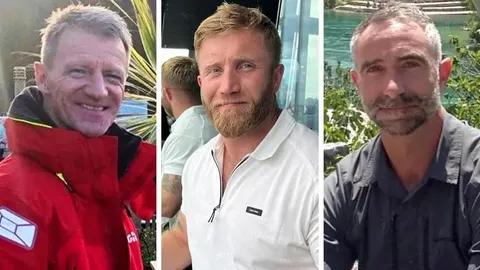
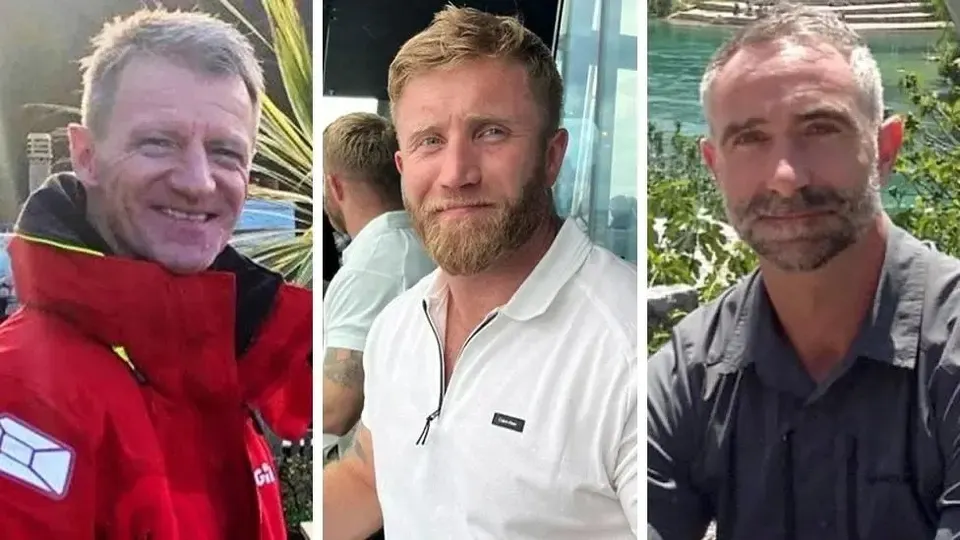
John Chapman, 57, James “Jim” Henderson, 33, and James Kirby, 47, were unarmed security contractors working for World Central Kitchen when Israeli forces struck their convoy near Deir al-Balah on 1 April 2024. Their team had unloaded more than 100 tonnes of food. The charity had coordinated the convoy’s movements with the Israeli military, and two of its three vehicles carried the charity’s logo. Israeli forces struck the vehicles in succession, killing all seven people travelling in them.
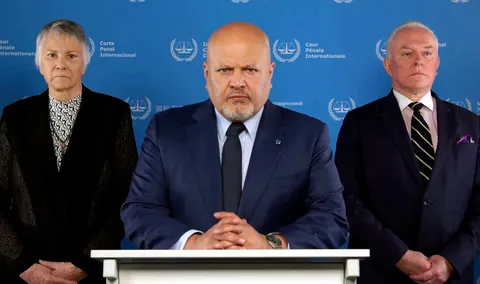
The military acknowledged that its forces had misidentified the convoy and breached procedures. It removed two officers from their posts and reprimanded senior commanders. On 19 August 2026, its prosecutor announced that there were no grounds to open a criminal investigation. Britain, Australia and Canada called the decision “shameful”.
The British families are still seeking answers. At Avon Coroner’s Court in September, their lawyers raised a question Britain itself may be able to answer. A Royal Air Force surveillance aircraft was operating over Gaza on the day of the attack. The families want to know whether it gathered information about the convoy and what, if anything, Britain shared with Israel before the missiles struck.
Sources and attributions
- The van, the meals and the witness. Dawoud Abu Alkas and Pesha Magid reported the witness accounts, food, paperwork and driver’s previous employment. World Central Kitchen issued its own statement on the vehicle and crew. Reuters, 21 November 2026 · Eyewitness testimony from Abu Zein al-Daya · World Central Kitchen statement. www.reuters.com
- The men killed and the competing accounts. Safa reported the men’s names and ages and published the Gaza ministry’s allegation of a war crime. Associated Press interviewed Al-Shifa’s director. An Agence France-Presse photograph identified Abeer Naeem at the hospital. Safa’s identification of the men · Gaza ministry statement · Associated Press · AFP funeral photograph · Israeli military statement · Military follow-up, 22 November. safa.ps
- International law. The Rome Statute and the International Committee of the Red Cross set out the rules on deliberately attacking civilians, verifying targets and protecting relief personnel. The International Court of Justice addressed Israel’s duties towards the population of the occupied Palestinian territory. Rome Statute, Article 8 · ICRC rule on verification · ICRC rule on relief personnel · ICRC guidance on direct participation in hostilities · ICJ advisory opinion summary, 22 October 2025. legal.un.org
- Displacement, flooding and winter supplies. The UN humanitarian team documented restrictions on access to higher ground, the number of tents awaiting entry and the changing damage estimates. Euro-Med Human Rights Monitor set out its assessment of deliberate deprivation before the storm. Israel’s military published its own figures for winter deliveries. UN winter appeal · UN assessment, 8 November · Updated assessment, 18 November · Euro-Med Human Rights Monitor · UN Human Rights Office briefing · Israeli military account. www.ochaopt.org
- Tent strikes and deaths during the ceasefire. The Palestinian Centre for Human Rights documented the strikes that killed Rimas al-Madhoun and Khaled Shalouf, and the subsequent death of Basmallah al-Seksek. The Health Ministry and UN Human Rights Office figures cover different periods. Field investigation into the 3 November strikes · Follow-up on Basmallah al-Seksek · Health Ministry figures, 21 November · UN-verified deaths through July. pchrgaza.org
- The ceasefire and the international response. The Board of Peace addressed Israeli strikes, armed activity by Hamas, shelter restrictions and donor funding in its report to the UN Security Council. Reuters documented the frequency of Israeli strikes and the share of Gaza still accessible to its population. Board of Peace report, 17 November · Reuters, 18 November · Joint statement by the British, Australian, Canadian and Italian foreign ministers. static-cdn.toi-media.com
- Independent press access. The Committee to Protect Journalists set out its legal challenge and documented the October exclusions. The Israeli government gave its security rationale in its response to the High Court. CPJ’s Article 19 argument · Government’s October submission · CPJ’s November findings · UN Human Rights Committee, General Comment 34, paragraph 45. cpj.org
- The 2024 convoy and the British inquests. World Central Kitchen documented its coordination with the military. The Israeli military published its disciplinary findings and its decision on criminal proceedings. Lawyers representing two of the British families recorded the questions raised at Avon Coroner’s Court. World Central Kitchen’s convoy account · Israeli prosecutor’s decision · Joint British, Australian and Canadian response · British families’ pre-inquest submissions.