What Israel’s Soldiers Remember About Gaza, and Whom They Leave Out
Israeli veterans describe the sound of explosions at night and the difficulty of sitting down to a meal. A new documentary asks what happens when a country begins to treat the soldiers it sent to Gaza while the Palestinians who lived through their actions remain largely absent from its account of the war.
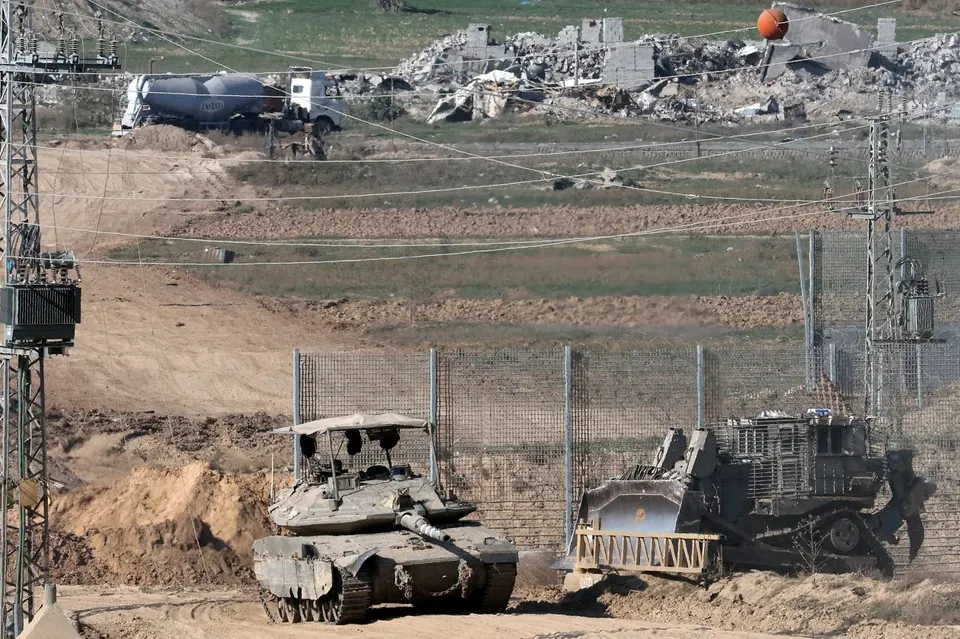
When Guy Zaken came home from Gaza, he said he could no longer eat meat. The sight of it brought back what he had seen from the cab of an Israeli military bulldozer. At night he still heard explosions. In June 2024, he told a committee of the Israeli parliament that soldiers had been required to “run over terrorists, dead and alive, in the hundreds”. He gave MPs a sense of what the experience had done to him. The people he described remained unnamed, their identities unverified.
His friend and fellow bulldozer driver Eliran Mizrahi, a construction manager and father of four, spent 186 days in Gaza, his family said. On leave, he struggled to sleep and withdrew from people close to him. He received a diagnosis of post-traumatic stress disorder and began weekly therapy. He died by suicide before he was due to return to military service. “He got out of Gaza, but Gaza did not get out of him,” his mother, Jenny, said.
The distance between what a soldier remembers and what he is prepared to say about the people on the other side is the subject of Gaza Syndrome, a documentary directed by Awad Joumaa and released on 19 November. Mohanad Mustafa, a scholar of Israeli society, puts its central argument plainly. “Israel faces a psychological crisis among thousands of soldiers, but no moral crisis,” he says.
The soldiers who want to go back
One of the men in the film, Itay Sagi, was a 25-year-old reservist in the Maglan special forces unit when his team came under fire near Kibbutz Zikim on 11 October 2023. The encounter he describes took place inside Israel. Three of his friends were killed. A grenade tore open his neck, and a medic kept a hand pressed inside the wound until he could be evacuated.
“I didn’t choose to kill people. I had to,” Sagi says. He speaks about the friends he lost and his wish to return to the fighting. Another veteran, Boris Shtonda, lost a leg in November 2023 when an explosive device detonated in a building in Gaza. Four of his friends died there. The men can tell the viewer exactly whom they miss. Across the soldiers’ testimony in the film, a Palestinian life rarely comes into focus with anything like that clarity.
Mustafa argues that many soldiers feel little remorse for acts he describes as violations of international law. His judgement concerns the way their conduct is understood and defended in Israel. A diagnosis of PTSD says little about an individual soldier’s beliefs. Clinicians use the term moral injury for the lasting distress that can follow doing, witnessing or failing to prevent something a person believes was wrong. Whether a soldier thinks an act was wrong in the first place matters to that distinction.
What families inherit
By 6 October 2026, about 30,000 Israeli soldiers and other security personnel wounded since 7 October 2023 had entered the Defence Ministry’s rehabilitation system. The ministry said 63 per cent were experiencing psychological reactions, a category broader than diagnosed PTSD. Reservists accounted for 62 per cent of all those admitted. For many of their families, the move from military service to civilian life can take place in the space of a few days.
Ashira Darwish, a Palestinian trauma therapist interviewed in the film, asks what that transition demands of someone who has taken part in shooting children or burning homes. Soldiers act collectively and under orders, she observes. The individual then goes home and has to live with what the group did. Once the fighting stops and soldiers sit alone, she says, “they will have to deal with all the feelings they have suppressed”.
Darwish worries about what reaches the family in the meantime. A reservist can be back at a school, office or hospital within a fortnight. Anger, drinking or withdrawal may be the first things a partner or colleague sees. Darwish also raises a harder possibility. Some soldiers, she believes, may become more committed to the beliefs that justified their actions, because reconsidering those beliefs would mean reconsidering what they did.
Israel has begun expanding treatment, including crisis teams that visit veterans at home. Its armed forces recorded 22 deaths investigated as suspected suicides in 2025, following 21 in 2024. Those figures cover the military as a whole. The records do not establish how many of those who died had served in Gaza or what led to any individual death.
What the army marked in green
One way to understand what is missing from the soldiers’ accounts is to look at a single village. In testimony published by the Israeli veterans’ organisation Breaking the Silence, a reserve sergeant major described an operation in Khuza’a, near Khan Younis, in the winter of 2023–24. His brigade had been told to clear buildings within 800 metres of the border fence. A UN school and a small water facility were to be spared. The stated military purpose was to give Israeli forces a clear view and field of fire.
The sergeant major recalled finding belongings taken from Israeli hostages in some houses. By his own account, those houses were a minority of the hundreds demolished. The division used a colour-coded map to measure the work. Once troops had taken down more than 80 per cent of the buildings in a designated area, it turned green. By the time his brigade finished, he said, its sector of Khuza’a was green.
The wider question of responsibility has reached international proceedings. In September 2025, an independent UN commission of inquiry concluded that Israeli authorities and security forces had committed genocide against Palestinians in Gaza. Israel rejected the finding. South Africa’s separate case against Israel under the Genocide Convention remains before the International Court of Justice.
One of the people who can describe Khuza’a before it became a coloured area on a military map is Seba, a Palestinian mother of two young girls. She remembered a house filled with flowers. Bombardment and shortages of food and water drove the family out, and they walked for hours before finding shelter in Khan Younis. In January 2024, as the brigade’s operation in her village drew to a close, Seba described two weeks spent in an overcrowded school. Her daughters kept falling ill with fever and diarrhoea. What she remembered most clearly about the walk was the fear of what might happen to them. “I was very worried about my daughters,” she said.
Sources and attributions
Al Jazeera Originals, Awad Joumaa, 19 November 2026. ‘Gaza Syndrome’: Israel’s Soldiers Haunted by Genocide and the accompanying interviews and report. Mustafa’s quotation follows the programme’s English description. Darwish’s remarks are translated from the supplied Arabic transcript.
CNN, Nadeen Ebrahim and Mike Schwartz, 21 October 2024. Interviews with Guy Zaken and Eliran Mizrahi’s family, including Zaken’s parliamentary testimony. Beit Halochem Canada recorded Itay Sagi’s account of the ambush near Zikim.
Israel Ministry of Defence, 6 October 2026. Three-year rehabilitation figures and provision for veterans. The Israeli military published its figures for suspected suicides in its 2024 casualty summary and 2025 casualty summary.
US National Center for PTSD. Moral Injury and PTSD, on the clinical distinction and the ways the two can overlap.
Breaking the Silence, April 2025. Soldiers’ testimony on the Gaza perimeter, including the 5th Brigade reserve sergeant major’s account of Khuza’a and the division’s demolition map. UNICEF, 25 January 2024. Childhood displaced in Gaza, including Seba’s account of leaving the village with her daughters.
UN Independent International Commission of Inquiry, 16 September 2025. Findings on genocide in Gaza. Israel’s Ministry of Foreign Affairs issued its response the same day. The International Court of Justice set out the timetable for further pleadings in its order of 21 May 2026.