‘Justice Catches up with Criminals’: UN Investigator Says Netanyahu Must Answer Before the ICC
Chris Sidoti says accountability is essential to stopping further atrocities against Palestinians, as a UN commission concludes that genocide in Gaza has continued despite the October 2025 ceasefire. In an extensive interview, he examines the killing of children, organised settler violence, the responsibilities of foreign governments and why he believes justice will eventually reach those responsible.
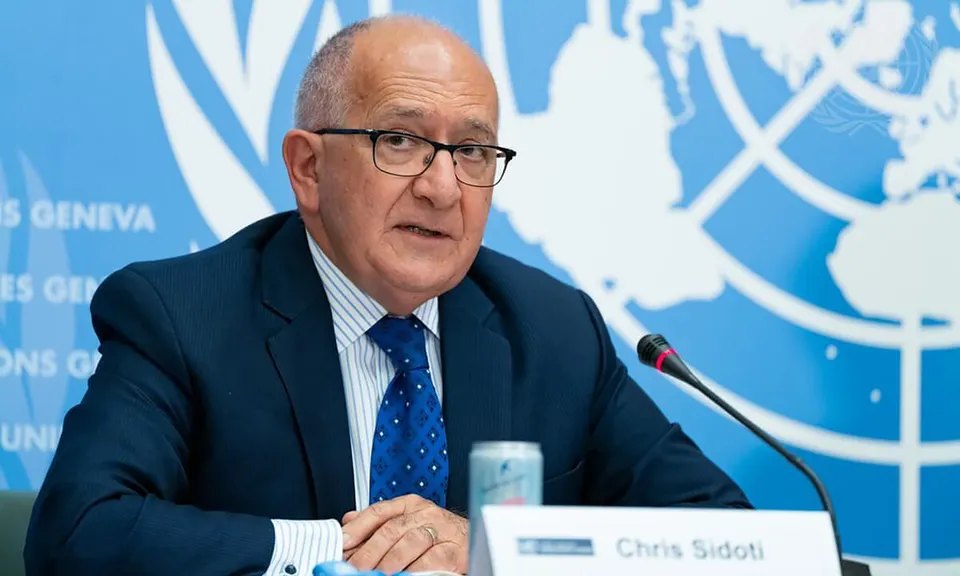
Benjamin Netanyahu should be brought before the International Criminal Court to answer allegations arising from Israel’s conduct in Gaza, UN investigator Chris Sidoti has said, warning that the failure to hold perpetrators accountable leaves Palestinians exposed to further atrocities.
Speaking to Enda Brady in an interview published on 2 November, the international human rights lawyer argued that the growing body of evidence concerning Gaza and the occupied West Bank must lead to prosecutions and changes in government policy. Documenting violations, he said, cannot fulfil its purpose if those responsible remain beyond the reach of the law.
“One of the lessons of history is that justice catches up with criminals,” Sidoti said.
His comments followed the publication of the latest report by the Independent International Commission of Inquiry on the Occupied Palestinian Territory, including East Jerusalem, and Israel. The October report concluded that Israeli authorities and forces continued committing genocidal acts with genocidal intent in Gaza after the ceasefire agreed in October 2025. It also found crimes against humanity in the West Bank, including persecution of Palestinian children on grounds of age. Question of Palestine
Israel has rejected the commission’s findings. Its representative at the United Nations accused the inquiry of bias and of seeking to undermine the country’s legitimacy. Netanyahu denies wrongdoing, and the allegations against him have not been adjudicated at a criminal trial. UN Transcripts
Sidoti repeatedly acknowledged the distinction between investigative findings and judicial verdicts. His demand was that those suspected of responsibility should face a legal process in which evidence can be tested and the rights of the accused respected.
For him, the urgency comes from the consequences of leaving that process unfinished: the same failures that deny justice to people already harmed also weaken protection for those still at risk.
Accountability must protect the future
Sidoti began with a warning about the way accountability is often understood. Public discussion tends to concentrate on justice for past actions, he said, while giving insufficient attention to its role in preventing the next violation.
“But without accountability, we are guaranteed to see the continuation of atrocity crimes in the future,” he said. “And so, it really is about the future as much as it is about the past.”
That argument ran through the interview, connecting individual killings, military policy, the conduct of settlers and the decisions of foreign governments. Sidoti’s concern was that the absence of meaningful consequences allows destructive practices to become established and repeated.
The commission’s work, he explained, involves collecting evidence, establishing facts, applying the law and drawing conclusions. Those conclusions concern what has happened, what is happening now and what governments must do to prevent further harm.
Accountability therefore extends beyond the eventual punishment of a particular offender. In his account, it also requires authorities to stop unlawful conduct, examine the policies that enable it and ensure that victims’ rights have practical force.
The difference matters for people whose lives remain in danger while investigations and court proceedings continue. A legal process that delivers a judgment years later may establish responsibility, but the obligation to protect people exists throughout the intervening period.
Sidoti’s insistence on prosecution was consequently accompanied by demands for immediate action from governments. The evidence being assembled, he argued, should inform decisions about military cooperation, financial support and the treatment of suspected perpetrators now.
How the commission reached its genocide finding
Sidoti rejected the suggestion that the commission’s conclusion about genocide had been reached casually or through political preference.
The inquiry was established by the UN Human Rights Council in 2021, before the events of 7 October 2023. By the time of the interview, he said, it had produced 18 reports over five years, with each investigation contributing to an accumulating body of evidence.
The reports should not be understood as isolated exercises, he explained. Investigations into killings, injuries, deprivation, violence against children and sexual violence had allowed the commission to examine different aspects of the treatment of Palestinians before reaching its wider legal conclusions.
“We came to that conclusion,” he said of genocide. “It took us a long time to do so.”
He described a process that began with the circumstances on the ground: how people were being killed and injured, what was happening to the necessities of civilian life, and how particular groups were being affected.
Only after examining those matters, he said, did the commission ask whether the evidence met the legal definition of genocide.
That sequence was central to his defence of the finding. In his account, the conclusion emerged from examining conduct and intent together, across a series of investigations.
Asked about news organisations that remain reluctant to use the word genocide, Sidoti acknowledged its gravity and the controversy surrounding it. People were entitled to form their own views, he said, while arguing that the commission had undertaken an unusually comprehensive examination of the evidence.
He also identified the limits of its authority.
“We’re not a court,” he said, acknowledging that the International Court of Justice would deliver a more authoritative judicial determination in the case before it.
The ICJ proceedings brought by South Africa concern Israel’s responsibility as a state and remain ongoing. They are separate from the ICC proceedings concerning the alleged criminal responsibility of individuals. The commission’s findings do not constitute a final judgment in either process. Question of Palestine
For Sidoti, recognising those distinctions did not diminish the significance of the evidence already assembled or relieve governments of responsibilities that exist before a final judgment.
A ceasefire that has not ended the underlying policy
The interview challenged the assumption that the October 2025 ceasefire had ended the conduct being investigated.
Brady asked about the expansion of Israeli military control inside Gaza, the movement of the demarcation known as the Yellow Line and the continued displacement of Palestinians. Sidoti linked those developments to a wider policy affecting both Gaza and the West Bank.
“The Israeli government’s game plan for a long time has been maximum Palestinian territory with minimum Palestinian population,” he said.
In Gaza, he described a policy of confining Palestinians to the smallest possible area while consolidating Israeli control over the territory. He argued that the expansion of military control had to be understood alongside the tightening of control in the West Bank.
His assessment went beyond the immediate conduct of individual military operations. He said the commission had examined how territorial control, displacement and attacks on the conditions necessary for Palestinian life fitted together.
Sidoti connected that analysis to the commission’s finding that four of the five categories of genocidal act had been committed with the purpose of destroying Palestinians in Gaza, in whole or in part.
The allegation, as he presented it, depended on the relationship between the acts documented by investigators and the intent they inferred from the evidence. His argument was that a ceasefire designation could not settle that question while the underlying conduct continued.
He described the same objective of maximising territorial control while minimising the Palestinian population as operating in the West Bank, although he distinguished the scale and form of destruction there from what had occurred across Gaza.
Hind Rajab and the evidence behind the findings
The killing of Hind Rajab brought the discussion from broad legal findings to the experience of a child whose calls for help became part of the evidence investigators examined.
Brady asked how a lawyer could approach a case involving a young girl trapped in a vehicle, relatives killed around her and rescuers who were themselves killed while trying to reach her.
“We attempt to approach the situation as dispassionately as possible, but that’s hard,” Sidoti said.
He described the commission’s examination of videos and the audio recordings of Hind’s prolonged contact with the Palestinian Red Crescent Society. Investigators also examined the killing of the paramedics sent to assist her, whom he said had received approval from Israeli authorities to make the journey.
The work had progressed beyond documenting that the deaths occurred, he said, to identifying the military formation believed to have been involved.
“We’ve actually identified the Israeli military unit responsible for the attack on that car and the killing of Hind Rajab,” he said.
The commission’s separate investigation into crimes against Palestinian children, published in June 2026, identifies the 401st Brigade, under the 162nd Division, among units it concluded on reasonable grounds may have been responsible for specified incidents. These included the killing of Hind and her relatives and the shelling of the rescue ambulance on 29 January 2024. That remains an investigative assessment, rather than a judicial determination of individual guilt. Question of Palestine
The Israeli military announced on 19 August 2026 that it had ordered a criminal investigation into the incident. Its statement acknowledged that troops had fired on a vehicle and referred to alleged failures concerning coordination of the Red Crescent ambulance’s movement. The announcement establishes that an investigation was ordered; it does not resolve the question of criminal responsibility. את"צ
Sidoti said the children’s investigation contained numerous cases that were similarly traumatic to examine. Hind’s case had become internationally recognisable, but the suffering documented by the commission extended far beyond one family.
His account also explained why preserving recordings, images and testimony matters. Such material can help investigators reconstruct events, identify those involved and examine decisions that might otherwise remain obscured behind competing official accounts.
Gaza’s tactics spreading into the West Bank
Sidoti warned that the situation in the occupied West Bank was deteriorating, with Israeli authorities increasingly adopting practices associated with their operations in Gaza.
He drew a distinction between the two territories. The West Bank as a whole had not experienced the same strategy of total destruction, he said, but comparable methods were being applied in particular locations, especially refugee camps in its northern and central northern areas.
Alongside military operations, he identified organised settler violence as a central part of the worsening situation.
“The settler violence can no longer be said to be the result of the actions of isolated individuals or groups,” he said.
He dismissed what he described as Netanyahu’s portrayal of violent settlers as “delinquent kids”, arguing that it failed to reflect the organisation of attacks and the relationship between settlers and state institutions.
Sidoti said the commission was seeing violence against Palestinian communities carried out with the complicity and cooperation of Israeli political and military authorities.
That relationship was essential to his legal assessment. His argument about Israeli state responsibility rested on evidence of official involvement and support for the attacks he was describing.
“We are seeing organised violence undertaken by settlers against Palestinian communities with the active complicity of the Israeli armed forces,” he said.
The implications extend beyond the prosecution of individual attackers. If violence is enabled by military protection, political encouragement or failures of enforcement, Sidoti’s argument requires scrutiny of the authorities whose actions help make it possible.
His warning was that the destruction and displacement associated with Gaza could not be treated as geographically contained while related practices were becoming more entrenched elsewhere.
Journalists as witnesses, and as targets
Sidoti placed journalism within the same discussion of evidence and accountability.
Reporters and camera crews do more than inform audiences, he said. Their work can record events as they happen, preserve accounts of violence and provide material that later becomes relevant to investigations.
Brady raised the international attention generated by an attack on a foreign photographer in the West Bank. Sidoti said substantial coverage was necessary, while stressing the wider importance of documenting what Palestinian communities were experiencing.
“The media has a very important role to play in bringing the situation to the attention of people generally,” he said.
He argued that attacks on journalists and restrictions on foreign media access to Gaza must be considered in that context. In his view, Israeli authorities understood the importance of eyewitness reporting and had sought to prevent the outside world from seeing their actions.
Sidoti also returned to the killing of journalist Shireen Abu Akleh, which he described as deliberate. The commission’s published 2023 finding used the formulation that Israeli security forces had unlawfully used lethal force and “intentionally or recklessly” violated her right to life. documents.un.org
His wider point concerned the consequences when journalists are killed and those deaths fail to produce accountability. The loss extends from the individual reporter to the public’s ability to understand events and to the preservation of evidence about what occurred.
“The role of the media is precisely to show the world what is happening,” he said.
Why trials remain some way off
Sidoti was direct when asked how soon prosecutions might bring those responsible for crimes in Gaza and the West Bank before a court.
“They’re a way off,” he said.
He expressed little confidence that Israeli courts would deliver effective accountability in the near future, describing their handling of crimes committed by the military as an abject failure. That assessment, he argued, made international proceedings particularly important.
The ICC issued arrest warrants for Netanyahu and former defence minister Yoav Gallant on 21 November 2024. Its current records list both men as at large. The allegations include starvation as a method of warfare, attacks against civilians and crimes against humanity. The warrants concern war crimes and crimes against humanity; they are not genocide convictions or findings of guilt after trial. International Criminal Court
Sidoti said Netanyahu should be brought before the court and required to answer the allegations, while retaining the same presumption of innocence that applies to any accused person.
That insistence distinguished his demand for a trial from a demand that punishment should precede one.
Practical obstacles remain substantial. ICC trials generally require the accused to be present, making the execution of arrest warrants crucial to moving proceedings forward. legal.un.org
Sidoti said the commission was cooperating with states, prosecutors and courts examining events in Gaza, including by providing evidence. He also raised the possibility that warrants might exist that had not been made public, without claiming knowledge of any particular undisclosed warrant.
His confidence concerned the eventual reach of accountability rather than an imminent courtroom timetable.
“The wheels of justice turn incredibly slowly, agonizingly slowly, but they do turn,” he said.
British citizens and individual criminal responsibility
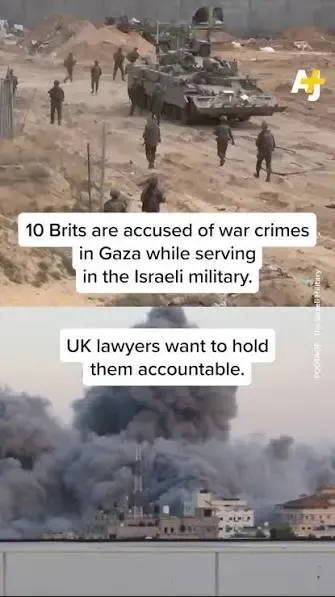
Brady asked about citizens of other countries who had travelled to serve with Israeli forces, including British citizens who might have participated in crimes in Gaza or the West Bank.
Sidoti’s starting position was that foreign nationality provides no exemption from responsibility for international crimes.
“There is no doubt whatsoever that anybody who commits a war crime, a crime against humanity, or the crime of genocide is liable under international law,” he said.
He referred to the different legal routes through which accountability could be pursued, including international courts and national courts applying domestic legislation or forms of universal jurisdiction.
Sidoti took a broad position on the need for investigation. Anyone who had fought with Israeli forces in Gaza during the period under discussion, or had been actively engaged in implementing the strategy there, should be considered a suspect, he argued.
He immediately qualified that statement.
“People are entitled, everyone, to the presumption of innocence,” he said.
His comments should therefore be understood as a call for scrutiny, rather than a finding that military service alone establishes guilt. Any prosecution would require an applicable basis of jurisdiction and evidence establishing the individual’s responsibility, including the relevant conduct and mental elements or a recognised form of participation or command responsibility. legal.un.org
For Britain and other countries whose citizens may have served in the conflict, the issue raised by the interview is whether credible allegations are being examined through an effective legal process.
Sidoti’s argument was that the nationality of a possible suspect should not determine whether the evidence receives attention. The distinction between investigation and conviction must be maintained, but it cannot become a reason to avoid investigation altogether.
What Britain, Australia and other states must do
Sidoti’s criticism extended beyond Israeli authorities to governments whose military, diplomatic or financial relationships could help sustain unlawful policies.
Asked about the slow response of Britain and his own country, Australia, he described a tension between his expectations as a lawyer and his understanding of politics.
As a lawyer, he said, he expected governments to comply with obligations they had helped establish. As someone familiar with political decision making, he understood why they often delayed.
“If I have to comply with the law and you have to, why shouldn’t states themselves, which make this law, be expected to comply with it?” he asked.
He pointed particularly to the ICJ’s advisory opinion of 19 July 2024. The court concluded that Israel’s continued presence in the occupied Palestinian territory was unlawful and that other states must neither recognise the resulting situation as lawful nor provide aid or assistance in maintaining it. Question of Palestine
Sidoti argued that governments needed to translate those obligations into concrete decisions. He called for an end to military relationships with Israel and for measures preventing economic or financial support from sustaining settlements.
His call to end all military relationships was his prescription for action. It should be distinguished from the precise terms of the court’s opinion, which addressed assistance in maintaining the unlawful situation.
He also criticised charitable tax arrangements in Britain and Australia which, he alleged, allowed money to reach Israeli organisations supporting settlements.
In his view, tax relief in such circumstances meant that the wider public helped subsidise conduct their governments should be working to end. He did not identify particular charities during the interview, but raised the issue as an example of how apparently domestic administrative decisions could have consequences in occupied territory.
The interview’s argument about prevention also concerns the period before a final genocide judgment. The ICJ has previously explained that states aware, or which should be aware, of a serious danger of genocide must use the means reasonably available to them to help prevent it, within international law. The duty does not begin only after a final judgment has been delivered. icj-web.leman.un-icc.cloud
Sidoti said the commission’s recommendations were directed first to Israeli authorities because of their own legal responsibilities. But other governments, the United Nations and institutions capable of supporting accountability also had duties that could not be discharged through expressions of concern alone.
Public pressure and the lessons of South Africa
Despite his criticism of governments, Sidoti said he could see signs of movement.
He described international responses as too limited and too late, while observing that public opinion was changing and political leaders were beginning to respond to pressure from their own electorates.
His confidence drew partly on his experience of the international campaign against apartheid in South Africa, in which he had participated as a university student.
He recalled the time it took for governments to respond to popular demands and adopt measures against the apartheid system. The struggle belonged to South Africans, he stressed, but they were entitled to support from the rest of the world.
That history informed his belief that entrenched political arrangements could eventually change, even when governments initially appeared unwilling to act.
“I see opinions changing. I see pressure from people building,” he said.
The comparison was a source of confidence in collective pressure, rather than a timetable for what would happen in Palestine. Sidoti did not suggest that a particular sequence of events was guaranteed to repeat itself.
His point was that governments can be made to reconsider positions they have defended for years when the political cost of maintaining them increases.
Political equality inside Israel
The interview also examined Sidoti’s description of Israel’s political system as only partially democratic.
He focused on the treatment of Palestinian citizens of Israel and the willingness of other parties to engage with their elected representatives.
At the time of the interview, he said, Palestinian parties appeared capable of holding the balance of power in the Knesset. Yet much of the wider political spectrum was refusing to contemplate working with them.
His criticism concerned whether electoral representation translated into equal political participation.
Palestinian citizens could elect representatives, but Sidoti argued that the routine exclusion of those representatives from meaningful political cooperation undermined the equality of their participation.
When Brady asked whether this made them second class citizens, Sidoti declined to endorse the label as a precise measure. He preferred to describe what he considered demonstrable unequal treatment.
“It’s a situation of gross inequality,” he said.
The discussion connected his criticism of Israeli policy in occupied territory with his assessment of political rights inside Israel. In both settings, he argued that lasting stability required the rights of Palestinians to have meaningful effect.
His assessment of possible parliamentary influence was a comment on the political situation surrounding the interview, rather than a declaration of a settled election outcome.
The human cost of investigating atrocities
Sidoti also spoke about the emotional burden of examining killings, sexual violence and the suffering of children.
The attempt to work carefully and dispassionately did not remove the distress, he said. Investigators still had to watch, hear and assess material recording extreme human suffering.
He described the work as traumatic, while explaining that his commitment to applying the law gave it a purpose beyond the production of reports.
What mattered was whether people experiencing injustice could eventually have their rights recognised and their lives improved.
That purpose also depended on collective work. Sidoti emphasised the contribution of fellow commissioners and staff, alongside the many people around the world engaged in documenting abuses, supporting victims and pursuing accountability.
His account placed the commission within that wider effort. Evidence collection, legal analysis and advocacy involved people confronting the consequences of violence repeatedly, often without knowing when their work might result in an effective remedy.
The motivation, he said, was to see those who had suffered injustice receive the benefit of justice.
Palestinian and Israeli futures are inseparable
Sidoti’s final argument was that the continuation of the present situation endangered both Palestinians and Israelis.
He rejected the idea that permanent warfare served the long term interests of the Israeli population, even while arguing that recent Israeli political leaders had treated continuing conflict as advantageous.
A different future, he said, required recognising the connection between the rights and security of the two peoples.
“Israel and Israelis will only know peace and prosperity and justice if the Palestinian people experience peace and prosperity and justice,” he said.
His confidence that change would come rested on a belief that perpetual warfare could not be sustained indefinitely. That belief did not reduce the urgency of the crimes he was describing or the difficulty of bringing suspects before a court.
It returned the interview to the purpose of accountability with which he had begun: protecting people from further harm by making the law consequential for those who exercise power.
For Sidoti, bringing Netanyahu before the ICC, investigating those implicated in crimes and ending external support for unlawful policies were connected parts of that task. The ultimate measure of success would be whether Palestinians obtained justice and whether both populations could live without the prospect of another generation of war.
Sources and attributions
Primary interview: ‘Justice catches up with criminals, Netanyahu should answer to ICC’ | Chris Sidoti, Roundtable, TRT World, presented by Enda Brady, published 2 November 2026. The supplied transcript and programme description form the principal basis of this feature. Interview quotations follow the supplied transcript, with punctuation regularised and repeated words removed where necessary; the publication date is not presented as a verified recording date.
October commission findings: Report of the Independent International Commission of Inquiry, A/81/430, dated 14 October 2026, and the commission’s public announcement of its findings, 26 October 2026. These support the discussion of continuing genocide findings, West Bank violations and persecution of children.
Investigation concerning children: “The essence of childhood has been destroyed”: Israel’s deliberate targeting of Palestinian children, A/HRC/62/CRP.2, UN Commission of Inquiry, dated 18 June 2026. Paragraph 356(c) identifies the military formation potentially responsible in the Hind Rajab case, subject to the commission’s stated evidentiary qualification.
Israeli investigation announcement: Updates concerning incidents examined by the military’s fact finding mechanism, Israeli military, 19 August 2026, published in Hebrew. Section two announces the criminal investigation concerning Hind Rajab, her relatives and the rescue ambulance.
Israel’s response: UN General Assembly Third Committee, 28th meeting, 26 October 2026. Israel’s intervention begins at approximately 08:39. The UN website identifies this transcript as automatically generated and not an official record; its use here is limited to paraphrasing Israel’s rejection of the report.
ICC allegations and warrant status: Benjamin Netanyahu case information and the announcement of the Netanyahu and Gallant arrest warrants, International Criminal Court, 21 November 2024, with current defendant records checked for this feature.
Criminal procedure and individual responsibility: Rome Statute of the International Criminal Court, particularly Articles 25, 28, 58, 63 and 66. These provide the legal context for individual responsibility, arrest warrants, presence at trial and the presumption of innocence.
ICJ proceedings and other states’ obligations: Order concerning further written pleadings in South Africa v. Israel, 21 May 2026; advisory opinion on Israel’s policies and practices in occupied Palestinian territory, 19 July 2024; and the ICJ account of Bosnia and Herzegovina v. Serbia and Montenegro, including the judgment of 26 February 2007, for the duty to prevent genocide.
Shireen Abu Akleh: Commission of Inquiry report A/78/198, dated 5 September 2023, particularly its findings concerning her killing. The feature distinguishes Sidoti’s description during the interview from the wording of the published investigation.