Gaza Faces Deeper Hunger as Food Aid Is Cut and Israel Halts Commercial Shipments
Half a million people in beseiged enclave set to lose World Food Programme assistance as winter approaches. UNRWA, other UN agencies and charities are still working, but their funding and delivery reports reveal a response stretched far beyond its resources.
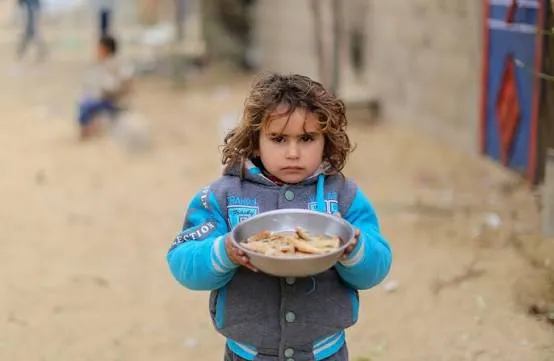
Families in Gaza face a fresh squeeze on their food supplies as the World Food Programme cuts assistance for lack of money and a halt to commercial shipments pushes up the prices of basic goods. With winter approaching, households already dependent on aid are being asked to survive on smaller rations while finding it harder to buy what is missing.
The United Nations agency is preparing to remove half a million people from its assistance rolls. At the same time, residents interviewed on the fifth day of Israel’s suspension of commercial imports described buying fewer eggs, paying more for flour and skipping meals because they could not afford to stock up.
The reductions come despite continuing mass dependence on humanitarian support. WFP’s reach will fall from 1.6 million people to 1.1 million, while the number receiving monthly flour and food parcels will drop from 1.1 million to 600,000. Community kitchens supported by the agency will reduce production from 250,000 hot meals a day to 150,000.
For some families living near the boundary of Israeli military control, a daily meal will become a meal every other day.
Shaun Hughes, WFP’s Palestine director, made clear that the immediate reason was a shortage of money.
The cuts were happening “not because the needs are coming down, or because we don’t have access — we do”, he said.
For Mervat al-Satari, a displaced mother of five living in al-Mawasi, the announcement threatens a food supply on which her children already depend.
“It’s a disaster! What will we do with these reduced rations? How will we provide for the little ones?” she said. “Sometimes we wait for these meals to eat.”
The announcement raises an obvious question after years of international appeals and fundraising: where are UNRWA, the other agencies and the money intended to help Gaza?
Published funding records and operational reports show that aid organisations remain active and donations are financing substantial services. They also show enormous unmet requirements, separate budgets that cannot be treated as one available pot, and Israeli restrictions that prevent money and supplies from being converted into help at the scale required.
OCHA’s funding snapshot dated 30 September recorded $1.63 billion against the $4.06 billion humanitarian appeal for the occupied Palestinian territory in 2026. That left $2.43 billion, approximately 60 per cent of the appeal, unmet. Gaza accounted for 92 per cent of the funding requested.
That shortfall is a measure of requirements without funding recorded against them. It is not a sum that donors necessarily paid and somebody then lost.
WFP says it now needs $450 million to maintain critical Palestinian operations over the next six months. Its warning follows earlier retrenchment: on 1 September, the agency announced that West Bank assistance would fall from 400,000 recipients to 200,000. It also reported that, in July, the cash value of assistance for 375,000 people in Gaza had been reduced by 40 per cent.
These successive cuts make clear that the latest announcement is part of a longer contraction in support.
UNRWA, meanwhile, has not disappeared from Gaza. Its update published on 9 October described more than 10,000 staff continuing to provide assistance, with 11 health centres operating and mobile medical teams working across the territory.
Between 21 September and 4 October, its health personnel provided 140,122 medical consultations. More than 106,000 children were attending activities in temporary classrooms, while 114 collective emergency shelters accommodated about 65,000 displaced people.
Those figures explain where some of the agency’s resources are going: into medical care, shelter, education and the staff needed to keep services functioning.
But UNRWA is struggling to finance those services itself. In an interview published on 28 September, senior agency official Roland Friedrich described a $100 million cash-flow shortfall in its 2026 core budget, alongside a larger projected funding gap. Reduced working hours and salaries, shorter service hours and fewer operating days were already constraining its response.
He also said the agency remained unable to bring its own supplies directly into Gaza and relied on international partners.
That distinction matters. WFP’s statement that it has access for the food operation now being cut does not establish that every organisation, or every category of humanitarian goods, can enter freely. An agency can have staff inside Gaza while being prevented from replenishing its own supplies.
UNRWA’s finances also cover a much wider area than Gaza. In 2025, it reported approximately $887 million in confirmed pledges and $829 million in contributions received, including $76 million from the UN regular budget. Its mandate extends across Gaza, the West Bank, Jordan, Lebanon and Syria.
Those are agency-wide figures for a previous year, not an unspent Gaza reserve available to replace WFP’s missing food budget.
The withdrawal of US government funding has removed a former major source of support. Other donors have continued contributing, but their announcements need to be read with care.
Britain announced £23 million for UNRWA on 30 June. On 24 September, it presented an £88 million package for humanitarian relief and early recovery in Gaza and the West Bank, covering healthcare, water, sanitation, waste management and protection.
The government’s own notes state that the £88 million includes previously announced support through UNRWA and the UN Horizon Fund, as well as new funding. It therefore cannot all be counted as fresh money on top of earlier announcements. The wider British bilateral aid budget for Palestine in 2026–27 is £127 million.
Nor does an announced commitment establish that the entire amount has already been disbursed or spent.
There are examples of donors explicitly reporting payments. Norway told the UNRWA pledging conference on 30 June that it had disbursed 275 million Norwegian kroner to the agency that year. Ireland said it had paid €20 million in core funding. The European Union described annual support of €82 million and an additional €17.6 million in humanitarian funding for 2026 by that point.
These contributions sustain services, but they serve different programmes and reporting periods. Adding them indiscriminately to agency receipts or the overall humanitarian appeal would risk counting the same money more than once.
OCHA also publishes a breakdown showing how one pooled funding mechanism supports organisations on the ground. Its 30 September snapshot listed 77 projects under the occupied Palestinian territory Humanitarian Fund: $21.6 million for national NGOs, $18.7 million for international NGOs and $18.4 million for UN agencies. Ninety-one per cent of the funding addressed needs in Gaza.
That is an identifiable allocation of resources to implementing organisations, although allocation figures alone do not show when every household received assistance.
Other agencies’ reports provide evidence of what their operations are delivering. On 16 October, UNICEF said it had provided digital cash assistance to more than 380,000 people during the year and continued supplying safe water to 1.2 million people.
Yet the same statement described all six wastewater treatment plants as out of service. UNICEF said the Sheikh Radwan stormwater basin could be drained within two weeks, but Israel had not allowed the necessary equipment into Gaza.
The result is a direct threat to families facing winter rain: humanitarian workers can identify the danger and the equipment needed to address it, while restrictions prevent them from completing the work.
The World Health Organization is also delivering supplies, supporting health services and facilitating medical evacuations. In its 24 September assessment, only 19 of Gaza’s 36 hospitals were functioning even partially, and none was fully operational. Medicines, equipment and fuel remained in critically short supply.
Medical spending therefore supports a severely damaged system whose needs continue long after a consignment arrives or a consultation takes place.
Public donations to charities are financing another part of the response. Britain’s Disasters Emergency Committee reported £68 million raised for its Middle East Humanitarian Appeal by 11 September.
That appeal covers Gaza, Lebanon, the West Bank and Syria. Its total should not be described as money raised exclusively for Gaza.
For the first 18 months of the response, from October 2024 to April 2026, DEC charities and their partners reported providing food assistance to more than 650,000 people in Gaza and access to clean water for more than 420,000. The activities included hot meals, food parcels, vouchers, water deliveries and work on water systems.
Those are reported service outputs, rather than a complete audit trail for every donated pound. They nevertheless demonstrate that charitable funds are supporting people inside Gaza. They also describe assistance delivered over time, not a standing capacity to replace another agency’s future cuts.
Large reconstruction announcements belong to a different category again. In September, the US-backed Board of Peace unveiled a $2.45 billion plan to begin rebuilding Gaza, against estimated recovery and reconstruction needs of $71.4 billion over a decade.
A reconstruction plan is not equivalent to cash paid into WFP’s food programme. Its headline value does not establish that money is available to keep a particular community kitchen operating tomorrow.
The humanitarian system also faces continuing disputes over access. Israel says it works with other UN agencies and argues that restrictions on certain goods address security risks. Aid organisations report that controls on equipment and materials obstruct essential services and recovery.
By 18 October, the suspension of commercial shipments had entered its fifth consecutive day. Residents described sharp increases in the cost of flour, eggs and vegetables after Israel announced on 14 October that commercial goods would no longer enter. Families with money were trying to buy ahead; those without it were reducing what they ate.
Ismail al-Barawi, 52, from Jabalia in northern Gaza, said a carton of 30 eggs that had cost 35 shekels was now selling for between 60 and 70. A kilogramme of onions had risen from five or six shekels to between eight and 10. Instead of buying a full carton of eggs, he might now take only four or five.
“These increases happened in just two or three days,” he said.
Al-Barawi helps feed an extended family of about 11 or 12 people, including his married daughters and their children. When he has money, he buys essentials such as flour, rice, cooking oil, onions and potatoes. He accused traders of raising prices as soon as they anticipated a prolonged closure.
“Some people cannot even afford to feed themselves for a day. How much can they save or store when they have no money?” he said.
Even households able to buy extra food face practical limits. Vegetables spoil, while unreliable electricity makes keeping meat difficult. Stockpiling offers little protection to families without an income, secure storage or refrigeration.
The reasons given for the suspension remain contested. Israeli authorities blamed charges imposed by Hamas on commercial trade. Gaza’s Government Media Office rejected the allegation that authorities had imposed taxes or government fees on trucks. It said the 10,000-shekel sum cited by Israel was connected to a voluntary community fund intended to help vulnerable families.
The office accused Israel of using the dispute to restrict supplies and urged mediators to secure the entry of 600 trucks a day under existing agreements. Those competing explanations concern the handling of commercial shipments; they do not provide an accounting of UN humanitarian donations.
For Iman Atallah, a 50-year-old displaced woman living in Beit Lahiya, the immediate calculation is the price of flour. She said a sack that had cost between 25 and 35 shekels before the closure now cost about 80. The size of the sack was not specified.
The flour her family receives through aid distributions does not last the month. They now depend on rice, lentils and a little bread, sometimes missing breakfast or dinner and making lunch their main meal.
“We used to eat more, and we could buy eggs for the children. Now we’ve had to give those things up,” Atallah said.
“We cannot stock up because we have no income.”
The accounts show how cuts to aid and disruption to trade can compound one another. Smaller food distributions leave households needing to buy more, while rising prices make their remaining cash buy less. For families already unable to afford sufficient food, neither the market nor the reduced aid ration reliably fills the gap.
The community kitchens facing cuts are already struggling to fill that gap. Sawsan Bahloul, a mother of three in al-Mawasi, said the portions were too small even before the planned reductions.
“This will affect us a lot. The daily aid was somehow ticking the box but now it will be every two days,” she said.
The improvements recorded since the October 2025 ceasefire remain dependent on sustained assistance. A joint assessment issued by WFP, UNICEF and the UN Food and Agriculture Organization in July put 1.4 million people at crisis or worse levels of acute food insecurity, despite the expansion of relief.
The agencies also reported that more than 70 per cent of Gaza’s cropland was inaccessible and only 3 per cent usable. Restoring people’s ability to feed themselves requires access to land, agricultural inputs, functioning markets and basic infrastructure, alongside emergency food.
For now, WFP says it will continue supporting bakeries that provide about a third of Gaza’s bread needs, nutritional assistance for around 300,000 women and children, and nutritious snacks for some 200,000 children.
But the reductions elsewhere will reach households that already describe their rations as inadequate.
In Gaza City, Dalal al-Dahdouh is living with her family of eight in the remains of their home. She remembers a life with fresh vegetables, sanitation and land of their own.
“The flour isn’t enough and the food boxes aren’t enough either,” she said.
“Now we live entirely on aid, including WFP vouchers.”
Source notes — reporting checked 19 October 2026
WFP’s latest $450 million requirement, planned October reductions and quotations from Shaun Hughes, Mervat al-Satari, Sawsan Bahloul and Dalal al-Dahdouh are drawn from Yolande Knell’s BBC report supplied for this feature, “Funding shortages force World Food Programme to cut aid to Gaza”.
The accounts and quotations from Ismail al-Barawi and Iman Atallah, their reported food prices, and the Gaza Government Media Office’s response are drawn from Maram Humaid’s “Gaza families fear food shortages as Israel halts commercial shipments”, Al Jazeera, 18 October 2026, also supplied for this feature. The fifth-day description refers to that reporting date. These interviews were conducted by the original reporters.
Additional sources:
OCHA humanitarian situation report, 2 October 2026, published 5 October. The funding graphic is dated 30 September and shows the $4.06 billion appeal, $1.63 billion funded, $2.43 billion unmet, and the Humanitarian Fund project allocations.
Sada El-Balad English interview with UNRWA official Roland Friedrich, 28 September 2026.
UNRWA funding overview and UN pledging conference transcript, 30 June 2026.
UNRWA USA explanation of continuing operations and withdrawal of US government support.
UK humanitarian and early recovery package, 24 September 2026. Notes to editors explicitly identify overlap with earlier announcements.
Reuters assessment of the Gaza peace plan and reconstruction proposal, 6 October 2026.
House of Commons Library briefing on UNRWA and Israeli restrictions.
Associated Press report on disputed commercial shipment stoppage, 15 October 2026.
Funding requirements, pledges, receipts, project allocations, spending and service outputs are different measures. Figures from different mechanisms overlap and should not be added together; agency reach figures may also count some of the same people.