Gaza’s Hunger Crisis Gives New Urgency to French Case Against Aid-Blocking Activists
A fresh warning over food supplies and an expanding Italian investigation provide a new context for the French proceedings against two women accused of complicity in genocide.
A fresh interruption to commercial supplies entering Gaza has underlined the stakes of a French investigation into activists accused of obstructing humanitarian aid: what accountability follows when civilians are deliberately denied the means to survive?
On 16 October, UNICEF called for humanitarian and commercial goods to enter Gaza continuously, warning that children’s recovery depended on reliable supplies. The warning offers a present-day lens through which to examine the proceedings against Nili Kupfer-Naouri and Rachel Touitou, two French-Israeli women accused of involvement in earlier aid blockades.1
Israel’s military coordination body, COGAT, attributed this week’s halt in commercial deliveries to merchants refusing to import goods because of Hamas-imposed charges. Palestinian importers disputed that explanation, saying Israel had imposed the restrictions. Humanitarian organisations warned that aid deliveries alone could not sustain a functioning food market. This interruption is separate from the earlier conduct alleged in the French case.2
The distinction does not diminish the connection between access and survival. UNICEF spokesperson Ricardo Pires said more than 47,000 children had received treatment for acute malnutrition over the preceding year. Famine conditions had receded, but malnutrition and stunting remained. Some 800,000 children were still displaced. In his briefing, Pires stressed that “humanitarian and commercial goods are essential to children in Gaza”.1
For the organisations pursuing the French complaints, the issue is whether particular individuals helped deepen that vulnerability by seeking to stop supplies reaching Palestinians.
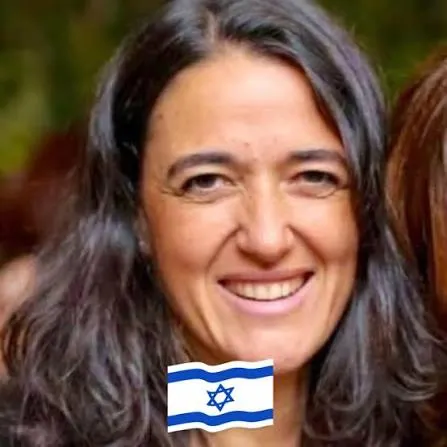
The warrants at the centre of the case were issued in late July 2025 and publicly reported in February 2026. They concern Kupfer-Naouri, a lawyer who heads Israel Is Forever, and Touitou, an activist associated with Tsav 9. Investigators are examining alleged complicity in genocide and public and direct incitement to genocide, including actions to obstruct aid at the Nitzana and Kerem Shalom crossings during 2024 and in May 2025.3
There is an important legal distinction behind the headlines. The orders are mandats d’amener: warrants directing police to bring a person before a magistrate. They do not themselves impose pre-trial detention, and they are not convictions. Article 122 of France’s Code of Criminal Procedure sets an evidential threshold for issuing such warrants; it does not turn the allegations into findings of guilt.4
No reliable public confirmation of either woman’s arrest, a trial or a judgment was located in the reporting reviewed for this article as of 17 October. The warrants should therefore be understood as a documented investigative step, without assuming a later outcome.
The case followed complaints involving French-Palestinian complainants and organisations including the French Jewish Union for Peace, Al-Haq, Al-Mezan and the Palestinian Center for Human Rights. Lawyers representing the French Jewish Union for Peace and a French-Palestinian complainant emphasised the concrete nature of the alleged conduct: “Complicity in genocide is not an abstract concept.” Their argument is that organising or encouraging the deprivation of essential supplies can require scrutiny alongside the acts of those conducting military operations.5
The women reject the accusations. Kupfer-Naouri defended her actions in an interview reported in February: “I blocked trucks that were supplying Hamas. If I had to do it again, I would do it again.” Touitou characterised her involvement as peaceful protest against the alleged diversion and resale of aid by Hamas. These are their explanations for their conduct; they do not establish that the supplies they sought to obstruct were destined for combatants.6
The allegations also concern rhetoric. In January 2025, France’s Ligue des droits de l’Homme criticised Kupfer-Naouri for statements it said advocated Gaza’s destruction and the obstruction of humanitarian assistance. It cited her assertion that there was “no innocent civilian population in Gaza”, translated from the French. The organisation’s statement is an accusation by a rights group, rather than a judicial finding, but it helps explain why the scrutiny extends beyond physical roadblocks.7
Tsav 9’s activities were already the subject of official international action before the French warrants were issued. In July 2024, the European Union sanctioned the group, describing repeated interference with aid deliveries, attacks on food trucks and the destruction of food. Its published reasons referred to incidents at Tarqumiyah and Binyamin and concluded that the actions had aggravated conditions for Gaza’s civilian population.8
That record provides background to the investigation, but the group’s designation cannot establish either woman’s responsibility for every incident attributed to its members. A criminal case must examine the evidence concerning each suspect’s own conduct and the elements of the offences alleged.
The wider European legal picture also shifted this week. On 16 October, Italian prosecutors said their investigation into the treatment of Gaza flotilla activists had expanded to include Israeli Defence Minister Israel Katz and senior military, police and prison officials. The inquiry followed complaints from 50 Italian citizens and concerns alleged torture, kidnapping and other offences. It had previously focused on National Security Minister Itamar Ben-Gvir. Katz did not immediately respond to Reuters; Ben-Gvir had earlier rejected the investigation. Being investigated does not establish guilt.9
The Italian and French proceedings concern different events and legal allegations. Together, they illustrate why domestic courts matter to people seeking accountability over Gaza: they provide venues in which specific acts, individuals and chains of responsibility can be examined.
The fresh humanitarian warning makes the underlying stakes immediate. UNICEF’s August nutrition survey found that chronic malnutrition, or stunting, affected 12.2 per cent of under-fives in the accessible areas surveyed. Those findings describe harm that can persist after acute hunger subsides. The survey covered accessible populations and should not be treated as a complete measurement of every child in Gaza.10
The French case cannot resolve Gaza’s food crisis. It can test whether alleged civilian participation in denying essential supplies carries individual criminal consequences. As children’s recovery remains dependent on what is permitted through the crossings, that question has lost none of its urgency.
Sources and reporting notes
- UN Geneva briefing, 16 October 2026, and the accompanying transcript. The transcript is automatically generated; the humanitarian figures and substance were checked against the UN’s written briefing summary.
- Associated Press, 15 October 2026: commercial supplies and the disputed explanation for their interruption.
- AFP reporting published by Le Progrès, 2 February 2026. This dates the warrants to late July 2025. The complainants’ separate joint statement describes August 2025; this article follows AFP’s judicial-source account.
- French Code of Criminal Procedure, Article 122; French Ministry of Justice explanation of the warrant types; and Brut/AFP’s account of this case. The Brut page displays September 2026 but repeats the July 2025 warrants; it is not treated as evidence of newly issued orders.
- Le Monde, 2 February 2026, including the comments of lawyers Marion Lafouge and Damia Taharraoui; the complainants’ joint statement. The lawyers’ short quotation is translated from French. The Middle East Eye article supplied for this draft also reports the case.
- Jewish Telegraphic Agency, 2 February 2026, reporting Kupfer-Naouri’s i24News interview and Touitou’s response; AFP reporting linked above.
- Ligue des droits de l’Homme, 24 January 2025. This is a rights organisation’s statement, not a court judgment.
- Council Decision (CFSP) 2024/1967, 15 July 2024, reasons for listing Tzav 9.
- Reuters, 16 October 2026, republished by Investing.com.
- UNICEF, 24 August 2026: Gaza SMART nutrition survey. Fieldwork took place from 31 May to 15 June 2026 in accessible areas.
Prepared from published reporting and official material available on 17 October 2026. The named individuals have not been contacted for this draft. No fresh French court outcome is asserted.