Gaza’s Forgotten Cages: How War, Siege and Official Indifference Condemned the Animals of Gaza’s Zoos
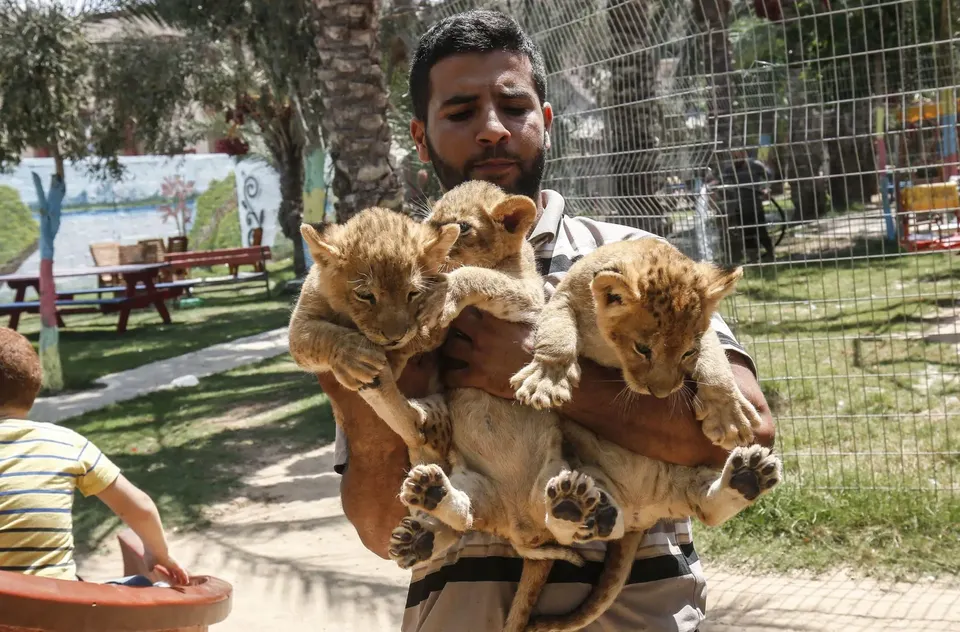
By the winter of 2023, Rafah Zoo had become a place where Gaza’s catastrophe could be seen in miniature. Displaced Palestinian families slept between cages while starving monkeys, parrots and lions cried for food. The zoo was no longer a public attraction, nor even a functioning animal facility. It had become an improvised shelter for humans and a death trap for captive animals that could neither flee bombardment nor survive without food, medicine and caretakers.
Reuters reported on January 1, 2024, that four monkeys had already died, while a fifth was so weak it could not feed itself. Zoo owner Ahmed Gomaa said two lion cubs were being kept alive on “dry bread soaked in water,” while veterinarian Sofian Abdeen described “cases of starvation, weakness, anaemia,” adding that “there is no food.” The lions’ mother had reportedly lost half her body weight after going from daily chicken meals to weekly bread.
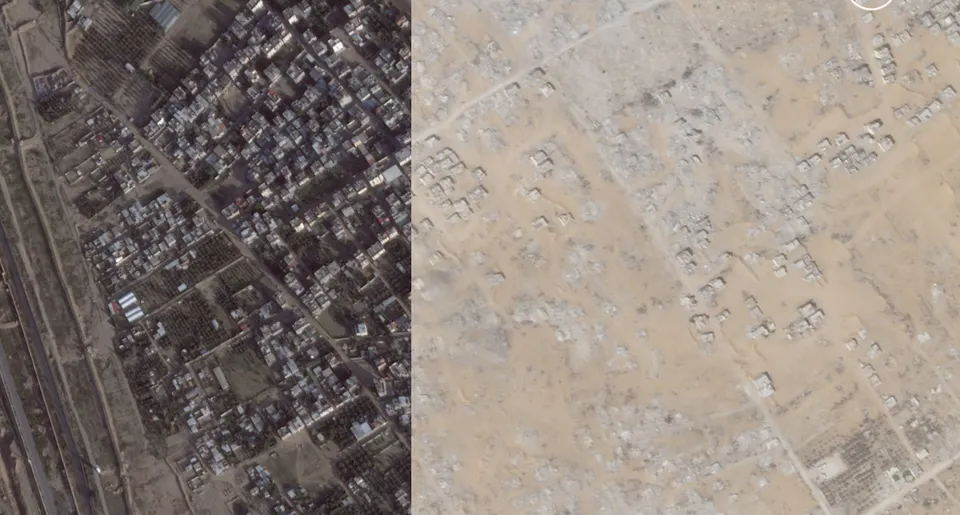
The suffering of Gaza’s zoo animals was not an accident of nature. It was the foreseeable result of a war and siege that collapsed every system animals depended on, including food supply, water, fuel, veterinary medicine, transport, safe shelter and international rescue access. Gaza’s animals were trapped inside a territory where people themselves were being starved, displaced and bombed. In those conditions, captive wildlife became almost impossible to protect, and the failure to create emergency evacuation corridors or humanitarian exceptions for animal care ensured that many animals died unnecessarily.
A fragile zoo system before the war
Before October 2023, Gaza had a fragile and controversial zoo culture, shaped by blockade conditions, private ownership, poverty and the difficulty of importing specialist supplies. A 2023 census cited by the Institute for Palestine Studies counted 19 zoos in Gaza, housing around 100 exotic or wild animals, including lions and eagles. These were not well resourced international conservation centres. They were small, vulnerable facilities operating in an already besieged enclave. After October 2023, that vulnerability became fatal. The same report said nearly all Gaza’s zoos had been destroyed, with animals suffering constant bombing, severe shortages of food and veterinary care, and abandonment after some caretakers were killed.
The animals’ origins were also bound up with Gaza’s long isolation. Earlier reporting on Gaza’s zoos showed that exotic animals often arrived through informal trade, smuggling routes and private arrangements rather than transparent conservation exchanges. FOUR PAWS reported that Rafah Zoo, opened in 1999, had previously held lions, a hyena, wolves, monkeys, cats, dogs, ostriches, emus and exotic birds, and that some animals had died during earlier rounds of war and were later stuffed and displayed.
This history matters because Gaza’s zoos were already products of siege, scarcity and improvisation before the current war. Many animals had not arrived through accredited breeding programmes or formal international zoo networks. They came through private trade, local breeding, informal transfers and regional contacts. Some may have been gifted between owners, but the available reporting does not establish a formal pattern of state gifts from foreign governments. The more reliable picture is one of acquisition under blockade conditions, followed by years of underfunded care and repeated exposure to war.
International concern for Gaza’s zoo animals did not begin after October 2023. FOUR PAWS had previously intervened at Rafah Zoo after it became known as the “Zoo of Sorrows.” In 2019, the organisation announced a mission to rescue more than 40 animals, including five lions, a hyena, monkeys, wolves, porcupines, foxes, cats and dogs. That intervention followed reports that four lion cubs had frozen to death and that a lioness had been declawed with garden shears.
Those earlier episodes were warnings. Gaza’s captive animals were already vulnerable before October 2023. The war did not create the underlying fragility, but it turned that fragility into mass death.
Rafah Zoo becomes a shelter and a starvation site
Rafah Zoo became the clearest documented case after October 2023 because journalists reached it while it was still partly functioning. Al Jazeera’s January 2024 photo report showed displaced families living beside cages, a worker feeding tomato slices to a weak monkey, and a man holding a monkey that had died from starvation. The report said lions, monkeys and parrots were struggling to find food and medical treatment under Israeli attacks in Rafah. One displaced man, Adel Gomaa, gave the scene its most haunting line: “Living among the animals is more merciful than what we get from the warplanes in the sky.”
The most damning detail was the lions’ diet. Big cats require meat, veterinary monitoring and stable conditions. In Rafah, they were reduced to soaked bread. That was not animal care in any meaningful sense. It was slow emergency triage in a collapsing society. The keepers were not indifferent. They were overwhelmed, impoverished and trapped. They were trying to keep predators alive with food that could barely sustain people.
The animals were rarely named in public reporting, and that absence is itself part of the tragedy. Unlike major international zoos, Gaza’s private zoos do not appear to have maintained publicly accessible registers giving names, ages, parentage, acquisition records or veterinary histories. The available reports usually identify animals by species and condition rather than by personal identity. Reuters named zoo owner Ahmed Gomaa, and other reports refer to Fathi Jumaa or Fathi Juma, but the lions, monkeys, parrots, turtles, gazelles, squirrels and birds mostly remain anonymous in the public record.
Some ages and life stages can still be reconstructed. The lions reported in January 2024 included two cubs and their mother, which means at least one breeding adult lioness was alive at Rafah Zoo when the war began. Later reporting described three lion cubs being moved during the Rafah evacuation. By November 2025, the Times of Israel reported that survivors from Rafah Zoo included three lion cubs, 19 monkeys of various species, two gazelles, 14 squirrels, five dogs and several birds, including an eagle, parrots and peacocks. The same report said Rafah Zoo had housed several hundred animals before October 2023, including lions, monkeys, gazelles, crocodiles and birds.
Those details sharpen the scale of loss. If Rafah Zoo once held several hundred animals and only a reduced group was still being described among surviving evacuees, then many animals had died, disappeared, been released or been abandoned. The public record does not allow a verified final count for each species, but it does show a collapse from a large private collection into scattered remnants.
Evacuation without rescue
As Israel expanded its operations in Rafah in May 2024, the animals were displaced again. Reuters published images showing animals from Rafah Zoo moved to Khan Younis, including lions, monkeys and birds taken to a sanctuary after escaping the fighting further south. These images showed survival, but not rescue in the full sense of the word. The animals had not been moved into a secure international sanctuary with specialist care. They had merely been pushed from one devastated part of Gaza to another.
Other reporting described the evacuation as chaotic and incomplete. Africanews, carrying Associated Press video material, reported that Rafah Zoo workers had only a couple of days to move animals when Israel launched its offensive in Rafah. Fathi Juma said three elderly lions, cats, guard dogs and turtles were left behind because there was not enough time.
Arab News reported that Gomaa said he had already lost several animals to the war, including “three lion cubs, five monkeys, a newborn monkey, and nine squirrels.” He also said he released some dogs, hawks, eagles, pigeons and ornamental birds because there were not enough cages to transport them.
That account captures the impossible cruelty of the situation. A zoo owner under bombardment had to choose which animals could be transported and which would be abandoned, not because they were beyond saving in principle, but because no organized protection system existed for them.
By 2025, the picture had darkened further. The Institute for Palestine Studies reported that some southern Gaza zoo owners managed to move animals to safer places, but surviving animals suffered severe psychological distress from shelling, injuries, illness, malnutrition and poor temporary shelters. It also reported that many animals had been left behind after caretakers were killed, while nearly all zoos had been destroyed.
Gaza’s other animals
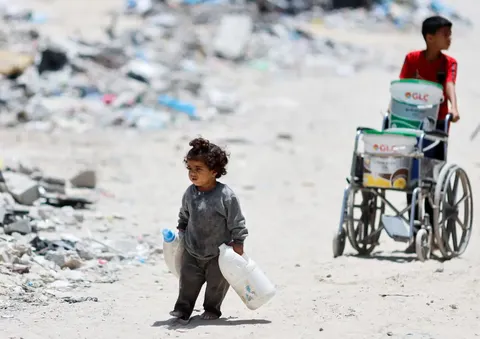
The zoo disaster was only one part of a broader animal catastrophe. Across Gaza, animals became another overlooked dimension of the war. Cats were trapped beneath rubble. Dogs wandered destroyed streets. Horses were wounded by shrapnel. Birds were abandoned in broken cages. Donkeys hauled displaced families, water containers, wounded civilians and personal belongings through bombed neighbourhoods. Campaign records compiled international appeals, social media documentation and figures from animal welfare groups, including Sulala Animal Rescue, Animals Australia, FOUR PAWS, In Defense of Animals and donkey welfare organisations.
Sulala Animal Rescue, founded by Gaza based rescuer Saeed Al Err, became one of the most visible animal welfare groups in Gaza. Its own website describes it as the first and only animal rescue in Palestine, founded in 2006. Animals Australia launched an appeal to support Sulala, saying the group was trying to help hundreds of animals stranded, starving and injured in Gaza.
The campaign material states that Sulala had cared for more than 350 dogs before the war, that it fed or supported more than 1,000 animals during wartime conditions, and that Animals Australia supporters came from more than 77 countries. It also records campaign claims that approximately 16 tonnes of emergency animal food were provided through support efforts, along with funding for veterinary care, emergency treatment and feeding programmes for cats, dogs, birds, donkeys, horses and livestock.
Saeed Al Err became one of the most quoted figures in Gaza animal rescue campaigns. Widely circulated campaign statements attributed to him included: “We have already lost everything, but at least the animals are still with me”; “Animals suffer like humans, they feel fear, even convulsions”; and “Even in war, the animals still need food, shelter, and care.” These lines became part of international fundraising and solidarity campaigns for Gaza’s animals.
Children also became part of the story. Campaigns repeatedly highlighted displaced children rescuing injured cats, dogs and birds, sometimes bringing them to shelters. Animals Australia campaign material quoted the idea that “Children are rescuing animals and bringing them to Sulala,” a line that resonated because it connected animal rescue with the survival of compassion under catastrophic conditions.
Donkeys as Gaza’s last transport system
One of the most striking animal related developments during the war involved donkeys. As fuel disappeared, roads were destroyed and vehicles became unusable, donkeys became essential to daily survival. They carried water, food, aid supplies, displaced families, wounded civilians and sometimes corpses. They were no longer merely working animals. They became part of the emergency infrastructure of a society under siege.
The Guardian reported in April 2025 that Dr Saif Alden and a mobile veterinary team connected to Safe Haven for Donkeys were treating working animals under extreme conditions, and that the mobile clinic had treated more than 7,000 donkeys since the war began in October 2023. The same reporting described donkeys as indispensable in Gaza because damaged infrastructure and fuel shortages had made vehicles unusable in many areas.
Alden’s statement, repeated in animal welfare coverage, captured their role: “These donkeys are the last thread connecting people to the basic services they desperately need.” He also said donkeys had saved lives by transporting pregnant women to hospitals and carrying injured people to safety.
Many of these animals suffered malnutrition, open wounds, hoof injuries, exhaustion, dehydration, untreated infections and injuries from debris or collapsed buildings. Animal welfare organisations increasingly described them as invisible frontline workers in Gaza’s humanitarian collapse. That description was not sentimental. It reflected practical reality. In a territory where fuel was scarce and roads were broken, the survival of humans often depended on the endurance of animals.
The destruction of Gaza’s animal wealth
The deaths of Gaza’s zoo animals must also be understood as part of a wider assault on animal life across the territory. Euro Med Human Rights Monitor reported in August 2025 that around 97 percent of Gaza’s “animal wealth” had been destroyed through bombing, starvation and looting. Its figures concerned livestock and working animals rather than zoo animals alone, but they show the broader ecological and agricultural collapse into which the zoo disaster fitted.
Euro Med said Gaza had around 6,500 poultry farms before October 2023, supplying about three million chickens to the local market each month, and that more than 93 percent of these farms had been completely destroyed. It also estimated that Gaza had approximately 15,000 cows, around 60,000 sheep, 10,000 goats and 20,000 donkeys before the war. By its August 2025 reporting, more than 97 percent of cattle, sheep and goats had been killed or destroyed, while no more than 6 percent of donkeys remained.
These figures move the story beyond individual suffering. They describe the near collapse of an entire animal economy, including food production, transport, household survival and the fragile networks of care that existed before the war. Gaza’s animals were not peripheral to civilian life. They were embedded in food systems, transport systems, family life and emotional survival.
International campaigns, but no decisive protection
The catastrophe exposed a hierarchy of concern in which animal suffering was visible enough to be photographed, but not important enough to trigger a major international protection mechanism. Reuters, Al Jazeera, AFP, Anadolu, Associated Press material, NPR linked reports, Xinhua and other outlets documented starvation, evacuation and abandonment. Palestinian officials and zoo owners described destruction and desperation. Animal welfare organisations raised money, circulated petitions and tried to keep local rescuers supplied. Yet no widely reported dedicated Israeli government statement addressed the fate of Gaza’s zoo animals, and no major United Nations wildlife intervention focused specifically on them.
That silence matters because the animals were fully dependent on human systems. Israel’s siege and military operations created the conditions in which food, medicine, fuel and safe movement became scarce or impossible. International agencies did not create a visible rescue mechanism for the zoo animals. Animal welfare groups had previously evacuated animals from Gaza during earlier crises, but wartime border closures and military conditions made comparable rescue operations extraordinarily difficult after October 2023.
The international response came mainly through charities, photographers, social media campaigns and grassroots donations. Campaign hashtags such as #SaveGazaAnimals, #AnimalsOfGaza, #StandWithSulala, #AnimalVictimsOfWar and #HelpAnimalsInGaza circulated among animal rights activists, veterinary networks, Gaza based shelters and international supporters. Campaign slogans included “Animals are the forgotten victims of war,” “Compassion does not stop at species,” and “Every living being in Gaza is under siege.”
One notable visual project, The Soul of Gaza: Animals Amid War, framed the crisis through the phrase: “The war on Gaza is not only a war on its people; it is a war on every living being.” Whether through documentary photography, social media footage, rescue appeals or news photography, animals became part of the archive of Gaza’s destruction.
Endangered and vulnerable lives
Some of the species involved were themselves threatened or vulnerable in the wild. Lions, repeatedly documented in Gaza’s zoos, are globally listed as vulnerable. Gaza collections had also historically included hyenas, crocodiles, exotic parrots, eagles, ibex, wolves and other animals, though not all were documented in the post October 2023 reporting. These animals were not part of a major recognized international breeding programme, so their deaths may not alter global conservation numbers. But they were rare captive animals whose suffering was avoidable, and whose deaths reflected a complete breakdown of responsibility.
The lack of names deepens the indictment. In many major zoos, animals have biographies, genetic records, birth dates, keepers’ notes and public followings. In Gaza, many vanished as categories: monkeys, parrots, lions, turtles, squirrels, gazelles, dogs and birds. Some were photographed starving. Some were moved in cages. Some were released into danger. Some were left behind. Some were later reported missing, with not even remains found. Their anonymity was not proof that they mattered less. It was evidence of how completely Gaza’s systems of care and record keeping had been destroyed.
The absence of formal records also makes final accountability difficult. How many animals died in cages. How many were crushed under rubble. How many starved. How many were released and then died outside the zoos. How many were taken by desperate civilians for food. How many survived in makeshift shelters. These questions cannot be answered fully because Gaza’s zoo system collapsed together with the records, enclosures and caretaking structures that might have preserved the evidence.
A catastrophe of captivity under siege
The central failure was not simply that zoo owners could not feed animals during a war. The deeper failure was that no authority with power over access, supplies or evacuation treated the animals as living beings requiring emergency protection.
This was a catastrophe of captivity under siege. Wild animals in cages cannot forage, migrate or escape bombardment. Lions cannot survive on soaked bread. Monkeys weakened by hunger cannot recover without proper food and veterinary care. Birds released into a shattered war zone are not truly freed. Turtles left behind in an evacuated zoo are not merely misplaced property. They are casualties of a system that trapped them first for display and then abandoned them when survival became inconvenient.
The available reporting does not provide a verified final death toll for every zoo animal in Gaza. It does, however, establish the essential facts. Gaza had 19 zoos before the war. Rafah Zoo alone reportedly held several hundred animals before October 2023. By January 2024, monkeys had died of starvation, lions were emaciated and cubs were being fed soaked bread. By May 2024, animals were being evacuated from Rafah to Khan Younis, while others were released, abandoned or left in cages. By 2025, Palestinian reporting said nearly all Gaza’s zoos had been destroyed, while broader monitoring suggested Gaza’s livestock and working animal populations had suffered near total devastation.
The animals of Gaza’s zoos died in the shadow of a much larger human catastrophe, but their suffering reveals something essential about that catastrophe. A society under siege loses not only homes, hospitals and schools. It loses the ordinary networks of care that keep every dependent life alive. Gaza’s zoo animals were not killed only by hunger, nor only by bombs, nor only by neglect. They were killed by the combined collapse of food, movement, medicine, protection and moral attention.
That is why their deaths were not merely tragic. They were unnecessary.