Hungary’s Prime Minister Péter Magyar Signals Netanyahu Arrest Under ICC Obligations
Hungary has moved to the center of an escalating international legal and diplomatic confrontation after Prime Minister Péter Magyar declared that Israeli Prime Minister Benjamin Netanyahu would be arrested if he were to enter Hungarian territory.
Magyar, a lawyer and former Member of the European Parliament who led the Tisza Party to victory in the 2026 parliamentary election, has now assumed office as Hungary’s prime minister, marking a decisive political shift in the country. His statement on Netanyahu signals an immediate departure from the approach of his predecessor and places Hungary squarely within a growing bloc of states emphasizing enforcement of international law.
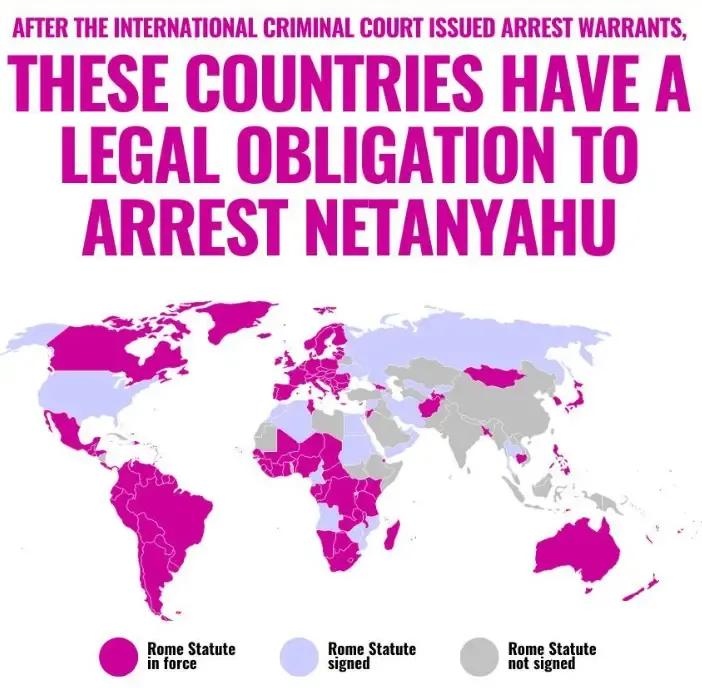
Grounding his remarks in legal obligations, Magyar pointed to Hungary’s membership in the International Criminal Court, stressing that any individual subject to an ICC arrest warrant must be detained upon entering the territory of a member state. His position reflects a strict interpretation of treaty commitments at a time when the authority of the court is being tested on the global stage.
The statement carries particular weight given recent precedent. Netanyahu previously visited Hungary during the height of the war in Gaza, when allegations of war crimes and genocide were intensifying and international scrutiny was mounting. That visit proceeded without legal consequence, highlighting the gap between formal obligations and political practice that Magyar’s declaration now seeks to close.
Europe Faces a Defining Legal Test
Magyar’s position underscores a widening divide across Europe over enforcement of international law. In Ireland, Foreign Minister Micheál Martin has indicated that Ireland would comply with any ICC warrant. In Spain, Prime Minister Pedro Sánchez has repeatedly emphasized the primacy of international law, a stance widely interpreted as support for enforcement.
Officials in Belgium and France have also stressed their obligations as ICC members, though often with careful diplomatic language reflecting the sensitivity of the issue.
Hungary’s shift is especially notable given its previous alignment. Under former Prime Minister Viktor Orbán, Budapest maintained close political ties with Netanyahu and frequently offered diplomatic backing within the European Union. Magyar’s stance therefore represents a significant recalibration of Hungary’s foreign policy and its relationship with Israel.
Recognition of Palestine and a Shifting Global Consensus
The debate over ICC enforcement is unfolding alongside the accelerating international recognition of Palestine. In Europe, Spain, Ireland, and Norway have formally recognized Palestinian statehood, marking a departure from long standing Western policy that deferred recognition pending negotiations.
Beyond Europe, recognition of Palestine is widespread. Countries such as South Africa, Brazil, and Argentina have long recognized Palestinian statehood and have been among the strongest supporters of international legal accountability. For many of these states, backing ICC action is closely tied to their broader political support for Palestinian self determination.
In contrast, the United States, which is not a member of the ICC, has rejected the court’s jurisdiction over Israeli officials. President Joe Biden has criticized efforts to pursue arrest warrants against Netanyahu, underscoring a deepening global divide over both the Gaza war and the role of international legal institutions.
A Turning Point for International Law
Magyar’s declaration places Hungary at the forefront of a critical test for the international legal system. The ICC has no independent enforcement mechanism and relies entirely on member states to carry out arrests, meaning that its authority ultimately depends on political will.
At the same time, the convergence of ICC accountability efforts and the growing recognition of Palestine suggests that the diplomatic framework surrounding the conflict is undergoing a significant shift. Legal mechanisms that were once sidelined are now moving to the center of international debate.
With Hungary now signaling a willingness to enforce its legal obligations at the highest level of government, the question facing other states is whether they will follow suit or continue to balance legal commitments against geopolitical alliances.