Trump’s Reported Clash With Netanyahu Signals Deepening Crisis for Israel’s Global Standing
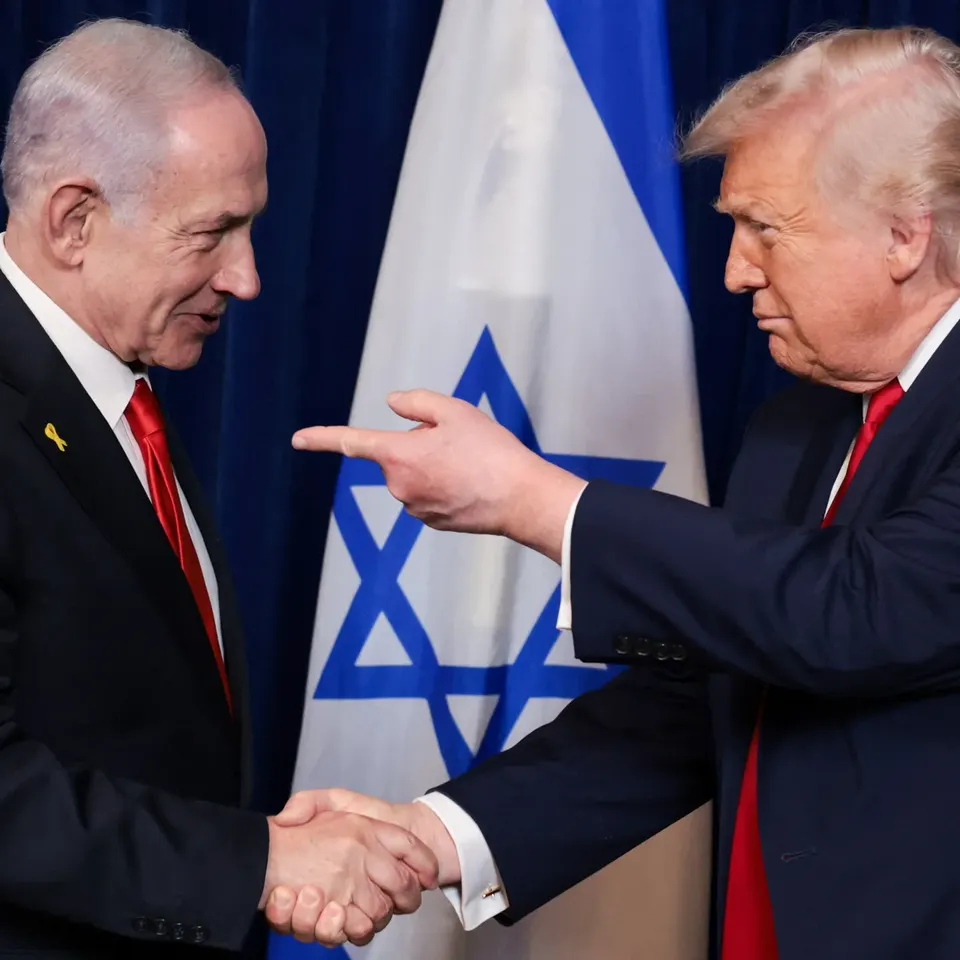
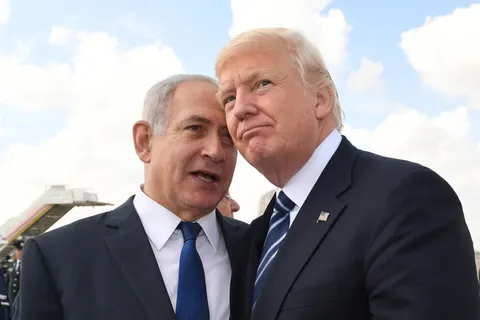
A leaked account of a heated conversation between U.S. President Donald Trump and Israeli Prime Minister Benjamin Netanyahu has reignited questions about the state of the U.S.-Israel relationship as Israel faces mounting international criticism over its military campaigns in Gaza and Lebanon.
According to a report by Axios, Trump delivered an extraordinary rebuke to Netanyahu, telling the Israeli leader:
“You’re fucking crazy. You’d be in prison if it weren’t for me. I’m saving your ass. Everybody hates you now. Everybody hates Israel because of this.”
Another source familiar with the conversation claimed Trump became so angry that he shouted:
“What the fuck are you doing?”
If accurately reported, the remarks represent one of the strongest criticisms ever attributed to a sitting U.S. president in private discussions with an Israeli prime minister. Yet many observers remain skeptical about the significance of such leaks, noting that similar reports emerged repeatedly during the administration of former President Joe Biden without producing any meaningful change in U.S. policy toward Israel.
Biden’s Private Anger and Public Support
Throughout 2024, stories repeatedly surfaced describing Biden’s growing frustration with Netanyahu as Israel’s military campaign in Gaza intensified.
In January 2024, four months into the war, reports emerged that Biden had ended a phone call with Netanyahu by saying:
“This conversation is over.”
The disagreement reportedly centred on Netanyahu’s refusal to release Palestinian tax revenues withheld by Israel. A U.S. official was quoted at the time as saying:
“The situation sucks and we are stuck. The president’s patience is running out.”
In February 2024, Politico reported that Biden had referred to Netanyahu as a “bad fucking guy,” although the White House denied the claim. That same month, NBC News reported that Biden privately called Netanyahu an “asshole” and “this guy,” while complaining that the Israeli leader was “giving him hell” and was “impossible to deal with.”
One anonymous U.S. official summed up Biden’s mood:
“He just feels like this is enough. It has to stop.”
The following month, Biden was caught on a hot microphone discussing the humanitarian catastrophe unfolding in Gaza. Responding to concerns raised by a Democratic congressman, Biden remarked:
“I told him, Bibi, and don’t repeat this, but you and I are going to have a come to Jesus meeting.”
In April 2024, after Israeli forces killed several foreign aid workers and their Palestinian driver in an attack on a World Central Kitchen convoy, outrage spread internationally. Axios reporter Barak Ravid cited a U.S. official who said:
“Biden is pissed. The temperature regarding Bibi is very high.”
That same month, Axios reported that Biden warned Netanyahu:
“We won’t be able to support you.”
By October 2024, reports suggested Biden regularly complained that Netanyahu lacked any coherent strategy. One account claimed he shouted:
“Bibi, what’s the fuck?”
Despite the reported frustration, critics argue that Biden’s administration continued to provide military, diplomatic and political support to Israel throughout the conflict. The contrast between private complaints and public policy became a recurring theme of the war.
Critics point out that while Biden was repeatedly portrayed as angry with Netanyahu, his administration approved at least $29 billion in military assistance and weapons transfers after October 7, 2023. As a result, many viewed the leaks as political theatre designed to reassure increasingly frustrated Democratic voters while leaving U.S. policy fundamentally unchanged.
Trump’s Frustrations Follow a Similar Pattern
The Trump administration has also been the source of repeated reports describing tensions with Netanyahu.
In May 2025, Axios reported that Trump had grown frustrated with the continuing war in Gaza and instructed aides to tell Netanyahu he wanted Israel to “wrap it up.”
In September 2025, The Wall Street Journal reported a heated exchange between Trump and Netanyahu after an Israeli strike in Qatar. According to the report, Trump criticized the operation, arguing that targeting Hamas political leaders in Qatar was not a wise decision.
Then in May this year, Axios reported another tense conversation concerning negotiations with Iran. According to Barak Ravid, Netanyahu’s “hair was on fire” after discussing renewed diplomatic efforts with the United States.
The latest leak therefore appears to fit a broader pattern in which American presidents are portrayed as increasingly exasperated with Netanyahu while maintaining the strategic alliance that underpins U.S.-Israeli relations.
Israel’s Image Problem
What makes Trump’s reported remark that “everybody hates Israel because of this” particularly noteworthy is that it reflects a dramatic shift in public opinion.
A poll conducted earlier this year found that 60 percent of U.S. adults now hold an unfavorable view of Israel, while only 37 percent have a favorable opinion.
The shift has been remarkably rapid. In 2022, favorable views outnumbered unfavorable views by 13 percentage points. Today, unfavorable views lead by 23 points.
Even more striking, 28 percent of Americans now report a “very unfavorable” view of Israel, nearly triple the 10 percent recorded in 2022.
The partisan breakdown reveals a profound transformation.
Among Democrats and Democratic-leaning voters, 80 percent now view Israel unfavorably, up from 53 percent in 2022.
Republicans remain more supportive overall, with 58 percent holding favorable views compared with 41 percent unfavorable. Yet even within Trump’s political base, support appears to be eroding. Among Republicans under the age of 50, 57 percent now reportedly hold an unfavorable view of Israel.
The changing public mood has coincided with visible divisions inside the MAGA movement itself. Prominent figures including Tucker Carlson, Candace Owens and Marjorie Taylor Greene have all voiced criticism of aspects of U.S. support for Israel.
Analysts therefore question whether Trump’s frustrations stem primarily from domestic political pressures or from concerns that Israel’s actions are increasingly undermining broader American strategic interests across the Middle East.
Iran, Lebanon and Regional Fallout
The debate has intensified as Israel’s conflicts have expanded beyond Gaza and increasingly intersected with wider regional tensions involving Iran and Lebanon.
According to reports discussed in the aftermath of the leak, Iran recently indicated it would suspend peace negotiations with Washington in protest over Israel’s military campaign in Lebanon.
The development has heightened concerns that continuing instability could undermine broader U.S. strategic objectives in the region.
Trump himself appeared visibly frustrated when discussing the possible collapse of negotiations, reportedly telling CNBC:
“I don’t care if they’re over honestly I really don’t care I couldn’t care less.”
The remark came as the fallout from the recent U.S.-Israeli confrontation with Iran continued to reverberate throughout the region.
Critics of the war argue that Israel played a pivotal role in persuading Trump to support military action against Iran and that the outcome strengthened Tehran’s leverage rather than weakening it. According to this view, Iran’s strategic position, particularly its influence over energy routes and regional diplomacy, now gives it significant leverage in future negotiations.
For Trump, the longer regional crises persist, the greater the economic and political costs become for his administration.
The Backlash Over the Leak
The Axios report triggered a furious response from conservative commentator Mark Levin, one of Israel’s most outspoken supporters in the United States.
Levin condemned the disclosure, writing:
“The leak of Axios was a violation of federal law and provided support to the Iranian regime and its Hezbollah proxy.”
He continued:
“Whomever leaked that story to Barak Ravid at Axios did a grave disservice to our country, to our president, to Israel, and to Israel’s prime minister.”
Arguing that the leak weakened Washington’s position, Levin stated:
“The Iranian regime will benefit from that leak, viewing us as weak and desperate for a deal.”
He also questioned whether authorities would investigate the disclosure:
“If the substance of the call is accurate is bad enough in my view, will there be an FBI investigation to determine who leaked? If not, why not?”
For critics of Israel’s military campaigns, however, the focus on the leak itself misses the larger issue: the growing political and strategic fallout from the conflicts that produced such tensions in the first place.
Lebanon’s Escalating Human Cost
The controversy comes amid continued violence in Lebanon, where Israel’s military campaign has generated mounting international concern.
According to figures cited in the discussion, approximately 3,500 people have been killed and more than 10,000 wounded since Israel’s dramatic escalation in early March. Among the dead are at least 121 paramedics and first responders.
One allegation receiving particular attention concerns so-called “double tap” strikes, in which a second attack follows an initial strike and hits rescuers or civilians who have arrived to assist victims.
One example cited involved first responders attempting to assist a father and daughter wounded in an initial strike before a second attack reportedly hit the rescue effort itself.
The practice has long been controversial under international humanitarian law because of its impact on emergency responders and civilian casualties.
Israel has also expanded military operations in southern Lebanon, occupying territory and ordering residents to evacuate entire towns and villages. Entire communities have reportedly been reduced to rubble.
Critics argue that these actions have failed to deliver decisive military success while generating increasing hostility among the Lebanese population.
A recent poll reportedly found that 87 percent of Lebanese regard Israel as an enemy, cutting across religious, ethnic and sectarian divisions. The survey found that 51 percent believed Israel should be destroyed, while only about one-third supported a peace agreement with Israel.
Far from creating stability, critics argue, Israel’s military campaign is generating deeper and more enduring hostility throughout Lebanese society.
Echoes of an Earlier Lebanon War
The present crisis has drawn comparisons with another confrontation between Washington and Israel more than four decades ago.
In 1982, Israel launched its second invasion of Lebanon in an attempt to destroy the Palestine Liberation Organization led by Yasser Arafat.
According to diary entries from U.S. President Ronald Reagan, he became increasingly alarmed by Israel’s bombardment of Lebanon and telephoned Israeli Prime Minister Menachem Begin to demand an end to the attacks.
Reagan reportedly warned Begin:
“It had to stop or our entire future relationship is endangered.”
According to the account, Reagan used the word:
“holocaust”
to describe what he believed was unfolding and referred specifically to an image of:
“a seven-month old baby with his arms blown off.”
Approximately twenty minutes later, Begin reportedly called Reagan back to inform him that he had ordered an end to the barrage and appealed for the continuation of close relations between the two countries.
The episode remains one of the clearest examples of an American president successfully using U.S. leverage to restrain Israeli military action.
A Relationship Under Pressure
Whether the latest reports accurately reflect a serious rupture between Trump and Netanyahu remains unclear. History suggests that private presidential anger does not necessarily translate into public action.
Yet the significance of the reported exchange may lie elsewhere.
Trump’s alleged declaration that “everybody hates Israel because of this” points to a reality increasingly visible in polling data, political discourse and diplomatic relations across the world. Israel’s wars in Gaza and Lebanon have transformed public perceptions, particularly among younger Americans and within political constituencies that once offered near automatic support.
As regional instability deepens and Washington struggles to balance strategic alliances with growing domestic opposition, the relationship between the United States and Israel may be entering a period of greater political strain than either government has faced in decades.
The leaked conversation, whether intentional or not, offers a rare glimpse into the pressures now shaping that relationship behind closed doors. More importantly, it underscores a growing challenge facing both Washington and Jerusalem: the gap between official policy and public opinion is becoming increasingly difficult to ignore.