Gaza’s Winter Emergency Exposes the Failure to Enforce the Ceasefire
Flooded shelters, worsening illness and continuing deaths have intensified demands for governments with influence over Israel to secure humanitarian access. With essential supplies still waiting outside Gaza, aid workers and analysts say the ceasefire’s credibility now depends on whether its sponsors are prepared to impose consequences for obstructing relief.
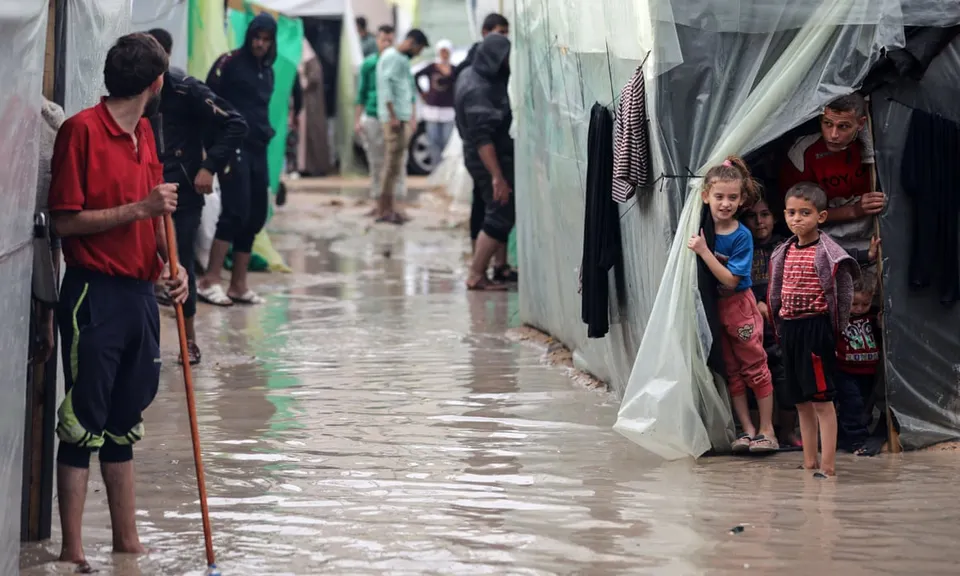
More than a year after a ceasefire was supposed to open a path towards recovery, Palestinians in Gaza are still struggling to keep rainwater and sewage out of makeshift shelters, obtain basic supplies and survive amid the destruction of their homes and public services.
The first heavy storms of the season have exposed the consequences of leaving a displaced population without adequate shelter, functioning drainage or the equipment needed to repair damaged infrastructure. They have also sharpened a question that repeated declarations of peace have failed to resolve: who will ensure that Israel implements the agreement’s humanitarian commitments?
“Where is the plastic sheeting? Are you waiting until we drown?” one displaced Palestinian asked, expressing the desperation of people facing another winter with little protection from the weather.
US President Donald Trump has declared the war in Gaza over, but humanitarian workers and regional analysts describe a population still exposed to violence, displacement and conditions that make ordinary life increasingly difficult to sustain.
Their argument places responsibility on the governments capable of influencing Israeli decisions. Washington holds the greatest outside leverage, they contend, while Britain, European governments, Canada and others have diplomatic and economic tools that could make obstruction carry a cost.
For families waiting for tents, clean water and working sanitation, the significance of those tools will be measured by whether they are used before the next storm.
When the basic systems of life fail
Eyad Amawi, a representative of the Gaza Relief Committee and a humanitarian consultant speaking from Nuseirat refugee camp, described a crisis in which the failure of one essential service makes the collapse of others more dangerous.
Destroyed buildings, accumulated waste and damaged sewage systems have left communities struggling to maintain even basic living conditions. Rainwater entering displacement sites mixes with sewage, while shortages of fuel and equipment prevent municipal workers and relief organisations from responding adequately.
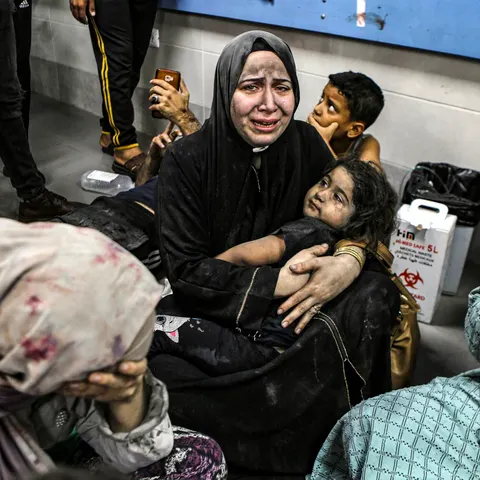
Amawi said local medical centres had received thousands of health complaints following the flooding, particularly involving children. His account conveyed the pressure on services already struggling with damaged facilities and shortages of essential supplies.
The absence of adequate shelter compounds every other difficulty. Families need materials to repair tents and protect their belongings, but they also need drainage, waste removal and functioning medical facilities. Replacing a damaged tent cannot resolve the danger if it stands in an area that floods whenever heavy rain returns.
Amawi argued that the discussion had moved beyond the number of aid trucks entering Gaza. The urgent task was to restore what he called “the foundations of dignified life in Gaza”: the interconnected services that allow people to sleep safely, prepare food, obtain treatment and maintain basic hygiene.
He also warned that humanitarian organisations were confronting financial pressures alongside restrictions on access. He referred to reductions in food assistance and other programmes, describing a situation in which needs were increasing while the capacity to respond was weakening.
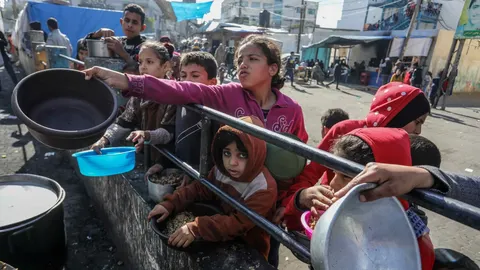
Even supplies that reach Gaza can be difficult to distribute. Fuel shortages affect transport, municipal operations and medical services, while damaged roads and repeated displacement make it harder to maintain reliable assistance.
In Amawi’s account, these pressures form a continuing cycle. Infrastructure damage worsens flooding and contamination; flooding increases illness and displacement; and the resulting demand places further strain on services that were already close to collapse.
A population compressed into less space
The humanitarian emergency is also being intensified by the shrinking area in which Palestinians can live and move.
Amawi estimated that people were concentrated in approximately 30 to 35 per cent of Gaza’s territory. He cited a population density assessment of about 21,000 people per square kilometre, illustrating the extreme pressure on the areas available to displaced families.
These were his estimates, but the underlying concern was clear: large numbers of people are being forced to share limited space and damaged infrastructure, making aid distribution, sanitation and disease prevention increasingly difficult.
Repeated evacuation orders further undermine stability. Families that have already lost their homes must move again, leaving aid organisations to locate people, reassess their needs and establish services in areas that may themselves be unsafe or poorly equipped.
Dr Reinhilde Van de Weerdt, the World Health Organization’s representative in the occupied Palestinian territory, described the same geographical squeeze. As the Israeli military occupied more territory, she said, people appeared to be moving closer to the Mediterranean and living in increasingly crowded conditions.
At a briefing on 13 November, she said acute respiratory infections were 33,000 cases higher than at the same point in 2025.
She also drew an important distinction between different medical supplies. About 88 per cent of the medicines the agency tried to bring in were entering, she said, while laboratory supplies remained difficult to obtain. That restriction affected the ability to diagnose patients and identify disease outbreaks.
Her account underlined why the humanitarian situation cannot be understood through a single measure of incoming aid. Medicines, diagnostic equipment, shelter, clean water and sanitation must work together if an overstretched health system is to meet people’s needs.
An emergency that was foreseen
Chris Doyle, director of the Council for Arab-British Understanding, argued that the flooding should have surprised nobody who had followed conditions in Gaza.
The risks were apparent well before the rain arrived. Families were living in damaged tents and improvised shelters, drainage systems had been destroyed or degraded, and the materials needed to prepare for winter were insufficient.
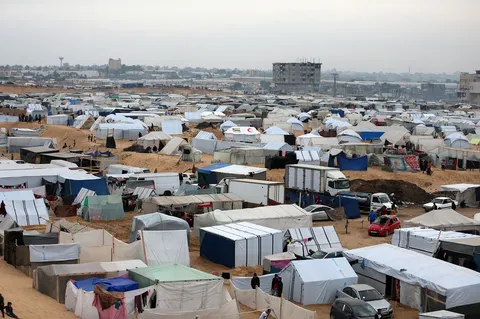
By early November, an estimated 1.4 million people were living in tents or makeshift shelters. Humanitarian agencies had been preparing for the season, but restrictions on supplies and equipment, together with funding shortfalls, limited what they could put in place.
Preliminary alerts covering the period to 9 November indicated that more than 46,000 households had been affected and more than 40,000 shelters damaged. Those figures were still subject to verification, but they conveyed the scale of an emergency spreading across displacement sites.
The shortage inside Gaza stood alongside substantial supplies waiting outside it. More than 150,000 tents purchased by humanitarian organisations and donor countries were ready for dispatch, many of them in Egypt.
Relief teams were distributing materials, clearing drainage channels and attempting to protect vulnerable sites. Their work, however, was constrained by the scale of the damage and the shortage of supplies and machinery.
Doyle warned against treating each seasonal disaster as a separate emergency. Winter brings rain and cold; summer brings extreme heat, water shortages and conditions that encourage disease. Without restoring infrastructure and ensuring sustained access, the same population remains exposed to successive forms of preventable harm.
“We have to ensure that this is the last winter that this happens,” he said, calling for governments to stop responding only when a new phase of suffering becomes impossible to ignore.
Continuing violence and the fear of permanent displacement
The ceasefire has also failed to bring an end to deaths from military violence.
Gaza’s Ministry of Health reported 1,613 Palestinians killed in conflict related incidents since the October 2025 agreement, in figures covering the period through 9 November 2026. That toll gives a stark context to declarations that the war has ended.
Tamer Qarmout, an associate professor of public policy at the Doha Institute for Graduate Studies who is from Gaza, described an ongoing tragedy in which people remained confined, deprived of dignity and exposed to systematic harm.
He argued that the reduction of the most visible forms of warfare had not ended the conditions that he characterised as genocidal. Governments continued to make statements expressing concern, he said, while failing to produce sufficient changes on the ground.
For Qarmout, the central failure was political. Powerful countries continued to protect Israel, allowing it to act without facing pressure proportionate to the consequences of its policies.
Doyle placed the present emergency within a longer history of Israeli control over Gaza, beginning with the occupation in 1967, the tightening of the blockade in 2007 and the further restrictions imposed after October 2023.
He alleged that withholding the fuel, equipment and materials needed to withstand winter was making the weather part of a broader effort to render Gaza uninhabitable. In his assessment, deprivation could drive people towards departure even where no formal order required them to leave.
“They call that voluntary transfer. It’s anything but voluntary,” he said.
Amawi also alleged that continuing Israeli demolitions, including the use of explosive robots, were further damaging infrastructure. He linked that destruction to the failure of drainage and sanitation systems and the increasing difficulty of maintaining basic services.
These accounts challenge the idea that humanitarian recovery can be assessed separately from military conduct and territorial control. The panel’s argument was that people cannot rebuild stable lives while the conditions necessary for remaining in Gaza continue to deteriorate.
Israel’s account of the aid response
Israeli authorities dispute that their policies are the principal cause of shortages.
In a statement issued on 6 November, the Israeli military said more than 85,000 tents and more than 8,000 trucks carrying winter supplies had entered Gaza since its winter preparations began. It said equipment covered by roughly half of approved requests had not yet arrived, attributing some of the delays to logistical and financial difficulties unrelated to Israel.
The military also accused Hamas of exploiting humanitarian assistance and said its refusal to disarm remained a major obstacle to progress.
Those claims concern the volume of supplies entering Gaza and the reasons some deliveries have not taken place. The humanitarian question remains whether assistance is reaching families in sufficient quantities and whether they can obtain the shelter and services they need.
The Humanitarian Country Team has emphasised that approvals and incoming supply figures do not, by themselves, establish that needs have been met. Its assessment places the practical outcome for people at the centre of the response.
What the ceasefire framework promised
The agreement’s humanitarian commitments are already set out in the international framework.
UN Security Council Resolution 2803, adopted on 17 November 2025, endorsed Trump’s Comprehensive Plan and welcomed the Board of Peace as a transitional administration.
The annexed plan provides for the immediate entry of full humanitarian assistance, including rehabilitation of water, electricity and sewage infrastructure, hospitals and bakeries, and the admission of equipment to clear rubble and reopen roads. It also provides for aid to be delivered through independent humanitarian organisations without interference by either party.
The framework contains separate provisions covering governance, demilitarisation and staged Israeli withdrawal. Its immediate aid commitments provide a concrete basis for demands that essential assistance should already be reaching the population.
The Board of Peace itself acknowledged the seriousness of the emergency. In a statement on 9 November, it urged Israel to permit materials for temporary shelter, water and sanitation, drainage and sewage removal, and said the response remained insufficient.
It also pressed Hamas to disarm and relinquish governing authority, saying failures to fulfil commitments had obstructed progress.
For Doyle, the board’s inability to secure adequate access exposed a deeper failure among the governments that had placed their confidence in it. He argued that international actors had effectively left the problem of humanitarian access to a body that had not ensured the necessary flow of assistance.
Creating a mechanism to oversee recovery, in his assessment, had not produced the political pressure required to make its commitments effective.
Why Washington remains central
Qarmout placed the United States first among the outside actors capable of compelling a change.
His reasoning was direct: Trump had advanced the plan, attached his name to it and taken the chairmanship of the Board of Peace. The initiative’s credibility therefore depended substantially on whether his administration was prepared to insist on implementation.
If the board could identify failures but could not secure compliance, Qarmout argued, the consequences extended beyond its institutional reputation. They raised questions about the value of the political guarantees offered to Palestinians.
He said Washington’s continuing protection of Israel was central to the absence of effective pressure. In his view, the United States possessed influence that it was not using adequately to protect either the people of Gaza or the credibility of its own initiative.
Qarmout also challenged European governments to move beyond recognition and declarations. Recognition of Palestine by countries including Britain and France represented political progress, he said, but it needed to be accompanied by tangible economic and diplomatic measures.
His criticism was that Israel continued to face too little pressure to change its behaviour. Expressions of concern did not alter that calculation unless governments connected them to practical consequences.
The wider implication of his argument is that the ceasefire’s future depends on decisions in the capitals sponsoring and supporting it. International endorsement establishes expectations; governments must then decide how they will respond when those expectations are not met.
Sanctions powers and the decision to use them
Doyle identified a specific mechanism available to Britain: sanctions against those responsible for obstructing humanitarian assistance.
British regulations that came into force on 15 October expanded the global sanctions framework to cover obstruction of the delivery or distribution of, or access to, humanitarian aid. Where the relevant legal criteria are met, the framework permits measures including asset freezes and immigration restrictions.
The existence of those powers does not automatically produce sanctions. Ministers must decide whether to designate particular people or entities under the applicable rules.
“There has to be a cost to this,” Doyle said, arguing that accountability needed to reach those responsible for decisions, including senior officials and ministers.
The British government has publicly indicated that it is prepared to use the expanded framework. On 12 November, minister Stephen Doughty told Parliament that the powers could be used against those continuing to block aid into Gaza, while declining to comment on future designations.
He also announced a further £5 million for UNICEF’s winter response. That assistance addresses an immediate funding need, while leaving unresolved the question of how to ensure that supplies and equipment can reach their intended recipients.
On 15 November, the foreign ministers of Australia, Canada, Italy and Britain renewed their demand for rapid humanitarian access and the admission of essential winter materials.
Doyle’s argument was that such appeals needed to be backed by coordinated pressure from Britain, the European Union, Canada and other governments. He called for clear demands and consequences that would make obstruction politically and economically more difficult to sustain.
He also warned against allowing the formation of a new Israeli government to become another reason for delay. In his assessment, the likely composition of a future coalition offered insufficient grounds to assume that policy towards Gaza would change substantially.
The demands, he argued, should apply regardless of who governs Israel: open the crossings, admit essential supplies and permit the work needed to restore conditions in which Palestinians can live with dignity.
Humanitarian relief cannot wait for political bargains
A central part of Doyle’s argument concerned the relationship between humanitarian assistance and negotiations over Gaza’s future.
He said civilians’ access to food, shelter, medicine and essential services must not depend on whether political or armed actors had completed negotiations over withdrawal, governance or disarmament.
“You cannot hold the civilian population hostage to the vagaries of political actors,” he said.
His proposed measures were practical and immediate. All available crossings should be opened for humanitarian supplies, while fuel, medicines, shelter materials and construction equipment should be admitted at the scale required.
He also called for a substantial narrowing of restrictions on items classified as having both civilian and military uses. In his assessment, the system was being applied arbitrarily and preventing the entry of materials needed for basic survival and recovery.
The consequences extend beyond any single consignment. A generator without fuel or spare parts cannot sustain services, while damaged water and sewage networks cannot be repaired without the equipment and materials required for the work.
The Humanitarian Country Team has likewise warned against making access to more durable shelter conditional on political progress. People exposed to cold and flooding need protection while negotiations continue.
For Amawi, this was an immediate operational demand. Humanitarian organisations needed permission to enter, deliver assistance and rebuild essential services without repeated delays that left families exposed to the next emergency.
The struggle to keep Gaza visible
The discussion also raised another factor affecting pressure for change: the decline in sustained international attention after the ceasefire announcement.
Qarmout said the loss of focus was deeply damaging because the humanitarian tragedy had continued. A declaration that the war was over could allow distant audiences to assume that the conditions threatening Palestinians had also ended.
Doyle described a recurring pattern in which Gaza returned to the headlines during a sudden escalation, a major attack or an especially visible disaster, then receded as attention shifted elsewhere.
The war in Ukraine, wider conflict in the Middle East, American politics and Israeli elections all competed for coverage. He also criticised reporting that concentrated on the internal dynamics of Israeli politics without adequately examining their consequences for Palestinians living under occupation.
The duration of the crisis created an additional challenge. Years of distressing news could generate audience fatigue, making it harder for journalists to sustain attention even where the underlying emergency remained unresolved.
Restrictions on independent access compounded that problem. Doyle said international journalists, diplomats and ministers needed to be able to enter Gaza and assess conditions freely, alongside humanitarian organisations whose work had been restricted.
The exclusion of outside reporting teams also placed a heavier burden on journalists already living in Gaza, who were documenting the destruction of their own communities while exposed to its dangers.
Qarmout paid tribute to those reporters and accused Israel of deliberately targeting journalists. His broader argument was that sustained coverage had preserved Palestinian voices in an international debate that too often moved away from their experience.
For Doyle, access and scrutiny were part of the response to the crisis. Governments demanding implementation of a ceasefire should also insist that journalists, humanitarian workers and other independent observers can examine whether its promises are being fulfilled.
Before the next storm
Amawi’s final appeal returned the discussion to the conditions facing people inside Gaza.
He described a population approaching collapse after repeated displacement, the destruction of infrastructure and the continuing struggle to obtain basic supplies. He characterised the situation as “selective firing”, conveying his view that the ceasefire had not brought reliable protection.
His demand was for intervention “urgently before the next storm”, with humanitarian organisations allowed to enter and respond at the scale required.
The priorities identified throughout the discussion were consistent: adequate shelter, functioning drainage and sanitation, reliable fuel, medical supplies, access for relief organisations and an end to the restrictions preventing recovery.
Those needs are already recognised in humanitarian plans and the ceasefire framework. The dispute is over whether governments with influence will use it to secure their delivery, and what consequences will follow when commitments remain unfulfilled.
For Palestinians living beneath torn canvas, the test of the agreement is immediate and concrete. It is whether the next rainfall can be endured with a dry place to sleep, safe water to drink and essential services that continue to function.
Sources and attributions
Primary programme and supplied transcript: Who can force Israel to implement Gaza ceasefire deal?, Al Jazeera English, Inside Story, 15 November 2026, presented by Tom McRae, with Tamer Qarmout, Eyad Amawi and Chris Doyle. The feature’s principal testimony, quotations and arguments come from the supplied transcript. The accompanying screenshot provides the direct video link and the on-screen identification of Dr Reinhilde Van de Weerdt. aljazeera.com
Flooding, shelter needs and reported casualties: Humanitarian Situation Report: Heavy Rains in the Gaza Strip, 8 November 2026 and Humanitarian Situation Report, 13 November 2026, UN Office for the Coordination of Humanitarian Affairs. These support the shelter estimate, preliminary flood damage figures, operational constraints and the post-ceasefire death toll attributed to Gaza’s Ministry of Health. Occupied Palestinian Territory
Winter preparations and restrictions on supplies: Urgent appeal to expedite the entry of winter supplies into Gaza, Humanitarian Country Team of the Occupied Palestinian Territory, 13 November 2026. Supports the account of tents awaiting dispatch, obstacles to preparations, the distinction between approvals and assistance received, and the demand to separate shelter access from political progress. Occupied Palestinian Territory
WHO testimony: UN Geneva press briefing, 13 November 2026, including remarks by Dr Reinhilde Van de Weerdt on overcrowding, respiratory infections and restrictions affecting laboratory supplies. The UN-hosted transcript corroborates the WHO quotation included in the programme. UN Transcripts
Ceasefire commitments and the Board of Peace: UN Security Council Resolution 2803 (2025), including the annexed Comprehensive Plan, adopted 17 November 2025. Supports the description of the framework’s humanitarian, governance and withdrawal provisions. mandates.un.org
Board of Peace response to flooding: Israel says winter supplies delivered to Gaza amid flooding; Board of Peace says it must do more, The Times of Israel, Lazar Berman, Emanuel Fabian and Jacob Magid, 9 November 2026. Provides the board’s calls for additional humanitarian access and for Hamas to disarm and relinquish governing authority. The Times of Israel
Israeli military response: How is the IDF Preparing Humanitarian Efforts for Winter in Gaza?, IDF Spokesperson, 6 November 2026. The delivery figures and explanations attributed to Israel are its stated position, rather than independently verified findings. IDF
British sanctions powers: The Global Human Rights and International Humanitarian Law Sanctions Regulations 2026, effective 15 October 2026. The regulations expressly cover obstruction of humanitarian assistance and provide for targeted sanctions where the relevant criteria are met. legislation.gov.uk
British government position and additional funding: Minister Doughty statement to the House of Commons, 12 November 2026, Foreign, Commonwealth & Development Office. Supports the account of potential sanctions and the additional £5 million announced for UNICEF’s winter response. GOV.UK
Joint diplomatic appeal: Joint Foreign Ministers Statement on Gaza, Australia, Canada, Italy and the United Kingdom, 15 November 2026. Calls for immediate humanitarian access and admission of essential winter supplies.