EU Pressure Mounts on Israel as Netanyahu Dismisses European Condemnation
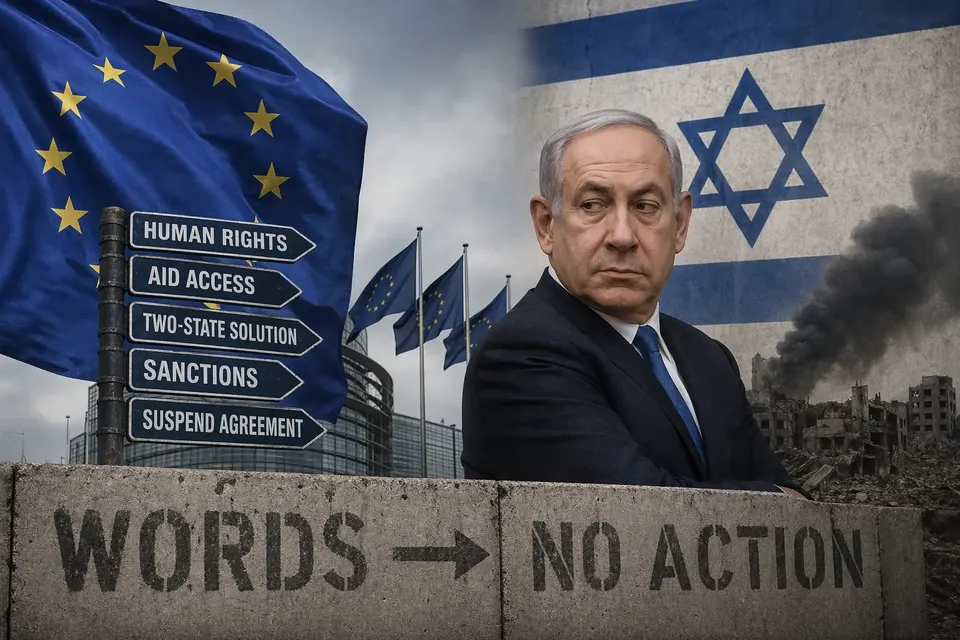
European leaders are beginning to shift from rhetoric to potential action as frustration grows over Israel’s conduct in Gaza, the West Bank, and Lebanon. A recent editorial published by The Guardian argues that years of warnings and condemnations from Brussels have failed to influence Israeli Prime Minister Benjamin Netanyahu—and that a tougher, more consequential approach is now overdue.
From Condemnation to Ineffectiveness
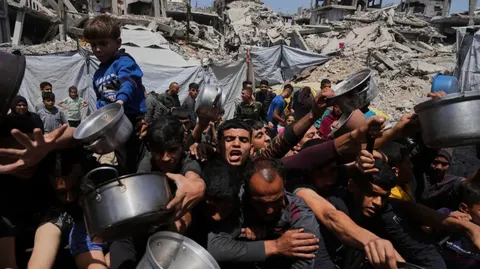
In recent months, senior European officials have sharpened their tone. European Commission President Ursula von der Leyen publicly denounced restrictions on humanitarian aid to Gaza, describing the situation as a “man-made famine.” Meanwhile, the EU’s foreign policy chief Kaja Kallas criticized Israeli military actions in Lebanon, stating that the right to self-defence “does not justify this destruction.”
Despite increasingly strong language, these statements have had little visible impact. Netanyahu’s government has largely brushed aside European concerns, buoyed by continued support from Washington—particularly under Donald Trump—and by the absence of meaningful consequences from the European Union itself.
Economic Leverage Untapped
The EU remains Israel’s largest trading partner, accounting for roughly a third of its total trade. Israel also benefits from participation in major EU-funded research initiatives such as Horizon Europe. Yet, according to the editorial, Brussels has been reluctant to use these ties as leverage, hindered by internal divisions and a longstanding preference for diplomatic persuasion over punitive measures.
This hesitation has weakened the bloc’s ability to influence Israeli policy, even as concerns mount over settlement expansion in the West Bank and the erosion of prospects for a two-state solution.
Political Shifts in Europe
Signs are emerging that the political landscape in Europe may be changing. The recent electoral defeat of Hungarian Prime Minister Viktor Orbán—a key ally of Netanyahu within the EU—has opened the door to renewed discussions on sanctions against Israeli settlers involved in violence in the West Bank. Hungary had previously blocked such measures, which require unanimous approval among member states.
In addition, Spain has formally called for the suspension of the EU-Israel Association Agreement, citing human rights concerns. While a full suspension would likely face opposition from countries such as Germany, a partial suspension—targeting trade provisions—could be enacted with a qualified majority.
Italy has also signaled a shift. Prime Minister Giorgia Meloni recently announced the suspension of a defence cooperation agreement with Israel following tensions over civilian casualties in Lebanon. Meloni, once considered politically aligned with Netanyahu, now appears to be recalibrating her position.
A Changing Mood in Brussels
The editorial suggests that growing unease over Israel’s military strategy—particularly its role in the broader regional conflict involving Iran—has begun to reshape attitudes within the EU. Economic fallout and geopolitical instability are increasingly seen as direct consequences of what critics describe as a “reckless and illegal” campaign.
For many European policymakers, the stakes are no longer abstract. The impact on energy markets, regional security, and migration pressures has made the conflict a pressing European concern.
Toward a More Assertive EU Policy
The central question now is whether the EU will translate its shifting rhetoric into concrete action. With significant economic and institutional ties at its disposal, Brussels holds tools that could exert real pressure—if member states can overcome divisions and agree on a unified approach.
As The Guardian editorial concludes, the time for “mere exhortation” has passed. Whether through sanctions, trade restrictions, or suspension of cooperation agreements, the EU faces a critical test of its willingness to align its policies with its stated values.
If the political winds in Europe are indeed changing, the coming months may reveal whether that shift marks a turning point—or yet another missed opportunity.