Gaza Devastation Exposes Limits of Proposed US Aid Cut to Israel
Donald Trump says Washington will end its annual military subsidy to Israel, while continuing to sell it weapons. The announcement leaves unresolved the wider system of funding, procurement and military cooperation that has supported the devastation of Gaza and Israel’s control over Palestinian life.
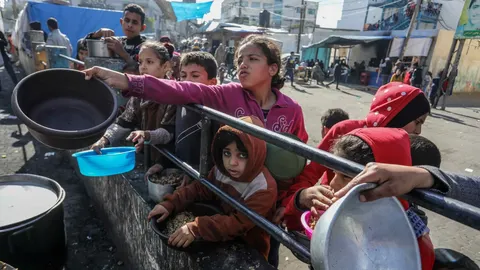
Gaza approaches another winter with families lacking shelter and basic services while Israeli fire continues. Donald Trump’s promise to end annual US military aid to Israel raises a question beyond Washington’s budget: whether the weapons and support sustaining Palestinian suffering will stop.
Gaza’s health ministry reported 33 Palestinians killed and 188 injured between 20 and 26 October. Humanitarian teams were assessing displacement sites threatened by flooding as families described shortages of shelter materials and essential services. These conditions form the immediate backdrop to a debate in which billions of dollars are discussed primarily as an American political liability or an Israeli budget problem.
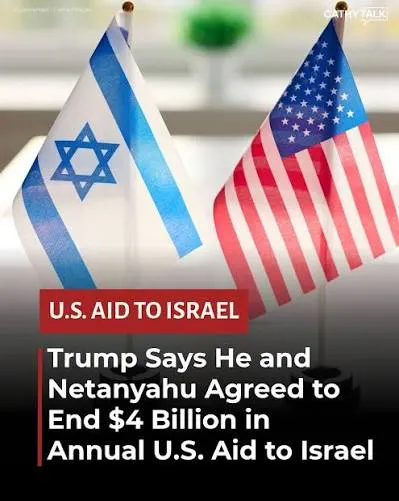
Trump announced on 3 November that nearly $4 billion in annual assistance would end before the close of 2026, saying Israel no longer needed the money. He presented the decision as an agreement with Prime Minister Benjamin Netanyahu, although the existing framework runs through September 2028 and the announcement did not explain how an early cutoff would operate.
“We were giving them $4bn … But it gets cut off at the end of the year,” Trump said.
Trump added: “They can buy whatever they want.”
That distinction is fundamental. Ending a grant could reduce the American subsidy and force Israel to carry more of the financial burden. Continued access to US weapons would still allow the military relationship to sustain operations against Palestinians. The announcement contains no equivalent promise to stop supplying arms because of their use in Gaza.
American weapons in Palestinian homes
The consequences of that relationship can be traced to individual families. On 10 October 2023, an Israeli strike on the al-Najjar family home in Deir al-Balah killed 24 people. An attack on the Abu Mu’eileq home in the same city on 22 October killed 19 people. Investigators identified components of American manufactured Joint Direct Attack Munition guidance kits in the wreckage of both attacks.
The investigation counted 43 civilians killed, including 19 children, found no indication of military objectives at the locations, and called for the attacks to be investigated as war crimes. Suleiman Salman al-Najjar lost his wife, Susanne, and four children in the first strike.
“Our lives have been destroyed in a moment. Our family has been destroyed,” he said.
The evidence identifies American weapon components; it does not establish which financing account paid for those particular munitions. That limit matters when tracing individual transactions, but the larger policy question remains. A restriction on taxpayer grants and a restriction on the supply of weapons would produce different consequences for the people exposed to those weapons.
Trump’s proposal addresses the first question while preserving the second channel. For a family facing bombardment, whether a weapon was purchased with an American grant or with Israeli funds does not alter its destructive effect.
The subsidy behind the arsenal
The regular annual package is $3.8 billion in total: $3.3 billion in Foreign Military Financing and $500 million for missile defence. The missile defence allocation is included in the total, rather than additional to it. Trump’s repeated reference to $4 billion is a rounded figure.
The arrangement was signed under Barack Obama in September 2016 and covers the ten US fiscal years from 2019 to 2028. Its overall pledge is $38 billion, with the military financing intended to support equipment purchases, including advanced aircraft. Its origins demonstrate how firmly the subsidy was embedded across successive American administrations before Gaza helped make it politically contentious.
Most of the financing is spent on American military suppliers. Israel’s special allowance to use part of the funding for purchases from its own defence industry is being phased out under the agreement. The programme therefore supports Israeli military procurement and American arms manufacturing at the same time.
This is why describing the arrangement simply as money handed to Israel can obscure its operation. US taxpayers underwrite purchases that generate business for weapons producers while reducing the cost to Israel of maintaining and replenishing its military capabilities. The resulting subsidy also eases pressure on the resources Israel would otherwise need to raise domestically.
The agreement depends on congressional appropriations. A presidential interview does not determine the treatment of money already appropriated or committed to contracts, and Trump has not explained how his timetable would handle them.
A genuine withdrawal of $3.8 billion each year would still be consequential. It would change who bears the cost of procurement and could affect planning. Its effect on Palestinian safety would depend on what happened to actual weapons transfers, the conditions attached to them and the other forms of support available.
Billions beyond the annual package
The familiar annual figure also understates the scale of support during the destruction of Gaza. A study of US military assistance estimated $21.7 billion in aid to Israel during the two years after 7 October 2023, covering October 2023 through September 2025. That is a historical estimate for a defined period, not a complete total through November 2026.
The same research programme estimated a further $9.65 billion to $12.07 billion for American military operations in Yemen and the wider region over that period. Those were US operational costs, distinct from grants to Israel. The distinction prevents regional deployments and military assistance from being misleadingly treated as the same financial transfer.
Nor should announced arms deals simply be added to aid totals. Grant money can pay for purchases included in those deals, while approvals, signed contracts, payments and deliveries can fall in different years. Adding every headline figure would risk counting the same support twice.
The important finding is that the annual grant is one part of a much larger military relationship. Stopping future grants would not retrospectively withdraw equipment already supplied or resolve the question of responsibility for how it was used.
Barbara Slavin, a distinguished fellow at the Stimson Center, described the established relationship directly: “Israel has benefited enormously from the aid, which has supported Israeli arms industries and facilitated Israel’s multiple wars.”
Weapons sales can themselves be funded by aid
Official procurement records show why a promise to replace aid with sales needs close examination. In February 2025, Washington approved a possible $295 million sale of Caterpillar D9 bulldozers and associated support to Israel. The formal notification identified the funding source as Foreign Military Financing, demonstrating that an arms sale can itself be financed through American assistance.
The administration invoked an emergency exception to waive the usual congressional review requirements for that transaction. The notification describes an approved potential sale; it does not establish when every machine was delivered or how any particular machine was subsequently used.
That same month, another approval covered a possible $6.75 billion sale of munitions, guidance kits, fuzes and support. It included bomb bodies and thousands of JDAM guidance kits. These official notices identify planned procurement and estimated values, rather than a completed inventory of weapons delivered or used in Gaza.
Bulldozers connect the procurement debate to the destruction of Palestinian homes and infrastructure as well as aerial warfare. In a July 2025 recommendation, Norway’s Council on Ethics concluded that Caterpillar machinery was being used in widespread unlawful destruction of Palestinian property in Gaza and the West Bank. It recommended excluding the company from the country’s sovereign wealth fund because of the risk of contributing to serious violations.
Caterpillar told the council that the relevant machines were sold to US authorities through the Foreign Military Sales programme and transferred to Israel. It said it supplied civilian machinery, which other parties modified for military use, and pointed to US government assessments when discussing restrictions on deliveries.
The records expose the connections among manufacturers, government purchasing channels and military use. Moving future purchases onto Israel’s own budget would change the financing, but continued authorisation of transfers would leave Washington involved in supplying the equipment. A commercial transaction does not answer the separate question of whether a transfer should be permitted.
Warnings and gaps in weapons oversight
Washington’s own auditors have documented weaknesses in the systems meant to address civilian harm. An April 2025 audit found that the State Department received 617 civilian harm reports across its arms transfer response process between August 2023 and December 2024. By December 2024, it had completed no investigations into reports it had deemed credible. The figure covered the overall process, not exclusively Gaza.
Routine monitoring concentrated on custody and security of weapons rather than how they were used. The audit also recorded a May 2024 US assessment that it was reasonable to assess that covered American weapons had been used by Israeli forces inconsistently with international humanitarian law obligations or civilian harm mitigation practices. That assessment did not reach definitive conclusions on individual incidents.
Trump rescinded the relevant national security memorandum, NSM-20, on 21 February 2025. These are dated findings about the oversight system and policy changes; they do not establish the current status of every investigation.
The subsequent legal findings were more severe. In September 2025, a UN commission of inquiry concluded that Israel had committed genocide in Gaza, following an examination of conduct and statements from October 2023 through July 2025.
“The Commission finds that Israel is responsible for the commission of genocide in Gaza,” said Navi Pillay, who chaired the inquiry.
Israel rejected the finding and challenged the commission’s methodology and authority. Its government said the campaign sought to dismantle Hamas and that it devoted resources to reducing civilian harm and facilitating humanitarian assistance.
The commission’s finding is distinct from the International Court of Justice’s provisional measures in South Africa’s genocide case. The court’s 2024 orders imposed binding obligations to protect Palestinians’ rights under the Genocide Convention; those orders were not a final judgment on whether genocide had occurred.
Independent UN human rights experts had already warned in June 2024 that arms suppliers risked complicity in international crimes. Their warning extended to manufacturers, component suppliers, indirect transfers and financial institutions investing in the companies concerned. It concerned the consequences of supplying weapons, including commercially, rather than only the source of the money used to buy them.
That is the accountability question the aid announcement leaves open. A government can reduce its grant expenditure while continuing to authorise the supply of equipment that exposes civilians to further harm.
The occupation extends the question beyond Gaza
The same debate reaches Palestinians in the occupied West Bank, where military control, property destruction and settler violence shape daily life. Between 1 and 26 October 2026, humanitarian monitoring recorded 397 settler attacks resulting in casualties or property damage, already the highest monthly total since documentation began in 2006.
Those attacks should not all be described as American funded, and the available evidence does not trace every demolition or assault to a specific US payment. The broader connection is the support provided to a military and security system that sustains the occupation, together with documented transfers of equipment used against Palestinian property.
In its July 2024 advisory opinion, the International Court of Justice concluded that Israel’s continued presence in the occupied Palestinian territory was unlawful and should end as rapidly as possible. It also said Israel was obliged to cease new settlement activity, evacuate settlers and make reparation.
The court stated that other countries must neither recognise the resulting situation as lawful nor provide assistance that maintains it. That conclusion gives the funding debate a legal dimension beyond whether Washington considers the annual subsidy affordable or politically popular.
The opinion does not automatically determine the legality of every American transfer. The relevant connection to maintaining the unlawful situation must still be examined. But it makes the purpose and effect of external support central to the discussion, rather than allowing the issue to be settled simply by relabelling assistance as trade.
A different form of military partnership
A shift away from direct grants has been under discussion for months. Netanyahu previously proposed a gradual transition over roughly a decade, a very different timetable from Trump’s claim that assistance would stop at the end of this year.
In June, Republican congressman Marlin Stutzman introduced a resolution proposing a relationship based more heavily on joint investment, shared development and military cooperation. His office said Netanyahu supported the initiative following their meeting in Jerusalem. The proposal treated the reduction of traditional assistance as part of a continuing strategic partnership.
The House version of the National Defense Authorization Act for fiscal year 2027 also contains a US–Israel Defense Technology Cooperation Initiative. Section 219 would coordinate research, testing, industrial cooperation and potential incorporation of Israeli technologies into American systems, including through joint ventures and production partnerships.
That provision belongs to a House approved bill and should not be presented as an enacted replacement for the aid package. It does, however, show that reducing direct grants can be discussed alongside plans for closer cooperation between the two countries’ military industries.
Other financial mechanisms also exist, including US loan guarantees that can lower Israel’s borrowing costs. Such guarantees are contingent backing arrangements, not equivalent cash payments, and should not be added indiscriminately to military aid figures.
The emerging possibility is therefore a reorganisation of support. Israel could shoulder more of the immediate purchasing cost while continuing to benefit from access to American weapons, industrial partnerships and other forms of cooperation. Whether that would weaken or strengthen its military freedom of action would depend on the terms eventually adopted.
Political pressure changes the calculation
Trump’s explanation placed electoral politics close to the centre of the decision. He referred directly to Abdul El-Sayed, the Michigan Democrat whose campaign challenged US military support for Israel, and complained that the subsidy had become an effective line of attack.
“Why should we suffer the slings from lunatics like El-Sayed when they don’t need it?” Trump said. “It’s a bad talking point.”
His words framed the proposed cutoff as a response to Israel’s financial position and the political cost of defending aid. He did not announce it as a sanction for civilian killings, settlement expansion or violations of international law.
Israeli officials appeared unprepared for the accelerated timetable. Two Finance Ministry officials expressed surprise, and one said the forthcoming budget had been prepared on the basis of the existing agreement. This is a significant practical obstacle to presenting an abrupt cutoff as a settled administrative arrangement.
Gadi Eisenkot, a rival seeking to replace Netanyahu, said the way the security establishment and public learned of the proposed change through the media showed that Netanyahu’s conduct posed “a genuine danger”. Yair Golan, leader of the Democrats opposition party, said a responsible prime minister would have sought increased American assistance.
Their objections concerned the damage to Israel’s security and finances. They demonstrate why the possibility of losing the subsidy cannot simply be dismissed as meaningless, even though stopping grants would leave the wider question of arms supply unresolved.
American opinion has shifted substantially. A national survey conducted in July 2026 found that 56 per cent of adults wanted military aid to Israel reduced or stopped, including 35 per cent who favoured stopping it altogether. Another 57 per cent supported restrictions to prevent US military aid being used in Israeli operations against Palestinians. The survey involved 2,156 adults and had a stated margin of sampling error of 2.2 percentage points.
The developments after Trump’s announcement sharpened the distinction between ending grants and ending weapons transfers. El-Sayed defeated Republican Mike Rogers in Michigan, becoming the first Muslim elected to the US Senate. Speaking on 4 November, he welcomed the proposed aid cutoff while demanding a broader change.
“I’d also like to see us stop selling weaponry that gets used to do the worst things, including genocide and apartheid, to Israel,” El-Sayed said.
That demand addresses the gap in Trump’s proposal. A verified end to annual grants would remove a substantial subsidy, but continued weapons sales and closer military cooperation could preserve much of the relationship that enabled Israel to sustain its operations. The financial change and its consequences for Palestinians would have to be judged separately.
For Gaza’s displaced families, the test will be whether changes in Washington reduce the weapons reaching forces that have destroyed their homes and whether those changes are accompanied by protection, access to essentials and accountability. Trump has announced a prospective change in who pays. He has kept open the route by which Israel continues to obtain American arms.
Sources and attributions
Trump says US will end military aid to Israel by the end of this year
The Guardian, Andrew Roth, 3 November 2026. Original report supplied by the reader; supports the announcement, Trump quotations, previous Netanyahu timetable and Israeli opposition responses.Fox interview
Fox News, Eric Mack, 3 November 2026. Arms sales quotation.Trump’s Election Day surprise
PolitiFact, Amy Sherman and Louis Jacobson, 3 November 2026. Implementation uncertainties, military ties and Barbara Slavin’s assessment.Trump says $4 billion in Israel military aid will end this year, citing political reasons
ABC News, Fritz Farrow and Shannon K. Kingston, 3 November 2026. Israeli Finance Ministry officials’ surprise and budget preparation.Humanitarian Situation Report of 29 October 2026
UN Office for the Coordination of Humanitarian Affairs, published 31 October 2026. Gaza conditions, ministry casualty figures and West Bank settler attacks, for the stated reporting periods.US made munitions killed 43 civilians in two documented Israeli air strikes in Gaza
Amnesty International, 5 December 2023. Forensic investigation and Suleiman Salman al-Najjar’s testimony; does not identify the payment account for individual weapons.Memorandum of Understanding Reached with Israel
White House fact sheet, 14 September 2016. The $38 billion framework and annual split of $3.3 billion in military financing plus $500 million for missile defence.US Foreign Aid to Israel
Congressional Research Service, Jeremy M. Sharp, updated 28 May 2025; reproduced by EveryCRSReport. Procurement rules, congressional funding and loan guarantees. Guarantees are not direct cash aid.US Military Aid and Arms Transfers to Israel October 2023 to September 2025
Brown University Costs of War, William D. Hartung, 7 October 2025. The $21.7 billion historical aid estimate and summary of Linda J. Bilmes’s companion estimate of regional US operational costs.Congressional arms sales notification for Caterpillar D9 bulldozers
Congressional Record, 3 March 2025; transmittal 24-38 notified on 28 February 2025. The $295 million possible sale, its Foreign Military Financing source and emergency review exception.Israel Munitions Guidance Kits Fuzes and Munitions Support
Defense Security Cooperation Agency, 7 February 2025. The possible $6.75 billion sale. Approval and estimated value are distinct from completed deliveries.Recommendation to exclude Caterpillar Inc from the Government Pension Fund Global
Norwegian Council on Ethics, 2 July 2025; unofficial English translation. The council’s assessment of destruction and Caterpillar’s explanations of sales through US authorities and subsequent modifications by others.Human Rights and US Arms Transfers
US Government Accountability Office, GAO-25-107077, 24 April 2025. Oversight findings, NSM-20 assessment and rescission.Israel has committed genocide in the Gaza Strip
UN Independent International Commission of Inquiry, 16 September 2025. The commission’s finding and Navi Pillay’s quotation. This is distinct from a final ICJ judgment.Israel response to the Commission of Inquiry
Israeli government statement, 16 September 2025, reproduced on the UN document portal. Israel’s rejection and stated position. The portal labels this a non-UN document and does not endorse it.South Africa v Israel provisional measures
International Court of Justice, 28 March 2024, reaffirming the order of 26 January 2024. Binding interim obligations; these orders did not determine the merits of the genocide claim.States and companies must end arms transfers to Israel
Independent UN human rights experts, 20 June 2024. Warnings about state, corporate and financial involvement in weapons transfers; not a judicial determination of individual liability.Advisory opinion on Israel and the occupied Palestinian territory
International Court of Justice, 19 July 2024. Unlawful presence, settlement obligations and other states’ duty not to help maintain the unlawful situation.Resolution to transition US Israel relations
Office of Representative Marlin Stutzman, 3 June 2026. Proposed joint investment and cooperation, and Netanyahu’s support.National Defense Authorization Act for Fiscal Year 2027
H.R. 8800, House approved text, 22 July 2026, section 219. Proposed defence technology cooperation. Described as a legislative proposal, not an enacted replacement payment.American Favorability of Israel Drops to Record Low
Chicago Council on Global Affairs, Dina Smeltz and Lama El Baz, 5 October 2026. Survey conducted 10–21 July 2026; aid preferences, restrictions, sample and sampling error.Abdul El-Sayed welcomes aid cut proposal and calls for end to arms sales
NPR, Steve Inskeep, Michel Martin and Majd Al-Waheidi, 4 November 2026; carried by Texas Public Radio. Election victory and subsequent Morning Edition comments.