Gaza Under Fire as UN Findings Echo the Genocide Warning of Ex-CIA Whistleblower John Kiriakou
Fresh killings in Gaza and a renewed UN finding of genocide give contemporary urgency to an earlier discussion between former CIA officers John Kiriakou and Andrew Bustamante about Palestinian suffering, Israeli objectives, American influence and the dangers of unconditional support.
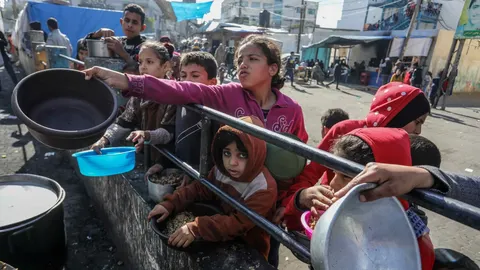
Palestinians in Gaza remain exposed to continuing Israeli attacks despite the ceasefire, with at least eight people reported killed on Sunday as UN investigators renew their finding that Israel is committing genocide in the territory.
Medics reported three deaths in Gaza City, while the Hamas administration’s interior ministry said five police officers were killed in western Khan Younis. Israel’s military said it had struck militants in Khan Younis and did not immediately comment on the Gaza City attack.
The latest deaths follow the 26 October announcement by the UN’s Independent International Commission of Inquiry that Israeli authorities and forces had continued genocidal acts after the October 2025 ceasefire. Israel rejected the findings, with its mission in Geneva accusing the commission of spreading misinformation and seeking to undermine the country’s legitimacy and right to defend itself.
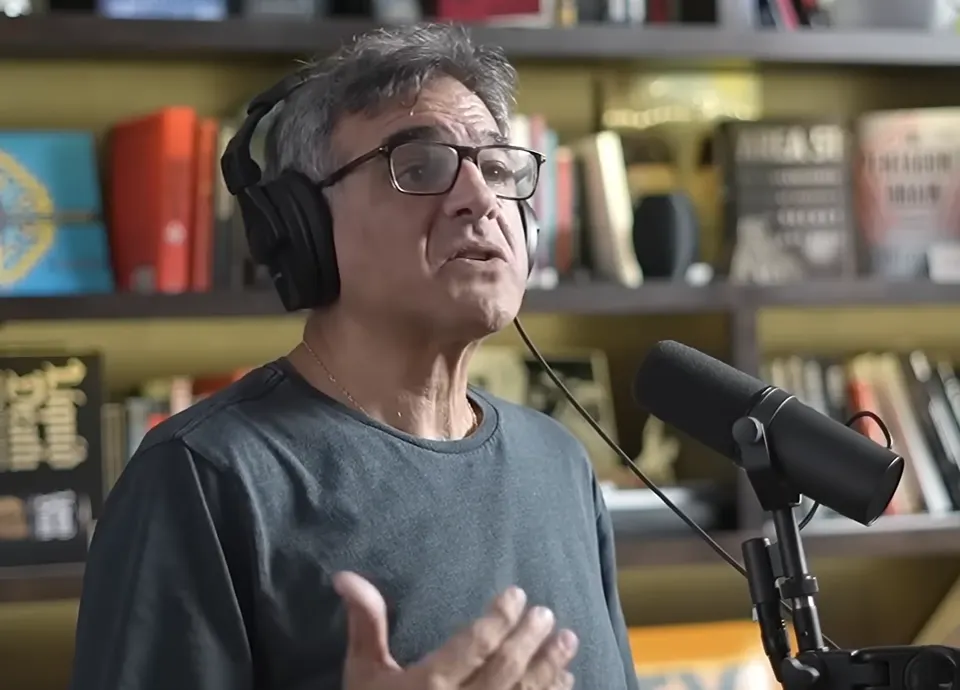
For former CIA officer and whistleblower John Kiriakou, the accusation was already explicit more than two years earlier. Discussing Gaza with fellow former intelligence officer Andrew Bustamante on the Danny Jones Podcast, he said: “I think the Israelis are guilty of genocide.” He immediately stressed that he did not use the term lightly.
That exchange took place on 3 August 2024 and was first published that month, before appearing in a later compilation. Its arguments concern a particular stage of the war, but subsequent events give fresh weight to its central questions: what Israel was seeking to achieve in Gaza, what Washington was enabling, and whether mass destruction could produce the security its advocates promised.
Although the wider programme featured fierce disagreements over the CIA and whistleblowing, the discussion of Gaza revealed considerable common ground. Bustamante emphasised Iran and regional strategy, defended the strategic value of the American alliance with Israel, and joined Kiriakou in questioning unquestioning support for Benjamin Netanyahu’s conduct of the war. He did not explicitly adopt Kiriakou’s genocide characterisation.
Their conversation now sits alongside a much larger record of Palestinian loss. Palestinian authorities put the death toll from Israel’s assault since October 2023 at more than 74,000. The latest humanitarian reporting records 1,559 Palestinians reported killed since the October 2025 ceasefire through 26 October 2026, using Gaza health ministry figures.
The commission’s findings are those of an international investigative body. South Africa’s genocide case against Israel remains before the International Court of Justice, where written proceedings continue; the court has not delivered a final judgment on the merits. That distinction preserves the legal position while recognising the gravity of the commission’s conclusions.
A genocide accusation rooted in the destruction of Gaza
Kiriakou began his account by condemning the Hamas led attack of 7 October 2023, describing attacks on civilians and the taking of hostages as an atrocity. He called it “a terrorist attack of historic proportions” and asked what response Hamas had expected to provoke.
His condemnation was followed by a separate challenge to Israel’s response. He argued that destroying Gaza as a place in which Palestinians could live had become an objective extending far beyond dismantling Hamas’s military capabilities.
Kiriakou portrayed Hamas as a movement that could not be identified simply by checking individual identity cards. In his account, presenting the entire territory as the target turned a stated campaign against an armed organisation into the destruction of a society.
He went further, alleging that the Israeli government had hoped for an event it could treat as legal cover for destroying Gaza. He referred generally to Israeli journalists, without identifying a particular investigation or evidence establishing that claim. His assertion about government intentions therefore remains an allegation; the exchange did not establish that Israeli officials had authorised or knowingly enabled the October attack.
The distinction matters because the destruction of civilian life, the intentions behind military operations and the origins of a particular attack are separate questions. The new commission findings address Israeli conduct and genocidal intent. They do not authenticate every explanation of the war’s origins offered in the podcast.
Kiriakou also made clear that his accusation did not amount to rejecting peaceful coexistence. He said Israelis had a right to exist in peace, while declining to prescribe whether the eventual political settlement should involve one state or two.
His objection concerned the means being used and the consequences for Palestinians. Israel, he said, had “gone much too far” and ignored international pressure. The implication of his argument was that an attack on Israeli civilians could not supply unlimited permission for what followed in Gaza.
That is the part of the exchange brought most directly into focus by the latest inquiry. The commission’s renewed assessment concerns the continued killing and harming of Palestinians during a period formally described as a ceasefire, together with the expansion of Israeli control over Gaza’s territory.
Land and the future of Gaza
Kiriakou linked the destruction to a struggle over land, displacement and the possible replacement of Palestinian communities with Israeli settlements and commercial development.
He said he had seen advertisements in New York, New Jersey and California for real estate seminars associated with synagogues, and alleged that these offered opportunities to buy Palestinian land in Gaza that would become settlements.
The documented property exhibitions of that period require a narrower description. A March 2024 tour promoted homes in Israel and in occupied West Bank settlements, including Efrat, Neve Daniel and Maale Adumim. An organiser said the events supplied information and contacts rather than directly concluding sales. That record does not substantiate Kiriakou’s specific allegation that Gaza plots were being sold at the seminars he described.
His broader concern about treating Gaza as a development opportunity also drew on remarks by Jared Kushner, Donald Trump’s son in law and a former White House adviser. During a conversation with Harvard professor Tarek Masoud on 15 February 2024, Kushner discussed the potential value of Gaza’s waterfront and suggested moving civilians out while Israel cleared the area.
Kushner also said he had not heard Israel state that people could never return. He subsequently defended his remarks as an argument that Palestinian resources should have gone into livelihoods and education. His comments nevertheless placed relocation and redevelopment within the discussion of Gaza’s future, which was precisely what alarmed Kiriakou.
“That wasn’t an accident,” Kiriakou said of the property rhetoric. “That was the plan.”
That conclusion was his interpretation. Neither Kushner’s interview nor the documented property fairs, on their own, established an adopted government plan to clear Gaza for beachfront resorts. The political significance of the comments lay in the willingness to discuss the territory’s potential value while its inhabitants faced destruction and displacement.
The territorial argument has also acquired a fresh and explicit political expression. At an October 2026 gathering in Tel Aviv, Itamar Ben-Gvir urged the conquest of Gaza and claimed the territory belonged to Israel. His position supplies direct evidence of expansionist aims among influential Israeli politicians, without resolving the separate allegations about the earlier seminars.
For Gaza’s population, the stakes of such ambitions concern the right to remain, to return and to rebuild. Kiriakou’s argument was that these questions should be central to any assessment of the war’s objectives, alongside the military language in which those objectives were presented.
Ceasefire diplomacy and the question of political will
Kiriakou’s criticism of negotiations was similarly severe. Speaking shortly after Netanyahu’s July 2024 visit to Washington, he accused Israel of “going through the motions of ceasefire talks”.
He pointed to negotiations in Rome and alleged that Egyptian representatives had complained that Israel’s delegation lacked authority to agree to anything. In his telling, the delegates could attend meetings without possessing a mandate to make the concessions needed for an agreement.
The Rome meeting took place on 28 July 2024, involving Mossad director David Barnea and senior representatives of the United States, Egypt and Qatar. Talks with Hamas were mediated; Hamas was not physically represented at that meeting. The precise Egyptian complaint recounted by Kiriakou remains his attributed account.
He also said John Kirby, then the White House national security communications spokesman, had suggested Netanyahu did not even pretend to support a ceasefire. Kirby’s public remarks after the visit do not support that attribution. On 29 July, Kirby described the discussions as constructive and said Washington continued to believe the remaining gaps could be closed.
Kiriakou’s view of Netanyahu’s intentions was therefore considerably harsher than the public position of the administration. His conclusion at the time was bleak: he saw little prospect of a ceasefire before Gaza had been comprehensively destroyed.
The later ceasefire means that prediction must remain in its historical setting. Its existence also sharpens a different question raised by the exchange: whether diplomatic agreements are delivering civilian protection in practice.
By 12 October 2026, UN human rights monitors had individually verified 1,076 conflict related deaths between the ceasefire announcement and the end of July 2026, including 268 children and 126 women. This is a separate verification record from the larger health ministry total, covering a different period and using a different process.
Those deaths give substance to the distinction between announcing an agreement and making it effective for the people living under it. Kiriakou’s account of the 2024 negotiations cannot simply be carried forward as a description of every subsequent diplomatic effort, but the protection he said was missing remains central to judging their results.
Iran and the limits of military force
Bustamante placed the conflict within a wider struggle involving Iran and its regional partners. He argued that concentrating exclusively on Hamas obscured the strategic contest surrounding Israel.
“It’s about Iran, and it’s about Iran’s efforts to execute proxy conflict in all directions around Israel,” he said. “That’s what it’s really about.”
Kiriakou agreed that the regional dimension mattered and described the exclusive focus on Hamas as a “red herring”. The two men were discussing different levels of the same conflict: the immediate devastation in Gaza, the objectives of the Israeli government, and the wider confrontation in which Iran, Israel and the United States were involved.
Jones had introduced the subject by asking about Israeli influence in American politics, including AIPAC and the Anti-Defamation League, and fears that confrontation between Israel and Iran could draw Washington into a much larger war. Bustamante’s answer addressed that strategic danger while maintaining that the alliance with Israel offered the United States real benefits.
“There’s also a very real strategic benefit from supporting Israel,” he said. But he argued that this did not require endorsing the way Netanyahu’s government was conducting its operations against Hamas. The exchange repeatedly returned to the problem of supporting those decisions blindly.
Bustamante’s regional explanation was an assessment of the conflict’s strategic context. It did not establish that Iran directed every Palestinian action, nor did it answer the separate question of whether particular Israeli operations were lawful or proportionate.
The most consequential area of agreement concerned the political effects of killing Palestinians. Both men accepted the argument that further deaths could produce another generation drawn to Hamas, perpetuating the movement’s appeal even as Israel tried to destroy its organisation.
In the exchange, Hamas was described as an idea that could survive the killing of its adherents. The underlying warning concerned political reproduction: military force could destroy personnel and infrastructure while the experiences of bereavement, dispossession and humiliation created new support.
Hamas has political and armed structures as well as an ideology. Their argument addressed the limits of treating those structures as the whole problem. In their reading, a campaign that intensified Palestinian grievances risked sustaining the constituency from which future militants would emerge.
This was a strategic criticism as well as a moral one. The two former officers were questioning whether Israel’s conduct could achieve the lasting security claimed for it, even on the terms used by its defenders.
Palestinian division and the search for political legitimacy
Bustamante pointed to cooperation between Fatah and Hamas as evidence that the war was changing Palestinian political relationships. Kiriakou responded that Israeli policy had helped push the factions towards one another.
The immediate background was the Beijing Declaration, signed on 23 July 2024 by representatives of 14 Palestinian factions. It envisaged reconciliation and an interim government, reaffirmed the Palestine Liberation Organization’s representative role, and addressed reconstruction in Gaza.
Bustamante interpreted the agreement as a gain in political standing for Hamas: a movement Israel wanted eliminated was being treated as a participant in the negotiation of a Palestinian future. Kiriakou regarded that outcome as another consequence of Israel’s own decisions.
The declaration had not, at the time of the interview, created a unified administration. Hamas had governed Gaza before 7 October, while the Palestinian Authority, dominated by Fatah, administered parts of the occupied West Bank. A line in the conversation placing Hamas in control of the West Bank reversed that geography.
Kiriakou was scathing about Palestinian Authority president Mahmoud Abbas. He called him a “buffoon”, accused him of corruption, disparaged his capacity to lead, and highlighted how far he had continued beyond his elected term.
Abbas had been elected in 2005 to a four year presidential term that expired in 2009. By August 2024, he had been in office for more than 19 years, rather than the 18 cited in the exchange. Kiriakou’s central criticism concerned the absence of a renewed electoral mandate and the weakness of a leadership he believed Israel had driven towards accommodation with Hamas.
Bustamante also argued that Hamas’s designation as a terrorist organisation was far from universal, claiming that only 13 UN member states applied the label. He supplied no basis for that count. Hamas was already listed by the United States, Britain and the European Union, whose measures applied across its member states; national designations and collective sanctions cannot be reduced to an unexplained tally.
His political argument was that Israel’s campaign had failed to exclude Hamas from Palestinian diplomacy. Whether an organisation remains a negotiating actor, and how governments classify it under terrorism legislation, are distinct questions. Neither removes responsibility for attacks on civilians.
Netanyahu and the politics of prolonging war
The guests also examined the personal and coalition pressures surrounding Netanyahu. Bustamante characterised his wartime policy as operating outside legal constraints and criticised the concentration of decision making, describing him as effectively “an army of one” after the dissolution of the emergency war cabinet.
Netanyahu disbanded that forum on 17 June 2024 following Benny Gantz’s departure from the government. The regular government and security cabinet continued to exist. During the podcast, the speakers clarified that Gantz had left voluntarily, while Ben-Gvir and Bezalel Smotrich remained influential figures within the governing coalition.
Their discussion of Ben-Gvir focused on his extremist political record and the portrait of Baruch Goldstein he had displayed at home. Ben-Gvir was convicted in 2007 of racist incitement and support for a banned terrorist group. Goldstein shot dead 29 Palestinian worshippers in Hebron in 1994; the atrocity was a mass shooting, despite the podcast’s loose description of a mosque being blown up.
Kiriakou then pointed to Netanyahu’s weak public standing, and the discussion turned to the argument that continuing the war served his political interests. The guests discussed his unpopularity before October 7, demands for elections, repeated periods in office and the criminal proceedings hanging over him.
The numerical claim in the exchange needs care. Kiriakou cited an approval rating of 22 per cent as though it came from the previous week. A subsequent exchange established that a poll being discussed was from May. A contemporary poll matching their reference to Gantz being only slightly more popular recorded Netanyahu at 32 per cent and Gantz at 35 per cent. Several other senior politicians scored lower than Netanyahu.
These were observations about the political landscape in 2024. They cannot establish Netanyahu’s approval rating or electoral position today.
At the time of the interview, Netanyahu was already on trial on charges of bribery, fraud and breach of trust, which he denied. The guests suggested that continued war could defer political accountability and preserve his position. That was their assessment of his incentives, rather than proof that personal survival explained every military decision.
The guests argued that Netanyahu had an interest in keeping the war going because it deferred a reckoning. A participant also recalled Trump once suggesting that one side did not want a deal, but the interview and the intended party were not identified.
The substantive concern was the risk of a divergence between a government’s survival and the interests of the people affected by its decisions. For Palestinians in Gaza, the consequences of that divergence would be measured in the duration and intensity of the war.
The intelligence relationship behind the alliance
Kiriakou’s account of American support extended beyond public diplomacy. He described an intelligence relationship in which, he alleged, Washington tolerated conduct by Israel that it would confront aggressively if carried out by a recognised adversary.
He recalled his first day at the CIA in January 1990, when a security briefing introduced him to the distinction between declared and undeclared intelligence officers. A declared officer’s affiliation was acknowledged to the host government’s service; an undeclared officer operated under cover without that formal disclosure.
According to his recollection, the briefing identified two declared Israeli officers at the embassy in Washington, one from Mossad and one from Shin Bet. He said he was also told the FBI had identified 189 undeclared Israeli intelligence officers operating across the United States and seeking American defence secrets.
The number is a claim about a briefing in 1990. Kiriakou did not produce an FBI record or a contemporary assessment in the programme, and it should not be read as an estimate of current Israeli intelligence personnel in America.
His explanation for their alleged tolerance was political. He argued that Israel’s influence on Capitol Hill made expulsions and a diplomatic confrontation more disruptive than American officials were prepared to accept. In his telling, the alliance constrained the response to the theft of the United States’ own secrets.
He then recounted alleged intimidation of two close CIA colleagues, a married couple on their first overseas assignment in Jerusalem. The wife held the posting, while her husband spent two years studying Arabic. Kiriakou said their identities had been formally declared to Mossad by their station chief.
After one dinner at the American ambassador’s residence, he said, the couple returned to find their living room furniture rearranged. After a subsequent Christmas party, they found that intruders had defecated in the toilets throughout their home.
At the end of the assignment, following a farewell dinner, Kiriakou said they discovered that their dog’s tail had been cut off and the wound wrapped in gauze. He interpreted the incidents as messages that Israeli intelligence could enter the property and intimidate its occupants whenever it wished.
He described a separate incident in the 1990s involving an unnamed American ambassador whose car suffered two flat tyres. Two apparently helpful men stopped, offered assistance and left with the ambassador’s briefcase. Kiriakou said the tyres were later found to have been shot.
He speculated about personnel files in the case but acknowledged that he did not know what it contained. The account therefore does not establish that classified documents were stolen.
The people and dates were not identified sufficiently to verify these incidents independently, and Israeli intelligence responsibility was Kiriakou’s allegation. Their significance within his argument was the proposition that an ally could pursue its own interests aggressively while American political institutions discouraged a forceful response.
These recollections describe Kiriakou’s view of the alliance from inside the intelligence world. They are separate from the documented present day findings concerning Gaza and cannot borrow their evidential authority from the UN investigation.
Judaism and support for Israeli policy
One of Bustamante’s clearest interventions concerned the distinction between Jewish identity and the decisions of the Israeli state. He argued that protecting Jewish religious life and opposing antisemitism should not require automatic support for an Israeli government.
“We on the other end here are still confused about whether or not rejecting Israeli policy is the same thing as anti-Semitism,” he said.
Kiriakou agreed. Bustamante described Israel as a country with its own security infrastructure, economic priorities and political interests. He characterised it as a state that did not separate religion from government, while stressing that its national priorities should not be conflated with Judaism or the views of Jewish Americans.
He also acknowledged Israel’s role as a refuge for Jews in a region with predominantly Muslim neighbours, including Sunni and Shia communities. In his account, concern for that refuge helped shape American attitudes, but did not settle the merits of any particular Israeli policy.
Bustamante discussed the influence of wealthy Jewish donors, lobbyists and people in entertainment, immediately comparing it with the influence exercised by wealthy Christians, Muslims and Buddhists. His point was that relationships with influential benefactors could be confused with an obligation to support Israel’s government. He supplied no evidence of collective control by Jewish Americans, whose political positions cannot be inferred from religion.
Kiriakou placed this discussion within his interpretation of the history of American policy. He recalled a recording of Harry Truman describing the difficulty of trying to make Arabs and Jews accept compromise around Israel’s establishment, and argued that Washington’s alignment with Israel had developed incrementally.
He also recalled an unnamed emir of Bahrain saying that George H.W. Bush had been the last American president to give Arabs a fair hearing, with Dwight Eisenhower the earlier exception. These recollections illustrated his view of a broader shift in American policy since 1948, which he linked in part to Washington’s difficulty distinguishing the Israeli state from the Jewish faith.
For both guests, the distinction between a people and a government created room to scrutinise Israeli decisions without making Jews collectively responsible for them. It also placed the American alliance on the terrain of policy choices: the benefits Washington believed it received, the conduct it was prepared to support, and the consequences for Palestinians.
Civilian protection after the ceasefire
The questions raised in the exchange return to Gaza with particular force as another winter approaches. Humanitarian assessments describe families in makeshift displacement sites facing flood risks, inadequate shelter, shortages of essential services and continuing insecurity. A ceasefire has not removed those dangers.
The two former officers approached the conflict through different experiences and political instincts. Kiriakou made a direct accusation of genocide and challenged the tolerance extended to Israel. Bustamante stressed the strategic contest with Iran and the benefits of the alliance, while questioning the assumption that those benefits required endorsing Netanyahu’s methods.
Their common warning concerned what those methods would leave behind. Killing Palestinians, destroying their communities and weakening credible political alternatives could deepen the conflict and renew the support that military operations were intended to extinguish.
More than two years after the conversation, that argument can be assessed against both continued Palestinian deaths and the commission’s renewed findings. For the people living in Gaza, the test of diplomacy remains whether it protects their lives and allows them a future in their own land.
Sources and attributions
Primary interview and chronology: Explosive CIA Face-Off: Loyal Officer VS Dissident Spy, Danny Jones Podcast, episode 254; original episode listing, published 12 August 2024. Quotations and the complete Israel and Gaza discussion are drawn from the transcript supplied for this feature. The speakers identify the date as 3 August 2024. The supplied Best of Danny Jones compilation metadata states 22 July 2026; that is not the date of the underlying conversation. The supplied transcript has no speaker labels, so uncertain brief interjections have been paraphrased without assigning a named speaker. Verbal fillers and stutters have been removed from quotations without changing their meaning.
Publication day developments: Israeli strikes kill eight people in Gaza, medics say, Reuters, Nidal al-Mughrabi, editing by Peter Graff, 1 November 2026. Supports the reported deaths, the identification of five of those killed as police officers by the interior ministry, and the Israeli military response. These are attributed accounts, not an independently established civilian classification for every person killed.
Renewed commission findings: Israel has committed war crimes and crimes against humanity in the OPT amid continuing genocide in Gaza, UN Commission of Inquiry finds, UN Independent International Commission of Inquiry, 26 October 2026; underlying report A/81/430, dated 14 October 2026. Supports the finding of continued genocidal acts and the relationship the commission identifies between harm and expanding territorial control.
Israeli response and cumulative deaths: UN inquiry says Israel kept committing genocide in Gaza after truce, Reuters, published 26 October and updated 27 October 2026. Supports Israel’s rejection of the report, including its Geneva mission’s position, and the Palestinian authorities’ reported cumulative death toll. The commission had previously made a genocide finding in September 2025; the latest report is a renewed assessment.
Recent humanitarian conditions: Humanitarian Situation Report, 29 October 2026, UN Office for the Coordination of Humanitarian Affairs, web publication 31 October 2026. Supports the health ministry’s reported post-ceasefire death total through 26 October and the risks facing displaced families before winter. The headline report date, web publication date and individual statistical cut-off dates differ.
Deaths verified by UN monitors: One year after ceasefire announcement, killings continue across Gaza, UN Human Rights, Occupied Palestinian Territory, 12 October 2026. Supports the separately verified deaths through the end of July 2026. Those figures must not be combined with the later health ministry aggregate as though they measure the same period or use the same verification process.
Status of the genocide case: Presidency notes ICJ Order on South Africa and Israel case, South African Presidency, 2 June 2026, recording the court’s order of 21 May 2026. The order schedules further written pleadings. The commission’s findings are distinguished from a final judgment by the International Court of Justice.
Real estate exhibitions: After drawing protests in NJ and Canada, Israeli real estate tour cancels Brooklyn stop over security concerns, Luke Tress, New York Jewish Week, republished by The Forward, 13 March 2024. Documents promotion of properties in Israel and West Bank settlements and includes the organiser’s response. It does not substantiate the specific Gaza sales allegation in the podcast.
Kushner’s remarks and their date: A Conversation with Jared Kushner, Harvard Belfer Center and Middle East Initiative, event 15 February 2024; Kushner notes value of Gaza waterfront property if people would focus on livelihood, Meg Kinnard, Associated Press, 20 March 2024. Supports the waterfront discussion, relocation suggestion, qualification concerning return and subsequent defence of his remarks. March coverage should not be confused with the February interview date.
Rome negotiations: Mossad chief meets negotiators in Rome after Israel submits new hostage deal draft, Lazar Berman, The Times of Israel, 28 July 2024. Establishes the meeting and its participants. Kiriakou’s precise account of an Egyptian complaint about the delegation’s mandate remains uncorroborated here.
Kirby’s public position: On the record press gaggle by John Kirby, White House, 29 July 2024, archived by the American Presidency Project. His description of constructive talks and continued efforts to narrow differences does not support the statement attributed to him in the podcast.
Palestinian reconciliation: Palestinian Factions Sign Beijing Declaration on Ending Division and Strengthening Palestinian National Unity, Chinese Ministry of Foreign Affairs, 23 July 2024. Supports the participation of 14 factions and the intended political arrangements. It describes commitments to reconciliation, not an already established unified government.
Palestinian governance and electoral history: West Bank, Freedom in the World 2024, Freedom House, 2024 edition. Supports Abbas’s 2005 election, the expiry of his four year mandate, and the distinction between Hamas rule in Gaza and Palestinian Authority administration in parts of the West Bank. Kiriakou’s personal criticisms of Abbas remain attributed opinions.
Hamas designations: Home Secretary to ban Hamas from UK, UK Home Office, 19 November 2021; proscribed organisations register, updated 7 July 2026; EU sanctions framework concerning Hamas and Palestinian Islamic Jihad, Council of the European Union, 19 January 2024. Supports the designation context. Bustamante’s figure of 13 states was not substantiated and is not used as an established count.
War cabinet: Netanyahu disbands war cabinet as pressure grows on Israel’s northern border, James Mackenzie, Reuters, event 17 June 2024, updated 18 June. Supports the dissolution following Gantz’s departure and the continued role of other ministerial forums.
Ben-Gvir and Gaza: Israel’s Ben-Gvir poised for election gains as young voters turn to far right, Emily Rose and Hannah Confino, Reuters, 20 October 2026; supports the October call to conquer Gaza. For the historical convictions and Goldstein portrait, see Understanding the ominous rise of Israel’s most notorious ultra-nationalist, Jeremy Sharon, The Times of Israel, 4 August 2022.
Historical polling: Poll: Netanyahu’s job approval rating at 32%, Gantz only slightly higher at 35%, The Times of Israel, 18 May 2024, describing a Channel 12 poll conducted by Midgam/Mano Geva with iPanel. Its wording closely matches the poll reference in the exchange. The precise on-screen item was not independently inspected; the connection is an inference, and the article does not substitute it as a current poll.
Netanyahu’s criminal proceedings: Explained: Benjamin Netanyahu’s corruption trial, Reuters, republished by RTÉ, 10 December 2024. Supports the 2019 indictment, the trial beginning in 2020, the charges and his denial. The feature describes the position at the time of the interview and makes no claim about a subsequent verdict.
Attribution limits for personal recollections: The 189 officers figure, the Jerusalem harassment allegations, the ambassador’s briefcase incident, the Truman and Bahraini ruler recollections, and the tentative closing reference to a Trump interview come from the supplied podcast transcript. They are retained as attributed accounts. No official record establishing the intelligence incidents or identifying their perpetrators was supplied, and the newer Gaza findings do not independently verify them. The claim that Israeli officials hoped for an attack as a pretext is likewise attributed, without presenting foreknowledge or facilitation of October 7 as established.