US Charity Plans AI Surveillance of Speech in Gaza Classrooms
The Israeli donor-backed Academies of Hope say their mission is peace and recovery. Plans to record lessons and flag speech raise questions about who decides what Palestinian children and teachers may say.
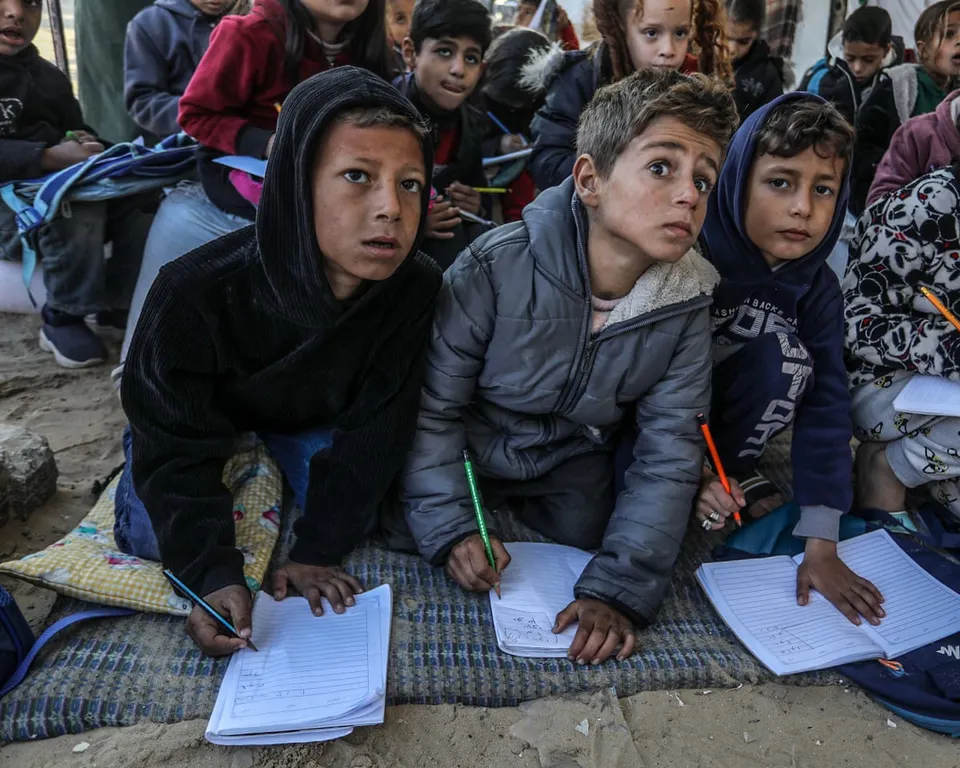
A US charity educating children in Gaza plans to record classroom conversations and use artificial intelligence to identify speech it considers hateful or inciting, bringing surveillance into schools serving a population already scarred by war.
Gaza Children Village’s founder pursues an educational programme he describes in terms of deradicalisation. His monitoring proposal would place classroom discussion under automated scrutiny.
At issue is how a school would distinguish incitement against people from criticism of a state, or a child’s account of violence from an expression judged unacceptable by those funding and running the classroom.
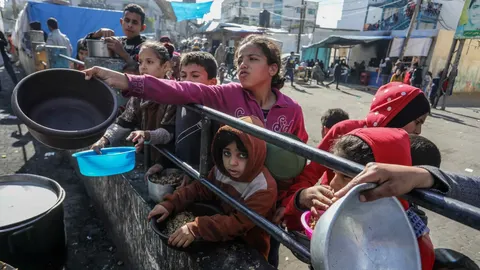
The proposal arrives amid an educational emergency. In an update covering 30 April 2026, UNICEF estimated that about 700,000 children aged four to 17 had missed almost three consecutive years of formal, in-person schooling. Nearly 98 per cent of school buildings were damaged and more than 93 per cent needed major rehabilitation or reconstruction. Around 420,000 children had no face-to-face learning at all.
The charity’s Academies of Hope offer education alongside food, healthcare and psychological support. Its website currently says it operates 14 academies serving more than 21,000 children. Those figures are the organisation’s own account of its reach.
Its founder, Dr David Hasan, is a Palestinian-American neurosurgeon who volunteered in Gaza’s hospitals. He has described the schools as a response to the trauma he encountered, with an ambition to interrupt the violence shaping Palestinian and Israeli lives. The first academy opened in July 2025.
In an interview with Jane Prinsley published in The Jewish Chronicle on 2 October 2026, Hasan described a prototype microphone that would record lessons and store them in the cloud for 72 hours. AI would flag objectionable language, sending him an alert, recording and transcript.
He would contact the teacher after reviewing the extract. A substantiated allegation could lead to dismissal.
Hasan anticipated privacy objections: “In Western countries, parents, teachers and liberal people will freak out about violating privacy.”
The interview also describes Israeli and American counterterrorism screening, excluding former Hamas or UNRWA employees. Hasan outlined an attitudes questionnaire and consultants joining classes remotely without warning. These are reported procedures, rather than independently inspected systems.
The proposed surveillance therefore accompanies an existing effort to select teachers and control how the curriculum is delivered. For staff, the prospect of a recorded sentence being reviewed by the founder carries an employment consequence, even before questions about the technology’s reliability are answered.
Israeli financial support is publicly acknowledged. In an interview published by Jewish News on 5 May, Hasan discussed Israeli and Jewish donors and said openness about that support was essential to local trust.
“You have to be honest with everybody,” he said. “If the people in Gaza found out later, they would say, ‘You’re up to no good.’”
That interview did not establish what percentage of funding came from Israel. Nor should Israeli donors be conflated with Jewish donors elsewhere. The charity’s own partners page names IsraAid, SmartAid and Natan alongside international organisations, including World Central Kitchen.
Hasan says the curriculum combines Palestinian Authority material with teaching about empathy, religion and critical thinking. His stated ambition is to preserve Palestinian identity while changing attitudes towards Jewish people and Israelis.
The changes include replacing examples involving violence with other classroom exercises. He has described substituting football players for references to martyrs in maths questions, and an Olympic javelin for a weapon aimed at an Israeli soldier.
Further proposals extend beyond conventional lessons. In remarks reported by The Jewish Chronicle on 9 October, at an event at Israel’s Reichman University, Hasan discussed using Xbox and Nintendo games to develop empathy and teach children about the Holocaust. The games’ identities and their introduction date were not established in the published account.
The proposals are being advanced amid extraordinary physical destruction. A UN satellite assessment, reported by OCHA, found that 82 per cent of Gaza’s structures had sustained some degree of damage by 16 June 2026, including 134,422 assessed as destroyed. In September 2025, a UN Commission of Inquiry concluded that Israel had committed genocide against Palestinians in Gaza, a finding Israel rejected.
The human consequences emerge in separate reporting by Gaza journalist and teacher Ruwaida Amer, published in +972 Magazine on 8 October. Amer described the destruction of the Rosary Sisters School in Gaza City, where she had taught since 2019. Its remains became shelter for displaced people; books were burned for cooking and warmth. She named four pupils killed by Israel — Habiba, Salma, Abdullah and Issa — and two colleagues, Wasima and Wahiba.
Across the makeshift classrooms she described, recovering an education meant confronting heat, overcrowding, thirst and bereavement. Rawan Al-Sir, a pupil attending tent lessons in Khan Younis, said she could go only three days a week because there was insufficient space. “The tent feels like an oven,” she said. Children sat on the ground and brought their own water.
Arabic teacher Ahlam Karira said some middle-school pupils could not read or write. “My role has shifted from teaching a standard curriculum to basic literacy instruction, laying the necessary groundwork for language learning,” she told Amer.
The lost years were painfully tangible for Ibrahim Ashour, 15: “I still feel like a 12-year-old-child.” Mathematics teacher Rima Shuqair estimated that catching pupils up on arithmetic fundamentals alone could take a full academic year.
Amer recalled a sixth-grade pupil repeatedly asking her to explain a science lesson. “I’m sorry, teacher; I feel like I’ve become a donkey — I bear huge responsibilities in our tent,” he told her. His mother had died and he was caring for his siblings.
Psychologist Falasteen Yassin described anxiety, irritability and distress among children whose days revolved around collecting water and fuel. She also stressed that temporary classrooms could restore routine and provide respite, despite their shortcomings. Education remained a source of protection even when its physical conditions were inadequate.
These accounts show why the language of deradicalisation demands scrutiny. A child’s anger, exhaustion or inability to concentrate must be understood in the context of bereavement and survival. Assessing speech without that context risks treating the consequences of violence as a defect in the children who endured it.
That context makes the combination of Holocaust teaching and speech monitoring especially fraught. The Holocaust’s universal lesson is that no people’s persecution licenses the persecution of another. A curriculum asking Palestinian children to recognise Jewish suffering must also permit them to name their own losses and examine the conduct of the Israeli state. If legitimate anger is treated as radicalisation, education risks becoming an exercise in securing acceptance from those who have been harmed.
A credible peace curriculum would allow a pupil to ask whether the promise of never again protects Palestinians too, without that question becoming grounds for suspicion.
Ines Abdel Razek, co-director of the Palestine Institute for Public Diplomacy, told AP: “It is very concerning, they’re trying to control the minds of new generations.”
International Crisis Group analyst Amjad Iraqi highlighted Palestinians’ surveillance fears. Board member Bishara Bahbah, who had not been informed, opposed silencing classrooms; an unnamed partner representative warned cooperation could end.
Palestinian government spokesperson Mohammad AbuAlrob said monitoring crossed “an important line”.
In commentary published on 10 October, Caitlin Johnstone and her co-writer and husband, Tim Foley, argued that the scheme risked policing Palestinian resentment after the destruction of Gaza. They placed the proposal within a broader critique of expanding AI surveillance.
That commentary reproduced a 9 October post by Mondoweiss accusing the charity of using classroom recordings “to make sure nobody sounds too resentful about it”. The remark captures the dispute over whether expressions of anger would be treated as incitement.
Support for the wider education project came from Gerald Steinberg, founder and president of NGO Monitor. Speaking to JNS after an 8 October panel, he described himself as “cautiously optimistic” and called it “a serious attempt, with significant backing, to begin a process”. He presented the schools as a potential alternative to the existing education system, including UNRWA.
Hasan named PollyLabs as a collaborator; it denied developing or deploying the system. Deployment, triggers and notification remained unclear. AP found no indication of intended outside sharing.
Those limits matter. The available evidence establishes a monitoring proposal and serious questions about its operation. It does not establish an intelligence-sharing arrangement. Assessing the scheme requires answers about the system actually proposed, including its provider, access controls and treatment of recordings after an alert.
On its website, Gaza Children Village says its safeguarding policy covers consent and photography. However, the accessible privacy notice concerns website users, rather than classroom audio. The public pages reviewed did not explain how families could refuse recording, who could retrieve flagged material or how teachers could appeal a decision. The detailed curriculum page required a password.
A stated 72-hour retention period leaves further questions. Would an extracted clip or transcript survive after the original lesson was deleted? Could a teacher inspect the full context used to judge a remark? Would children know when they were being recorded?
The charity’s combination of schooling, meals and care also makes the practical meaning of consent important. A family deciding whether to accept recording would need to know whether refusing it affected a child’s access to those services. The reviewed public material did not resolve that question. With so few functioning alternatives, the ability to refuse surveillance would depend on whether another place to learn was realistically available.
Hasan presents his schools as places where children can recover and learn to live alongside others. Whether classroom surveillance supports that purpose depends in part on what happens when a pupil expresses anger, recounts a bereavement or asks a politically difficult question.
Karira’s appeal was practical: “Children need to return to actual schools and their proper classrooms.” That means rebuilding places where pupils can learn, recover and speak freely about the lives they are trying to rebuild.
For a child returning to education after war, trust in the classroom includes the ability to speak about what happened outside it.
Sources
6. Gaza Children Village — partners.
7. Gaza Children Village — safeguarding statements in its FAQ.
8. Gaza Children Village — website privacy notice.
9. Gaza Children Village — password-protected curriculum page.
11. JNS, Rikki Zagelbaum, 8 October 2026 — Gerald Steinberg’s support for the broader education project.
12. OCHA, 7 August 2026 — UNOSAT assessment of structural damage in Gaza as of 16 June 2026.
14. Reuters, 18 September 2025 — explanation of the Commission’s finding and Israel’s rejection.