Netanyahu’s UN Gaza Genocide Denial Draws Walkout, Arrests and Rebukes from Three States
Iran called for Israel’s expulsion from the UN as Türkiye and Qatar rejected the Israeli prime minister’s attacks. Outside, police arrested protesters opposing his visit.
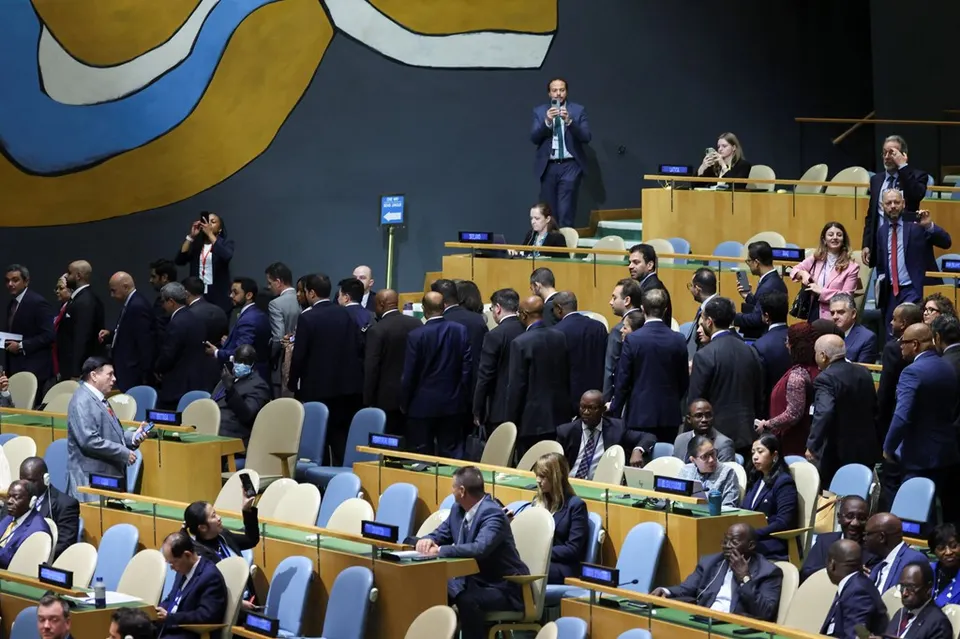
Diplomats were still leaving the United Nations General Assembly hall when Benjamin Netanyahu reached the lectern. The presiding officer called for order. Israel’s prime minister looked towards the departing delegations and called them “moral cowards”. Hours later, Iran, Türkiye and Qatar answered him from the same chamber.
Outside the UN, police were detaining protesters who had blocked a Manhattan street to challenge his presence in the city. Among those arrested, according to her own account, was Darializa Avila Chevalier, the Democratic nominee for New York’s 13th congressional district. Organisers estimated that more than 100 people were arrested during Thursday’s demonstration; the New York police had not confirmed that total when it was first reported.
The confrontation unfolded inside and outside the UN. At the podium, Netanyahu insisted that Israel had taken extraordinary steps to protect civilians in Gaza, calling the war “the opposite of genocide”. On the street, Jewish, Palestinian, Iranian and Lebanese New Yorkers, joined by elected officials and candidates, demanded an end to US military support for Israel. The diplomatic replies came after the day’s scheduled speeches.
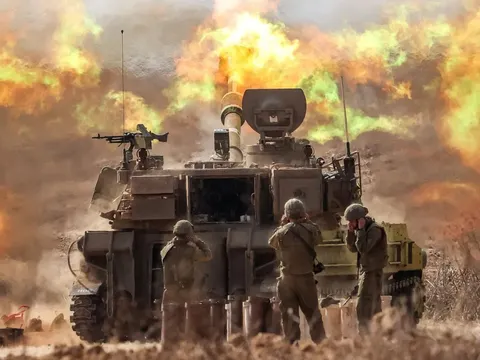
Netanyahu’s address defended the joint US–Israeli strikes on Iran as a matter of survival, attacked governments and media organisations he said were spreading lies about Israel, and accused New York mayor Zohran Mamdani of antisemitism. With an Israeli election approaching in October, he invoked his brother Yonatan, killed in the 1976 Entebbe operation, and repeated the family’s wartime refrain: “We have no other choice.” The address offered little indication of a change in policy on Gaza or the occupied West Bank.
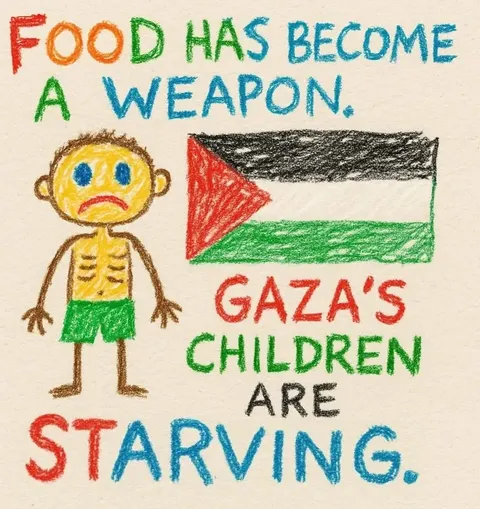
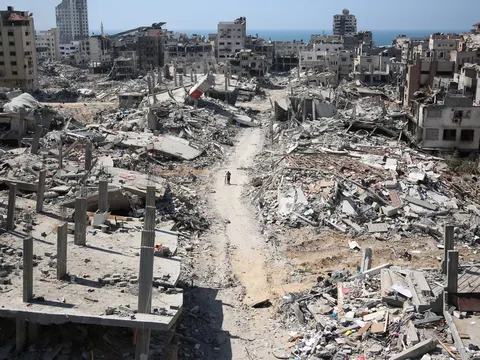
The numbers and legal findings behind the diplomatic revolt tell a different story from the one Netanyahu presented. UN News reported that Gaza’s health authorities had recorded more than 73,000 Palestinian deaths since October 2023, with many others missing beneath rubble. UNICEF says more than 64,000 children have reportedly been killed or injured. Its figure combines both categories; it is not a count of children killed.
Nearly a year after the announcement of a ceasefire in October 2025, UN humanitarian officials still report strikes, severe shortages and damaged health and water systems in Gaza. In the West Bank, Netanyahu characterised settler violence as the work of a small group of young offenders. The UN humanitarian office recorded more than 1,600 settler attacks causing casualties, property damage or both across 275 Palestinian communities between January and 14 September 2026.
Britain’s prime minister, Andy Burnham, had used the same UN platform two days earlier to insist that attacks on civilian life be judged against international law. Describing the threat of renewed Russian strikes on Ukraine’s heat and power plants this winter, he said that “strikes on civilian infrastructure are explicitly forbidden by international law”. He called the attacks he expected Russia to carry out war crimes and promised British help to repair and protect Ukraine’s energy supply.
Burnham then turned to the Middle East. He condemned the Hamas attack of 7 October 2023 and reaffirmed support for Israel against threats including Iran, before saying that this “does not justify the Israeli government’s actions in Gaza or the West Bank”. He spoke of children killed, insufficient aid and a two-state solution under threat. In that passage of his speech, he did not describe Israel’s actions as war crimes. The difference in his language stood out against the destruction of Gaza’s essential services documented by UN humanitarian agencies.
On the West Bank, Burnham condemned Israel’s decision to issue construction tenders for the E1 settlement project, warning that it would further divide the territory and endanger a viable Palestinian state. He pointed to Britain’s position that the continuing occupation is unlawful, sanctions on settlers, and a proposed ban on imports from illegal settlements. Although he spoke of banning settlement goods as an action taken, the UK government’s 8 September announcement described the import ban as a measure it was bringing forward; it said sanctions on five people had already been imposed.
An independent commission of inquiry established by the UN Human Rights Council concluded in September 2025 that Israel had committed genocide in Gaza. Israel rejects that finding. The International Court of Justice has ordered provisional measures in South Africa’s case against Israel but has not delivered a final judgment on the genocide allegation. Separately, the International Criminal Court issued an arrest warrant for Netanyahu in 2024 over alleged war crimes and crimes against humanity. That warrant is not a conviction and does not charge him with genocide.
When delegates exercised their right of reply at the end of Thursday’s General Assembly meeting, Iran’s representative described Netanyahu’s appearance as a disgrace and asked why he was speaking at the UN rather than standing “in the dock of a court of law”. The representative urged the organisation to invoke Article 6 of its charter to expel Israel and compared the situation with apartheid-era South Africa. Expulsion would require a Security Council recommendation before a General Assembly decision. South Africa was barred from participating in the assembly’s work in 1974 but was not expelled from UN membership. The Iranian representative also incorrectly said that the International Court of Justice had concluded Israel was committing genocide; the court has made no such final finding.
Iran’s delegate accused the United States of enabling Israel’s conduct and invoked the strike on a primary school in Minab during the US–Israeli war with Iran. The delegate described 168 children as having been killed there, but a recent independent UN fact-finding mission reported more than 150 deaths, including about 120 children. The mission found reasonable grounds to believe the United States had committed a war crime in the attack. The Iranian representative warned that further attacks on Iran would be met with a severe response.
Türkiye’s representative rejected Netanyahu’s accusations against President Recep Tayyip Erdoğan and called the earlier walkout “a resounding diplomatic condemnation”. The delegate said Israel was becoming more isolated and reaffirmed Türkiye’s support for a Palestinian state on the 1967 borders, with East Jerusalem as its capital. Qatar’s representative rejected the claims Netanyahu had made about the Gulf state, saying they diverted attention from Israel’s conduct in the occupied Palestinian territories. The Qatari delegate also disputed the suggestion that young people needed Qatar to shape their views of the conflict.
The absence of the Palestinian president supplied another striking contrast. Mahmoud Abbas addressed the assembly by video after the United States denied visas to his delegation for a second consecutive year. A week earlier, the General Assembly had voted 152 to three to allow his recorded address. Abbas warned that policies in Gaza and the West Bank threatened Palestinians’ continued existence in their homeland and pressed for the next phase of the Gaza peace plan, including Israeli withdrawal and reconstruction.
Chevalier’s arrest brought the argument over Gaza into a New York congressional race. In an opinion article published after the protest, she said about 400 people had joined the civil disobedience organised by groups including Jewish Voice for Peace, the Democratic Socialists of America’s New York chapter, the Sunrise Movement and the Palestinian Youth Movement. She cited the reported toll of more than 64,000 children killed or injured and the death of five-year-old Hind Rajab as reasons she refused to welcome Netanyahu to the city.
Hind’s case has returned to public attention since the Israeli military acknowledged in August that its soldiers fired on the car carrying her family in January 2024. It said it had opened a criminal investigation into the incident, which also left two Palestinian Red Crescent paramedics dead. Forensic Architecture’s examination mapped 335 bullet holes in the family’s car; that figure does not establish that 335 separate bullets were fired.
Chevalier also made the protest an argument about American spending. Brown University’s Costs of War project estimates that the US spent $21.7bn on military aid to Israel in the two years to September 2025. In New York, Advocates for Children found that more than 154,000 public school students experienced homelessness at some point during the 2024–25 school year. Chevalier argues that Washington’s priorities should shift towards housing, education and food assistance for families in her district.
The protest exposed a dilemma for Mamdani. Netanyahu attacked the mayor from the UN podium; Mamdani had previously called the Israeli leader a war criminal but has acknowledged that he cannot order his arrest. He said this week that he would not join the demonstrations and that New Yorkers had a right to protest.
It also reflected a wider change in American opinion. In a Pew Research Center survey conducted in May, 62% of US adults expressed an unfavourable view of the Israeli government, up from 43% in 2022. Before the speech, Israel’s UN ambassador, Danny Danon, attributed the collapse in support largely to misinformation and said Netanyahu would highlight his government’s achievements.
By the end of Thursday, Netanyahu had made his case to the assembly, Abbas had addressed it from Ramallah, Iran, Türkiye and Qatar had responded, and protesters had been led away outside. Chevalier’s explanation for joining them was brief: “If that requires my arrest, so be it.” The competing accounts of Gaza remained unresolved by the speeches, but the diplomatic walkout, the replies and the arrests showed how far the argument had travelled beyond the chamber.
Sources and reporting notes
- UN recording and automated transcript of the 24 September General Assembly debate. The transcript is machine generated; quotations from Netanyahu were checked against the prime minister’s released speech.
- UN News report on Netanyahu’s address and UN General Assembly account of its vote on Abbas’s remote address.
- UNICEF’s Gaza children briefing, updated 5 August 2026; UN OCHA humanitarian situation report, 18 September 2026.
- UN commission of inquiry finding; ICJ case record; ICC announcement of the arrest warrants.
- The Guardian’s report on Netanyahu’s speech, report from the New York protest, pre-speech reporting and Chevalier’s first-person opinion article.
- Pew Research Center’s July 2026 analysis.
- Brown University’s military aid estimate and Advocates for Children’s New York student homelessness data.
- Forensic Architecture’s reconstruction of Hind Rajab’s killing and the Israeli military’s August 2026 investigation announcement.
- Andy Burnham’s 22 September UN speech, official UK transcript; UK government announcement of settlement measures, 8 September; joint foreign ministers’ statement on settlement trade.
- UN recording and automated transcript, final right-of-reply section: statements by Iran, Türkiye and Qatar on 24 September 2026. UN Charter, Article 6 and UN account of South Africa’s 1974 exclusion from General Assembly proceedings.
- UN News account of the independent fact-finding mission on the Minab school strike and the mission’s report A/HRC/63/61.