Gaza’s Children Face Deafness After Israeli Bombardment, as Deaths and Injuries Mount
Hearing damage is adding to the lasting injuries suffered by Gaza’s children, while humanitarian organisations warn that restrictions on treatment and supplies are prolonging the harm.
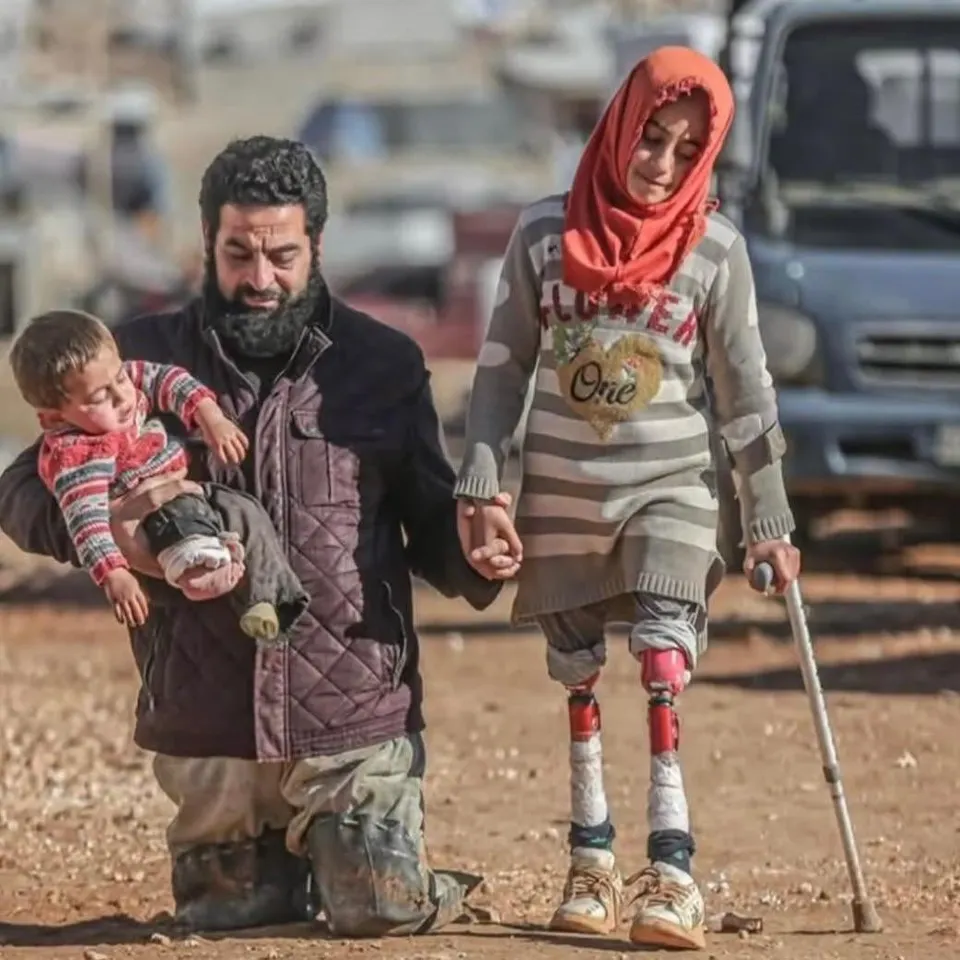
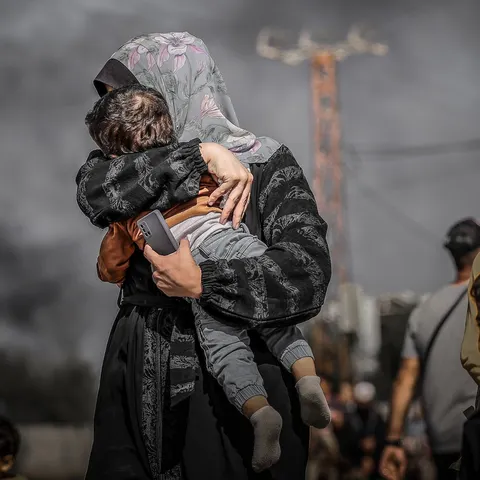
Children who survived Israeli bombardment in Gaza are facing another lasting injury: the loss of their hearing. Explosions have damaged their ability to communicate and learn, while the destruction of medical services and shortages of equipment are making assessment, treatment and rehabilitation harder to obtain.[2][3]
The hearing-loss crisis forms part of a far wider toll on Palestinian children. UNICEF’s report covering the first six months of 2026 recorded at least 21,700 children reported killed and 45,000 injured in Gaza between 7 October 2023 and 30 June 2026. Those figures exclude subsequent months of reported casualties. The same report said approximately 4,000 children required medical evacuation for treatment unavailable inside Gaza.[4]
The killing has continued despite the ceasefire announced in October 2025. On 6 August 2026, UNICEF said at least 300 children had reportedly been killed during its first 300 days, with hundreds more injured.
“A ceasefire that leaves an average of one child dead each and every day is failing children,” said Edouard Beigbeder, UNICEF’s regional director for the Middle East and North Africa.[5]
For some survivors, the damage becomes apparent only after the immediate danger has passed. Le Monde described 12-year-old Dana Abou Amro developing severe hearing loss after a nearby Israeli missile strike. Her family struggled to communicate with her; her four-year-old sister became an intermediary.
The newspaper reported in January 2026 that an Atfaluna Society for Deaf Children survey indicated 35,000 children and adults had suffered partial or complete hearing loss from Israeli bombardment.[1]
The precise scale remains uncertain. Atfaluna’s own March 2025 situation report described 35,000 people as being “at risk” of temporary or permanent hearing loss. Published accounts differ in how they define the estimate, which is not a verified count of 35,000 people newly and permanently deafened.[6]
More specific screening results appear in a World Health Organization report published later in 2025. Atfaluna assessed 32,753 people between December 2024 and August 2025 and identified 2,500 children and adults with new hearing impairment directly attributable to the conflict. That finding covers the people assessed, rather than the whole population, and does not establish the total number affected across Gaza.[2]
The mechanism of injury is well established. Explosive noise can rupture an eardrum, damage the small bones of the middle ear or destroy sensory cells inside the inner ear. Hearing loss can occur immediately, affect one or both ears, and be temporary or permanent. The US National Institute on Deafness and Other Communication Disorders explains that the human sensory hair cells destroyed by noise do not regenerate.[7]
Atfaluna, which has worked in Gaza since 1992, provides hearing assessments, speech therapy, hearing-aid services, education and sign-language training. Its work now spans the needs of people with existing hearing disabilities and those acquiring them during the war.[8][2]
In June 2026, its director, Fady Abed, told El País that approximately 50,000 hearing aids were needed. He warned that delays could turn potentially recoverable injuries into lasting disabilities.
“Some injuries are temporary, but without immediate intervention they become irreversible,” he said, in comments translated from Spanish.[9]
The consequences reach into ordinary family life and children’s safety. UNICEF has documented children unable to hear relatives calling during bombardments, children struggling to follow lessons, and families losing hearing devices while fleeing or when their homes were attacked. In May 2025, the agency estimated that 10,000 children in Gaza had hearing loss, about half of them severe. That estimate included children with pre-existing conditions.[3]
UNICEF reported delivering 148 hearing aids that had entered during a ceasefire, illustrating both the possibility of helping children and the gap between available supplies and need. Batteries, replacement devices and continuing support are essential to keeping that assistance usable.[3]
The treatment crisis extends beyond specialist hearing equipment. Médecins Sans Frontières warned on 12 August 2026 that Israeli restrictions on engine oil and spare parts were threatening hospital generators, ambulances and water systems. After a generator failed at its Deir al-Balah field hospital on 5 August, the charity said electricity rationing restricted surgery, halted X-ray services and prevented nurses from sterilising essential equipment.
“What we are witnessing in Gaza is not a series of isolated shortages, it is a policy of attrition by design,” said Filipe Ribeiro, MSF’s head of mission in Palestine.[10]
In a response reported by El País in June, Israel’s COGAT agency denied blocking medicines and said it worked with organisations on alternatives for restricted goods with potential military uses.[9]
WHO’s September 2025 assessment estimated that at least 41,844 people in Gaza had injuries requiring prolonged rehabilitation, with children accounting for approximately a quarter of potentially life-changing injuries. Hearing impairment sits alongside amputations, burns and injuries to the brain and spinal cord in the long-term burden facing survivors. The organisation also warned that service-provider records miss people unable to reach treatment.[2]
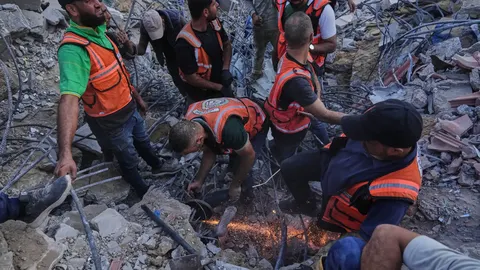
Recent deaths underline how danger continues after the initial attack. OCHA’s report dated 18 September 2026 said a previously war-damaged residential building in Gaza City collapsed on 16 September, reportedly killing 21 people, including 12 children. Families had remained in unsafe buildings because adequate alternatives were unavailable.[11]
Responding to the collapse, Save the Children said Israeli restrictions on shelter materials had left families living in damaged structures, while restrictions on machinery hampered efforts to rescue people when those buildings fell.
“Nearly a year after its signing, the so-called ‘ceasefire’ continues to fail children,” said Hiba AlHejazi, the charity’s advocacy, campaigns, communications and media director in the occupied Palestinian territory.[12]
The charity called for the immediate removal of restrictions on rescue and reconstruction equipment. In a separate statement on 17 September, it urged governments to prevent the use of explosive weapons in populated areas and invest in sustained rehabilitation for children injured by blasts.[12][13]
For children living with hearing loss, assistance also has to reach classrooms and homes. Atfaluna’s programmes include support for parents and teachers, accessible education and sign-language training. UNICEF is calling for unrestricted humanitarian access and the restoration of the healthcare, education, water and protection services on which children’s recovery depends.[8][5]
Sources
WHO, September 2025 rehabilitation assessment: hearing-screening results on page 19; wider rehabilitation findings and limitations throughout the report.
UNICEF, 26 May 2025: hearing-loss estimates, children’s experiences and hearing-aid delivery.
UNICEF, report covering 1 January–30 June 2026, issued 8 August 2026: cumulative child deaths and injuries since October 2023, and medical evacuation needs; see page 2 of the downloadable report.
UNICEF, 6 August 2026: deaths following the October 2025 ceasefire and Edouard Beigbeder’s statement. This figure overlaps the reporting period in source 4 and must not be added to its cumulative total.
Atfaluna, March 2025 situation report: page 4 describes 35,000 children and adults as at risk of temporary or permanent hearing loss.
US National Institute on Deafness and Other Communication Disorders: medical mechanisms and effects of noise-induced hearing loss.
Médecins Sans Frontières, 12 August 2026: restrictions affecting medical services, generator failure and Filipe Ribeiro’s statement.
OCHA, situation report dated 18 September 2026, published 21 September: building-collapse casualties and unsafe shelter conditions.
Save the Children, 16 September 2026: rescue and shelter restrictions, and Hiba AlHejazi’s statement. The article uses OCHA’s subsequent casualty update rather than the charity’s preliminary figures.
Save the Children, 17 September 2026: protection from explosive weapons and investment in rehabilitation.