Gaza Mother Gives Birth After Israeli Airstrike Killed All Three of Her Children
Alaa Hessi named her newborn Waseem after the eldest son she lost. In the final weeks of her pregnancy, she was living in a tent above her destroyed home, struggling to find nourishment and a safe place for her baby.
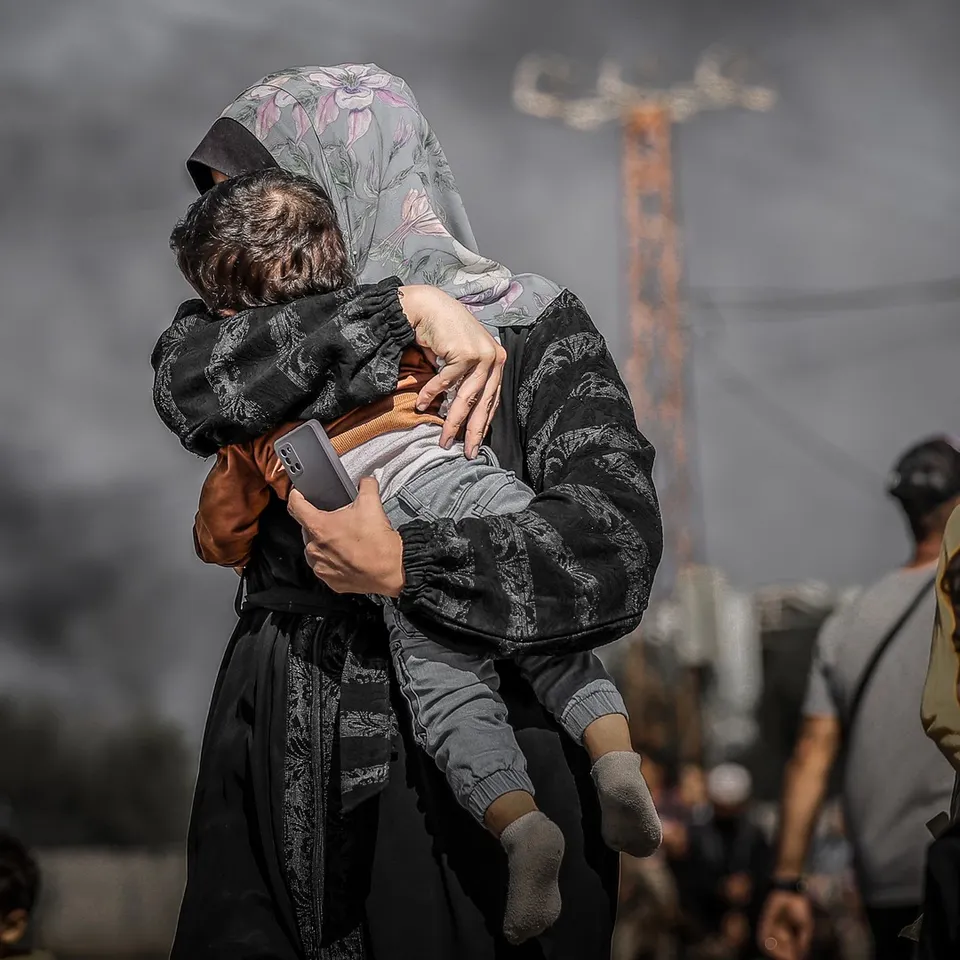
Alaa Hessi has given birth to a healthy baby boy after spending the closing weeks of her pregnancy in a tent pitched on the ruins of the home where an Israeli airstrike killed all three of her children.
She named him Waseem, after his older brother, who was 10 when he died. Her other son, Mohannad, was seven. Her daughter, Khawla, was five.
Before the birth, Alaa was preparing to welcome her baby among the surviving possessions of the children she had lost. She hoped he might one day wear their clothes. Some had been torn or scorched in the blast, but she had kept them, carrying them in a blue backpack up the unstable wooden stairs to her tent.
Her account of those final weeks describes a pregnancy shaped by bereavement, food shortages, physical exhaustion and fear for the child she was carrying.
“Sometimes, fear controls me because I lost my children, and I’m afraid of losing my baby again,” she said.
The news that she was pregnant had brought happiness and renewed grief together. Even a craving for a particular food could take her back to her pregnancy with the first Waseem.
“I was happy that I would have a child, but I also cried constantly because I missed my children – Waseem, Mohannad and Khawla. Everything reminds me of them.”
Among the clothes she saved were a Snoopy T-shirt, a hat with two fluffy pompoms and a scarf for Castleview AFC, a small football club in Cork. Waseem had loved the scarf so much that he wore it through the summer, resisting his mother’s attempts to persuade him to take it off in the heat.
Keeping those belongings safe presented another difficulty. Rats entered the tent at night, chewing fresh holes through the fabric after Alaa sewed up their previous entrances. She and her brother discussed finding a sturdy box to protect the clothes. She wondered about poison; he worried that rats might die inside the tent and spread disease.
For Alaa, the infestation raised an immediate question about how she would protect a newborn. She wanted a crib, but said they were difficult to find in Gaza, and the shelter was already crowded.
“For the baby who’s coming, all I want is a safe place where the rats can’t reach,” she said. “The baby will be so small, and I am terrified for him.”
The tent stood on what remained of the upper floor of the family home. Reaching it meant climbing a wooden staircase resting on rubble. Eight months pregnant, Alaa had to pause for breath as she made her way up.
Beyond the tarpaulin walls lay broken concrete and exposed steel. Alaa said her tent faced the military boundary known as the yellow line, that Israeli army positions were visible and that soldiers sometimes fired at them.
The shelters offered little privacy. Neighbours could hear conversations and people using the bathroom. Flies buzzed inside the tent from the start of the day.
“What I wish the world outside Gaza understood is how humiliating life in a tent really is,” Alaa said. “It is difficult, degrading and profoundly inhumane. Death still surrounds us in every direction.”
Ordinary household tasks consumed much of her strength. A morning cup of tea required gathering wood and lighting a fire. Alaa attributed the shortage of cooking gas to Israeli restrictions on its entry into Gaza. She and her husband depended on open flames for cooking and hot drinks.
She tried to prepare food early, before the heat intensified, and washed their clothes by hand. By the eighth month of pregnancy, even these routines were exhausting.
Getting medical care required another demanding journey. On the day described in her account, she walked through damaged streets in temperatures of 34C to attend a prenatal appointment. Transport was usually unavailable to her. The clinic itself operated from a tent.
Doctors had prescribed nutritional supplements, but Alaa said she continued to feel the effects of food deprivation. Having been pregnant before, she recognised how different this pregnancy felt: her body remained depleted despite her efforts to improve her diet.
Her husband bought fruit and vegetables in the small quantities they could afford, then declined to eat them himself so that she could have them.
The emotional burden followed her into the clinic. Alaa said she avoided telling nurses that all her children had been killed because she believed the healthcare workers were themselves too exhausted to offer comfort.
“My story is not unusual in Gaza,” she said. “Many women here have lost their children.”
She also had an appointment with a maternity psychologist, who encouraged her to practise slow breathing. After her appointments, she walked home through the same damaged streets.
Her husband was the person with whom she could speak most openly about Waseem, Mohannad and Khawla. They spent hours remembering their children’s personalities, habits and favourite things, and visited their graves together. When one parent struggled, the other tried to provide support.
On an old smartphone with a cracked screen, Alaa could still hear the children’s voices. One recording preserved Khawla and Mohannad teasing each other, each insisting that they were the sweet one.
The ruins beneath the tent held memories of feeding the children, teaching them and watching them grow. For Alaa, the place where they had died was also the place where the family had shared its everyday life.
“Everything beautiful disappeared after they were gone,” she said.
Shortly after her account was recorded, her baby was born healthy. During her pregnancy, Alaa had expressed a simple wish for the boy she would name Waseem: that he would be allowed to grow up in safety.
“I hope my new baby will live a better life than the one his siblings experienced, and that he will be safe.”
Source and attribution: Reporting by Seham Tantesh in Gaza and Tess McClure, published in the Guardian on 21 September 2026. All quotations and personal details come from the Guardian article. Its closing update confirms the subsequent birth of a healthy baby boy; descriptions of Alaa’s pregnancy and living conditions refer to the period before his birth.