Israeli Attacks on Gaza at Highest Level Since Ceasefire as Strikes Kill 14 in a Day
A drone strike on a funeral, an armoured push to Gaza's main highway and new testimony of rape and beatings inside Israeli prisons come as a conflict monitor records the heaviest Israeli fire since the October 2025 truce – and ministers celebrate the ruins on television.
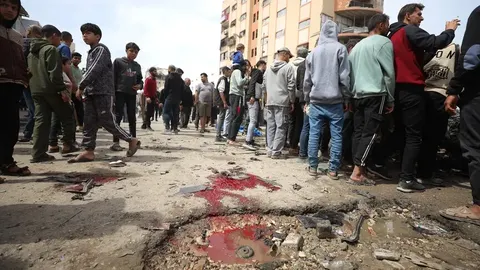
Israeli forces killed 14 Palestinians and wounded at least 37 in a series of attacks across Gaza on Friday, Al Jazeera reported, on a day that began with a drone strike on a funeral procession and coincided with confirmation that Israeli attacks are now running at their most intense level since the ceasefire agreed in October 2025.
The deadliest strike hit the Nuseirat refugee camp in central Gaza, where a drone attacked a crowd as the funeral of a man killed earlier passed through the area. Eight people died and 20 were wounded, according to the Gaza-based Safa news agency. West of the camp, another strike hit a makeshift shelter housing displaced families, killing one person and injuring three. In Gaza City, a strike on an apartment building killed one resident and wounded others, while in Beit Lahia, in the north, a drone killed a 52-year-old woman.
The Armed Conflict Location and Event Data Project, a conflict monitor, recorded more than 40 Israeli air and drone strikes in June – the highest monthly total since the truce took effect – and its data shows Israeli attacks at their highest level since the October agreement, Reuters reported.
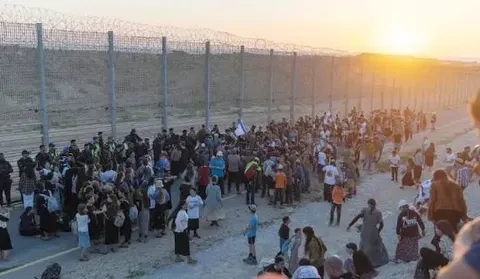
The strikes came as Israeli ground forces pushed deeper into territory the agreement placed beyond their control. Troops entered Gaza City's Zeitoun neighbourhood under heavy gunfire, killing one Palestinian and wounding three others, demolishing homes and shops and forcing families to flee, according to reporting by Drop Site News contributor Mohamed Ahmed. By morning they had moved the 'yellow line' – the boundary marking the edge of Israeli military control – up to Salah al-Din Road, the 45-kilometre artery that connects northern and southern Gaza and passes through every governorate, in violation of the October terms. A witness described quadcopters and shelling closing around displaced families overnight, forcing women to sleep in the street. 'We don't know where to flee to,' he said.
The advance follows briefings on Thursday in which senior military officials told Israel's security cabinet that the army now controls between 67 and 70 per cent of the Gaza Strip, the Jerusalem Post reported.
Inside Israel's prisons, meanwhile, fresh accounts of abuse have emerged from both Palestinian detainees and foreign activists. Dr Hussam Abu Safiya, the former director of Kamal Adwan Hospital in northern Gaza, told his lawyers on 14 July that guards had beaten him again following an earlier legal visit on 2 July, according to Physicians for Human Rights Israel. He remains in solitary confinement in an underground prison, where he says his pain medication has been discontinued, the results of a recent X-ray have been withheld from him, and he is being denied treatment for an injury to his right eye. During the visit he was concealed behind an opaque partition and made to speak to his lawyers by telephone while masked guards stood close enough to hear every word. 'Do everything possible to get me out of this place,' he told them. Abu Safiya has been imprisoned without charge or trial since December 2024, when he was seized after refusing to abandon his patients.
Anna Liedtke, a 25-year-old activist detained aboard the Gaza-bound Freedom Flotilla, has filed a criminal complaint in Israel accusing female guards at Givon prison of raping her during a forced strip-search, the Guardian reported this week. The complaint has been sent to Israel's attorney general, the legal adviser of the Israel Prison Service, the department responsible for investigating prison guards, known as Yahas, and the commander of Givon itself. Her lawyer, Muna Haddad of the Palestinian human rights organisation Adalah, framed the filing as a challenge to the impunity that has shielded Israeli prison staff, saying sexual violence against Palestinian prisoners has recurred for nearly three years and is now being extended to foreign nationals acting in solidarity with them. The complaint, Haddad said, will also test how the Israeli system responds when formally asked to investigate its own guards.
Liedtke sailed from southern Italy on 30 September aboard a converted ferry carrying roughly 100 activists and humanitarian aid. Israeli forces stormed the vessel in international waters in the early hours of 8 October 2025, confined the passengers to the canteen and sailed the ship to the port of Ashdod. During processing, she said, an officer speaking fluent German called her a 'Nazi slut'. She refused to sign rapid-deportation papers, which would have amounted to admitting she had entered Israel illegally when she had in fact been brought there by force from international waters, and was made to strip in an area only partly screened by a curtain, her naked body visible to male soldiers walking past. Transferred blindfolded and handcuffed to Ketziot prison that night, she was strip-searched again, fully naked and without consent, then held in a dirty cell with no clean drinking water, kept awake by loud music and repeated searches of the cell with dogs, while screams carried from other parts of the prison.
On 10 October she was moved to Givon, where she was once more ordered to strip behind a partly open curtain. When she refused, she says, guards tore off her clothes, groped her, pinned her arms, forced her to her knees and covered her mouth to stop her screaming, and one of them penetrated her vagina and then her anus with her fingers. Male guards stood laughing where the open curtain gave them a clear view, she said, and she believes the assault may have been recorded by the dense network of security and body cameras inside Israeli prisons. Israeli law defines rape as any non-consensual penetration. It also requires a detainee's consent before a strip-search, written authorisation from a senior officer if consent is refused, and that any search be a visual inspection only, conducted by female officers in a closed room. On Liedtke's account, none of those safeguards held at any of the three facilities.
Deported to Jordan on 12 October after spending her entire detention on hunger strike, Liedtke asked a journalist friend in Amman to record in her reporting that at least one woman had been sexually assaulted. In December she became the first flotilla activist to speak publicly about rape in Israeli detention, at a conference on political prisoners in Germany, after which women from her own boat contacted her to say they had been through the same. More than a dozen flotilla participants have now reported sexual assault, most anonymously; Drop Site published Liedtke's first-person account, co-authored with the journalist Noa Avishag Schnall, in May. 'It's clear they want to break our will and silence us,' she told the Guardian, insisting she had no reason for shame and that staying silent would only expose the next person to the same treatment. What she endured, she added, was 'way, way less than what Palestinian prisoners experience'.
Her case comes amid widening external scrutiny of Israeli detention. In May the UN added Israel to its blacklist of parties responsible for sexual violence in conflict, citing abuses by its security forces including the rape of male detainees, and Britain raised sexual assault in Israel's detention centres at the UN security council this month. Australian police are investigating rape and torture allegations lodged by flotilla participants in May, and French prosecutors have opened a war crimes inquiry into the suspected torture and mistreatment of French citizens held in Israeli custody.
The Israeli military rejected allegations of abuse by the forces that intercepted the flotilla and referred questions to the Israel Prison Service, which dismissed the claims as baseless and denied outright that its personnel had committed rape, sexual assault or systematic abuse.
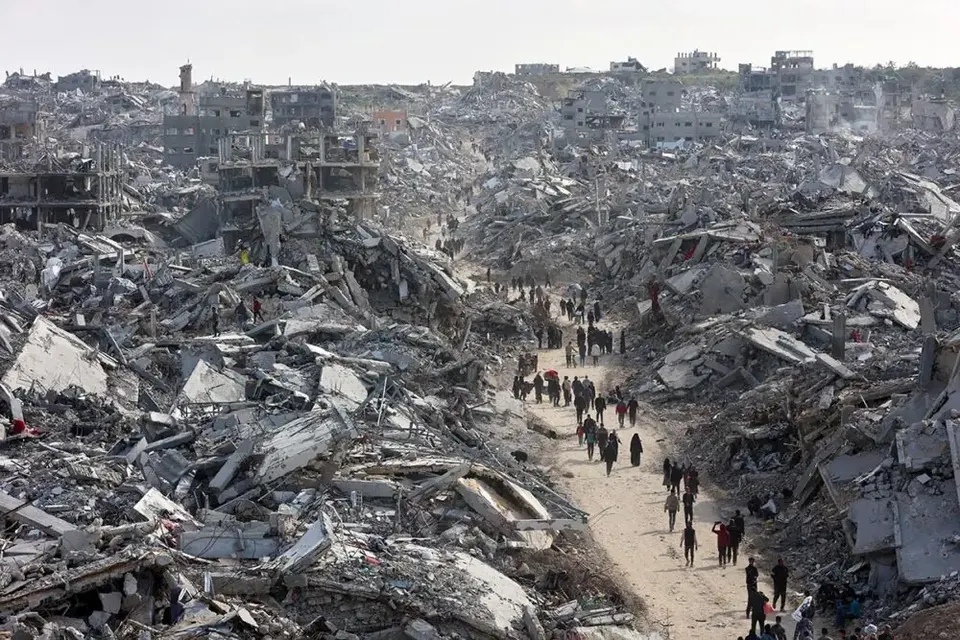
Senior Israeli officials, for their part, have been celebrating the results on national television. A report broadcast by Israel's Channel 14 showed government and military figures openly praising the destruction of large parts of Gaza and the mass killing and displacement of its population. The defence minister, Israel Katz, said he felt 'good' seeing neighbourhoods such as Jabaliya and Shuja'iyya 'destroyed' and 'in ruins', describing the devastation as the result of deliberate policy. Israeli forces, he said, would not withdraw from the yellow line unless Hamas disarmed – 'and even after that, we will remain in Gaza!' The military's deputy chief, Major General Tamir Yadai, called the situation a 'victory', citing Israeli control of 65 per cent of the territory and claiming that '70,000 terrorists' had been killed.