EU Parliament Erupts: MEPs Accuse Bloc of "Genocidal Complicity" as Damning Data Exposes Settlement Trade Fraud
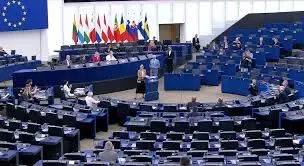
A high-stakes, explosive debate in the European Parliament this week descended into raw political warfare, with lawmakers trading accusations of "hypocrisy" and "complicity" as new evidence emerged of widespread trade fraud involving Israeli settlement goods. The session, held on June 17 to discuss the EU's role in Middle East peace following the US-Iran deal, quickly became a lightning rod for fury over the bloc's inaction on Gaza.
The Custom Mislabel Scandal
The debate was ignited by fresh investigative findings from the human rights group Global Echo. Analysis of over 30,000 export documents revealed that 17% of 5,900 surveyed shipments entering the EU contained agricultural products from illegal settlements, fraudulently mislabeled as "Made in Israel."
One MEP directly confronted the European Commission over the systemic failure to enforce existing trade rules, recalling a previous exchange with EU leadership: "You replied, you said that exports from Israel are difficult to prevent in circumstances where there's circumvention. So, what has happened since then is that Global Echo have published further evidence of widespread mislabeling of settlement goods presented at EU customs authorities as made in Israel."
The lawmaker pressed the Commission on the political paralysis: "Can we honestly deal with the question of settlement goods without first dealing with the question of the association agreement? The sequencing is really crucial here. The expansion of settlements are unlawful, and we must stop supporting settlers through trade."
Calls for Sanctions: "The EU is Complicit with a Genocidal State"
The most volatile clashes centered on the EU's double standard. Lawmakers contrasted the bloc's instant, unified execution of sanctions against Russia with its complete gridlock regarding Israel's actions in Gaza and the West Bank.
One MEP delivered a blistering indictment from the podium: "I don't really know what the point of this debate is. We come to the podium again and again to hear the same empty words. The EU is politically and economically complicit with a genocidal state of Israel. Who can seriously talk about justice while at the same time arming Israel, maintaining the association agreement, placing conditions on human rights, welcoming representatives from Israel who are violating human rights? European leaders are complicit and all of those who are with them betraying those who have elected us. The truth is very clear. You cannot improve the situation as long as you protect and legitimize Israel. It's about speaking out against the apartheid regime of Israel."
Another MEP, addressing the high representative, demanded clarity: "Seeing things as they are is very important, and you have to call things by their name, and that's why we have to call what's taking place apartheid. What's taking place in Israel is very, very clear. I think it would be good if this would be said publicly in this particular parliament, because this distortion of reality is something which is extremely harmful. And it undermines our credibility. The high representative can only express herself through certain channels. That's why we need somebody who can really say things as they are. To expressing opinions, there's no problem about her expressing herself with regard to Russia, but it seems that there is a mincing of words in the case of Israel."
"History is Watching": MEPs Demand Action on Gaza
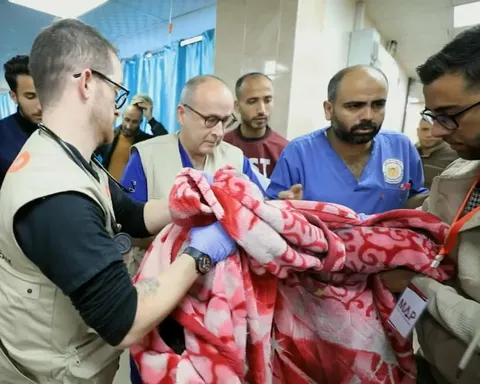
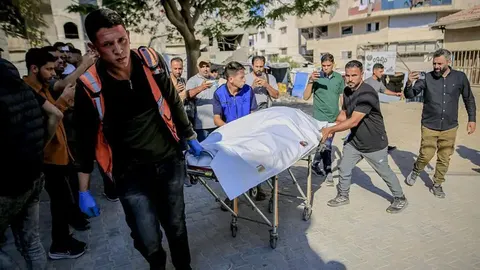
Lawmakers invoked the devastating humanitarian toll in Gaza, urging immediate action. One MEP declared: "Maybe there is a peace deal between the US and Iran, maybe not. But things are much worse. Israel's bombing of residential areas in Lebanon won't remove Hezbollah, and it will weaken the Lebanese government. Israel violates the peace deal in Gaza. 1.7 million people live in tents amongst rubble and ruins. The health situation is disastrous. Hamas holds people in its iron grip. Israel's illegal actions in the West Bank are at a historical level. We should have sanctioned Israel many years ago. And it's time to act now."
Another MEP, issuing a stark warning, said: "The American President can shout about a diplomatic victory, but nobody has been duped. The peace agreement simply takes us a step back. There's thousands of dead, massive destruction, the global economy has been held hostage. And what are we doing to stop Israel's actions? We cannot sanction the genocide in Gaza, the occupation of the West Bank, or the Lebanon. We cannot sanction a supremacist minister. Stop products from the colonized areas coming into the EU. Unable to stop war crimes in this country. History is watching and it will remember the lack of action from the EU and the member states."
The Power of Economic Leverage
In a particularly tense exchange over the viability of sanctions, one MEP challenged the proposal directly: "Do you really think that sanctions would stop Israel? Would it really stop Israel from producing weapons? Would it really stop Israel from waging war? And is this a promise that we should give to our citizens that we can stop a state that is perpetrating violations of international law with sanctions?"
The response was scathing: "Mr. Siepel, I am shocked. You support sanctions on Russia, right? What else do I need to say? Your hypocrisy is so horrible. Once it is about measures against Israel, it's like, 'Oh, no, I'm going to look elsewhere.' Yes, we can stop Israel if we stop funding it. 30% of their trade is with the European Union. Put the sanctions on that."
Another MEP echoed this sentiment, challenging the European Council's inaction: "The most powerful armies in the world, US and Israel, haven't been able to beat Iran. They've managed to stand up to illegal react, and there's a chance for peace. That could give an opportunity to offer life, quality life, good life for people in the Middle East. That's positive. Who wants to sabotage that? The genocidal state of Israel. Who wants to continue the war? They want to invade Syria, we'll stay there, they want to invade Lebanon, we'll stay there, we're having ethnic cleansing in Gaza and the West Bank. We can stop that. We have the power to stop Israel by sanctioning, by saying, 'We'll stop trading with you. You won't have the privileges. You won't have the arms or the money from Europe.' If you do that, tomorrow the Middle East will be a better place."
Christian Persecution Exposed
In a rarely reported angle, testimony on the floor detailed systematic harassment against Christians in Jerusalem. An MEP declared: "In Palestine, on a daily basis, Christians, Catholic nuns, priests, even bishops are being harassed, are being attacked, physically attacked, humiliated. That is regular. That is not something exceptional. And this is the problem that this peace agreement, whatever it is, is not going to solve. You can solve it only by restoring the independence and security of Christians in Jerusalem and in the whole region. And the Jewish state is not going to take responsibility for it. We have to take this responsibility."
The Counter-Argument: Terror as the Root
Pro-Israel hawks fiercely rejected the apartheid claims, shouting down colleagues with historical references. Citing a 1980 statement by Yasser Arafat, one MEP argued that the root of the conflict is terrorism: "Peace for us means the destruction of Israel. We are preparing for total war, a war that will last for generations. We will not rest until the day we return to our home and until we destroy Israel. This, ladies and gentlemen, is the root of the problem in the Middle East. It is called terrorism. It is called hatred. It is called Hamas, it is called Hezbollah, it is called Muslim Brotherhood. Peace requires Hamas to be disarmed, Hezbollah to be declared terrorist in its entirety and disarmed, and the Muslim Brotherhood to be considered as a terrorist movement. And the financing of structures that live off the destruction of Israel must be cut off. Without that, no peace deal can work in the region."
A Mother's Testimony: "I'm Ashamed"
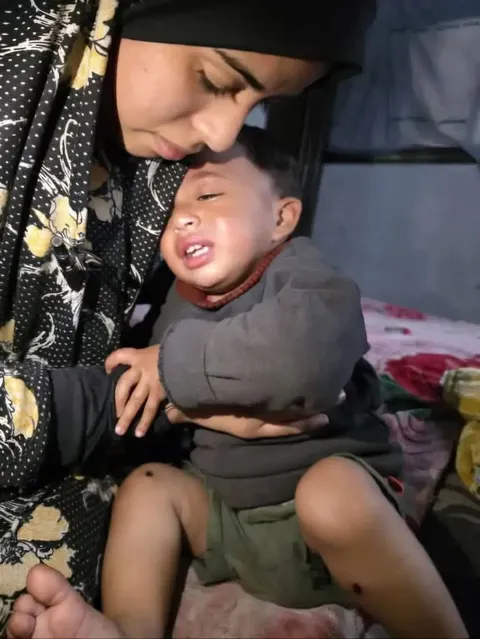
One MEP delivered a deeply personal plea, invoking the death of a seven-month-old Palestinian baby in the West Bank: "Two weeks ago in the West Bank, Sam, a 7-month-old Palestinian baby, was shot in the face by an Israeli soldier. He's dead. And almost no one is speaking his name. Sam is dead because impunity in Israel and the occupied territories has made the lives of Palestinian children expendable. Where soldiers and settlers kill without consequences, another Sam is only a matter of time. I wish I could stand here and tell you I'm proud, but I'm not. I'm ashamed as a member of parliament that we failed to prevent and to punish these crimes. I'm ashamed as a politician that there is no justice and barely a complaint raised about it. I'm ashamed as a mother that a 7-month-old baby can be shot in his mother's arms. And I'm ashamed as a human being that we ignore the cries for help. So, let's be courageous. Let's stop looking away. We must ban trade with Israel settlements and we must expand humanitarian aid for the more than 3 million Palestinians who are dependent on it in Gaza and the West Bank. We owe it to Sam."
Kallas: Pressure Mounts, But Divisions Remain
EU foreign policy chief Kaja Kallas acknowledged that a "large number" of member states raised the issue at the June 15 Foreign Affairs Council and called for concrete proposals regarding trade with illegal settlements. She reiterated that Israel's settlement expansion plans are "not in line with international law" and undermine prospects for a two-state solution.
However, the debate exposed deep divisions. Under the EU-Israel Association Agreement, any suspension requires unanimity among member states—and countries like Germany remain reluctant to sever ties.
One MEP highlighted the legal reality: "Yesterday the EU observer reported that as far back as 2017, the then commission top lawyer was very clear. The EU was legally entitled to suspend cooperation with Israel, such as Horizon Europe and Erasmus exchange, due to Israel's violations of international law. Almost 10 years and the EU has refused to act. We have witnessed a genocide in Gaza, the annexation of the West Bank, entrenchment of apartheid policies, racialized capital punishment, 1,000 Palestinians killed since the ceasefire, and in the first half of 2026, 88 attacks against Christians and Christian holy sites, and not to mention the 1 million displaced civilians in Lebanon. Yesterday again, the Foreign Affairs Council took no action because of some member states. So, with all due respect to the German government, we are tired of hearing about your sensitivities. A heinous genocide against Jewish people perpetrated by an earlier generation cannot be used to justify an Israeli genocide against Palestinians. Your obstruction is making us all complicit."
Diplomatic Rupture: Sa'ar Severs Ties with EU's Kallas from UN Podium
New York, June 20, 2026 — The diplomatic rift between Israel and the European Union deepened dramatically this week, as Israeli Foreign Minister Gideon Sa'ar announced he was cutting all contact with EU foreign policy chief Kaja Kallas—delivering his rebuke not from Jerusalem, but from the United Nations in New York.
"Blood Libel" Accusation from the UN Podium
Speaking from the UN in New York, Sa'ar delivered a blistering condemnation of Kallas following reports that she had compared Israel's treatment of Palestinians to South Africa's former apartheid regime during closed-door meetings.
In a social media post published on June 18, Sa'ar declared: "Kaja Kallas has for some time now been acting obsessively and with blatant unfairness toward the State of Israel." He accused her of failing to issue any denial or clarification regarding the reported remarks, adding: "To date, no denial, clarification or response has been issued by her regarding this severe statement."
From the UN podium, Sa'ar announced his decision: "I have no choice but to sever all contact with Ms. Kallas until she retracts the blood libel she directed at the world's only Jewish state, which is also the only democracy in the Middle East."
Kallas Responds—But Avoids the Core Issue
In a carefully worded response posted on social media, Kallas declined to confirm or deny the reported remarks but attempted to de-escalate the crisis. "Dear Gideon, as you know, the EU and Israel have a lot that binds us. I value our dialogue and engagement, and I'm open to continue in that spirit, respectfully and constructively. Dialogue is the foundation of diplomacy, especially when differences arise. The EU is always committed to a constructive relationship with Israel."
She reiterated the bloc's position that the two-state solution remains "the only viable path" to peace and confirmed that "the EU has condemned the illegal Israeli settlements in the West Bank that make it increasingly difficult to get to that goal."
Sa'ar was unimpressed. "With all due respect, even in your remarks here you refrain from denying or condemning what has been attributed to you and published publicly. That speaks for itself," he fired back. "If you did indeed make these vile and defamatory statements, stand behind them. If you did not make them, deny it. Until this matter is cleared up, my decision will remain unchanged."
EU Divisions on Display
The diplomatic rupture comes as the European Council convenes in Brussels, with deep divisions among member states over how to respond to Israel's actions in Gaza. While France, Spain, and Ireland lead a push for sanctions and trade restrictions, countries including Germany remain reluctant to sever ties.
Sa'ar's UN remarks thus carried an additional layer of meaning: a direct challenge to the EU's credibility on the world stage, delivered from the very podium where global accountability is debated. According to reports, Kallas had expressed deep shock during her Mexico visit after touring South Africa's apartheid museum in Johannesburg, drawing parallels to the situation of Palestinians in Gaza and the West Bank.
What Happens Next?
With the European Parliament demanding legal options for enforcing trade rules by July, and the Foreign Affairs Council under mounting pressure to act, the EU faces a stark choice: move beyond words and sanctions rhetoric, or risk further erosion of its credibility—and its relationship with Israel.
Kallas, for her part, remains publicly committed to dialogue. But as Sa'ar has made clear from New York, that dialogue will not resume until she directly addresses the apartheid comparison that has ignited this diplomatic firestorm. "To the best of my knowledge, the statements attributed to you regarding 'apartheid' do not reflect the position of the European Union," Sa'ar noted, challenging Kallas to either confirm or deny the remarks definitively.
Editor's Note: This article incorporates developments from the European Parliament debate in Strasbourg on June 17, 2026, and the United Nations in New York, where Israeli Foreign Minister Gideon Sa'ar addressed the diplomatic rupture on June 18, 2026.