Investigation Exposes Psychological Collapse and Child Torture in Gaza’s Ongoing War
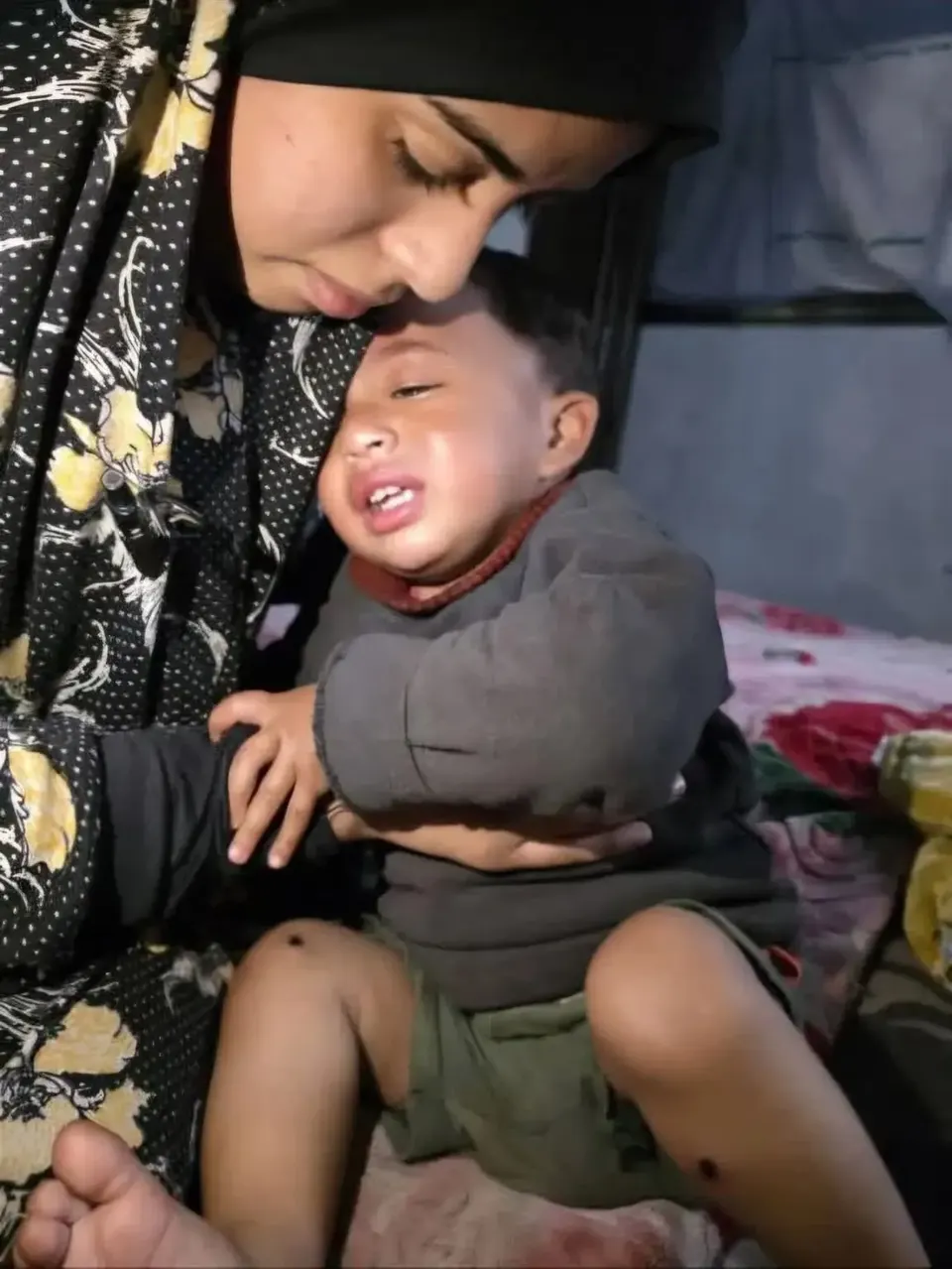
A July 11 report by Mohanad Maher details how one father’s mental unraveling led him to walk toward Israeli troops—carrying his 22-month-old son—and how the infant returned bearing cigarette burns and deep psychological scars.
A devastating investigation published by Drop Site News on July 11 pulls back the curtain on the compounding mental-health catastrophe unfolding inside the Gaza Strip, using the harrowing story of one family to illustrate a wider pattern of collective trauma and abuse. Reported by Mohanad Maher from the Al-Maghazi refugee camp, the piece traces the psychological deterioration of father Osama Al-Shafi—and the subsequent detention and torture of his infant son, Jawad—as a microcosm of a territory where the war has effectively unmaking both adults and the children they are meant to protect.
According to the reporting, Osama Al-Shafi had been steadily crumbling under the weight of Israel’s genocidal assault. He had previously earned a meager living driving a horse-drawn cart, but two months before the incident, Israeli shelling killed his horse. With his livelihood destroyed and food shortages sharply worsening, Al-Shafi’s family watched helplessly as his mental state deteriorated. His father, Mohammad, told Drop Site that Osama began smashing windows and furniture, picking fights with neighbors, and even turning on his own relatives. The family was certain he no longer grasped the reality of his actions—yet in besieged Gaza, psychological treatment remains almost entirely out of reach.
The Walk Toward the 'Yellow Line'
Mohanad Maher’s report reconstructs the morning of March 19, 2026, when Osama told his wife, Waad, that he was taking Jawad to buy candy at a shop near their home. Instead of turning west toward the store, Osama walked east—directly toward the so-called "yellow line," where Israeli forces are stationed, just 500 meters away.
Witnesses and family members told Drop Site that when troops opened fire, Osama did not flinch, run, or take cover. He kept walking, with Jawad perched on his shoulders, as if entirely detached from the gunfire around him. Mohammad Al-Shafi attempted to intervene but was physically restrained by neighbors who warned that the military was shooting anyone who approached the zone. "I tried to reach him," Mohammad told Maher, "But people held me back so I would not be harmed, because the occupation kills anyone who approaches."
The report details how a quadcopter drone descended and, via loudspeaker, ordered Osama to strip himself and his infant down to their underwear. Four Israeli soldiers then approached, ordered Osama to place the child on the ground, and separated father from son. Osama was detained; Jawad was taken away alone.
Twelve Hours of Silence and a Return Marked by Burns
For the next twelve hours, Waad and her family knew nothing of Jawad’s fate. At 10 p.m., the International Committee of the Red Cross (ICRC) called to say the infant had been handed over. An ICRC team delivered Jawad near the Maghazi market, wrapped in plastic sheeting. The aid workers told the family the child had fallen asleep from the cold—but when Waad held him, he erupted into screams.
Underneath the sheeting, Waad discovered blood, burn marks, and puncture wounds covering her son’s legs and knees. A medical report from Al-Aqsa Martyrs Hospital in Deir al-Balah, reviewed by Drop Site, confirmed swelling in Jawad’s right knee, repeated vomiting, incised wounds around the knees, and deep puncture wounds on his lower body. While his overall physical condition was stable with no internal injuries, Dr. Bisan Ahmad, who examined the boy, concluded that the marks on his legs were "consistent with deliberate cigarette burns used as a form of physical torture."
'Continuous Trauma' Rather Than 'Post-Trauma'
The report does not stop at Jawad’s physical wounds. Maher turns to Mohammed Al-Kurd, a Gaza-based psychosocial support adviser and psychological specialist in protection and rehabilitation, to contextualize the family’s ordeal. Al-Kurd explains that Osama’s trance-like walk toward the soldiers is a textbook case of dissociation—a psychological defense mechanism triggered when prolonged, persistent exhaustion surpasses the mind’s capacity to bear any more. Under unrelenting threat, the brain treats life itself as a perpetual emergency, fraying concentration, eroding memory, and eventually severing the individual from reality, time, and place.
Al-Kurd emphasizes that specialists in Gaza have stopped using the term "post-traumatic stress" because the "post" assumes the event has ended. Instead, they speak of "continuous trauma." For Jawad, this manifests in fragmented sleep and nightly terrors; he does not fall into the deep slumber of a child. His mother now sits beside him through the long hours, applying cool compresses and working ointment into his burns, waiting for him to settle.
The most haunting detail in the Drop Site investigation comes from Mohammad Al-Shafi, who recalls Jawad pointing at a calendar picture of an olive tree under an open sky. The boy said: "This is where the army shot us." His grandfather told Maher that the child had tied the image to what he lived through. "He was not reaching for a memory," Mohammad said. "He was pointing at something still inside him."
A Wider Pattern of Abuse and Collective Punishment
Maher’s investigation situates Jawad’s suffering within a much broader crisis. Citing a study by the Gaza-based Community Training Centre for Crisis Management, carried out with support from the War Child Alliance, the report notes that approximately 79% of children examined suffered from persistent nightmares.
The piece also underscores the staggering scale of Israel’s war on Gaza: over 73,000 Palestinians killed, including more than 1,000 since the so-called ceasefire took effect in October 2025; more than 173,000 wounded, over 3,400 of them since the ceasefire. Thousands of Palestinians have been arbitrarily detained and held in Israeli prison camps without charge or trial, subjected to systematic abuse. The UN Special Rapporteur on the Occupied Palestinian Territory, Francesca Albanese, warned in her report "Torture and Genocide" that Israeli torture of detainees "suggests collective vengeance and destructive intent." As Maher writes, what happened to Jawad "belongs to that wider pattern, the turning of an entire territory into a space of collective punishment."
A Father Still Detained, A Son Forever Scarred
Osama Al-Shafi remains in Israeli detention. His family knows only that he was shot in the shoulder. They have received no further information about his location, his condition, or whether he will ever return.
For now, the Drop Site report leaves us with a quiet, devastating image: Waad al-Shafi, sitting on the floor in a shell-battered room, keeping watch over her son as he wrestles with terrors that have no end. The father who should be beside them is gone. The ceasefire has not stopped the violence, the detentions, or the trauma. In Gaza, where the war grinds on without reprieve, the psychological damage is already echoing into the next generation—and investigations like Mohanad Maher’s are among the few remaining witnesses to the cost.