‘They Dumped Him on the Roadside Like Garbage’: Israeli Forces Murder 3-Year-Old, Flung His Body on Street as World’s Media Looks Away
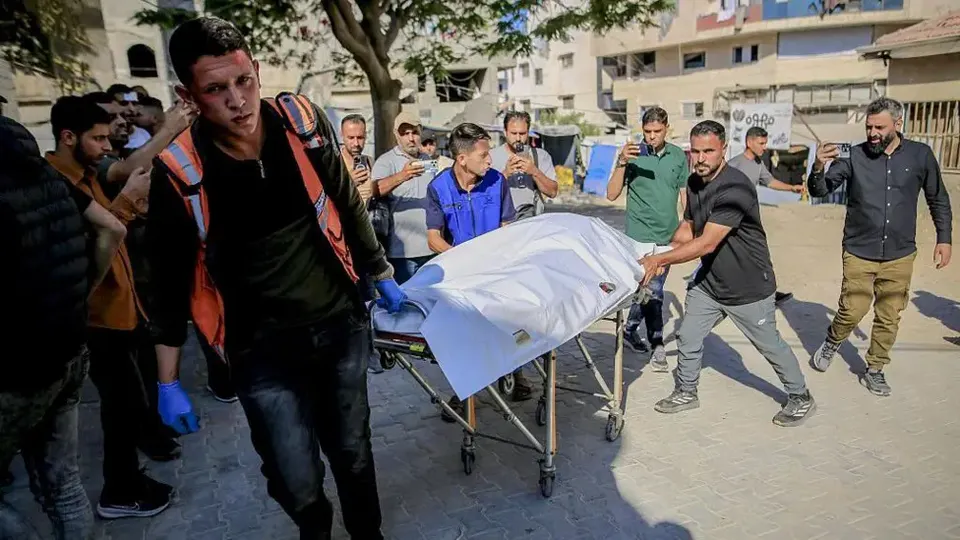
They shot him in the eye, gouging it out and exiting the back of his skull. They left him bleeding in his father’s arms, refused to call an ambulance, and confiscated the father’s phone when he begged them to save the boy. Then they detained the dying toddler and his wounded father, tossed the child’s lifeless body into a dark shroud, and, at midnight, dumped them both—the dead baby and the injured father—on a roadside like refuse, with no explanation, no apology, no accountability.
This is what Israeli forces did to 3‑year‑old Rayan Abu Al‑Ajeen on Monday, June 15, in the Wadi Al‑Salqa area east of Deir Al‑Balah. And this is one of at least five children killed in Gaza in a single week—a pattern of extraordinary war crimes that, despite graphic testimonies and irrefutable evidence, has drawn barely a whisper from Western capitals or mainstream newsrooms.
On that Monday afternoon, Rayan went with his father, Baha Abu Al‑Ajeen, and his uncle, Khaled Abu Garaba, to check on their family farmland. According to family elder Nawaf Abu Al‑Ajeen, who spoke to Middle East Eye, the three were shocked to find Israeli soldiers positioned inside a nearby house. “The soldiers opened fire directly and without warning,” Nawaf said. “The bullets immediately pierced Rayan’s eye, causing it to gouge out and exit the back of his head.” Another bullet struck Baha in the leg.
Instead of rendering any medical aid—as required under international humanitarian law—the soldiers left the family members bleeding on the ground, then detained all three and transported them in military vehicles to the Kisufim military base. In a devastating video testimony from his hospital bed, Baha recounted his desperate pleas:
“My son still had life in him. I begged the soldier, ‘Save the boy. Save the boy.’ I grabbed the phone telling him I was calling an ambulance. But he took the phone from me and said, ‘Don’t call an ambulance. Don’t call anyone.’ He took the phone and my son stayed in my arms dying. I kept telling him, ‘Save the boy. Forget about me. Save the boy. I don’t matter. My leg is gone. It doesn’t matter. God will make up for it. Just save the boy.’”
The soldiers moved Baha around on a stretcher, then “tossed me off of it,” he said. He passed out unconscious and tied up. When he came to, he found his son beside him. “I looked over and put my hand on him. And there’s my son beside me wrapped in a dark shroud,” Baha said. The soldier then threatened him with arrest. At midnight, without any medical care, the Israeli military dumped the wounded father and his dead child on Salahadin Street—leaving them to be picked up by passers‑by. They were taken to Al‑Aqsa Martyrs Hospital, where Rayan was officially pronounced dead. Khaled Abu Garaba, Baha’s brother‑in‑law, remains in Israeli detention without any information about his whereabouts.
Saturday’s Strikes: A Journalist and a Family of Four
These atrocities were compounded on Saturday, June 19, when Israeli strikes killed at least six more Palestinians across Gaza, including an Al Jazeera cameraman and at least one child in a separate attack, according to health officials and rescuers.
In the Bureij refugee camp in central Gaza, an Israeli airstrike hit a home, killing Al Jazeera cameraman Ahmed Wishah and two other people, according to a local hospital and the Hamas‑run civil defence agency. Al Jazeera said it “strongly condemns the heinous crime of targeting and killing” of its correspondent, calling it “a new and flagrant violation of all international laws and norms, and reflects a continued systematic policy of targeting journalists and silencing the voice of truth.”
The Israel Defense Forces (IDF) accused Wishah of being “a terrorist in Hamas’ military wing who served as a sniper operative,” and claimed he had advanced sniper attack plans against Israeli troops in recent months—allegations made without providing any evidence. The IDF also accused the two others killed in the same strike of being Hamas members. Wishah’s brother Mohamed, also an Al Jazeera correspondent, was killed in an Israeli strike in April; the IDF at the time accused him of working in Hamas’ rocket and weapons production headquarters, without offering further details.
Meanwhile, in the Sabra neighbourhood of Gaza City, an overnight strike levelled a family home shortly after 02:00 local time, killing four family members, according to civil defence, relatives, and Shifa Hospital. Medics told Reuters that the dead included two women and at least one child, while relatives confirmed that children were among the victims. Relative Nael Safadi told AFP: “My cousins have no connection to Hamas, nor are they involved in anything. They’re just innocent children.”
Another cousin, Mohammad Safadi, asked the Associated Press in anguish: “Is this really a ceasefire? We are civilians. I never held a weapon.”
Strikes were also reported in southern and northern Gaza, but details remained scarce.
A ‘Ceasefire’ in Name Only
These killings are not anomalies but part of a systematic campaign that has defined the eight months since the so‑called ceasefire took effect in October 2025. According to Gaza’s Hamas‑run health ministry—whose figures the UN regards as reliable—Israeli forces have killed 1,007 Palestinians since that truce began, a figure that starkly exposes the fragility of any cessation of hostilities. The overall death toll since October 7, 2023, has now surpassed 73,000, including some 20,000 children.
Both Israel and Hamas have accused one another of violating the ceasefire since October. The agreement had promised a flood of humanitarian aid into the territory, where the UN estimates 81% of buildings have been damaged. While Tom Fletcher, head of the UN’s humanitarian agency, told the Security Council this week that the share of households going to bed hungry has dropped from 92% to 36% since the ceasefire as more aid trucks entered, he also warned that 70% of the population still lacks proper shelter, sanitation is deteriorating, and essential services are “on the brink.” “Today, Palestinians in Gaza remain deprived of the basics that you would all demand for your own families: safety, shelter, clean water, healthcare, education,” he said.
The ceasefire deal also required Hamas to disarm and have no role in Gaza’s governance—conditions that have yet to be met. A “Board of Peace” of international diplomats was created to oversee an apolitical Palestinian technocrat committee to govern the Strip, and Israel pledged not to occupy Gaza and to progressively hand back seized territory. Yet in May, Prime Minister Benjamin Netanyahu openly declared that he had directed the military to increase the area of Gaza under Israeli control to 70% of the territory—a goal that has already been substantially achieved.
The Creeping ‘Yellow Line’ and the Erasure of Place
On the ground, Israeli forces have steadily expanded their self‑declared “yellow line” westwards, now controlling over 60% of Gaza’s territory. According to The New Arab, concrete barriers have been moved roughly 300 metres westward in eastern Gaza City, bringing Israeli‑controlled zones closer to densely packed residential neighbourhoods. Mahmood Basal, spokesperson for Gaza’s Civil Defense, told the publication that residents often wake up to find the boundary has shifted overnight. “The line is not fixed. Residents often go to sleep believing they are outside the danger area and wake up to discover the boundary has moved overnight.”
In the Al‑Maghazi refugee camp overnight on June 11–12, Israeli forces issued forced displacement orders covering schools, a rehabilitation centre, the municipality building, and the camp’s fresh‑water wells. Hours later, heavy bombardment reduced entire neighbourhoods to rubble. Resident Shakar Shalabi told Drop Site News: “They fired a missile and in the second area, they also fired a missile. I don’t know what the justification was… That wiped out the entire neighbourhood… They don’t want us here, although it is our homeland.”
Attacks on Healthcare and the Silencing of Witnesses
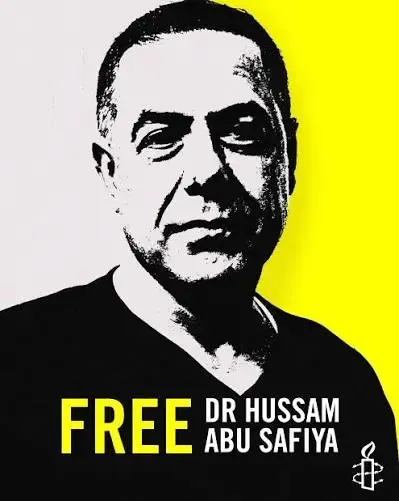
The campaign against healthcare has intensified. Dr. Hussam Abu Safiya, the paediatrician and director of Kamal Adwan Hospital in Beit Lahia who was abducted by Israeli forces in December 2024, remains in solitary confinement in Nafa Prison after Israel’s High Court rejected an appeal against his detention without charge under the “unlawful combatants law.” His attorney, Nasser Ouda, stated the decision is “in clear contradiction with international law and the Geneva Conventions, which provide special protection for medical personnel.” His son Elias described his father as showing “signs of pain, exhaustion, emaciation, a weakened body, and skin diseases.”
In response, more than 1,600 health professionals and rights groups have petitioned the World Medical Association to suspend the Israeli Medical Association. A petition published in The Lancet alleges the Israeli body has been complicit in attacks on healthcare and has done “nothing to oppose the killing and injuring of hundreds of thousands of Palestinians” – effectively giving “the green light for the genocide.”
Just this week, Euro‑Med Human Rights Monitor closed its Gaza office after 15 years, citing “Israeli threats, defamation, and punitive measures” in response to its documentation of Israeli crimes—a pattern of silencing independent voices that has also targeted journalists like Ahmed Wishah.
West Bank and Lebanon: Wider Regional Violence
In the occupied West Bank, settler violence has reached record levels. On June 14, settlers set fire to a mosque in Burqa while worshippers were inside; in Der Diwan, they poured gasoline on 92‑year‑old Yaser Rashid in an attempt to burn him alive. “He wanted to burn me alive,” Rashid told Al Jazeera. Similar mosque arsons occurred in Jiljilya and Mazra al‑Nubani. Israeli forces also shot a 15‑year‑old girl with live ammunition in Al‑Mughayer.
In Lebanon, Israel has continued violating its ceasefire agreement, striking towns in Nabatia and systematically demolishing residential blocks in border villages to enforce a depopulated buffer zone, while the Lebanese resistance reported wounding at least 10 Israeli soldiers in a drone strike.
A Child’s Body on the Roadside – and a World That Looks Away
As the conflict grinds on with no end in sight, the human toll is measured in children like Rayan, Musa, Amir, Riyad, and the unnamed child from the Sabra family—toddlers and teenagers whose bodies are wrapped in shrouds and dumped in hospitals or left on roadsides, while grieving families are left to mourn in a landscape of rubble.
Gaza‑based writer Kasam Wal Far, in a feature for The Electronic Intifada, captured the sense of exile that now defines life in the Strip:
“The word ‘displaced’ in English softens our misery as ‘place’ is still a part of the word. For me, for Palestinians in Gaza, place is being erased. And the more accurate description of our condition is exile, defined as a period of forced absence from one’s country. We are exiled in our own land.”
For 3‑year‑old Rayan, that exile became final—his body discarded on the tarmac like garbage, his father left to grieve alone, and the world’s media scrolling past without a second glance. For Ahmed Wishah, the crime of bearing witness cost him his life, just as it had his brother before him. And for the Safadi family, the question echoes unanswered: “Is this really a ceasefire?”