‘We Bury Our Children Every Day’: Gaza’s Environmental Collapse Deepens as Israel Expands Control and Blocks Aid
With two‑thirds of the territory now under Israeli military control and only one crossing partially open, Palestinians face a growing crisis of contaminated water, rodent infestations, and a blockade that aid workers say has turned life into something “unlivable,” while medical evacuations would take three to five years at the current rate.
The son of Hamas’s chief negotiator died this week not at a negotiating table in Doha or Cairo but in Gaza City, from wounds sustained in an Israeli airstrike. Azam al‑Khaya, whose father Khalil has been representing Hamas in indirect ceasefire talks with Israel, became the fourth of Khalil’s sons killed by Israeli forces since 2018, and in a separate strike on Wednesday three Palestinians from the same family were also killed.
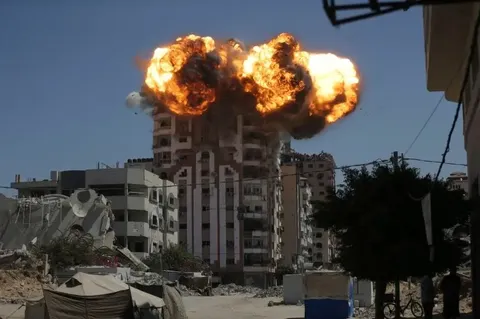
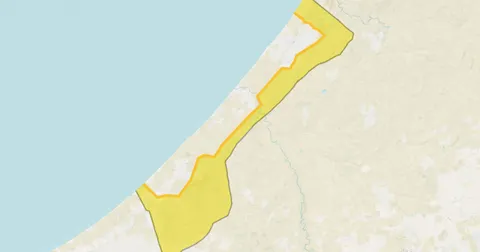
These deaths come as Israel continues daily bombardment of the besieged enclave, expands its territorial control well beyond the terms of last October’s U.S.-brokered ceasefire, and blocks essential aid from entering the territory. New military maps issued by Israel show that two‑thirds of Gaza is now effectively under Israeli control, and since the ceasefire went into effect Israeli forces have killed at least 837 Palestinians, according to local health officials. Hamas has condemned the ongoing violence as a blatant violation of last year’s ceasefire agreement.
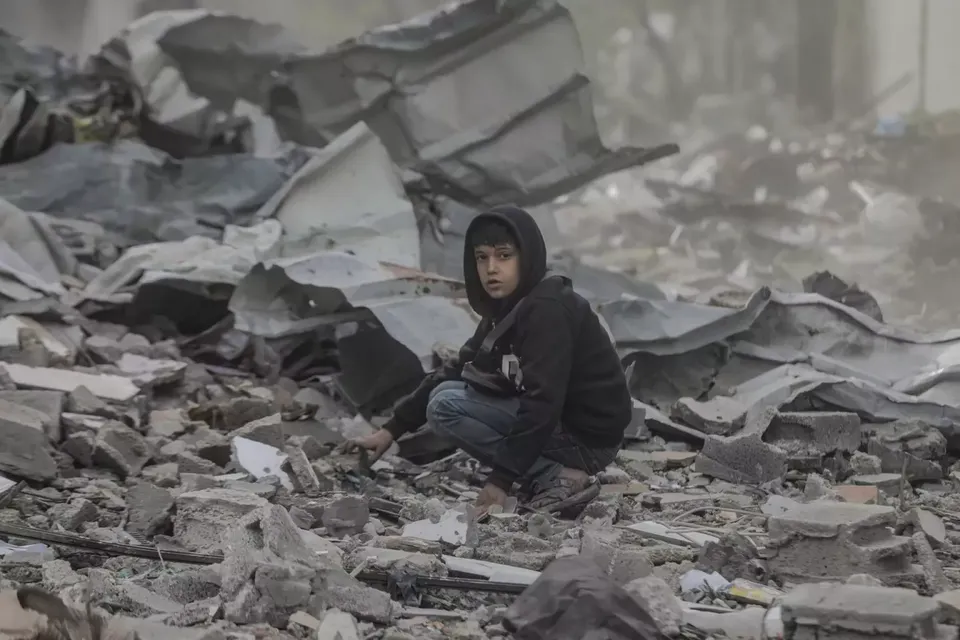
But beyond the bombs a quieter catastrophe is unfolding, one of poisoned water, rotting food, and swarms of rodents inside family tents, leading aid workers to warn of what they call an “environmental and biological apocalypse.” Last week an Israeli drone strike killed a 9‑year‑old boy, Adel al‑Najar, who was searching for cardboard to use as cooking fuel because his family has no gas. “They were collecting cardboard so we could bake,” a relative told Democracy Now! in remarks that captured the desperation of daily life. “We don’t have gas. They want to eat. They want to drink.” The boy’s father is completely blind and depends on his children to guide him, move him, and bring him water. “A little child,” the relative continued. “He did not damage a tank. He did not make missiles or do anything. He was torn. Isn’t it shameful? Isn’t it shameful what is happening to us? Isn’t it shameful that we bury our children every day right in front of us? I swear to God, our hearts are breaking for these children.”
According to a new report from the Gaza Relief Committee, more than 59 percent of Gaza’s population lacks sufficient drinking water and nearly 55 percent are unsure whether the water they consume is even safe, while food spoilage has become rampant and is reported by 94 percent of families. Rodent infestations inside shelters are now widespread as the collapse of sanitation systems transforms tent cities into breeding grounds for disease. “We are not speaking only about bombardment,” said Eyad Amawi, a Palestinian aid worker and representative of the Gaza Relief Committee who also coordinates local NGOs, speaking from Gaza. “We are speaking about a systematic transformation of life into something unlivable. What’s happening is no longer just bombardment or physical destruction. It is the collapse of every essential condition required for human survival: water, food, health, dignity, shelter, safety, everything.”
Amawi explained that Israeli forces now control more than 60 percent of Gaza’s land area, leaving what remains of the infrastructure hanging by a thread, and he described the report’s most alarming findings from a recent field survey examining the relationship between rodent infestation, water scarcity, and displacement. The survey revealed that the overwhelming majority of displaced families are living with severe rodent infestations inside their tents and shelters, that food is contaminated, that water is stored under unsafe conditions, and that rodents have become part of children’s daily environment. “This is no longer simply a sanitation issue,” Amawi said. “It is evidence of the collapse of the most basic conditions necessary for human life.”
At the heart of the crisis is a blockade that humanitarian workers say has become an instrument of collective pressure. Only one crossing, Kerem Shalom, remains partially open, and in April just 40 percent of Gaza’s daily needs in terms of truck deliveries were met, according to Amawi. But the deeper problem is what is not allowed in at all. Under Israeli restrictions, basic rebuilding materials such as cement, iron, and pipes for water and sewage networks are classified as “dual use” — potentially usable for military purposes — and are systematically blocked. “When they restrict materials under the pretext of ‘dual use,’ they continue to provide us with infectious disease and environmental collapse,” Amawi said. “What we are witnessing is the systematic use of starvation and public health collapse as an instrument of collective pressure over our people here.”
The numbers bear out the scale of destruction. According to UN data, 84 percent of Gaza’s buildings have been damaged, more than 425,000 housing units have been destroyed or partially damaged, and 55 million tons of rubble now block municipal trucks from clearing streets and delivering services, while 92 percent of residential buildings are damaged completely or partially. No meaningful reconstruction has begun. “Nothing tangible has happened after the ceasefire agreement was signed here in Gaza,” Amawi said. “Israel is still preventing the new Palestinian committee from entering Gaza to launch the rebuilding process and remove rubble. Just a little municipal services, reopening some roads, but they prevent municipal engineers from fixing drinking water pipelines, especially in the eastern part that is parallel to the yellow line. We need cranes and borers, and most of our municipal machinery is destroyed. We have no ability to remove rubble or reopen main roads to facilitate our daily lives.”
For Gaza’s sick and wounded, the blockade has created what Amawi called a “medical evacuation illusion.” Some 15,800 people urgently need to be evacuated from Gaza to receive medical care that is no longer available inside the territory, but current evacuation rates are operating at just 12 percent of daily needs. At that pace, Amawi said, it would take between three and five years to evacuate everyone on the list. “Those people are judged to die before they receive medical care,” he said flatly. “Nothing tangible happened after the ceasefire agreement was signed here in Gaza. We cannot live in this infectious environment while they treat us as if we are inside a cage under security clarifications.”
On Wednesday, Palestinians rallied in Gaza City in support of two detained activists who attempted to break the siege by sea. The Brazilian Thiago Aila and the Spanish‑Palestinian Sefi Abu Keshek were arrested aboard a Gaza‑bound flotilla, and an Israeli court extended their detention until Sunday while denying their appeal for release. The Brazilian activist’s mother died in the past two days while her son remains in Israeli custody. Protesters waved Palestinian flags and held pictures of the two activists, praising their willingness to bypass what one speaker called the stances of their governments. “These activists came to bypass the stances of their governments in the world and to say that humanity will not be stopped by the political decisions,” said Tahrir Mues, a Palestinian civil society activist addressing the rally. “Humanity is represented in the act of these humans, even if it’s just one person. They embarked on their journey to spread this message. We wish them safety from all our hearts, and the Gaza Strip completely values this step.”
Amawi sent condolences from Gaza to the detained men and their families, especially to Thiago Aila for the loss of his mother. “Hopefully we send our condolences and our sadness for the loss for our great colleague Thiago and others who are supporting us,” Amawi said. “I have had solidarity for a long time. I mentioned them and I talked to them for all of their trips. They try to break the siege imposed over the Gaza strip, and the solidarity and support for Gaza and Gazan children is very important in this moment because after they signed the ceasefire they forgot Gaza — those great people can increase pressure over all the politicians to stop the firing. Gaza is still living under selective firing. By Thiago and other activists we have a chance to renew the issue and increase pressure and awareness about the catastrophe still ongoing in Gaza. We send our solidarity with those great people, and we hope they free them and release them, just as we hope for our doctors and prisoners who have been held for a long time in prisons with unknown destinations under psychological pressure.”
Back in Gaza, the dead are buried: the 9‑year‑old boy, the negotiator’s son, the three from the same family, the 837 since the ceasefire. The relative of Adel al‑Najar, the boy killed while collecting cardboard, stood before a reporter and demanded an answer that never came. “Isn’t it shameful what is happening to us? Isn’t it shameful that we bury our children every day right in front of us?” She lowered her voice. “I swear to God, our hearts are breaking for these children.” No one has yet offered a reply that means anything on the ground.