Gaza’s Returned Dead: Organ-Removal Allegations Remain Unresolved as UN Calls for Investigators
Eight months after doctors in Gaza alleged that Palestinian bodies returned by Israel bore evidence of organ removal, renewed United Nations demands for access to human remains have underlined the obstacles to establishing what happened to the dead.
d they encountered became the basis for the allegations.
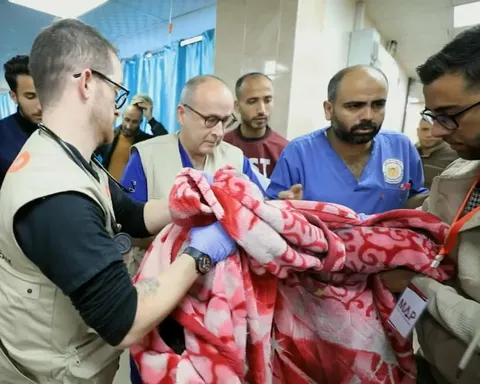
In an interview broadcast by Al Araby on 5 February and reported on its website the following day, al-Shifa’s director, Dr Mohammed Abu Salmiya, alleged that organs had been stolen from returned bodies. He described severed hands, abdomens that had been opened and closed with medical sutures, and injuries which, in his assessment, would not themselves have explained death.
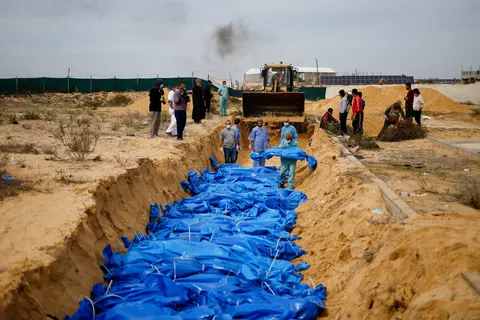
Other remains were fragmentary. Some boxes contained a skull and bones that staff could not confidently establish belonged to the same person.
“There are also bodies belonging to women; we do not know where they were abducted or how they died,” he said, translated from Arabic.
Abu Salmiya described a hospital attempting to document the dead through photographs, clothing and visible identifying features, without the laboratory resources needed to resolve many of the uncertainties. His account was widely repeated, including by Middle East Monitor, but those reports largely drew on the same interview.
A more detailed report published by Independent Arabia on 27 February added allegations from other named personnel.
Mahmoud Ashour, identified as a spokesperson for Gaza’s forensic evidence department, alleged that organs and tissues were missing, including corneas, kidneys, liver, heart, skin and bone. He also described bodies reportedly packed with cotton after their internal contents had been removed.
The article nevertheless acknowledged that the suspicions had not been conclusively verified. Physician Imad Shahada described personnel struggling to identify remains and determine whether organs were absent, attributing those difficulties to restrictions on equipment and supplies.
“We work in heavy silence amid catastrophic conditions,” he said, translated from Arabic. The report also quoted Gaza government spokesperson Ismail al-Thawabta saying requests for autopsy documentation had gone unanswered and calling for an independent international investigation. It did not publish the underlying post-mortem case files.
The distinction between what was transported and what had happened to the bodies is essential to understanding the official record.
On 5 February, ICRC spokesperson Amani Al Naouq confirmed to Qatar News Agency that the organisation had facilitated the previous night’s transfer. She described its provision of preservation containers, refrigerated vehicles and trained personnel, with Gaza’s health and forensic authorities responsible for identification. She did not corroborate organ theft.
The organisation’s published explanation of its role is explicit: “The ICRC does not open body bags or conduct any examination during or after transfers.”
Its participation establishes a humanitarian transfer mechanism. It does not amount to a medical assessment of the remains or verification of either the allegations or Israel’s denial.
The issue reached a UN press briefing on 9 February, when a journalist asked spokesperson Stéphane Dujarric about reports of missing body parts and boxes containing skulls and bones. Dujarric said he had not seen those particular reports and would consult colleagues on the ground. The exchange recorded a question to the UN, not a UN conclusion about organ removal.
Later that month, Jeremy Corbyn repeated an account he attributed to al-Shifa’s director, describing boxes of skulls and women’s bodies from which organs had allegedly been removed. The intervention brought an official Israeli response.
On 24 February, military spokesperson Lieutenant Colonel Nadav Shoshani called Corbyn’s claims “completely false” and a “wild baseless blood libel”. He said military directives prohibited such conduct and that bodies were returned through international coordination with Red Cross assistance. The statement did not provide individual autopsy findings addressing the medical allegations.
The controversy also became entangled with older material circulating online.
British-Palestinian surgeon Dr Ghassan Abu-Sittah had already alleged, in a November 2025 television interview, that photographs of returned Palestinian bodies showed evidence of surgical organ removal. That assessment concerned images, rather than a published series of post-mortems he had personally conducted.
By 5 February, a social-media caption claiming that Palestinian children’s bodies had been returned without hearts, lungs and livers was circulating. Dorset Eye embedded it in an article the next day. Its resemblance to wording subsequently presented as breaking news shows how older allegations can acquire the appearance of a fresh disclosure. The article supplied no named child’s autopsy establishing that specific claim.
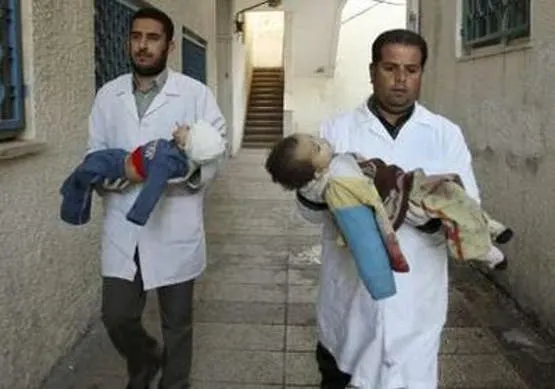
Children were, however, among those whose families searched desperately for answers.
Reporting at al-Shifa, Drop Site interviewed Allam Abu Wadi, who had come after the February delivery hoping to identify his 17-year-old brother, Mohammed, missing since February 2024. He described repeated visits to hospitals and the difficulty of recognising decomposed remains. The report did not establish that his brother was among the returned dead.
Moein al-Wahidi, head of the committee receiving bodies, described remains arriving with numbers but without the information needed to restore their identities. Staff relied on photographs and whatever relatives might recognise: clothing, shoes, a surviving physical feature.
September’s warnings place that struggle within a wider threat to evidence. Albanese said she had received information during August about extensive removal, crushing and transport of rubble in Israeli-controlled areas. She called for a Palestinian-led process that protected remains and material relevant to investigations.
“Destroying evidence of atrocity crimes is illegal,” she said.
The February accounts leave serious allegations requiring examination. The official documents establish that bodies and fragmented remains were returned; they do not establish that organs were taken for transplantation. Resolving the allegations requires access to the remains, reliable identification, medical records and independent forensic scrutiny—the same foundations of accountability that UN officials have continued to demand across Gaza.
For the families, those demands begin with something more immediate: finding a relative, recovering a name and being able to bury a person whose fate they understand.
As al-Wahidi told Drop Site: “The Palestinian is no less worthy than any other person in the world.”
Principal source material: