“Gaza Is the Most Inhumane and Most Shameful Concentration Camp of Our Time”
Türkiye’s President Recep Tayyip Erdoğan called Gaza a concentration camp as world leaders confronted Israel over genocide allegations, demanded protection for Palestinians and questioned whether international law could survive without enforcement.
A war declared over by the American president was described by other leaders as a continuing catastrophe. A military campaign defended by Israel as essential to its survival was denounced by governments across several continents as genocide. A Palestinian state endorsed repeatedly from the United Nations podium was, speaker after speaker warned, losing the territory on which it would have to exist.
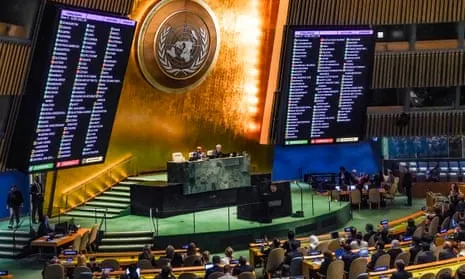
The General Assembly’s debate this week exposed those divisions with unusual directness. Alongside demands for food, medical care and reconstruction came proposals for arms embargoes, sanctions and restrictions on settlement trade. The argument was increasingly about what governments would do with the power they possessed, and what their refusal to act meant for the authority of international law.
The confrontation reached its most visible point on Thursday, when Mahmoud Abbas and Benjamin Netanyahu offered irreconcilable accounts of Gaza from the same morning’s programme. Delegations walked out as the Israeli prime minister took the podium. Iran, Türkiye and Qatar later answered him from their seats. But the week’s argument extended far beyond that exchange: presidents, prime ministers and representatives from large and small states had already made Palestinian suffering a test of the institution’s credibility.
Opening the debate on Tuesday, 22 September, UN Secretary-General António Guterres warned that devastation in Gaza and developments in the West Bank were destroying the conditions for Palestinian statehood. “We cannot allow the two-State solution to disappear before our eyes.” He called for compliance with international law and court orders, protection of UN personnel and an end to policies that could produce forced displacement.
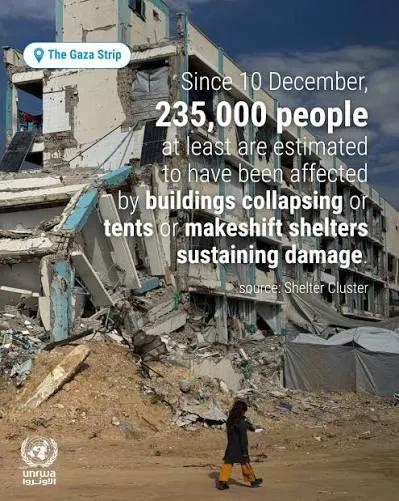
The General Assembly’s president, Khalilur Rahman, described the unresolved Palestinian question as a continuing failure of the international system. He cited more than 70,000 deaths, including thousands of children, and said relief remained grossly inadequate: “Humanitarian support has been a fraction of what is needed.”
Brazil’s President Luiz Inácio Lula da Silva accused Netanyahu’s government of committing genocide against women and children in Gaza, while condemning Hamas’s terrorist attack. He defended the International Criminal Court and independent UN scrutiny, warned that Israeli expansion in the West Bank was undermining a viable Palestinian state, and rejected attempts to silence those documenting the situation. “The UN special rapporteur Francesca Albanese must not be silenced for telling the truth.”
Donald Trump, speaking next, invoked the 7 October 2023 attacks as part of his case against Iran. The US president said Iranian-backed attackers had tortured, mutilated and killed “1,200 very innocent civilians”, including Americans and “many babies — babies, little, tiny, beautiful babies”.
That description misrepresented the casualty record. The approximately 1,200 people killed included hundreds of soldiers and other security personnel. Published breakdowns identified two infant deaths, alongside older children. The suggestion of numerous infant victims echoed discredited atrocity stories from the opening days of the war, although Trump did not repeat the specific claim that 40 babies had been beheaded. That claim was false; the killing of children in the attack was real.
Trump went on to claim that Washington had ended the Gaza war, “saving untold thousands of lives”, and secured the return of all remaining hostages held in Gaza, alive and dead. His account of completed diplomatic success would stand against repeated descriptions of continued killing, restricted assistance and a ceasefire whose promises remained unfulfilled.
Jordan’s King Abdullah II followed with a demand for consequences. “Yet with Israel, resolutions end where they begin: on paper. The result is a state without restraint.” He described Gaza and the West Bank as connected parts of a strategy threatening Palestinian existence and statehood, and said 300 children had been killed in 300 days of ceasefire.
Abdullah described attacks affecting Jordanian medical provision and called for sanctions, asset freezes, an arms embargo and diplomatic isolation. He also raised UNRWA, Jerusalem’s holy sites and Israeli actions affecting Syria. The failure to enforce resolutions, in his account, had allowed impunity to become a settled expectation.
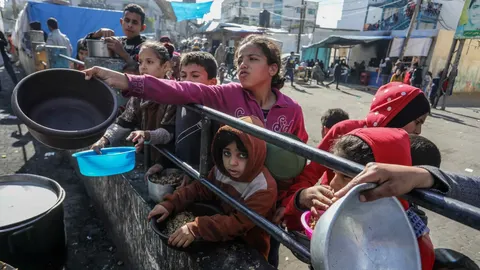
Türkiye’s President Recep Tayyip Erdoğan used some of the debate’s strongest language. “Gaza is the most inhumane and most shameful concentration camp of our time.” Accusing Israel of genocide and deliberate devastation, he described Gaza as a graveyard for children and cited more than 74,000 deaths over three years, with more than 1,500 since the ceasefire.
Erdoğan criticised the exclusion of Abbas from New York and called for pressure on Israel, reconstruction and recognition of a Palestinian state on the 1967 boundaries, with East Jerusalem as its capital. Kyrgyzstan’s President Sadyr Zhaparov then included Palestine among the armed conflicts and humanitarian crises exposing the difficulty of the international situation, in a broader appeal for diplomacy and collective responses.
Qatar’s emir, Sheikh Tamim bin Hamad Al Thani, returned to the question of unequal protection. “There can be no talk of a just international order so long as Palestine remains a blind spot within it.” He described Gaza’s destruction as genocide and rejected displacement presented as voluntary migration.
The emir argued that discussion of Palestinian disarmament could not be detached from a full Israeli ceasefire, withdrawal, an end to the blockade and humanitarian access. He linked Gaza to occupation and discrimination in the West Bank, and to Israeli actions in Syria and Lebanon. The same international law, he argued, had to apply throughout.
For Lithuania’s President Gitanas Nausėda, the immediate priority was to make the existing arrangements work. “As regards the situation in the Gaza Strip, my country supports international efforts to maintain and consolidate the ceasefire.” He backed implementation of the peace arrangements and an international stabilisation force, calling for the complete disarmament of Hamas and other non-state armed groups, humanitarian access and progress towards two states. He warned against measures that would undermine that outcome.
Finland’s President Alexander Stubb described Gaza as an acute humanitarian emergency marked by mass displacement, destroyed infrastructure and a lack of essential services. “We must not grow indifferent to wars and human suffering”, he said, placing the civilian toll within a wider warning against the normalisation of war.
France’s President Emmanuel Macron linked peace to Palestinian and Lebanese sovereignty, humanitarian provision and respect for the Geneva Conventions. “There cannot be peace without justice”, he said. A supposed peace without effective assistance lacked substance, he argued, while continuing violations in the West Bank threatened both Palestinian statehood and Israel’s long-term security.
Angola’s President João Lourenço condemned what he described as genocide against a defenceless population and the deprivation of humanitarian assistance. He also criticised the removal of Palestinians from their land in the West Bank, connecting immediate survival in Gaza with the prospects for any lasting political settlement.
During Tuesday’s afternoon session, Denis Bećirović, chairman of Bosnia and Herzegovina’s presidency, placed Gaza alongside failures exposed by his own country’s experience and Russia’s war in Ukraine. “Gaza is humanity’s greatest defeat in the twenty-first century.” His warning concerned the erosion of international law and the consequences when institutions fail to protect people facing organised violence.
Viet Nam’s President To Lam reaffirmed Palestinian self-determination and an independent Palestine living peacefully alongside Israel, calling for civilian protection, humanitarian access and respect for international humanitarian law. Tanzania’s Vice-President Deogratius Ndejembi expressed sorrow over prolonged suffering in Gaza and the wider Middle East. His country’s longstanding position, he said, combined protection and assistance with a settlement allowing Palestinians and Israelis to live in dignity and security.
British Prime Minister Andy Burnham condemned Hamas’s attack of 7 October 2023 and acknowledged Israeli security concerns, including threats from Iran, before rejecting those concerns as justification for the government’s conduct. “But this does not justify the Israeli government’s actions in Gaza or the West Bank.”
Burnham focused on children’s suffering, restrictions on aid and the E1 settlement project’s consequences for a connected Palestinian territory. He announced measures concerning trade with illegal settlements and sanctions on construction associated with them, placing economic consequences alongside Britain’s condemnation of occupation.
Croatia’s Prime Minister Andrej Plenković paired Palestinian statehood with security for both peoples. “Croatia supports a negotiated two-state solution in which Israelis and Palestinians live in peace and security.” He also backed humanitarian assistance to Gaza. Belgium’s Deputy Prime Minister Maxime Prévot argued that the principles his country defended in Ukraine had to apply elsewhere, including Palestine. “This is not the time to treat humanitarian aid as an optional expense”, he said, insisting that the value of a human life did not depend on geography.
Morocco’s Foreign Minister Nasser Bourita said regional peace required a viable Palestinian state. He announced Moroccan participation in the International Stabilization Force in Gaza and expressed concern about unrest in the West Bank and repeated violations of the sanctity of Al-Aqsa Mosque.
When the debate resumed on Wednesday, 23 September, Syria’s President Ahmad Al-Sharaa widened the focus to Israel’s regional actions. “Golan will remain Syrian territories”, he declared. Rejecting Israeli incursions and the imposition of new facts on Syrian territory, he called for Israeli forces to withdraw to the lines of 8 December 2024, reaffirmed the 1974 disengagement framework and said annexation of the Golan was invalid under Security Council resolution 497.
Romania’s President Nicuşor-Daniel Dan called for implementation of the Gaza peace plan under Security Council resolution 2803. He discussed humanitarian needs and Romanian medical evacuations of children, treated Hamas’s disarmament as a prerequisite for lasting progress and warned against developments in the West Bank that undermined peace.
Iran’s President Masoud Pezeshkian accused Israel of genocide in Gaza and the international system of double standards over nuclear scrutiny. “The nuclear weapon is in Israel, but the inspectors are in Iran. Israel kills, but Iran is subject to sanctions.” He alleged that 80,000 innocent civilians had been killed in Gaza and hundreds of thousands displaced.
Pezeshkian also denounced US–Israeli attacks on Iran, including the killing of its supreme leader and civilians. He maintained that Iran had acted in defence and argued that occupation and injustice could not be defeated through bombing or siege.
Argentina’s President Javier Milei defended Israel as an ally, accused the UN of anti-Israel bias and indulgence towards Islamist terrorism, and condemned Iranian attacks. He pointed to Argentina’s designation of the Islamic Revolutionary Guard Corps, aligning Israeli security with his wider criticism of the multilateral system.
Estonia’s President Alar Karis concentrated on protection and recovery. “Innocent civilians and children must not bear the devastating human cost of the war.” He called for humanitarian access and compliance with international humanitarian law, addressing support for UNRWA, food and medical care, reconstruction and the possibility of contributing Estonia’s digital expertise within a two-state settlement.
Timor-Leste’s President José Ramos-Horta examined the distance between witnessing suffering and stopping it. “This is not a lack of information. We are drowning in information.” He set contemporary events against the histories of the Holocaust, Israel’s creation and the Palestinian Nakba, reflected on Israeli security and nuclear deterrence, and argued that two states remained the only viable settlement. His criticism was of an international public saturated with images but unable to secure an effective response.
Libya’s President Mohamed Younis Menfi described decades of occupation, repression and denied Palestinian rights. He supported statehood, criticised the restrictions preventing Abbas’s attendance and linked Gaza and the West Bank to Israeli expansion and attacks affecting Lebanon and Syria.
Cyprus’s President Nikos Christodoulides condemned Hamas’s 7 October attack and described the humanitarian devastation that followed in Gaza. He highlighted his country’s allocation of more than a quarter of its humanitarian aid budget to Palestine and the Amalthea maritime corridor, connected to the UN mechanism established under resolution 2720. Bulgaria’s President Iliana Iotova called for an end to recurring destruction, Hamas’s disarmament and its exclusion from future administration, pairing Israeli security with Palestinian governance and a two-state outcome.
Wednesday afternoon brought further commitments to assistance and self-determination. Poland’s President Karol Nawrocki supported de-escalation, civilian protection, international humanitarian law and two states. He described mobile clinics in the West Bank and programmes supporting women’s employment, treating Palestine and Lebanon as priorities for Polish assistance.
Namibia’s President Netumbo Nandi-Ndaitwah demanded an end to atrocities in Gaza. “Namibia calls for the Palestinian people’s right to self-determination, freedom, and statehood.” She linked those rights to a two-state settlement and the immediate protection of lives. Slovakia’s President Peter Pellegrini similarly insisted: “Humanitarian aid must reach those who need it, including in Gaza.” He called for civilian protection and two states, while rejecting terrorism, antisemitism and Islamophobia.
Mozambique’s President Daniel Chapo grounded his country’s support in the right of peoples to determine their own future, backing Palestinians and Israelis living side by side in peace. Montenegro’s President Jakov Milatović put the immediate obligation plainly: “In Gaza, our responsibility begins with the protection of human lives.” He called for humanitarian access, Israeli security, Palestinian dignity and statehood, and Hamas’s disarmament.
Spain’s President Pedro Sánchez pressed for an arms embargo on Israel, condemning what he described as genocide committed by Netanyahu’s government. He said Spanish territory would not facilitate illegal aggression, connecting his criticism with restrictions on material support for war. Andorra’s head of government, Xavier Espot Zamora, reaffirmed a negotiated settlement founded on coexistence, security and mutual recognition between Israel and Palestine.
Italy’s Deputy Prime Minister Antonio Tajani distinguished a reduction in fighting from an end to the emergency. “In Gaza, the truce has slowed the fighting, but it has not yet ended the suffering.” He urged assistance and Hamas’s disarmament, and described Italy’s Food for Gaza initiative, care for wounded children and support for Palestinian university students.
On Thursday, 24 September, Ghana’s President John Dramani Mahama challenged the language in which the crisis was being discussed. “We must stop using diplomatic euphemisms to veil the human carnage taking place in Gaza.” Invoking the killing of Hind Rajab and the deaths of Palestinian children, he described Gaza, the West Bank and the occupied Palestinian territory as a crisis of international credibility. He condemned Hamas’s attack while insisting that the same law must constrain Israel.
Palestinian President Mahmoud Abbas spoke next in the published programme, after another refusal of US entry. He accused Israel of genocide, forced displacement and attempts to prevent Palestinian statehood, connecting settlement expansion, the E1 project, withheld Palestinian revenues and attacks on UNRWA.
“For how long will some States continue to remain silent about Israel, or supply it with the weapons it uses against our people?” Abbas asked. He cited widening recognition, sought full UN membership and said the future Palestinian state would be unarmed. He also discussed institutional reform and elections planned for 28 November. His challenge extended responsibility to the governments supplying Israel with weapons.
Guyana’s President Mohamed Irfaan Ali called for an end to civilian suffering and a just, lasting Middle East settlement, backing Palestinian self-determination, a homeland and two states. Somalia’s President Hassan Sheikh Mohamud supported the Palestinians’ legitimate rights to self-determination and a viable independent state within a settlement based on the 1967 boundaries. Comoros’s President Azali Assoumani called for protection and peace for Palestinians and Israelis, and for the peoples of Lebanon and Syria, urging implementation of UN resolutions.
Hungary’s President András Bálint Baka called for humanitarian provision and civilian protection under international humanitarian law. “Israelis and Palestinians must be able to live in security and dignity.” European Council President António Costa regretted the stalemate in Gaza and Palestine, saying it prolonged the suffering of millions despite diplomatic opportunities. Two states, he argued, remained the only route to lasting peace.
The Gambia’s Vice-President Mohammed Jallow made the connection between Palestinian rights and the institution’s standing explicit. “The suffering of the Palestinian people remains a profound test of the credibility of the international system.” He backed self-determination, Palestinian UN membership and two states, alongside humanitarian access, civilian protection and compliance with international humanitarian law.
Netanyahu’s intervention later that morning rejected the central accusation made by many of those speakers. “Israel didn’t commit genocide. Israel prevented genocide.” Invoking Hamas’s 7 October attack, the Israeli prime minister defended military campaigns against regional enemies as necessary for Israel’s survival and portrayed international criticism as another front in the conflict.
Netanyahu cited vaccinations, food provision and warnings before strikes as evidence for his defence. He minimised settler violence, attacked Qatar and Türkiye, praised Trump and challenged the delegations walking out. His account of protective military action stood against the descriptions of unlawful devastation delivered elsewhere in the debate.
Portugal’s Prime Minister Luís Montenegro followed with an appeal for a two-state settlement and a reduction in regional violence. He described the humanitarian tragedy and addressed the destabilising role of armed groups. In the afternoon, Senegal’s President Bassirou Diomaye Faye called for an end to massacres and destruction, and for a Palestinian state with East Jerusalem as its capital alongside Israel. Yemen’s Vice-President Abdullah Al Alimi-Bawzer reaffirmed the Palestinians’ rights to freedom, dignity and an independent sovereign state, calling for an end to their suffering and protection of civilians.
Kuwait’s Crown Prince, Sheikh Sabah Al-Khaled Al-Hamad Al-Mubarak Al-Sabah, condemned continuing Israeli violations, displacement, detention and settlement policies. He called for full implementation of the Gaza plan, Israeli withdrawal, humanitarian access and the Palestinian Authority’s return.
The crown prince welcomed European sanctions on violent settlers and restrictions on settlement imports. He backed a Palestinian state on the 1967 boundaries with East Jerusalem as its capital, condemned Israeli incursions into Syria and demanded withdrawal from occupied Lebanese territory, linking Gaza’s future to the sovereignty of neighbouring states.
Bangladesh’s Prime Minister Tarique Rahman reaffirmed Palestinian rights, self-determination and statehood within a wider endorsement of UN efforts for peace, grounding that support in his country’s national experience. Dutch Prime Minister Rob Jetten included Gaza in a warning about the erosion of international rules and ineffective cooperation. “We see the unending human suffering in Gaza, Sudan and so many other places in the world.”
Slovenia’s Prime Minister Janez Janša questioned what he regarded as an imbalance in international attention. “For decades, the United Nations has devoted significant institutional attention to the question of Palestine.” He accepted the legitimacy of that concern but criticised unequal attention to other victims, including Christians and people threatened by Iran. He discussed terrorism and self-defence while distinguishing criticism of Israeli policies from antisemitism.
Greek Prime Minister Kyriakos Mitsotakis backed implementation of the Gaza plan, Hamas’s disarmament and its exclusion from government. Reconstruction should remain under Palestinian ownership, he said. He urged an end to unlawful actions in the West Bank and linked Israel’s long-term security to regional cooperation, also discussing Greece’s strategic relationships, including with Israel, and regional infrastructure connections.
Ireland’s Taoiseach, Micheál Martin, said the world had failed the Palestinians and that the peace plan had not ended strikes or restrictions on aid. He described E1 as a deliberate obstruction to statehood and raised what he characterised as ethnic cleansing in the West Bank. Restrictions on imports from settlements formed part of his demand for action. “Nobody will be able to say that we did not know. Let it not be said that we did not act.”
Austria’s Foreign Minister Beate Meinl-Reisinger paired Israeli security with Palestinian statehood. “We want a prosperous and safe Israel.” She rejected the idea that bombing could produce lasting peace and called for Hamas’s disarmament, Israeli withdrawal and an end to settlement expansion. South Africa’s Minister for International Relations and Cooperation, Ronald Lamola, said Israeli violations in Palestine constituted genocide and demanded an end to impunity, arguing that common humanity required an effective response and a two-state settlement.
After Thursday’s scheduled addresses, Iran, Türkiye and Qatar exercised their right of reply, in that order. The interventions came from representatives at their delegations’ seats, distinct from the earlier addresses by their leaders.
Iran’s representative, Nasser Asadi, challenged Netanyahu’s presence at the Assembly. “The UN was founded to preserve peace and uphold justice, not to serve as a platform for war criminals.” Iran called for action under Article 6 of the UN Charter to expel Israel and accused the United States of enabling Israeli actions. It also denounced attacks on Iran and warned that further aggression would meet a forceful response.
The Turkish representative rejected Netanyahu’s attacks on Erdoğan and interpreted the walkout as evidence of widening diplomatic rejection. “The fact that numerous delegations walked out during Israeli prime minister’s speech is not a minor gesture. It is a resounding diplomatic condemnation.”
“The message is unmistakable. His words are discredited. His policies are rejected and his isolation is deepening by today.”
Accusing Israel of genocide and aggression in the West Bank, Lebanon and Syria, the representative continued: “No propaganda can erase the truth. Thousands of civilians have been slaughtered, homes and hospitals reduced to rubble, schools deliberately targeted, and the humanitarian aid obstructed with intent. These are crimes that will not be forgotten nor forgiven.”
“While Israel exports war, destruction, and instability, Turkey builds peace.” Türkiye reaffirmed support for an independent, sovereign and contiguous Palestinian state on the 1967 boundaries, with East Jerusalem as its capital.
Qatar’s representative answered Netanyahu’s allegations with a categorical rejection. “We reject categorically the accusations that were mentioned in that statement that are not even worth refuting.” The delegation said those accusations could not divert attention from Israeli violations in the occupied Palestinian territory and their humanitarian consequences. It also rejected the suggestion that changing international opinion, particularly among young people, could be explained by outside manipulation, arguing that young people could form their own judgements.
On Friday, 25 September, the Maldives’ Vice-President Hussain Mohamed Latheef returned to the question of whether the same rules bound every state. “International law cannot bind the weak and bend for the powerful.” He accused Israel of genocide and war crimes, condemned violations of regional sovereignty and called for an end to the occupation. He supported humanitarian access, accountability, full Palestinian UN membership and a state on the 1967 boundaries with East Jerusalem as its capital.
Iraq’s Prime Minister Ali Falih Al-Zaidi affirmed the Palestinians’ rights to their land, self-determination and an independent state. He connected regional security to the fulfilment of those rights and called for humanitarian provision and civilian protection.
Lebanon’s Prime Minister Nawaf Salam demanded a durable ceasefire, Israeli withdrawal from all Lebanese territory, the release of Lebanese captives, safe return and reconstruction. He linked negotiations and implementation of Security Council resolution 1701 to Lebanese sovereignty and exclusive state control of arms. Regional stability also required Palestinian self-determination, he said. Gaza had become a test of the world’s conscience, and weakening UNRWA’s funding or mandate would deepen suffering rather than resolve the refugees’ rights.
Malta’s Prime Minister Robert Abela described the confidence each population needed from a settlement. Israelis had to know that Hamas would be disarmed and excluded from Gaza’s future governance and security structures; Palestinians in Gaza had to know there was a route towards a just peace. Lesotho’s Prime Minister Samuel Matekane welcomed the ceasefire framework and stabilisation arrangements, seeking sustained engagement towards a settlement on the 1967 boundaries in which Israelis and Palestinians could coexist peacefully.
Saint Lucia’s Prime Minister Philip J. Pierre included Gaza among conflicts requiring an end to civilian suffering and respect for international humanitarian law. He supported the Palestinians’ right to their own state and UN membership, citing the General Assembly’s recognition of their rights in resolution 3236.
Albania’s Prime Minister Edi Rama brought Israel into a different argument: the danger of AI-enabled disinformation. He described a fabricated account of an Israeli invasion of Albania’s coast—an invasion that had never occurred—as an example of technology manufacturing a persuasive false reality.
Pakistan’s Prime Minister Muhammad Shehbaz Sharif invoked Wafa Akilah, an eight-year-old Palestinian girl he said had been killed on her first day of school, to argue that children’s rights could not depend on nationality. He accused Israel of a continuing genocidal programme and connected Gaza’s suffering with forced evictions in the West Bank. Niger’s Prime Minister Lamine Zeine Ali Mahaman condemned the unequal application of international principles and the civilian cost of the crisis, supporting assistance and a two-state settlement.
In Friday’s afternoon session, Egypt’s Prime Minister Moustafa Madbouly called for compliance with the Gaza ceasefire arrangements and the Trump-backed Sharm el-Sheikh framework. He sought Israeli withdrawal, sustained humanitarian access, support for Palestinian administration through the national committee and reconstruction without forced displacement. Egypt reaffirmed a Palestinian state on the 1967 boundaries, with East Jerusalem as its capital.
Saint Vincent and the Grenadines’ Prime Minister Godwin Friday called for a permanent ceasefire in the Middle East, protection of civilians and a two-state settlement securing Palestinian and Israeli rights. Samoa’s Deputy Prime Minister Mulipola Anarosa Ale Molioo widened the appeal: “We remain concerned by the ongoing wars in Ukraine, Gaza, and Iran.” She focused on war’s effects on civilians, infrastructure and the environment, urging an end to the supply of weapons that fuelled conflicts.
The demand for consistent concern was also central to Saint Kitts and Nevis’ Deputy Prime Minister Geoffrey Hanley. “There can be no hierarchy of human suffering.” He included Gaza alongside Ukraine, Sudan, Yemen, Chad and the Democratic Republic of the Congo, arguing that the same humanitarian principles had to apply to civilians caught in each conflict.
Bahrain’s Foreign Minister Abdullatif bin Rashid Al Zayani reaffirmed his country’s position: “The Palestinian cause remains at the heart of our concerns.” He backed a contiguous Palestinian state and a two-state settlement, presenting Bahrain’s participation in the Board of Peace and support for resolution 2803 as contributions to Gaza’s stabilisation and recovery.
Kazakhstan’s Foreign Minister Mukhtar Tileuberdi supported an independent, sovereign and viable Palestine alongside Israel, the New York Declaration and practical implementation within a defined timetable. He backed resolution 2803 and the Board of Peace, discussed assistance with food, reconstruction and digital governance, and referred to prospective peacekeeping and engagement with the Abraham Accords.
Mauritania’s Foreign Minister Mohamed Salem Merzoug supported a settlement based on the Arab Peace Initiative and UN resolutions. European sanctions on violent Israeli settlers were welcome, he said, but broader international measures were needed to end settlement activity and restore the possibility of two states. Mauritius’s Foreign Minister Dhananjay Ramful similarly warned that settlements and recurring violence obstructed a durable settlement, reaffirming support for a sovereign Palestine with East Jerusalem as its capital, living peacefully with its neighbours.
Chad’s Minister of Public Health and Prevention, Abdelmadjid Abdelrahim Mahamat, expressed deep concern about continuing violence and humanitarian distress in Gaza. He reaffirmed the Palestinians’ right to a state within the 1967 boundaries alongside an Israel living in security.
Norway’s Foreign Minister Espen Barth Eide drew a direct connection between the response to Russia and the response to Israel. Condemnation of violations in Ukraine had to be matched by opposition to violations in Palestine, he argued. “Double standards quickly translate into no standards at all.”
Eide described the contrast between unprecedented diplomatic support for Palestinian statehood and deterioration on the ground. There was no alternative to two states, he said, and the coming year had to become one of implementation. Sweden’s Foreign Minister Maria Malmer Stenergard also placed Palestine and Lebanon within the wider civilian toll: “In Ukraine, Sudan, Yemen, Palestine, Lebanon, Myanmar, the Democratic Republic of the Congo and many other conflict zones, millions are suffering.”
On Saturday, 26 September, China’s Vice-President Han Zheng called for Palestinian-led governance of Palestine, advancement of governance in the West Bank and post-conflict reconstruction in Gaza. He connected those objectives with a two-state settlement and respect for regional sovereignty.
Belize’s Prime Minister John Briceño condemned allowing a leader sought by the International Criminal Court to justify what he characterised as apartheid and genocide. “The genocide must end. The apartheid must stop.” He linked the Palestinian struggle to decolonisation and self-determination, accusing the international system of decades of complicity.
The Holy See’s Secretary of State, Cardinal Pietro Parolin, called for an end to violence against Palestinian civilians in the West Bank, including demolitions and movement restrictions that drove displacement. He described Gaza’s destruction, mass displacement and severe shortages, and urged the international community to advance a two-state settlement.
Laos’s Deputy Prime Minister Thongsavanh Phomvihane called for Gaza’s reconstruction, Palestinian UN membership and two states. “The question of Palestine remains an enduring test of multilateral credibility.” Cuba’s Foreign Minister Bruno Rodríguez Parrilla characterised Israel’s treatment of the Palestinians as genocide within a wider denunciation of what he described as imperial aggression, linking Palestine with US actions in the Caribbean, Venezuela and Iran.
Russia’s Foreign Minister Sergey Lavrov said the Security Council-endorsed US peace plan had not delivered peace in Gaza, where civilians continued to die and humanitarian conditions remained critical. He warned that developments in the West Bank could make a Palestinian state impossible: “There will simply be no land left for it.” He called for urgent international action and also criticised the US–Israeli campaign against Iran and attacks on safeguarded nuclear facilities.
Brunei’s Foreign Minister, Prince ‘Abdul Mateen, described Gaza’s destruction and the deaths of civilians, medics, journalists, aid workers and UN personnel as intolerable. “This suffering cannot become normal.” He condemned occupation, settlement expansion, settler violence and displacement in the West Bank, backing an independent Palestine on the 1967 boundaries with East Jerusalem as its capital.
Saudi Arabia’s Foreign Minister Prince Faisal bin Farhan Al Saud condemned attacks on civilians, obstruction of humanitarian assistance, attempted forced displacement and settlement expansion. A just and lasting peace, he said, required two states and an independent Palestine on the 1967 boundaries, with East Jerusalem as its capital.
Iceland’s Foreign Minister Thorgerdur Katrín Gunnarsdóttir described repeated ceasefire violations and continuing civilian deaths, including children. “The suffering of Palestinian civilians cannot become background noise.” She demanded consequences for Israeli and settler violations, discussed restrictions on settlement trade pursued with other countries and rejected Netanyahu’s attempt to shame governments that criticised him.
Belarus’s Foreign Minister Maxim Ryzhenkov included Palestine among countries and territories he said had suffered from Western power and intervention, a brief reference within his wider criticism of the international order.
In Saturday’s afternoon session, San Marino’s Foreign Minister Luca Beccari condemned Hamas’s 7 October attack while asserting that Palestinian statehood was an inherent right. “Statehood is not a reward for terrorism. It is a right.”
Beccari rejected collective punishment and called for humanitarian access, Hamas’s disarmament and Israeli withdrawal. He addressed Palestinian Authority reform, elections, withheld revenues and banking constraints, settlement expansion including E1, Jerusalem’s holy sites and international recognition within a two-state settlement. His intervention brought together many of the week’s recurring demands: protection, accountable government, security and the preservation of a political future.
By Saturday, the speeches had revealed substantial support for Palestinian statehood but continuing differences over sequencing, governance, disarmament and the consequences Israel should face. Some governments presented the existing arrangements as a route towards peace; others argued that continued deaths, restricted aid and settlement expansion demonstrated how far those arrangements remained from the lives they were meant to protect.
The contributions of smaller states made clear that the dispute was also about the kind of international system they inhabited. For governments with little power to impose their own security, a rule that could be ignored without consequence was a fragile protection. From Gaza’s hospitals to the land available for a Palestinian state, the speeches repeatedly returned to the distance between a right recognised and a right made real.
The debate was still continuing, with further addresses scheduled for Monday. The demand running through the week’s interventions was already unmistakable: promises of peace would have to be judged by whether civilians could live safely, assistance could reach them and Palestinians retained a future on their own land.
Sources, attributions and reporting notes
The article above retains the substantive details of all 87 relevant scheduled interventions and the three verified replies in the earlier draft. All 49 original quotation passages have been retained, with two further Trump excerpts and a fact-check added on 26 September. Source credits, recordkeeping details and qualifications are collected here; the speaker identifications in the article establish who made each statement.
Coverage and order
Coverage note: This is a dated account of the General Assembly’s general debate, which runs on 22–26 and 28 September. It is not a completed record of the entire debate or of every separate UN meeting this week. The research snapshot contains 175 entries captured in the published programme through Saturday, plus Japan’s separately verified Tuesday address: 176 entries in total. It checks 166 individual statement pages, 126 downloaded written statements and Japan’s foreign ministry text. The feature identifies relevant material from 87 scheduled speakers, followed where appropriate by three representatives exercising the right of reply. The register accounts for every other scheduled speaker, including gaps and pending statements. Short verbatim quotations are accompanied by detailed paraphrases and links to the complete source material. This is not an exhaustive verbatim anthology, and absence from the feature does not establish that a speaker said nothing relevant.
The narrative follows the UN’s published daily programme, with Japan inserted at its verified place in Tuesday’s delivery sequence. AM and PM numbers preserve positions in the captured programme; Japan is marked 13a between Tuesday PM 13 and 14. They are not clock times or a claim to have reconstructed every live procedural change. Direct quotations preserve the available English statement or the UN’s English rendering. Where only a summary or a text in another language could be checked, the entry uses attributed paraphrase. Except for the expressly identified fact-check of Trump’s 7 October account, casualty totals, allegations of genocide and other contested assertions remain attributed to the speaker; they are not adopted as independently established findings.
Attribution and translation details
The dated register below gives each scheduled speaker’s full recorded name, office, programme position and source links. Its UN pages and written statements support the corresponding passages in the article. The narrative’s day transitions supply the dates; AM and PM numbers in the register preserve the more detailed programme order.
- Headline: The user-selected headline reproduces Recep Tayyip Erdoğan’s description of Gaza in his 22 September address. The corresponding passage identifies him in the article; the Türkiye entry below links the UN page and published statement.
- United States, 22 September — transcript correction: The earlier paragraph omitted Trump’s 7 October passage. It is now included, checked against the UN’s day-one automatic transcript and the Roll Call Factba.se transcript, also available in a readable timestamped copy. The attack passage is at 00:08:06–00:08:30; the war-ending and hostage-return claims are at 00:14:48–00:15:27. These are offsets within that speech transcript. Punctuation is normalised. The fact-check concerns his infant-victim description and his treatment of the whole death toll as civilian; it is not a verification of every assertion in the speech.
- 7 October casualty check: The Times of Israel’s breakdown, 4 December 2023, distinguishes military and other security casualties from civilians and identifies two infant deaths. Le Monde’s investigation, 3 April 2024, corroborates that infant count and documents the false mass-beheading story and its circulation through Israeli official accounts. These are dated breakdowns of the attack’s victims, not a current count of all hostages subsequently confirmed dead. The article’s observation that Trump’s imagery echoes those earlier stories is analysis, not a claim that he repeated their precise wording or evidence of his intent.
- Opening casualty figure: Khalilur Rahman’s figure of more than 70,000 deaths, including thousands of children, is his stated figure. It has not been presented as an independently reconciled total.
- Türkiye, 22 September: Erdoğan’s published English statement cites more than 74,000 deaths over three years and more than 1,500 since the ceasefire. The latter differs materially from the UN webpage summary. The article follows the written statement and attributes both figures to him.
- Iran, 23 September: The figure of 80,000 civilian deaths, the account of attacks on Iran and the assertions concerning nuclear scrutiny are Pezeshkian’s claims. No common casualty estimate has been constructed from the different speeches.
- Bulgaria, Niger and Chad: The relevant passages are English paraphrases of the published French statements. Chad’s passage was recovered from its scanned statement.
- Lebanon and Egypt: The relevant passages are English paraphrases of the Arabic statements.
- Kuwait: Relevant Arabic passages were checked, but the extracted text is unsuitable for exact English quotation. The short UN summary omitted the Palestinian and Israeli passages included in the article.
- Yemen: The relevant Palestinian passage is supported by the UN’s related news account. The extracted Arabic PDF is too corrupted for a reliable verbatim quotation.
- Saudi Arabia: The Palestinian passage appears in the UN News account embedded on the statement page, beyond the shorter meeting summary.
- Belarus: The brief reference to Palestine is paraphrased from the Russian statement.
- Albania: Rama’s reference was to a fabricated account of an Israeli invasion, which he explicitly said had not happened. It is included as an Israel-related comment, not as a claim that an invasion occurred.
- Legal characterisations: The descriptions of genocide, apartheid, war crimes, unlawful displacement and terrorism are attributed to their speakers. The article does not turn a speech into a court ruling. This applies to South Africa, Belize and Cuba as well as the other delegations using those terms.
Rights of reply: 24 September 2026
The longer reply excerpts come from an NDTV World compilation and its automatic transcript. Line breaks have been joined and typographic punctuation normalised; the wording has not been rewritten into invented polished speech. Automatic transcripts contain errors and are not official verbatim records. These three replies are established in this account; a complete audit of every reply on every debate day remains outstanding. The allegations and legal characterisations in the replies are the speakers’ assertions, not independently verified findings.
Speaker register: every entry accounted for
This register covers 176 scheduled or independently verified entries through 26 September, followed by 20 entries scheduled for 28 September. It also records the two UN member states for which no programme entry or address was located. The three verified right-of-reply interventions are incorporated in the narrative and identified in the preceding attribution table.
R means relevant material was located and included in the feature. N means no explicit Israel/Gaza/Palestine passage was located in the available text review; it does not certify silence in the delivered speech. U means the full text or its reliable extraction remains unresolved; a summary alone cannot rule out a relevant passage. P means the statement was not available in the captured record or the address was still scheduled for a later date.
Names and offices follow the UN programme. The source column links to the statement page and, where published, the written statement—even where retrieval of that PDF failed. “Written statement” may mean a prepared text rather than a verbatim record of delivery.
22 September 2026
Order correction — Japan: The captured programme omitted Japan. The UN plenary transcript introduces Takaichi Sanae after Trinidad and Tobago and before the United Kingdom. Japan’s foreign ministry publication independently confirms 22 September as the local delivery date. “13a” preserves this sequence without silently renumbering the captured programme. The full published Japanese address discusses Middle East tensions and shipping, but no explicit Israel/Gaza/Palestine passage was located in it.
23 September 2026
24 September 2026
25 September 2026
26 September 2026
Monday, 28 September 2026 — scheduled, not yet delivered at this cutoff
Source: UN general-debate programme. A scheduled name or position can change before delivery.
Member-state reconciliation: no speech located
The reconciliation uses the UN member-state list. These two findings do not establish the reason for absence or resolve questions of representation. The register otherwise includes the member states present in the captured programme, Japan’s verified address, Palestine, the Holy See, the European Union and the two UN opening speakers.
Source and completeness notes
- Meeting scope. The source event is the 81st General Assembly general debate, 22–26 and 28 September 2026. Separate Security Council meetings, Human Rights Council proceedings, side events, press conferences and bilateral meetings are outside this account. The official programme is the principal starting point.
- Research cutoff. The main archive snapshot was taken on 26 September while the debate was still in progress. It extends to San Marino’s published afternoon statement. Later Saturday addresses and Monday’s scheduled addresses cannot be treated as completed, reviewed speeches on the basis of that snapshot. Japan was subsequently reconciled against its foreign ministry and the day-one plenary record.
- What was checked. Individual UN statement pages were compared with the downloadable written texts that could be retrieved. Five scans or unusable text layers were recovered for review: Ethiopia, Liberia, Israel, the Central African Republic and Chad. English, French, Spanish, Arabic and Russian material was screened; relevant non-English passages are paraphrased unless a reliable English quotation is available. Corrupted extraction and missing texts are marked, rather than interpreted as absence of comment.
- Full texts still unresolved. Twelve linked PDFs were not successfully retrieved: Switzerland, Dominica, Sierra Leone, Belgium, Australia, Marshall Islands, Tuvalu, Malta, Burundi, Naoero, Paraguay and Cambodia. Other entries had no complete written text obtained at the snapshot. The table states which contributions rest on a UN summary or related news account. The full delivered videos were not exhaustively reviewed.
- Quotes and translations. Quotations in the scheduled-speaker entries are short excerpts checked against a published statement or the UN’s English account. They are not the full set of relevant sentences spoken. Full-source links are provided so that their context can be examined. Longer reply excerpts use that compilation, with its limitations disclosed. No translated paraphrase is presented as an exact English quotation.
- Rights of reply. Iran, Türkiye and Qatar’s 24 September replies are included in their verified sequence. This research does not certify that every relevant reply across all debate days has been found. The Turkish and Qatari representatives’ personal names remain unverified in the reviewed primary material.
- Discrepancies. Erdoğan’s published statement and the short UN summary differ materially over a post-ceasefire death figure; the feature follows the written statement and attributes the figure. Japan’s absence from the programme snapshot was corrected using independent primary records. Automatic speaker labels in plenary transcripts were not accepted without checking the surrounding introductions and the national statement pages.
- Legal and numerical claims. A speech alleging genocide, war crimes, unlawful displacement or terrorism is evidence that the speaker made that allegation. It is not by itself a judicial finding or independent verification. Figures quoted or paraphrased from speeches have not been merged into a single casualty estimate. The separately sourced correction to Trump’s 7 October casualty description is explained above.