‘A Self-Destruction Strategy’: Richard Wolff Warns Israel Could Bring About Its Own Demise
The economist argues that the destruction of Gaza, confrontation with Iran and dependence on American protection have placed the Jewish state in the most dangerous position he has witnessed—and that its leaders may be refusing to recognise the consequences of their own decisions.
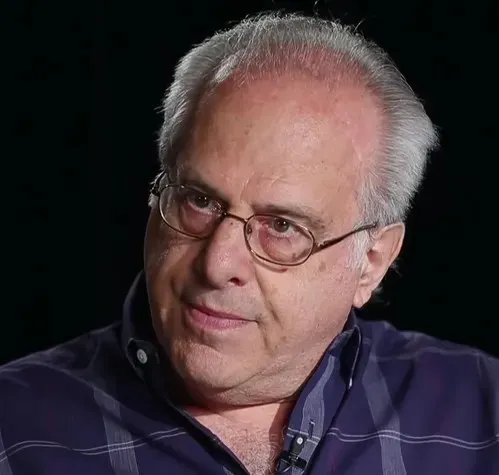
Israel could be bringing about its own demise by destroying the political support and strategic relationships on which its survival depends, the American economist Richard Wolff has warned.
In an extended assessment of Israel’s future, Wolff argued that its leadership had pursued a course that risked leaving the country militarily exposed, diplomatically isolated and increasingly burdensome to its principal protector, the United States. The danger, in his account, was rooted in decisions taken by Israel itself: the devastation of Gaza, the confrontation with Iran and the assumption that American support would remain available regardless of the consequences.
“In my judgement, they’re in the worst position I have ever seen them in,” he said.
If Israeli leaders could not recognise that predicament, he added, “they are playing a dangerous game of denial”.
Wolff, an emeritus economics professor at the University of Massachusetts Amherst, made the comments in a conversation with Glenn Diesen published on 18 September 2026. Asked whether he now saw a plausible pathway to Israel “actually going under”, he answered: “Yes.”
“I didn’t until recently,” he continued, before identifying what he regarded as a rapid change in American attitudes towards Israel and Palestine. His argument was that the state’s own actions were eroding the political conditions that had enabled it to rely so heavily on Washington.
The phrase that captured his assessment came when he considered an American withdrawal from the Middle East and the closure of US bases: “Israel is going to be left on its own. That’s not a survival strategy. That’s a self-destruction strategy.”
Wolff placed that danger within a broader argument about the decline of American power. Washington, he maintained, was increasingly unable to deliver the military and political outcomes it had once promised its allies.
“It cannot do what it used to do. It doesn’t want to face it.”
He portrayed Donald Trump’s displays of strength as an attempt to conceal those limitations. Announcements of further weapons for Israel, in this reading, could prolong destructive military action without resolving the strategic predicament that action had created.
Referring to a proposed shipment of large bombs, he asked: “For what? For Israel to go crazy in Lebanon, maybe to do something even stupid? What is he doing?”
Later in the conversation, he returned to the assumption that superior American and Israeli force would produce a quick victory over Iran. Trump, he said, had presented the war as something that “would be over in a couple of weeks because Israel and America are so powerful”.
Wolff’s contention was that Iran had demonstrated an ability to inflict damage that further American arms deliveries could not simply eliminate.
“The ability of the Iranians to damage Israel is now established, very well established,” he said. “I’m very dubious that the Israelis have the ability to survive much further,” given the position into which, he argued, they had manoeuvred themselves.
He dismissed the idea that supplying Israel with more weapons would fundamentally change that balance: “And nothing that you can give to the Israelis, no matter how horrible the Israelis are, they can’t much change this either.”
“I think this is going to be a radical reorganisation of Western Asia and its relationships with everything else in the world.”
He also argued that Iran would have to consent to any end to the conflict: “The war in Iran is now not over. It’s not going to stop anytime soon. Even if it stops, it will only stop because the Iranians agree.”
For Israel, the most consequential change in Wolff’s account was taking place inside the country that had sustained it. He described American public opinion as moving “from pretty massively pro-Israel to now pretty massively pro-Palestinian”.
Established political leaders, he argued, were finding that their institutional and media influence could no longer insulate them from electoral consequences. “While they control the government and they control much of the mass media to continue to be pro-Israel, it is costing them in elections,” he said.
He referred to electoral developments in Michigan and Chicago as signs that Palestine could become a central political issue, calling that prospect “a watershed moment”.
“I think what you’re seeing is a radical reorganisation of American politics,” he said.
He also pointed to criticism from figures on the American right, including Tucker Carlson and Marjorie Taylor Greene, as evidence that Israel’s support could fracture within constituencies once treated as dependable.
“That means you’re pulling part of what used to be a fairly solid MAGA base” away from its pro-Israel position, he argued. He extended that analysis to the ideological support Israel had received from fundamentalist Christians: “That’s now disintegrating.”
From there, Wolff advanced the interview’s most far-reaching claim: that Washington’s underlying discussion might already be shifting from how to protect Israel towards how to extricate the United States from the consequences of supporting it.
He explicitly qualified that account of private deliberations. “I’m speculating here. I’m not part of that community, and I don’t claim to be.”
But, he continued, “if I’m reading the signals right”, the question was no longer simply: “How do we protect Israel?”
“That’s over,” he said. The emerging question, in his interpretation, was: “What is the best way to extract ourselves from this mess?”
That would create a difficult political calculation for both major American parties. Wolff argued that their leaders remained attached to the financial support associated with pro-Israel politics, even as the electoral costs of their positions increased.
“The Republican leadership doesn’t want to lose that money, and the Democratic Party doesn’t,” he said, describing AIPAC as having been successful in supporting both sides of American party politics.
The resulting contradiction, he argued, was that “the people at the top don’t want to give up the money, but they have to give up the actual support because it’s costing them”. Public opinion, in his assessment, was shifting and showing “no sign of unshifting”.
His proposed explanation for Washington’s behaviour was stark: American leaders could seek to preserve the appearance of loyalty while accommodating a fundamental change in Israel’s position—or its disappearance.
“There has to be a way to arrange for Israel to either fundamentally change or disappear while it appears that the United States is helping them not to do that,” he said.
“That’s the theatre that is being debated. How do we appear to help in such a way that makes them disappear?”
He drew a parallel with his interpretation of American conduct towards Iran: displaying military power while searching for an exit that would do the least damage to America’s standing.
“How can we appear to be the powerful America bombing while what we’re really trying to do is figure out how to get out of there with the least damage to our imperial status?”
He suggested that Trump, or people around him, might be coming to accept those twin problems. His description was cutting: “How to appear to be supporting the people you’re actually burying.”
When Diesen asked whether that meant Trump had already moved towards accepting Israel’s defeat, Wolff replied: “He’s being persuaded.”
“He wouldn’t put it that way.”
Instead, Wolff imagined Washington presenting any retreat as the consequence of Benjamin Netanyahu’s refusal to heed American advice. In that hypothetical explanation, Netanyahu would be portrayed as having been “inadequately grateful” for decades of assistance and as having refused requests to behave differently.
“He shouldn’t have done that. He didn’t have to do it, and it has cost him,” Wolff said, sketching the language he thought Washington might use. Public declarations that supporting Israel remained “the right thing to do” could continue alongside an underlying message: “You’re not playing ball.”
At the centre of his argument about Israel’s responsibility for its own predicament was Gaza. Wolff contended that Netanyahu had pursued devastation there despite the damage it would do to Israel’s international position and to American interests.
“They didn’t want the slaughter in Gaza,” he said of the Americans. “That’s not good for the United States, and they know it.”
But, he continued, Netanyahu had wanted to proceed, while Washington had been unwilling to act decisively: “They weren’t ready and didn’t see the political need to do much about that.”
That did not absolve the United States in Wolff’s account. He placed American weapons and financing at the centre of what had been enabled.
“They let him go ahead using American weapons and American money to sustain a genocide in Gaza,” he said. “That’s what they did, and they’re stuck with the blame for that.”
He suggested that Washington might nevertheless accept that responsibility while deciding that Israel should be “quietly shunted away”. That remained part of his speculative interpretation of American strategy.
The practical vulnerability, he argued, was Israel’s reliance on a regional military presence that the United States might eventually decide was too costly to maintain.
“If the United States leaves the Middle East, if Iran is persuasive and the United States leaves, closes its bases, and then what? Israel is going to be left on its own.”
He argued that a withdrawal would also make the purpose of remaining military assistance harder to obscure. Supplies could no longer be presented through the wider framework of American bases in Bahrain, Kuwait or elsewhere; direct support for Israeli military operations would become more exposed.
“We’re giving bombs to Israel so it can do a genocide,” he said. “This is not a sustainable arrangement.”
Domestic American politics could accelerate the process, he predicted. If the midterm elections went badly for Trump, Congress could move to constrain him. Wolff also argued that Republicans were already becoming more willing to oppose the president across a range of issues.
“Republicans are standing up against Trump in a wide variety of areas who dared not do it before,” he said. “I think you’re going to see more and more.”
His description of Israel’s diplomatic position was similarly severe: “Nobody is supporting them any more.” It was a sweeping expression of his argument that dependable support was eroding, even as the interview itself discussed continuing American weapons supplies.
He pointed to European criticism of West Bank settlements and British sanctions as signs of a changing political direction, while questioning the seriousness of the measures themselves.
“These are theatrics. They’re not very real. They probably won’t be enforced,” he said. “But the direction of change is unmistakable.”
Each government that acted, he argued, strengthened pressure across Europe for others to go further. Arab countries, he added, could expose the inadequacy of symbolic responses and encourage demands for more substantive action.
“That’s what politicians understand. They put their finger in the air and they see which way the wind is blowing,” he said. “You’d have to be dead not to get which way that wind is blowing now. And Mr Trump, he knows it too.”
The prospect of Israel’s demise raised a further question: what might a government do if it believed its survival was at stake? Diesen suggested that the collapse of a nuclear-armed state could be exceptionally dangerous.
Wolff responded with an account of a conversation he said he had had with an Israeli government official some years earlier. The official, whom he did not identify, had expressed what Wolff described as a claimed right “to take the whole world down with us if we go down”.
“That’s a quote from an official of the Israeli government told to me some years ago, but from everything I can tell, a very alive way of thinking,” he said.
Wolff argued that nuclear escalation would deepen Israel’s isolation and could expose it to catastrophic retaliation. He explicitly described Israel as already a pariah, then warned that using nuclear weapons would make that position still worse. His full passage, reproduced verbatim from the interview transcript, was:
Okay. But if there is one thing in the world that will unite the entire world against Israel, it would be its use of nuclear weapons. No one is going to be impressed by giving them a pass because they were in trouble. Especially now given their reputation for the genocide they performed that they didn't have to. They have lost every chance of getting away with a use of nuclear weapons. So what are they going to do if the United States and China and Russia and Pakistan and India all and whoever else has nuclear weapons decide to punish Israel for being the first one to use them? be finished and Israel is a very small place. Will not be much effort needed to do to Israel what the United States did to Hiroshima and Nagasaki. So I mean what that's no solution for them either. It just isn't. And it will make them a pariah even more than they have already become.
The irony of this, the the the total absurdity of the victims of a holocaust being the ones least able to learn the lesson. Spectacular. But it it isolates. It's not a question of will they be isolated. They are isolated.
The whole world would at this point, I think, vote overwhelmingly almost any program of punishment of Israel the minute the United States says it's okay to do that. Remove the look at the UN votes. You get 150 countries to one or two or three three little islands in the Pacific and Israel and the United States. Okay, they remove the United States and you're you're you're done. Drop a nuclear bomb somewhere, you lose the United States. That I would assure you, you lose it in the moment. You're losing it now without that. I don't think that's an option for that.
Unless you really have, and maybe you do. I mean, I I don't go to Israel. I don't have, you know, I don't know anything about it, but I find it hard to imagine an entire population ready to to self-destroy on that scale. I I just given all that they've been willing to do to other people to survive, the survival instinct seems very uppermost in in their minds. And this would be a a survival uh negation that is so obvious that even they I think would see it.
His wider argument was that Israel could also be left behind by a regional settlement that made an American military withdrawal the price of restoring trade and reducing destruction.
Earlier, he had referred cautiously to reports of a meeting involving Iraq, Gulf states and Iran, where, “if the news is correct”, arrangements to end the destruction could include “the removal of the United States from its positions in the Middle East”. He argued that Iran and the Houthis were in a position to enforce that demand, called the idea “very good”, and warned of further consequences if it went nowhere.
He presented the reopening of the Strait of Hormuz and the Red Sea as potential bargaining instruments. In his account of the Iranian position, the message to Washington was: “If you want to reopen the Strait of Hormuz and now the Red Sea, you’ve got to get out of there.”
Wolff imagined the argument being put to the Americans in practical terms: shipping could resume, a costly naval deployment could end and money could be saved.
“You can withdraw your armada, your blockade. You’ll save a lot of money. You’ll have an open passage, but you’ve got to get out of here. You’re not welcome. Nobody wants you.”
For Israel, that would create a different calculation. “They are already a target,” he said, “and they will be a target when the Americans leave and when they don’t leave.” It might therefore seek an accommodation that preserved a direct American military presence on its own territory.
Wolff offered one hypothetical—and, in his own assessment, doubtful—way Israel might try to bind Washington to its defence.
“Maybe Israel will offer itself as a hostage,” he said. “They’ll say, ‘Station 10,000 American Marines permanently in Israel, spread them all over so that any Iranian attack on Israel will kill Americans.’”
The hoped-for result would be an American intervention triggered by American casualties. Wolff immediately questioned whether the scheme would be credible or effective.
“Then they can hope, which I don’t think is reasonable either,” that Washington would have to enter the conflict, he said. But such possibilities were “stretches of credibility, stretches of effectiveness”, and he was unconvinced they would work.
He compared Israel’s predicament with Europe’s attachment to the American security relationship established after the Second World War: both, in his analysis, had difficulty accepting that their protector’s priorities and capabilities could change. Israel had concentrated its expectations on a patron whose continued commitment it could not guarantee.
Beyond the Middle East, Wolff argued that Israel faced a world in which other governments were reconsidering their relationship with American power. He described the importance of “middle countries” trying to navigate between the United States and the emerging influence of China and Russia.
Those countries, he said, could want to escape American dependence while remaining wary of exchanging it for dependence on Beijing. Their decisions would help determine whether Israel could replace some of the support it risked losing.
He used India as an example. He recalled Narendra Modi’s visit to Israel and address to the Knesset, arguing that the Indian leader had initially avoided condemning the subsequent US-Israeli attack on Iran.
“He didn’t say it was outrageous. He didn’t say it was wrong,” Wolff said. “He talked about the need to find peaceful solutions.”
Wolff contrasted that with what he described as Modi’s later endorsement of a Shanghai Cooperation Organisation statement expressing grief over the Ayatollah’s killing and condemning the war. His interpretation was that a government which had appeared firmly aligned with Washington could reposition itself as the costs changed.
“He was very pro-American, and much more recently he was very not so pro-American,” he said. He argued that Indonesia, Pakistan and other states were making comparable calculations, each according to its circumstances.
If those governments concluded that moving away from Washington required an agreement with China, he believed they would make it. “Then it’ll become suddenly very clear which way the world is going.”
Wolff suggested that Israel already understood enough of this danger to seek new relationships of its own. He cited initiatives involving smaller countries such as Tajikistan and described an arrangement involving an old Volkswagen factory that, he said, would produce “bombs and missiles for Israel”.
His account included the claim that the factory was closed “because Volkswagen can’t exist any more”. That was his description of the company’s predicament; contemporaneous reporting described a continuing business issuing a profit warning and pursuing restructuring.
The larger point he drew from the example was that individual commercial arrangements could not replace the international support Israel was jeopardising.
“Israel is trying to make deals with private enterprises and in these middle countries perhaps hoping at least to slow down what is happening,” he said. “My guess is it won’t work.”
He argued that Israel lacked the scale and financial weight to redirect the policies of larger states through such transactions.
“Israel is too little, too small,” he said. “It can be a godsend for a particular empty factory someplace, but beyond that, no.”
“It’s not going to change German policy either.”
Throughout the interview, Wolff returned to the same causal argument: Israel’s leaders had pursued destructive policies while assuming that American protection could absorb the military, diplomatic and political consequences. He now believed those consequences could overwhelm that protection and endanger the state itself.
His forecast remained conditional on changes in American policy, domestic politics and regional power. But his warning was that Israel’s own conduct was helping to bring those changes about—and that additional weapons, nuclear threats or isolated commercial deals could not reliably undo the damage.
“But that’s all that’s left,” he said. “Israel is all by itself.”
Sources and quotation note: This feature draws on the transcript of Richard Wolff’s interview with Glenn Diesen, Richard Wolff: U.S.–Israel Divorce as U.S. Economy Is on the Brink of Collapse, published 18 September 2026. Quotations are taken from that transcript, with light removal of verbal fillers and repetitions and correction of obvious transcription errors, except for the complete block passage concerning nuclear escalation, pariah status and isolation, which retains the wording and repetitions exactly. The transcript has not been checked against the audio; unclear names and figures have not been reconstructed. Wolff’s predictions, descriptions of private American deliberations and account of an unnamed Israeli official are attributed to him. The interview and biographical source are linked in the text.