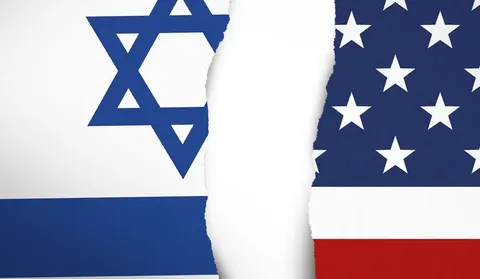
The Arrogance of Power: Armed Settlers, a Detained Congressman and the Unravelling of the US–Israel Consensus
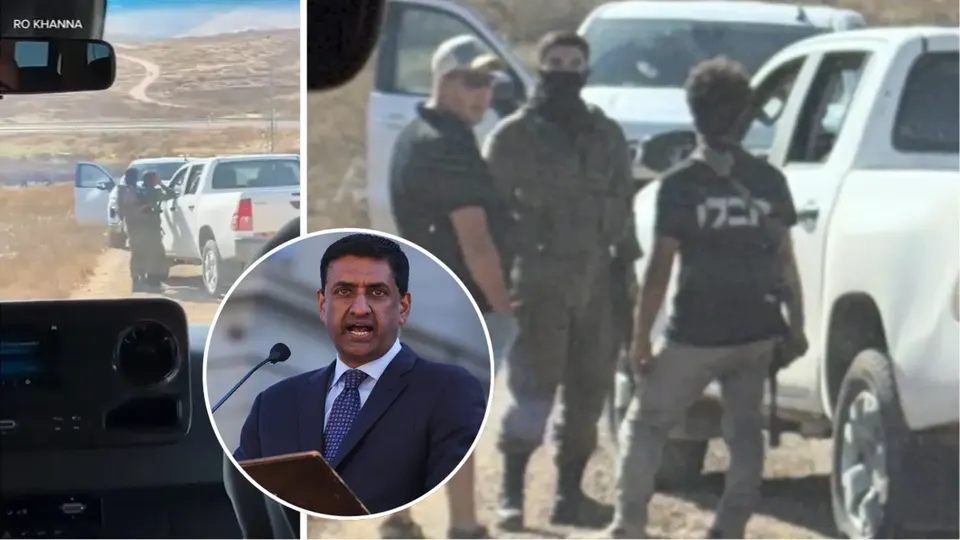
Masked men with American-made rifles held up a US congressional delegation in the South Hebron Hills this month. The hour that followed handed Ro Khanna a presidential cause, embarrassed the Israeli army into changing its story, and exposed how far Washington and Benjamin Netanyahu have drifted apart – three months before Israelis go to the polls.
The road to Khirbet Zanuta leads to a village that no longer functions as one. The Palestinian hamlet in the southern West Bank was emptied by settler raids in the months after October 2023, its school smashed and its families scattered. On Wednesday 8 July it acquired a further distinction – the place where armed Israeli settlers detained a member of the United States Congress.
Ro Khanna, the progressive Democrat who represents Silicon Valley, was midway through a three-day tour of the occupied West Bank when a car pulled across the narrow road and masked men carrying M4 rifles surrounded his minibus, swearing at the passengers and kicking the vehicle. 'These hoodlums come in with machine guns – M4, an American-made machine gun,' Khanna told Reuters the next day in Turmus Ayya, the town near Ramallah where many residents hold US citizenship. The gunmen, he said, blocked the road and summoned the army, which took their side. Four Israeli soldiers arrived and, rather than dispersing the settlers, repositioned a vehicle to keep the road shut. When the group's translator explained that the passengers were Americans and that one of them was a member of Congress, Khanna says, the men laughed.
The delegation was held for more than an hour, according to Cameron Kasky, an aide travelling with the congressman, and released only after calls to the US Embassy in Jerusalem reached a senior Israeli official and police appeared at the scene. 'Israeli settlers, brandishing American made M4s, detained me & other Americans,' Khanna wrote on X that Saturday. 'When the IDF arrived, they sided with the settlers & continued our detention.' Then came the warning: 'They made a huge mistake. You will be hearing more soon.'
A story that would not hold
The Israeli military's first account denied that anyone had been detained at all, insisting its troops had 'dispersed' the civilians blocking the road. That version deteriorated quickly. Footage of the stand-off circulated widely, witnesses corroborated the congressman's account, and by Tuesday, in an interview with NPR, Khanna was pointing out that the army now conceded his group had every right to be where it was, that its soldiers had parked beside the settlers without moving them on, and that they claimed to have been 'waiting for orders' from police. On NBC's Meet the Press he accused the military of lying outright and demanded that settlers and soldiers alike be prosecuted. Benjamin Netanyahu's response ran to six words: 'We are a nation of laws.'
The counter-attack came from familiar quarters. David Friedman, Donald Trump's former ambassador to Israel, claimed without evidence that Khanna had deliberately strayed into a restricted zone to engineer 'the photo op', signing off 'Well played Ro' – an argument complicated by the army's own admission that the zone was not restricted, and by Khanna's insistence that he had notified Israel of his travel. J Street, which had nothing to do with the trip, offered awkward corroboration instead. Its president, Jeremy Ben-Ami, said the congressional delegations it escorts to the same communities routinely encounter 'intimidation, harassment, threats of violence from extremist settlers', with soldiers more inclined to move the visitors along than to stop the harassment. The Council on American-Islamic Relations asked Congress to consider what Palestinians endure daily without a congressional office or the world's attention to protect them.
The pattern hardly needed underlining, but the week supplied it anyway. On the same Saturday that Khanna went public, the Israeli military said it had detained four suspects who attacked foreign journalists – a CNN crew among them – with clubs and knives on the road to Sinjil. The journalists were travelling to mark one year, to the day, since Sayfollah Musallet, a 20-year-old Palestinian-American from Florida, was beaten to death there by settlers. Settler violence has surged across the West Bank alongside record settlement construction, and prosecutions remain rare. The International Court of Justice ruled in July 2024 that the occupation itself, and the settlement regime it sustains, violate international law.
Netanyahu has his own arithmetic for all of this. Pressed by Fox News's Bret Baier at the end of December – fresh from a Mar-a-Lago meeting at which Trump's aides had raised unchecked settler violence directly – the prime minister dismissed the coverage as 'bloated' and the perpetrators as 'a handful of kids', 'about 70' of them, not from the West Bank at all but teenagers 'from broken homes' who chop down olive trees and 'sometimes try to burn a home'. There was, he insisted, a 'false symmetry' with the terrorism directed at settlers; what he wanted was 'peaceful coexistence' in Judea and Samaria. By summer the handful had grown. In the very week Khanna toured the West Bank, Netanyahu revised the figure upward, telling CNN the problem amounted to '150 or so, what you call, juvenile delinquents' – quite distinct, he stressed, from the settler community proper, 'law-abiding, outstanding citizens' – and complained that the courts were 'lenient because they are young'. On the prime minister's own numbers, then, the cohort of troubled adolescents more than doubled in six months; and it was evidently these wayward juveniles, grown into masked men with military-grade rifles, whom four soldiers of the state chose to protect while a member of the United States Congress sat detained on the road out of Khirbet Zanuta. Yesh Din, the Israeli group that has monitored such cases for two decades, has consistently found that more than nine in ten police investigations into settler violence close without indictment. The broken homes, it turns out, are Palestinian.
Nor is the contempt confined to settlers. In May last year, Israeli troops fired what the army called 'warning shots' at a delegation of 25 diplomats touring Jenin – ambassadors and envoys representing 31 countries, Britain, Canada, Italy, Egypt, Jordan, China and Russia among them – on an official visit arranged by the Palestinian Authority to inspect the aftermath of the Israeli assault that had driven tens of thousands from the city and its refugee camp that January. Footage showed the group scattering for cover mid-interview as the shots cracked out. The army's explanation had a familiar shape – the delegation, it said, had 'deviated from the approved route' – the same defence Friedman would attempt on Khanna's behalf fourteen months later, though in Jenin the soldiers fired first and explained afterwards. Ambassadors were summoned in capitals across Europe and the Arab world, Germany condemned the 'unprovoked firing', Canada's prime minister Mark Carney – four of whose diplomats were in the group – called it 'totally unacceptable', and the United Nations reminded Israel that diplomats must never be fired upon. The army, promising an internal inquiry, regretted 'the inconvenience caused'. The shots came, for good measure, in the same week Britain suspended free-trade talks with Israel over the conduct of the war in Gaza. From the ambassadors in Jenin to the journalists on the Sinjil road to the congressman at Khirbet Zanuta, the pattern of consequence has been remarkably stable: a summons, a statement, an internal inquiry – and, so far, nothing further.
The money and the votes
What distinguishes this incident from a thousand others on those roads is arithmetic. The rifles were American-made, tens of thousands of West Bank settlers hold American citizenship, and the man detained at gunpoint votes on the budget that underwrites the entire relationship. Khanna, a longstanding critic who has accused Israel of genocide in Gaza, wasted little time translating the affront into the language of appropriations, telling Newsmax that 'Israel can afford to pay for the Iron Dome on its own' out of a defence budget of some $45bn.
The awkward truth for Israel's friends in Washington is that the aid consensus is dissolving from both ends at once. Under the memorandum of understanding signed in 2016 and in force since 2019, Israel receives $3.8bn a year – $38bn over the decade to September 2028, comprising $33bn in equipment grants and $5bn for missile defence, roughly 15 per cent of its defence budget. Netanyahu himself has spent the year talking the arrangement down. In January he told the Economist he wanted to 'taper off' American aid to zero within a decade. In May he told CBS's 60 Minutes, 'I want to draw down to zero the American financial support', adding that Israel had 'come of age'. And on 18 June, addressing reserve officers in Gush Etzion, he declared that Israel must 'break free from dependency and build our own independent armaments network', having already pledged 350bn shekels ($110bn) in December towards an independent arms industry. Republicans have taken him at his word. Congressman Marlin Stutzman has introduced a resolution to negotiate a successor memorandum phasing out the $3.8bn entirely – Netanyahu wrote to him that 'the time has now arrived for us to move from aid recipient to partner' – while Senator Lindsey Graham, long the most reliable of Israel's allies on Capitol Hill, suggested there was no need to wait ten years. Khanna's warning that Israel 'made a huge mistake' therefore lands in a Congress where scepticism about the cheque is no longer confined to the left.
'They don't want you there'
The White House, meanwhile, has quarrels of its own with its ally. On Thursday 9 July – the day after meeting Syria's president Ahmed al-Sharaa, the former Islamist militia commander whose forces toppled Bashar al-Assad in December 2024, on the margins of the NATO summit in Ankara – Trump telephoned Netanyahu and told him to begin pulling Israeli forces out of Syria, according to Axios. 'They don't want you there. You should redeploy,' the president said, adding that the same applied to Lebanon. The Israeli military occupies large tracts of southern Syria and southern Lebanon, deployments Jerusalem justifies as insurance against another 7 October. Washington has spent months trying to broker a security arrangement between Israel and the new government in Damascus, stalled in large part by Netanyahu's refusal to withdraw, while friction on the ground grows – protests by Syrian residents against the occupation, and gunfire at an Israeli post answered by strikes in the buffer zone. In Lebanon, a framework agreement signed last month committed Israel to vacate two 'pilot zones' in the south so the Lebanese army could deploy there; the withdrawal has not begun. American mediators met both sides in Rome on Tuesday, with Beirut demanding a timetable and Israel insisting the zones first be certified clear of Hezbollah weapons – the two sides disagreeing, naturally, over who does the certifying. Netanyahu's office answered Trump's demand by restating 'the need for security zones along Israel's borders'. The White House declined to comment on the call, and pointedly declined to deny it.
Three months to polling day
Nobody expects movement before 27 October. Israel's governing coalition confirmed the election date this month – the last the law allows – and the Knesset dissolved on Friday, the first parliament since 1988 to serve out its full term. Axios described the vote as existential for Netanyahu's political survival and his personal freedom, his corruption trial still grinding on, and any withdrawal from Syria or Lebanon before polling day would be read as weakness by the very voters he needs. His flank offers no room in any case. Itamar Ben-Gvir and Bezalel Smotrich sit to his right, senior coalition figures argue for indefinite control of the occupied belts, and some advocate planting Jewish settlements there, as in the Golan and the West Bank. Facing him are Gadi Eisenkot, the former chief of staff whose new Yashar party polls level with Likud, and a joint list led by Naftali Bennett and Yair Lapid.
Khanna, for his part, has stopped pretending the trip was anything other than formative. 'I'm more resolved to consider it after this trip,' he told Reuters when asked about 2028, calling for 'a new moral direction in our party'. To the New York Times he observed drily that it was 'not a good idea to detain long-shot presidential candidates'. The betting markets promptly repriced the long shot.
On Kalshi, the regulated prediction exchange, the implied probability that Khanna enters the 2028 race climbed from 72 to 78 per cent across the week of the detention, while on Polymarket he overtook Gavin Newsom as the single likeliest Democrat to be first to declare – a name recognition problem solved at gunpoint, free of charge, by his critics' own side. Those critics insist the whole episode was engineered for precisely this purpose, and every repetition of the charge sends the footage around the world once more. In that footage, and in Khanna's telling, the armed men laughed – at the translator, at the diplomatic formalities, at the congressman in the minibus. 'It is the arrogance of power,' he said afterwards, of a power with 'no accountability. Total impunity.' The settlers may yet discover that the man they were laughing at sits rather closer to the money than they do.