UN: Israel Blocking Millions of Vaccination Supplies and Baby Bottles From Entering Gaza as Disease Risk Mounts
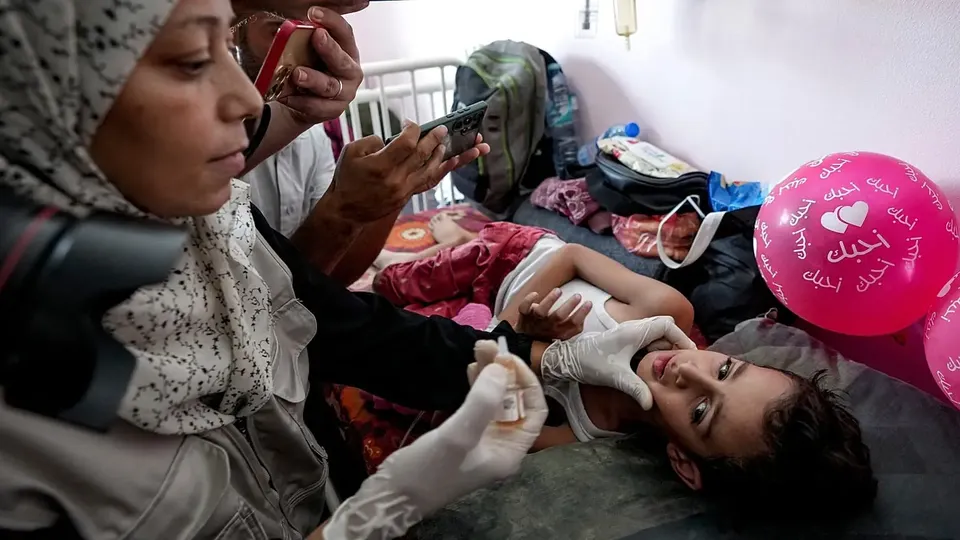
Gaza’s children are facing what UN agencies describe as a “ticking biological time bomb,” with the territory on the brink of major disease outbreaks after Israel blocked the delivery of life-saving vaccination supplies — including 1.6 million syringes, cold-chain vaccine refrigerators, and nearly one million bottles of baby formula — from entering the enclave.
UNICEF confirmed the items have been stuck at Israeli crossings for months, despite repeated urgent requests for clearance. Without them, Gaza’s immunisation programme — already shattered by months of bombardment and mass displacement — remains at a standstill.
“This is not a political issue,” a UNICEF spokesperson said. “These are syringes for children, refrigerators for vaccines, and bottles for babies. Every day of delay increases the risk of preventable disease.”
An Immunisation System in Collapse
The blocked supplies were intended to restart Gaza’s routine vaccination campaign, which collapsed early in the war when clinics were bombed, hospital generators ran out of fuel, and tens of thousands of families fled their homes.
Doctors warn that thousands of infants and young children have now gone months without vaccinations for measles, polio, pneumonia and cholera — diseases that can spread explosively in overcrowded encampments.
A World Health Organization (WHO) field coordinator described conditions on the ground as “a public-health emergency in slow motion.”
“We have vaccines in storage,” he said. “But we have no way to inject them, no way to refrigerate them, and no way to reach children safely.”
The danger is acute: measles and polio require only tiny pockets of unvaccinated children to trigger outbreaks. In Gaza, health officials say that “pockets” have become “an entire generation.”
Israel Cites ‘Dual-Use’ Concerns — UN Calls Claim Absurd
Israel’s military body responsible for overseeing goods entering Gaza, COGAT, claims items such as syringes and refrigeration units carry potential “dual-use” risks — equipment it argues could theoretically be repurposed for military purposes.
UN agencies dismissed the justification as “absurd”, saying that the equipment is unequivocally humanitarian in nature and is essential to preventing disease among civilians, most of them children.
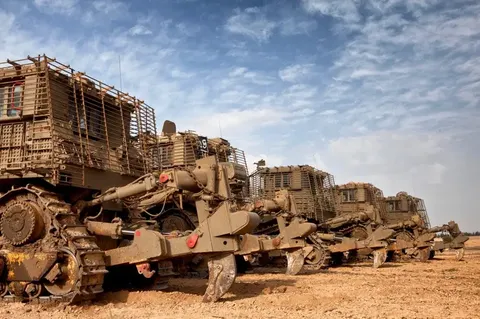
Diplomats familiar with the negotiations say that even when crossings briefly open, restrictive conditions render meaningful aid movement impossible: no fuel, short operating hours, and bans on heavy machinery essential for unloading large medical consignments.
The result, aid workers say, is a bottleneck that appears designed to allow Israel to technically claim crossings are “open” while making the transfer of critical equipment unworkable.
Growing Disease Clusters in Gaza’s Camps
Gaza’s displacement camps — now home to more than a million people — present ideal conditions for infectious disease to spread.
UN health monitors say disease clusters have already appeared:
- Acute diarrhoeal illness in multiple camps
- Respiratory infections rising sharply among children
- Skin diseases, lice and scabies spreading
- Suspected measles cases under investigation
A single confirmed case of polio, doctors warn, would signal uncontrolled community transmission.
Hospitals are unable to respond effectively. Many lack functioning cold storage, some operate without electricity, and most have lost their capacity to manage high-volume outbreaks. “We are watching a preventable crisis unfold in real time,” one Gaza paediatrician said.
Infant Formula Blocked as Malnutrition Intensifies
Also stuck at crossings are 938,000 bottles of ready-to-use infant formula — a crucial lifeline for newborns whose mothers are malnourished, sick, or unable to breastfeed amid relentless stress and displacement.
Aid agencies report a sharp rise in acute malnutrition, with one in ten children screened at clinics showing signs of wasting. Without formula, many families are attempting to feed infants with unsafe water, drastically increasing the risk of dehydration and disease.
“Formula is not optional in a crisis like this,” one UN nutrition specialist said. “Without it, babies will die.”
Legal and Humanitarian Alarm: Is This Collective Punishment?
International law prohibits the obstruction of humanitarian supplies essential for civilian survival. Several UN agencies have warned that Israel’s refusal to allow basic medical items into Gaza may constitute collective punishment — a war crime under the Geneva Conventions.
Human rights experts say the pattern is consistent: restrictions on food, medicine, fuel, electricity, and now vaccine supplies amount to an intentional degradation of civilian life.
“For over a month, no commercial or humanitarian supplies have entered Gaza,” a previous joint statement by UN agency heads said. “More than two million people are trapped, bombed, starved, and denied medical care.”
Lawyers warn the new blockade on vaccination tools could become a central element in future war-crimes investigations.
‘Even If Supplies Entered Today, It’s Already Too Late’
Medical coordinators in Gaza stress that the crisis extends beyond the missing items. The cold-chain system required to handle vaccines — refrigerators, generators, transport vehicles, trained staff — has been shattered.
Even if Israel released all supplies immediately, it would take:
- Weeks to repair or rebuild cold-storage capacity
- Weeks more to establish safe vaccination sites
- Additional time to reach children scattered across unstable displacement zones
“Every day this continues, the window narrows,” one field doctor said. “We are not talking about theoretical risks anymore. We are preparing for epidemics.”
The World Is Watching — But Has Not Acted
Despite mounting warnings, the international response has been muted. Privately, diplomats say that Israel’s “dual-use” classification of humanitarian items has become a loophole that donor governments are reluctant to challenge publicly.
Aid workers describe the situation as one of the most preventable disasters of the war — a catastrophe driven not by lack of resources but by deliberate obstruction.
“This didn’t have to happen,” a senior UN official said. “Children will suffer and die from diseases we know how to prevent, and the world will look back and ask why no one intervened.”
A Preventable Tragedy
As winter approaches and Gaza’s camps remain overcrowded and unsanitary, health experts say the territory is entering one of the most dangerous phases of the conflict.
Without syringes, without refrigerators, without formula, and with sanitation at its worst point since the war began, Gaza’s children face a perfect storm: malnutrition, displacement, contaminated water, and no functioning vaccination system.
The ingredients for a mass outbreak are already present. Only one thing is missing — political will.
“And until that changes,” a UNICEF official said, “children will continue paying the price.”