Breaking Ranks: Israeli Soldiers Describe Unlawful Killings as Gaza’s List of Dead Records 18,457 Children
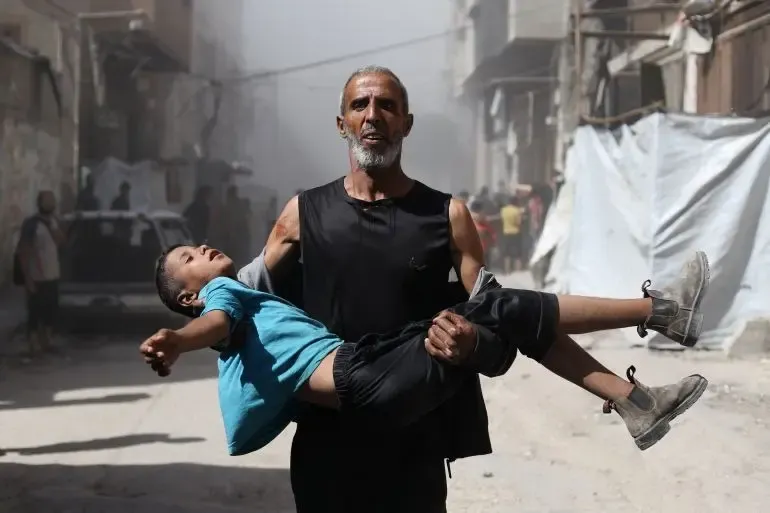
The first time “Daniel” realised the rules had slipped their leash, it wasn’t during a firefight. It was quiet. A man stood on a rooftop, hanging washing in a zone the Israeli army itself had marked “safe.” Daniel’s superior called him a spotter. There were no binoculars, no radio, no visible weapon. The nearest Israeli unit was six or seven hundred metres away — too far for human eyes to do any good. A tank fired. Half the building fell. “Many dead and wounded,” Daniel recalls. “All that’s left is shame.”
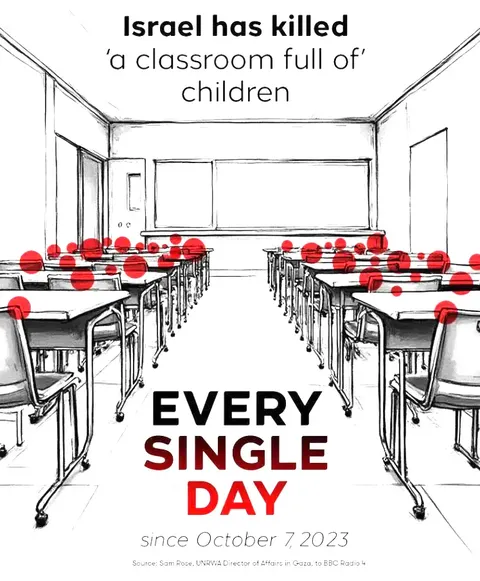
That shame runs through Breaking Ranks: Inside Israel’s War, an ITV documentary airing in the UK, in which Israeli soldiers — some named, others anonymous — describe a campaign in Gaza where suspicion replaced law, and civilians died at commanders’ discretion. The film lands alongside a ledger of loss meticulously assembled by Gaza’s health authorities: as of 31 July 2025, 60,199 named victims, including 18,457 children under 18. The two narratives confirm each other: testimonies from the men with their fingers on the triggers; names and ages of the children who never made it home.
This is not two stories told back to back. It is one story told from both ends of the rifle.
The vanishing test: “means, intent, ability”
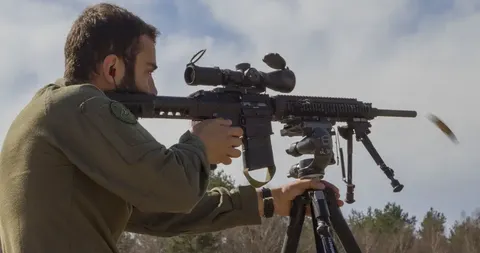
In IDF basic training, recruits are taught a triad: you may fire only if a target has means, shows intent, and possesses the ability to cause harm. Captain Yotam Vilk, an armoured corps officer, says that in Gaza the formula dissolved into a profile: male, 20 to 40, walking where it’s not allowed. “No soldier ever mentions ‘means, intent, and ability’ in Gaza,” Vilk says in the film. “It’s just suspicion.”
That suspicion moved like weather across the Strip. It followed families into supposed safe zones and gathered over queues for bread and water. Hind Rajab, 5, was fleeing through Gaza City when her family car came under Israeli fire. In a recorded call, she begged rescuers to come. A tank stood beside the vehicle. The paramedics who set out to save her were later found dead, like Hind. A forensic investigation concluded an Israeli tank likely raked the car with hundreds of rounds.
In the logic described by soldiers, movement itself became incriminating. “If they’re walking too fast, they’re suspicious. If they’re walking too slow, they’re suspicious,” says Eli, another soldier. “If three men walk and one lags behind, that’s a ‘two-to-one infantry formation.’ Everything becomes a pretext.”
Everything — including waiting for water. Lana Ashraf Yasser Al-Ghusein, 10 — “Lulu” to her family — stood beside a distribution point in Deir al-Balah on 12 July 2025, cradling jerry cans with her nine-year-old brother, Karam, when an airstrike obliterated the queue. Her mother, Heba, remembers the gentleness that earned her daughter her nickname: “She had such a joyful personality, and a heart full of kindness.”
From incitement to orders: how rhetoric travels
Soldiers in Breaking Ranks say the moral collapse didn’t appear from nowhere. It trickled down from the top — statements that “there are no innocents in Gaza,” that a whole population is responsible. Those messages, repeated by politicians and amplified by some military rabbis, reshaped what counted as “lawful” in the minds of young men at checkpoints and on tank crews.
Major Neta Caspin recalls a brigade rabbi counselling revenge: “Be like they were on 7 October. Take it out on all of them, including civilians.” Another cleric, Rabbi Avraham Zarbiv, who says he spent more than 500 days in Gaza, declares on camera: “Everything there is one big terrorist infrastructure.” In Zarbiv’s telling, bulldozers become theology, neighbourhoods become targets, and “the conduct of an entire army” shifts.
On the ground, that shift looked like Rakan Hamdi Yahya Al-Najjar, 10, dying under rubble in Khan Younis on 23 May 2025 with eight of his siblings after an airstrike on the family home. His parents, Alaa and Hamdi, were doctors; she had set out that morning to treat children at the Nasser Medical Complex. Colleagues said the family held Egyptian citizenship; they had planned to relocate to Cairo so the children could attend university. Hamdi died of his wounds days later. “My only hope,” a colleague at Nasser said, “is that those who were killed are not just names on paper.”
The hunger lines: “two shots — two heads snapped back”
If rhetoric primed the field, daily deprivation made it lethal. At aid queues run by the Gaza Humanitarian Foundation (GHF) — a US- and Israeli-backed operation meant to relieve the siege — “Sam,” a contractor interviewed in the film, says he watched two young men sprint towards food as soldiers knelt and fired: “Two shots — two heads snapped back — and they dropped.” In another incident, he says, an IDF tank destroyed a “normal car… just four normal people sat inside it.”
The UN has counted at least 944 Palestinians killed in or near food lines. And still families returned; hunger leaves no alternatives. Yaqeen Khader Fathi Hammad, 12, known online for posting practical survival tips — how to cook without gas, how to stretch water — helped the Ouena collective get new clothes to orphans. “We wanted a day of joy,” she wrote in one of her final posts. On 23 May 2025, a wave of strikes hit her home in Deir al-Balah, tearing her apart. Friends pulled what they could from the rubble.
Starvation itself kills, too. Health officials say at least 150 children have died of hunger; many more succumb to infections and treatable disease as water systems fail and drugs vanish from shelves. These deaths rarely enter the official list because they do not arrive at morgues with shrapnel wounds and crater coordinates. Yet they belong to the same policy: close the exits, drain the clinics, make aid dangerous.
The “mosquito protocol”: civilians forced underground
Breaking Ranks corroborates a practice long alleged by Palestinian families and rights monitors: using civilians as human shields. Soldiers describe a tactic informally called the “mosquito protocol.” A civilian — coerced — is sent into tunnels with a phone lodged in his vest to transmit GPS data: a map drawn with a living stylus. “Within a week, every company was operating its own mosquito,” Daniel says.
The IDF’s written statements insist the opposite — that coercion is prohibited, allegations are examined, investigations opened. The gap between rulebook and reality is the space civilians occupy with hands raised, phones strapped to chests, walking into dark mouths of earth.
That darkness extends upward, where weaponised quadcopters skim tent tops. On 12 February 2024, a drone’s fire cut down Elias Osama Izz Al-Din Abu Jamea, 16, and his 19-year-old brother Muhib outside a tent in Rafah. Their father Osama remembers the panic: shots, people running, the whirr overhead, then bullets into nylon and flesh. Elias had physical and cognitive disabilities. No one in the camp mistook him for a fighter.
Profiles in grief: a ledger of small lives
The Gaza Ministry of Health’s roll of names — 31 July 2025 edition — is both unbearably intimate and institutional by design. It records the dead who were identified and processed through hospitals; it cannot count the thousands still beneath concrete or those vanished by disease and thirst. English transliterations draw on Iraq Body Count conventions; the list is recognised as authoritative by the UN and, in practice, by the Israeli military that tries to disparage it.
From that list:
- Omar Ahmed Abdel Naser Shamlakh, 4 months, killed on 8 October 2023 in Sheikh Eljeen when a strike crushed three generations in a pink apartment house. “They were just starting their lives,” a cousin said.
- Nahedh Mohammed Adel Ramez Barbakh, 15, carrying a white flag near Khan Younis on 25 January 2024, shot in the leg, then in the back and head as he turned to retreat. His brother Ramez, 20, was shot through the heart trying to carry him home.
- Khaled Mohammed Fathi Jabr, 7, born after years of IVF and surgeries, fragile in infancy but newly thriving — killed on 17 October 2023 in Rafah, a declared safe zone, alongside his grandfather, aunt, cousins, and 11 other relatives.
- Lulu (Lana Al-Ghusein), 10, and Karam, 9, evaporated by a single blast while waiting for water, their father so undone he barred their mother from seeing the bodies.
There are thousands of others whose entries resist narrative because narrative suggests an arc, a resolution. Joud Mohammed Mansour Abdel Jawad — listed as less than a day old. Rahaf Mohammed Salim Safi, 12 days. Hamdi Munir Hamdi Abu Asr, 8 months. The list is a form of journalism that refuses embellishment: date, name, age, manner of death.
A war measured against children
Context does not lessen this, but it clarifies scale. Israel’s Operation Cast Lead (2008) killed 345 children in 22 days. Operation Protective Edge (2014) killed 548 in 50 days. Over 15 years in Iraq (2008–2022), the UN verified 3,119 child deaths. In Gaza, in less than two years, 18,457 named children are dead — approximately one in every 50 who lived there before the war.
Numbers create distance; names do the opposite. Huda Mohammed Nabil Al-Bas, 5. Farid Mohammed Saher Al-Ghuf, 5. Aisha Yousef Muslim Mahani, 8. Menna Allah Jamal Rateb Nawfal, 17. Yassin Mohammed Fayez Al-Shaer, 13. Siwar Abdel Karim Khaled Harara, 3. Hour Hossam Fawzi Al-Bawwab, 2. To read fifty names is to understand the editorial constraint of space; to read 18,457 is to understand why communities fall silent.
“We became monsters”: what soldiers say happened to them
The film’s most disturbing thread is not cruelty but indifference — a learned numbness that made cruelty possible. “Life and death isn’t determined by procedures,” says Eli. “It’s the conscience of the commander on the ground.” Conscience is elastic when leaders describe a population as collectively guilty and battlefield sermons equate revenge with righteousness.
Some soldiers, like Daniel, describe a personal collapse: “They’ve destroyed all my pride in being Israeli — in being an IDF officer. All that’s left is shame.” Shame is not accountability. But it is the first honest fact many victims have heard from the people who harmed them.
The official story, and everything it leaves out
The IDF’s formal replies emphasise unprecedented complexity and Hamas’s embedding within civilian areas. They say human shields are prohibited, investigations are opened, and legal and ethical obligations are observed. These are necessary words for a state to say. Yet the system that produces them also produced Hind, trapped alive with her dead family; Yaqeen, posting her last small lesson in endurance; Rakan and eight siblings; Omar, the baby in the pink house; Nahedh, flag aloft; Lulu with her buckets.
International investigators have drawn their own conclusions. A UN commission has found that Israel committed genocide in Gaza, citing patterns of mass killing and explicit incitement from officials. Whether courts translate those findings into indictments is a question of geopolitics as much as law. In the meantime, evidence accumulates: call logs, drone footage, satellite images, unit rosters, chat threads, hospital registries, and now, interviews with the soldiers themselves.
Method, sources, and a necessary correction
This feature draws on the ITV documentary Breaking Ranks: Inside Israel’s War and on the 31 July 2025 edition of the Gaza Ministry of Health’s list of named dead, filtered for those under 18. English transliterations follow Iraq Body Count conventions. Photography, where families allowed it, was supplied by relatives; the widely circulated image of Hind Rajab is from AFP.
A previously published article misdated Khaled Mohammed Fathi Jabr’s death as 2024; the correct year is 2023.
What it means to keep counting
Lists can feel cold. Yet in Gaza, counting is an act of care. The list refuses erasure; it insists that 18,457 is not a number but 18,457 particular worlds — a grin that coaxed a tired parent to laugh, a classmate who shared crayons, a sister who hummed to a newborn brother, a boy who loved a horse named Shams at the Friends Equestrian Club.
In the film’s final sequence, Daniel gropes for language: “They told us Gaza was a battlefield. But what I saw wasn’t war. It was a slaughterhouse.” The sentence does not absolve him. It does describe a system that trained teenagers to see laundry as reconnaissance and a water line as a threat axis, then told itself this was unavoidable.
The ledger does not argue. It names. Rital Ihab Atallah Abu Ulba, 12. Sama Adnan Harb Al-Kurd, 14. Aisha Ahmed Fuad Abu Ouda, 13. Abdel Rahman Khader Issa Karsou, 4 months. Juna Ahmed Ramzi Kamel Al-Yaziji, 4. Hassan Ibrahim Abdullah Ashour, 4. Rahaf Hisham Ismail Ismail, 8. Kenan Mohammed Ibrahim Darwish, 3. It keeps naming until the reader recognises the structure of the crime: not an error in targeting, but a campaign that made the presence of civilians a manageable inconvenience.
The silence that follows
There is a moment, always, after the last scream and before the bulldozer arrives, when survivors decide which room to excavate first. Parents listen for a muffled tap and agree without speaking. Soldiers sit on hulls and smoke. Aid workers check battery levels. Journalists sharpen questions they have asked a hundred times.
Somewhere in that moment, a culture chooses itself. Breaking Ranks confronts Israelis with that choice, spoken by their own soldiers. The Ministry of Health list confronts the world with the cost of delay.
If there is a single sentence to keep, it might be Heba’s refusal to look at her children’s bodies. It isn’t denial. It is defiance: an insistence that Lulu remain luminous in memory, not reduced to what metal did to her. Journalism can honour that defiance by refusing to make these children interchangeable.
War collapses time; the ledger restores sequence. 8 October 2023: Omar. 17 October 2023: Khaled and 13 relatives. 29 January 2024: Hind and the medics. 12 February 2024: Elias and Muhib. 25 January 2024: Nahedh and Ramez. 23 May 2025: Rakan and eight siblings; Yaqeen. 12 July 2025: Lulu and Karam. Each date collapses a family tree; each name extends an indictment.
The documentary ends; the list does not. It will be amended again — names corrected, spellings standardised, ages confirmed by battered ID cards. That administrative tenderness, done under bombardment, is the opposite of the worldview that made the list necessary.
The soldiers in Breaking Ranks tell us what they did and what they were told to believe. The names tell us what that belief produced. Between them there is no room left for euphemism. Only the work of repair — legal, political, and human — remains.