'Terrorism' Has Lost All Meaning: Israel’s War of Overreach and the Collapse of Moral Language
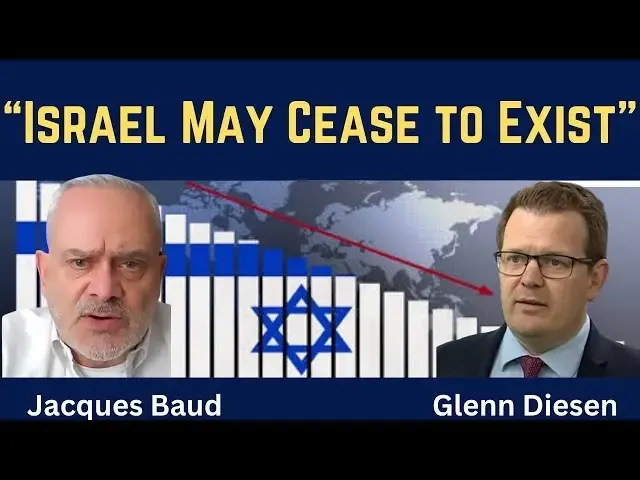
In the age of 24/7 media saturation and real-time war footage, words matter more than ever. But some words, repeated too often without precision, begin to lose all meaning. One such word is “terrorism.” Once used to describe deliberate acts of violence targeting civilians for political ends, it is now a catch-all term that, according to Colonel Jacques Baud, “reflects nothing specific anymore.” And nowhere, he argues, has the word been more cynically abused than in the case of Israel’s ongoing war on Gaza.
Colonel Baud is no armchair critic. A former senior official in the Swiss strategic intelligence service and NATO consultant, Baud has spent decades analyzing asymmetric warfare, including writing extensively on terrorism in the Middle East. In a wide-ranging interview, he said the Israeli government’s behavior not only mirrors the very thing it claims to fight, but it also reveals a deeper existential crisis within Israel itself—a state now on the brink of strategic collapse, international isolation, and moral bankruptcy.
“If you want to provoke terrorism, you do exactly what the Israelis are doing,” Baud said. “If you wanted to suppress terrorism, you would behave completely differently.”
A War Without Strategy, A Label Without Meaning
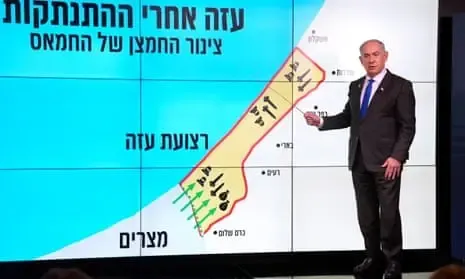
Baud points to Israel’s self-declared war on Hamas as a political smokescreen. “Even if we assume Hamas is a terrorist organization—which I challenge—you still don’t justify collective punishment of an entire population.” Israel’s brutal siege, the bombing of refugee camps, and the targeting of children have not eliminated Hamas’ fighting capacity, according to reports from Israeli and international observers alike. “The methods used are not counterterrorism. They are terrorism.”
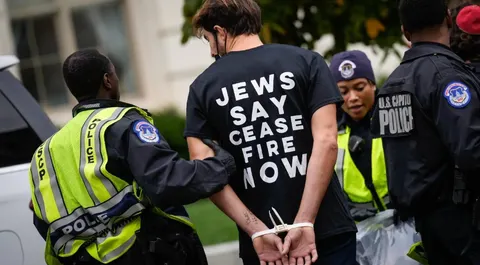
The problem, Baud warns, is that the term "terrorist" has become a narrative device used to delegitimize dissent. “People in the UK now waving a watermelon flag—a symbol of Palestinian resistance—are labeled terrorist sympathizers. This is absurd.” Such linguistic inflation, he says, destroys the possibility of diplomacy and gives carte blanche to unrestrained state violence.
Netanyahu’s Private War
Baud characterizes the Gaza war as a “private war” waged by Israeli Prime Minister Benjamin Netanyahu and his far-right coalition partners, motivated less by national security and more by personal and ideological preservation. Netanyahu, under threat of legal prosecution for corruption, is “trapped,” Baud explains, and reliant on extremist figures like Itamar Ben-Gvir and Bezalel Smotrich, whose vision includes annexation of all Palestinian land and ethnic cleansing by any means necessary.
“There is no sign of appeasement,” Baud said. “They are exhausting everything—military resources, international goodwill, even Israeli public patience.”
Indeed, internal dissent within the Israeli Defense Forces (IDF) is rising. Reports of soldiers expressing joy in killing Palestinian children are no longer fringe accusations but documented trends, with some dating back over a decade. Baud says such behavior “ashames” him as a former military officer. “This is mere terrorism. It’s nothing else.”
Israel as a Rogue State
Baud is blunt in his historical assessment: “Israel has never abided by international law.” Since before its founding, he says, Israel sought to operate under its own rules. Its admission into the United Nations in 1949 came only after it pledged to follow international law—something it has flagrantly violated over 150 times, according to UN resolutions.
This exceptionalism, Baud notes, stems from post-WWII guilt in the West, particularly over the Holocaust, and a Cold War strategy that positioned Israel as a Western outpost in the Middle East. But that calculus is no longer sustainable. “Israel today is not a strategic asset—it’s a liability,” he said. “It gives nothing to the West but problems.”
A Region in Reverse
Baud believes that the broader Middle East has outpaced Israel in political maturity and potential for partnership with the West. “Iran, Saudi Arabia, even Syria have moved towards modernity and economic cooperation,” he said. “Israel stands still, defined by perpetual war, extremism, and dependency on U.S. aid.”
The Houthis’ disruption of Israeli ports, Iran’s successful retaliatory strikes, and the economic devastation from internal flight—particularly among high-tech workers—signal Israel’s growing vulnerability. “This is not a bump in the road. This is a systemic collapse,” Baud warned. “Israel’s economy is hemorrhaging billions. Tourism is down. Investors are fleeing. Even Jews abroad are refusing to visit.”
Image Management as Gaza Starves
While Israel's leadership continues to defy international court rulings and imposes a starvation siege on Gaza’s population, Western leaders who remained silent—or complicit—for months are now finding themselves in a public relations crisis. British Prime Minister Keir Starmer, who spent the first months of the war parroting Israeli talking points and denouncing ceasefire advocates as extremists, has suddenly discovered a “grave concern” for starving Palestinian civilians.
But to many observers, this change in tone is not driven by moral awakening, but by the collapse of plausible deniability. Gaza is now the most documented genocide in history. Every morning brings new footage of slaughtered children, bombed refugee camps, and starvation. Every day, another Israeli minister or IDF commander issues a statement that explicitly frames Palestinian existence as a threat to be eliminated. The intent is stated plainly. The body count rises. And the West watches.
Starmer’s sudden rhetorical shift, like that of French President Emmanuel Macron and German Chancellor Olaf Scholz, is widely perceived as reputation management—a reaction not to the deaths of Palestinians, but to the political cost of being seen to support it. “This is not empathy,” said Baud. “This is late-stage damage control.”
Public opinion is shifting dramatically, even among traditional pro-Israel constituencies in the U.S. and UK. The American political right—once Israel’s staunchest ally—has begun questioning the endless flow of military aid. In Israel itself, debates once considered unthinkable are now openly discussed in Hebrew media: To what extent are Israeli leaders mimicking the actions of the Nazis?
Echoes of Ukraine: Strategic Escalation as Policy
Baud sees Israel’s war strategy as one of desperation, not strength. “They believe it’s now or never. Either total victory, or collapse.” In this, he draws a parallel with Ukraine—another case of strategic overreach propped up by Western support that has failed to produce results.
“The leadership in both countries comes from the same region,” Baud notes, referencing Netanyahu and Zelensky’s shared Eastern European heritage. “They are driven by trauma, vengeance, and a cultural resistance to negotiation. That makes escalation almost inevitable.”
The irony, Baud says, is that the very wars meant to secure statehood and survival are instead accelerating collapse—militarily, economically, and morally.
The West’s Moral Collapse
But Israel is not alone in culpability. Baud blames Western governments—especially the U.S. and Europe—for their cowardice, complicity, and failure to engage in honest diplomacy. “This war could have been prevented,” he said, noting that all the signs of the Gaza eruption were visible in early 2023. “Where was the West’s strategic intelligence? Where was its moral courage?”
He is particularly scathing about European passivity: “Nobody even tried to stop it. Not before October 7. Not after. The European Union is absent from every serious diplomatic initiative.”
The United States, Baud believes, is structurally incapable of negotiating fair solutions. “They treat diplomacy like mafia deals: threats and bribes, not dialogue,” he said. “They don’t understand that dialogue implies two sides, not just one dictating terms.”
A Dangerous Precipice
With regional tensions flaring, global patience exhausted, and Israel increasingly perceived as a pariah state, Baud warns of a deeper danger: that the current crisis might trigger the irreversible unravelling of the Israeli state.
“The Mount of Temple issue—the Al-Aqsa Mosque—remains a powder keg,” he said. “If fundamentalists act on their desire to destroy it and rebuild the Third Temple, it could provoke regional war far beyond Gaza.”
Yet this possibility remains largely unacknowledged in Western media. “The crisis is multi-layered. We speak only of Hamas. But the real instability could erupt elsewhere—and with far greater consequences.”
Baud’s conclusion is as grim as it is prescient. “This is a war that never had to happen, but now that it has, the stakes are existential. For Gaza. For Israel. And for the West’s claim to any moral high ground at all.”