Gaza and the Reckoning of Israel: War Crimes, Resistance, and the Collapse of Western Complicity
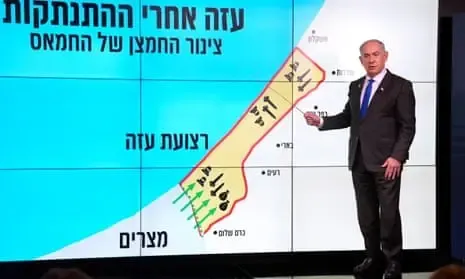
“The level of war crimes taking place in Gaza each and every minute... I can't keep up with it. These little girls, little boys being slaughtered left and right... They’re trying to hide it. But the world needs to see what’s really happening.”
The Gaza Strip has become the most visible front line of global injustice in the 21st century. Under constant aerial bombardment by Israeli forces, Gaza has descended into something more horrific than war—it is a mass execution zone. Hospitals are overwhelmed. Families are entombed in rubble. Children are dying by the hour. And the world can no longer look away.
In the words of former U.N. weapons inspector and U.S. Marine intelligence officer Scott Ritter, “These are war crimes happening every minute. It’s genocide in real time.”
The old narratives—of Israeli victimhood, moral superiority, and Western complicity—are unraveling. From Washington to Johannesburg, from the streets of London to the chambers of The Hague, people are finally confronting what has long been buried beneath political spin: the systematic destruction of a people under military occupation.
The Turning Tide: Global Sentiment Shifts
Across the globe, sentiment has begun to shift decisively. In the U.S., a majority of Americans now oppose unrestricted military aid to Israel. A recent Pew survey found that over 60% of young Americans support an immediate ceasefire, with many viewing Israel as the aggressor. In the UK, France, and Germany, mass demonstrations have broken records. Hundreds of thousands of people march weekly, waving Palestinian flags and calling for sanctions, boycotts, and international accountability.
At the United Nations, the Security Council has become a battleground. Repeated U.S. vetoes of ceasefire resolutions have sparked outrage. In June 2025, a global majority at the UN General Assembly passed an emergency resolution recognizing Palestine as a full member state and urging all countries to suspend arms sales to Israel. It was non-binding—but symbolic of a seismic shift.
Even traditionally pro-Israel voices are breaking ranks. In Israel itself, nearly 80% of Jewish Israelis now blame Prime Minister Benjamin Netanyahu for what they call the "October 7 disaster"—the breach by Hamas fighters that triggered the ongoing war. In Europe, lawmakers have begun calling for sanctions. South Africa, Bolivia, and Malaysia have already severed diplomatic ties.
“We are witnessing the collapse of Western complicity,” says Ritter. “The Gaza war has pulled the mask off.”
America’s Role: Guns, Money, and Silence
Despite public outcry, the United States remains Israel’s primary backer. Billions of dollars in military aid continue to flow—$3.8 billion annually through FMF (Foreign Military Financing), plus supplemental funding for Iron Dome systems, joint defense programs, and intelligence sharing.
The Biden administration initially stood firm in its support of “Israel’s right to defend itself,” but that line has grown harder to sustain as images of dead children dominate global media. The White House now faces growing pressure from Congress, civil society, and international legal bodies. A coalition of progressive lawmakers, led by Rep. Rashida Tlaib and Sen. Bernie Sanders, has called for a complete suspension of arms transfers pending an investigation into war crimes.
But the legacy of U.S. policy runs deeper than the current administration.
“This war didn’t start in 2023,” Ritter reminds us. “This is the culmination of decades of American protection, veto power, and weapons shipments. Without U.S. cover, none of this would be possible.”
Indeed, Israel has relied on American impunity for generations. From the 1982 Lebanon War to the current devastation of Gaza, Israeli leaders have operated with the knowledge that the U.S. will shield them from international justice. But that shield is cracking.
The War Crimes Dossier: Israel on Trial
Legal experts now argue that Israel’s actions in Gaza constitute crimes under the Rome Statute of the International Criminal Court (ICC), including:
- Intentional targeting of civilians
- Destruction of civilian infrastructure, including hospitals and schools
- Collective punishment of a population under occupation
- Forced displacement and ethnic cleansing
- Use of starvation as a weapon of war
In July 2025, the ICC’s Chief Prosecutor confirmed that multiple war crimes investigations into Israeli officials—including Netanyahu—are underway. Satellite imagery, field reports, and thousands of civilian testimonies have formed a growing body of evidence.
“What’s happening in Gaza is not a grey area,” says former U.N. rapporteur Michael Lynk. “It’s textbook genocide and crimes against humanity.”
The ICC has historically struggled to bring powerful states to justice. But with legal teams from South Africa, Turkey, and Ireland submitting formal complaints, and with evidence mounting by the day, the international legal landscape is changing.
Historical Parallels: From Vietnam to South Africa
The horror of Gaza is not without precedent.
During the Vietnam War, the U.S. claimed to be fighting communism, while massacring entire villages and napalming civilians. It was only when the My Lai massacre came to light that public support collapsed. Similarly, Israel claims to be fighting Hamas—yet is bombing hospitals, UN shelters, and residential blocks.
“The logic is the same,” says Ritter. “You kill to break the will of the population. It didn’t work in Vietnam. It didn’t work in Algeria. It didn’t work in South Africa. And it won’t work here.”
In apartheid-era South Africa, the world also looked away—for decades. Only sustained global pressure, mass protests, and a cultural boycott campaign eventually forced change. Today, those tactics are being revived under the banner of BDS: Boycott, Divestment, Sanctions.
As Archbishop Desmond Tutu once said, “If you are neutral in situations of injustice, you have chosen the side of the oppressor.”
The Netanyahu Doctrine: Fear, Lies, and Collapse
Prime Minister Netanyahu has long styled himself as “Mr. Security.” But his record tells a different story—one of deception, manipulation, and disaster.
In the 1990s, Netanyahu opposed the Oslo Accords and incited against Prime Minister Yitzhak Rabin, who was later assassinated by a far-right Jewish extremist. As opposition leader, Netanyahu labeled Rabin a Nazi and encouraged rabbis to declare him a “traitor to Judaism,” effectively issuing a religious death sentence.
As Prime Minister, he deepened occupation, expanded settlements, and built a literal apartheid wall. “He created a ghetto,” Ritter says. “I saw it with my own eyes. Israel was becoming a fortress fueled by fear.”
In recent years, Netanyahu has rewritten Israel’s Basic Laws to shield himself from prosecution. Facing criminal charges for bribery, fraud, and breach of trust, he gutted the judiciary, fired dissenting judges, and tried to place the courts under his party’s control. “It’s legal tyranny,” Ritter says. “Israel doesn’t have a constitution. They have power structures. And Netanyahu owns them.”
The October 7 breach—when Hamas infiltrated Israeli territory, killed civilians, and took hostages—was a direct result of this rot. “They were warned,” says Ritter. “They had intelligence. But they ignored it. Because they believed their own propaganda.”
Hamas: Trapsetters and Ideologues
Hamas did not strike randomly. It planned meticulously, for years. The assault was timed to coincide with the 50th anniversary of the 1973 Yom Kippur War—when Israel was also caught off-guard. It was intended not only to humiliate the IDF but to provoke an overreaction.
“They set a trap,” Ritter says. “They knew Israel would respond with overwhelming force. They knew civilians would be killed. And they knew the world would finally see it.”
Hamas’s underground tunnel networks, 15 meters below the surface, are fortified against even the most advanced U.S.-made bombs. They are stocked with food, fuel, and weapons. Above ground, Gaza is being annihilated. But below, Hamas fighters are waiting.
Ritter is no supporter of Hamas. He repeatedly condemns their tactics. But he insists: “This is an ideology. You can’t bomb it away. You can kill a fighter. But you’ve made him a martyr. His children will carry the torch. This war will not end.”
The Death of the Two-State Illusion
The idea of a two-state solution is all but dead. Israel controls all territory between the Jordan River and the Mediterranean Sea. Palestinian land is fragmented, walled off, and militarized. Settlements have turned the West Bank into a patchwork of disconnected ghettos.
Even the Palestinian Authority—the supposed partner in peace—is widely seen as corrupt and illegitimate. “They’re fat men in five-star hotels,” Ritter says. “They’ve betrayed the resistance. They’ve betrayed their people.”
Netanyahu’s government, meanwhile, continues to expand settlements and reject any discussion of a Palestinian state. The far-right ministers in his cabinet openly call for the annexation of Gaza and the expulsion of its population.
But history has a way of catching up.
After the Rubble, the Reckoning
The Gaza war has shattered illusions. Israel is no longer viewed as a besieged democracy fighting for survival. It is seen—by millions—as a settler-colonial apartheid regime waging genocidal war on an imprisoned population.
The West’s complicity is now exposed. So too is the fragility of Israel’s self-image. In the rubble of Gaza lie the ruins not only of homes and lives—but of an entire geopolitical narrative built on impunity.
And now, the world must choose.
Will it return to silence? Or will it finally act?
“This war is the end of illusions,” says Ritter. “It’s the end of impunity. And it’s time for the world to decide which side of history it wants to be on.”