Israeli Actress Chelli Goldenberg Condemns “The Sin of the Occupation” Before Discovering Her Comments Are Live
**A television appearance about an acting career became an argument over occupation, Palestinian freedom and Israeli patriotism, followed by the actress’s shock at discovering the discussion had been broadcast.**
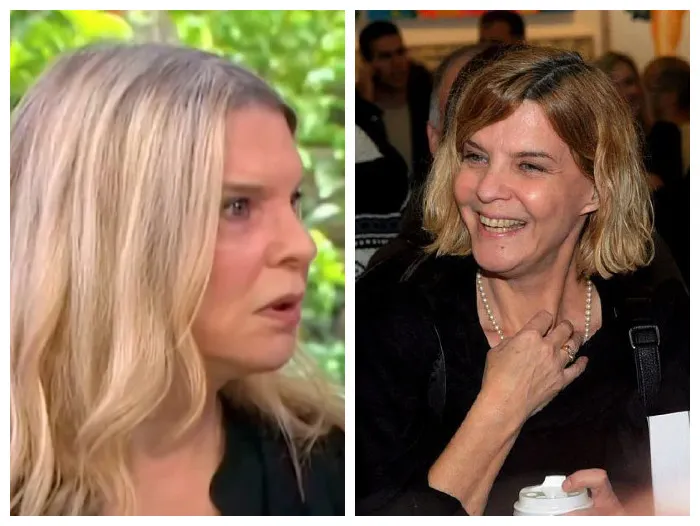
Veteran Israeli actress Chelli Goldenberg criticised Israel’s occupation of Palestinian territory, growing religious influence, settlers and Jewish terrorism during a morning television interview, before reacting with shock when she discovered that a conversation she believed was private had been broadcast live.
The exchange took place on Channel 13’s Opening the Day on Monday, 26 October 2026, with presenters Elad Zohar and Yarden Harel. Wider footage carries the broadcaster’s date and a clock showing 09:41 to 09:44 Israel time during the discussion, equivalent to 07:41 to 07:44 GMT.
Her argument combined disillusionment with Israeli identity, opposition to occupation and an account of volunteering in communities attacked on 7 October 2023. Her later apology addressed the force of her language, leaving a distinction between regret about her expression and withdrawal of her political criticism.
A familiar face in Israeli cultureGoldenberg, 72, is a longstanding figure in Israeli cinema and television whose career includes modelling and roles in Ha-Lahaka, known in English as The Troupe or The Band, and Dizengoff 99.
Her latest film, Probability of Love, features her alongside Yehoram Gaon. After more than five decades in entertainment, she continues to pursue acting roles. The television appearance had been intended to explore her career and cultural work, before the discussion turned political.
National pride and the legacy of occupationGoldenberg began with a wish to recover a feeling she had lost: “I want to feel happy about being Israeli again.” Asked whether matters had reached the point where she no longer felt happy to be Israeli, she distinguished that longing from her present feelings about the country. “I no longer feel proud to be Israeli,” she said.
“You don’t feel proud to be Israeli? Those are dangerous words to say,” the presenter told her. Goldenberg answered that she was speaking off-air: “I’m saying it quietly.” Her response foreshadowed the misunderstanding that would become explicit later in the exchange.
She then described the distance between her attachment to the country and her view of its collective conduct. “I don’t hold my head high about who we are collectively, and that’s a terrible feeling,” she said.
She connected that feeling to her generation’s experience. Born in 1954, she recalled the period surrounding the 1967 war and the years it had taken her to recognise what occupation meant. “It took ten years to understand the sin of the occupation. It wasn’t immediate,” she said.
Her criticism then moved from personal disappointment to a broader argument about political cause and consequence. “The occupation brought everything that came afterwards. Everything happening now is the result of the occupation.”
“We are occupiers,” she said. When Zohar asked what was happening now, she answered with a question of her own before listing the developments she condemned: “What’s happening now? What isn’t happening now? Growing religious influence, the settlers, Jewish terrorism, arrogance.” Her argument linked these developments to occupation and to the way Israeli society had changed around it.
Gaza and the argument over freedomZohar challenged her explanation by invoking Israel’s withdrawal from Gaza and what subsequently developed there, referring to the events of 7 October. Goldenberg responded by drawing on her experience of living in South Africa under apartheid and by invoking the history of Jewish underground violence against British rule.
In that historical comparison, she associated Yitzhak Shamir and his Lehi organisation with the bombing of Jerusalem’s King David Hotel. The attribution was mistaken: the attack on 22 July 1946 was carried out by Irgun, the organisation led by Menachem Begin, and killed more than 90 people, including civilians.
“A minority has the right to fight for its freedom,” Goldenberg said. “Not if it massacres civilians,” Zohar interjected, invoking the killing of Israelis and referring to the victims as their brothers, sisters and soldiers. The dispute therefore moved between two questions: the political rights of a people living under occupation and the conduct of those claiming to fight for them.
Harel also rejected Goldenberg’s framing. “I see things differently,” she said, describing the assertion that a minority had the right to defend itself as difficult to hear. Goldenberg’s own formulation had been the right to fight for freedom. Zohar described Israel as still wounded and grieving, arguing that it was too early to discuss the subject in this manner and questioning whether such a discussion would ever be appropriate.
“Okay, but Chelli, we didn’t come to talk about these things,” Zohar said. Goldenberg answered that they had asked how she was feeling and that she was hurting. Her reply placed the political disagreement within the personal distress she had described at the beginning.
Cleaning homes in the communities attacked on 7 OctoberGoldenberg’s response to the presenters also included a detailed account of helping Israeli communities near Gaza. She said she had joined volunteers cleaning damaged homes in Nir Oz, Nahal Oz and Be’eri, repeatedly stressing that she had done the work herself.
She placed the start of that work in December 2023 and described continuing until approximately a year before the interview, estimating the period at about two years. She said the volunteers went three times a week and used bleach to clean homes in which attackers had been present. These were her recollections of the work and its duration.
The details she gave conveyed the physical aftermath of the violence. Her reported description included maggots, bloodied knives and ammunition casings. She complained that this work was barely discussed, even as she invoked it to explain her connection to the people and places affected.
She described herself as deeply patriotic and expressed love for Israel. Her comparison was to a parent watching a child become someone whose conduct departed from the values they had been taught. In that image, attachment to the country and anguish over its direction formed parts of the same account of her feelings.
The moment she realised viewers had heard herThe presenters then tried to move the discussion back to her acting career. “We came to talk about something completely different, about cinema and new roles,” Zohar said, before Goldenberg interrupted with a question: “Were we on air?”
The presenters confirmed that they were broadcasting, prompting her to ask again: “Were we on air during that conversation?” Their confirmation brought an immediate objection: “That’s not okay.”
“You didn’t say we were back on air,” she protested. “No, I’m leaving. That’s not okay. I thought this was an off-screen conversation. I thought we were in the commercial break.” Her objection was that she had understood the exchange to be private and had not realised it was reaching viewers.
She also explained that she had not wanted to discuss her volunteer work publicly, a detail that complicates any reading of her reaction as concern solely about the political remarks.
“I don’t know what to do with this now,” Goldenberg said. She described being in shock and repeatedly objected that nobody had told her the conversation was being broadcast. The presenters then took the programme into a commercial break.
A short clip and a longer argumentThe moment subsequently circulated in shortened versions online, including an edit running for about one minute and 46 seconds.
The reactions attached competing interpretations to the footage. A post by broadcaster Yinon Magal characterised Goldenberg’s comments as justification for the 7 October massacre. The @Catholicizm1 caption instead emphasised her apparent fear when she realised she was live. Both descriptions add interpretations to an exchange in which she argued for a minority’s freedom, was challenged over civilian killings and protested that she had believed the conversation was private.
The legal context behind the disagreementThe occupation she condemned also has an established international legal context. In its advisory opinion of 19 July 2024, the International Court of Justice concluded that Israel’s continued presence in the occupied Palestinian territory was unlawful and that it was obliged to end that presence as rapidly as possible. The court also said Israel must immediately stop new settlement activity and evacuate settlers from the occupied territory.
On the same date, the International Committee of the Red Cross reiterated that it regarded the West Bank, including East Jerusalem, and Gaza as remaining under Israeli occupation. It said the establishment and expansion of Israeli civilian settlements in the occupied West Bank were incompatible with the Fourth Geneva Convention.
The ICRC’s statement also condemned deliberate attacks on Israeli civilians as violations of international humanitarian law. It recognised Israel’s right to take security measures while emphasising that those measures must comply with humanitarian and human rights law. Those positions distinguish the legal questions about occupation from the separate protections owed to civilians during hostilities.
The subsequent apologyLater in the interview, Goldenberg addressed viewers and apologised for the manner in which she had expressed herself. She described being impulsive and intensely passionate, acknowledged excessive drama and sharpness, and said she had spoken with greater extremity because she had not realised she was on air.
She added that even her parents would have been upset by some of the language she had used. Her apology expressed regret over the intensity of her language without clearly withdrawing every criticism she had made about occupation, settlements or the country’s direction.
Her final practical request returned to the circumstances of the broadcast. She asked for a more unmistakable indication that the cameras were live and said she had failed to notice the red light that should have alerted her.
Sources and attributionsPrimary quotation material: Hebrew automatic transcript of the circulating video excerpt, supplied for this article and labelled as generated with Kome.ai. The extended passages about national identity, the sin of occupation, settlers, Jewish terrorism, freedom and the discovery that the conversation was live are translated from that supplied text. The excerpt does not cover the entire interview.
Israel National News, 26 October 2026: Broadcast identification, corroboration of the occupation and freedom remarks, the presenters’ challenges, Goldenberg’s explanations and her later apology. Its published translation supports the short quotation identifying Israel as an occupying power.
Walla, 26 October 2026: Longer Channel 13 footage, the visible broadcast date and clock, and the political exchange.
Mako, 26 October 2026: Hebrew corroboration of the political exchange and the transcription correction concerning growing religious influence, her response to the presenters, volunteer testimony, subsequent apology and camera light request.
Ice, 26 October 2026: Additional reported details of the volunteer work, the presenters’ responses and Yinon Magal’s reaction.
Israel Hayom, 26 October 2026: The communities she named, the transition back to cinema, and her objection on learning she was live.
The Wire, 30 October 2026: The opening discussion of national pride, the warning about speaking on air and her later explanation.
7NEWS report republished by Newswire, 30 October 2026: The 7NEWS account of her generational reference, criticism of occupation and parental comparison.
Channel 13, 26 October 2026: Biographical and career information, including Probability of Love and Yehoram Gaon. This separate career interview was published on the same day as the broadcast.
International Business Times, 30 October 2026: Career interview context, the historical attribution and the reported apology.
National Army Museum: The correction identifying Irgun, under Menachem Begin, as responsible for the King David Hotel bombing on 22 July 1946.
International Court of Justice, 19 July 2024: The International Court of Justice’s advisory conclusions on Israel’s continued presence and settlement activity.
International Committee of the Red Cross, 19 July 2024: The ICRC’s positions on occupation, settlements, civilian protection and security measures.
The X post, 29 October 2026: The circulating edit and its caption. Posted on 29 October 2026 at 16:23 GMT, it runs for approximately one minute and 46 seconds, carries RT branding and links to RT’s upload.
Translation and editorial notes: The expanded quotations are English translations of the Hebrew transcript supplied for this article, with filler sounds, obvious duplicate syllables and false starts removed for readability. They are not a fresh transcription of the audio. The supplied text has a damaged opening sentence about national pride; the short quotation about no longer feeling proud follows the previously published English translation. A phrase about her generation is also unclear and has been omitted from direct quotation rather than reconstructed. The automatic text’s העדה has been corrected to הדתה against Mako’s Hebrew report and rendered as growing religious influence. Goldenberg’s right to fight for freedom and the presenter’s formulation about defending oneself have been kept distinct. The speaker of an isolated interjection is uncertain, and the final incomplete word has not been turned into an apology. Details from the longer interview, including her volunteer work, historical comparison and later apology, remain supported by the reports listed above.
Hebrew reports differ over one physical detail: Mako and Ice print רימות, meaning maggots, while Israel Hayom prints רימונים, meaning grenades. That discrepancy has not been independently resolved against the audio. The volunteer chronology and frequency are Goldenberg’s own recollections. Her later apology concerned the intensity of her expression and does not establish that she withdrew every substantive criticism.