Mercury Launches Next-Generation Retail Automation Platform to Expand 24/7 Retail Access Across Airports, Hospitality and High-Demand Locations
Formerly Swyft, Mercury combines upgraded technology, managed operations, supply-chain capabilities and premium brand partnerships to capture consumer demand beyond the limits of traditional retail.
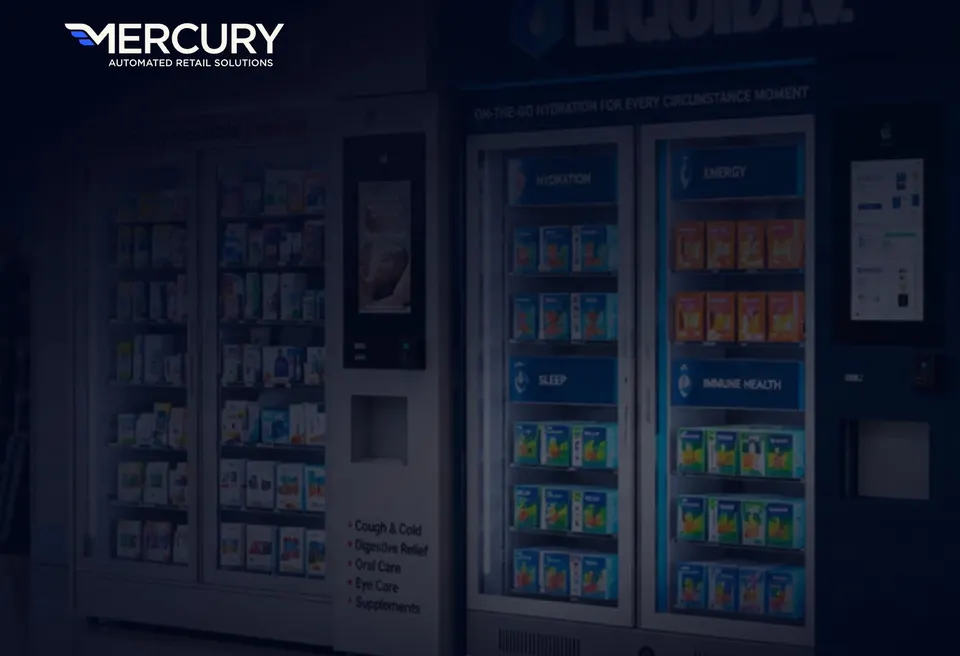
Swyft today announced its evolution to Mercury Automated Retail Solutions, marking a broader transformation of the company around new technology, operating capabilities and leadership designed to scale automated retail across airports, hospitality environments and other high-demand physical locations.
The transition goes beyond a new name.
Mercury brings together technology, merchandising, inventory management, replenishment, payments, analytics and field operations into a managed retail model designed to extend access wherever consumer demand exists beyond the limits of traditional retail.
The company enters this next phase under CEO Ken Sullivan, whose background spans large-scale operations, distribution and supply-chain leadership. Sullivan’s appointment reflects Mercury’s evolution from a technology-led automated retail business into an operating platform built to manage retail at scale.
“The opportunity has become much bigger than the technology,” said Ken Sullivan, CEO of Mercury. “Mercury brings consumer demand, premium locations and leading brands together through a managed retail system built to scale beyond the limits of traditional retail.”
Technology Built for Deployment
Mercury’s evolution is supported by a modernization of the technology and operating infrastructure behind each retail location.
Rather than treating automation as the end product, Mercury uses technology to support the operating system required to manage retail at scale, including payments, inventory visibility, replenishment, sales reporting, merchandising performance and ongoing optimization.
The objective is practical: help location partners serve more consumer demand across more locations and more dayparts, while giving brands a managed route into high-value physical environments.
This is technology being deployed against real operating demand, not technology for technology’s sake.
Proven Across Airport Environments
Airports demonstrate the scale of the opportunity.
Non-aeronautical activity represents 36.7% of airport income, making commercial revenue an important component of airport economics.
Mercury already operates across 20+ airports and 100+ stores, extending retail access across environments where passenger demand can exist beyond the footprint or operating hours of traditional concessions.
The model also makes compact physical space productive, with Mercury locations generating approximately 5,000–10,000 in revenue per square foot.
That combination creates a distinct airport proposition: extend retail access across the passenger journey while generating commercial value from spaces and dayparts that conventional retail may not efficiently serve.
Hospitality Extends the Opportunity Beyond Conventional Retail Hours
The same demand dynamics exist in hospitality, where guest needs rarely conform to the operating hours of a gift shop, pantry or nearby retailer.
Mercury’s hospitality business is already demonstrating a conversion rate above 40%, while Better+ transaction data shows 39.4% of purchases occur between 7 PM and 7 AM.
That after-hours activity illustrates the underlying opportunity: meaningful guest demand exists when conventional retail options may be closed, inconvenient or unavailable.
Mercury addresses that gap with a managed, always-available retail experience without requiring the hotel to create another staffed retail operation.
The assortment is designed around the real needs that emerge throughout a guest stay, spanning cough and cold, digestive and allergy relief, oral and eye care, beauty and grooming, feminine hygiene, travel chargers, batteries and adapters, toys and other high-need essentials.
The result is not simply another hotel amenity. It is an extension of guest service designed around when and where demand actually occurs.
Connecting Consumer Demand, Premium Locations and Leading Brands
Mercury’s strategy connects three parts of the modern retail ecosystem:
- Consumer Demand. Identify when and where a consumer need exists.
- Premium Locations. Extend retail access across environments such as airports, hotels, healthcare facilities and campuses.
- Leading Brands. Bring relevant products closer to consumers at moments where need and purchase intent intersect.
Mercury manages the infrastructure connecting the three, from identifying opportunities and designing the retail experience through deployment, fulfillment, measurement and optimization.
For location partners, that creates an opportunity to serve more demand from the traffic already there.
For brands, it creates a managed physical route to market that gets products closer to the moments that drive purchase.
Swyft Proved the Model. Mercury Is Built to Scale the Opportunity.
The Mercury name reflects the larger ambition behind the company’s evolution.
Swyft demonstrated that automated retail could bring products closer to consumers in high-demand environments.
Mercury builds on that foundation with new leadership, expanded operating capabilities, modernized technology and a managed retail model designed to connect demand, locations and brands at greater scale.
The company’s existing operating experience, relationships and market knowledge continue under Mercury.
Mercury Automated Retail Solutions is a managed automated retail company connecting consumer demand, premium physical locations and leading brands.
Through technology, merchandising, deployment, fulfillment, operations and performance optimization, Mercury helps location partners extend retail access and helps brands reach consumers closer to the moment of purchase.
Mercury operates across high-demand environments including airports, hospitality, healthcare and higher education.
Learn more: mercuryautomatedretailsolutions.com