The Unanswered Question of 7 October: How Many Israelis Were Killed by Israeli Fire?
Three years after the attacks, military admissions, soldiers’ testimony and UN findings have left unresolved questions about the Hannibal directive and the deaths of people Israel’s forces were sent to protect.
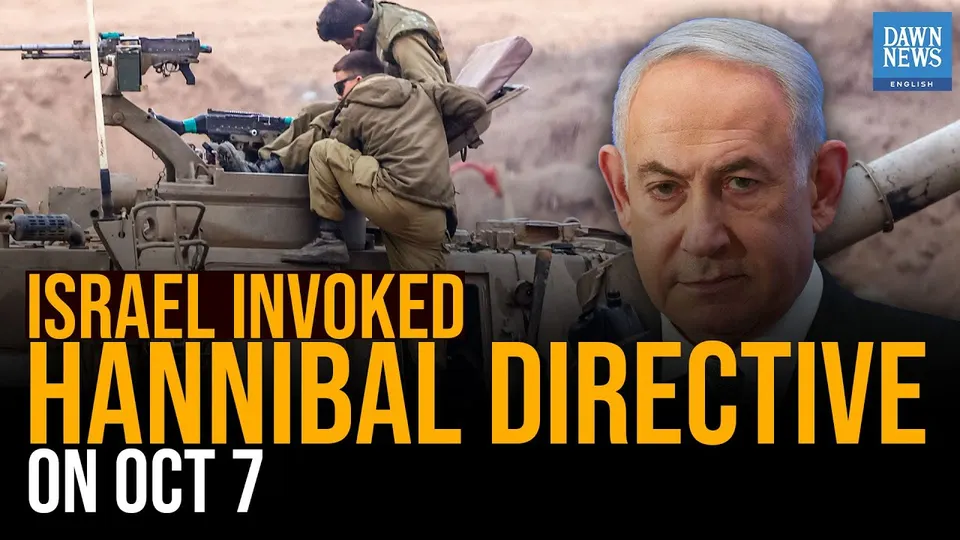
Three years after the Hamas-led attacks of 7 October 2023, there is still no comprehensive public accounting of how many Israelis were killed by their own armed forces during the military response.
Israeli investigations have identified cases in which civilians were probably killed by Israeli fire. Soldiers have described attacking vehicles that might have contained captured Israelis. Operational orders reported by Israeli journalists show commanders seeking to prevent vehicles reaching Gaza despite the danger to those being carried inside them.
An anniversary examination by journalist Mehdi Hasan, published by Zeteo on 6 October, has brought those findings together around a question that remains unanswered: how many people died because of those decisions, and who authorised them?
Hasan asked “how many people on October the 7th were killed not by Hamas or other Palestinian armed groups, but by Israel”.
1,195 people were killed during the attacks, and 251 were taken into Gaza. Human Rights Watch has documented deliberate killings of civilians and other war crimes by Hamas-led armed groups. Establishing responsibility for deaths caused by Israeli forces is also part of accounting for what happened that day.
At the centre of that unfinished reckoning is the Hannibal directive: a military procedure associated with preventing the capture of Israeli soldiers even when the force used could kill the soldiers themselves.
The doctrine emerged in 1986 amid abductions in Lebanon and controversy over prisoner exchanges. Its underlying calculation was that a captured soldier could become a bargaining asset, placing Israel under pressure to release large numbers of Palestinian or Lebanese prisoners.
The wording of the directive, as quoted in Hasan’s report, captured the danger inherent in its approach: “Even if this means hitting our soldiers, in any event, everything will be done to stop the vehicle and not allow it to escape.”
Hasan characterised its guiding philosophy as “better dead than abducted”. The distinction between risking a captive’s life and deliberately killing that captive became one of the directive’s most troubling ambiguities. Some officers understood it as permitting the latter.
In 2016, military chief Gadi Eisenkot cancelled the directive. Replacement orders introduced in 2017 explicitly instructed soldiers to avoid hitting the captive. Yet the language of Hannibal resurfaced during the collapse of Israel’s Gaza border defences six years later.
An investigation published by Haaretz in July 2024 reconstructed orders from that morning using military documents and testimony.
At 7.18am, after a reported abduction at the Erez crossing, divisional headquarters issued the command “Hannibal at Erez”, followed by “dispatch a Zik” — a reference to an armed drone. Another Hannibal order followed at 7.41am. The newspaper reported that the procedure was also employed at the Re’im base and Nahal Oz outpost.
At 11.22am, a broader instruction went across the Gaza Division network: “Not a single vehicle can return to Gaza.” Haaretz described the message as “understood by everyone”.
“Everyone knew by then that such vehicles could be carrying kidnapped civilians or soldiers,” an unnamed Southern Command source told Haaretz.
“There was no case in which a vehicle carrying kidnapped people was knowingly attacked, but you couldn’t really know if there were any such people in a vehicle.”
Haaretz could not determine how many people had been hit because of these orders. Its investigation established the danger to captives, rather than a definitive casualty total.
Hasan also included footage from Israel’s police command centre in which an officer discussed attacking Gaza: “Break it all apart. Along with the soldiers who got abducted.”
The officer’s name is not given in Hasan’s narration. Hasan said national security minister Itamar Ben-Gvir subsequently ordered filming to stop. The recording shows a discussion; it does not by itself establish which military orders followed or who implemented them.
Former defence minister Yoav Gallant subsequently acknowledged the directive’s use in a February 2025 Channel 12 interview with Amit Segal and Yonit Levy. The Hebrew-to-English translation and subtitles used in Hasan’s report were supplied by The Electronic Intifada, whose accompanying report credits translator David Sheen.
“I think tactically in some places it was, in other places it was not, and that is a problem,” he said.
Gallant was Israel’s defence minister on 7 October. His answer supports the accounts of local implementation, but does not by itself establish that he personally issued a single, nationwide order to kill captured Israelis. The chain of command, the instructions given at each location and their consequences remain central questions.
An earlier account came from Israeli air force reserve colonel Nof Erez, speaking to a Haaretz podcast in November 2023.
“The Hannibal Directive was apparently applied at a certain stage,” Erez said, in The Electronic Intifada’s Hebrew-to-English translation. He described the response as: “This was a mass Hannibal.”
Erez contrasted the single-vehicle abduction scenario for which pilots had trained with the numerous breaches and vehicles moving across the border that morning. His account described the scale and confusion of the response; it did not establish an overall death toll.
Accounts from helicopter crews add a further dimension: the difficulty of identifying people on the ground while firing powerful weapons inside Israel.
In a passage from Meirav Halperin’s War Machine quoted by Hasan, an unnamed pilot described that uncertainty:
“I realised that in the chaos, I no longer knew what I was seeing. I couldn’t tell whether the vehicles I spotted were carrying terrorists or civilians. I didn’t know how many had crossed the border or whether the figures I saw in the fields and at the junctions were terrorists or our own soldiers. Every target I marked was shadowed by doubt. And each time I squeezed a trigger, I wondered whether I was about to fire on our soldiers or on the terrorists.”
Hasan also quoted a Haaretz review of the book:
“Almost every testimony repeats the pilots’ shock at having to fire inside Israel, something that was strictly forbidden until October the 7th. Many also stressed that they often could not be sure who they were targeting. The book does not reveal how many Israeli civilians died as a result of friendly fire, but it does dare to acknowledge that the chaos of that day led the Israeli army to kill its own people.”
In a separate excerpt from Halperin’s book published by Ynet, a pilot identified by the pseudonym Tavor described seeing figures near Gaza Division headquarters without knowing whether they were Israeli soldiers or attackers.
“I didn’t know if they were our soldiers or terrorists,” he recalled.
He described firing a missile near the headquarters entrance without first receiving permission, amid uncertainty about whether civilians were present. Another pilot described both cases in which Israeli fire hit Israeli forces and occasions when withholding fire spared them.
Another helicopter recording included in Hasan’s presentation contains the brief instruction “shoot there”. Hasan’s narrated account does not identify that speaker or establish the target of the instruction.
These accounts show why an investigation must examine individual engagements. Misidentification, crossfire and a conscious decision to endanger captives can produce similar casualties while raising different questions about responsibility.
The uncertainty also runs through a January 2024 investigation by Ronen Bergman and Yoav Zitun for Yediot Ahronot. In the English rendering read by Hasan, the journalists wrote:
“Estimates are that about a thousand terrorists and infiltrators were killed in the area between the settlements of the encirclement and the Strip. It is not clear at this stage how many of the hostages were killed as a result of the operation of this order on October the 7th.
“In the week after Black Sabbath, soldiers from elite units, at the initiative of the Southern Command, inspected about 70 vehicles remaining in the area between the settlements of the encirclement and the Strip. These were vehicles that did not reach Gaza because they were shot at en route by a combat helicopter, a UAV or a tank. And at least in some of the cases, everyone in the vehicle was killed.”
The passage records the journalists’ assessment and its explicit uncertainty. It does not establish how many Israelis were in those vehicles or how many died.
Identification of the dead had already forced a substantial revision of Israel’s initial casualty figure. Speaking to Hasan on MSNBC in November 2023, Israeli government adviser Mark Regev explained:
“We originally said in the atrocious Hamas attack on our people on October 7th, we had the number at 1,400 casualties. And now we’ve revised that down to 1,200 because we understood that we had overestimated. We made a mistake. There were actually bodies that were so badly burnt, we thought they were ours. In the end, apparently they were Hamas terrorists.”
Regev’s statement explains the identification error behind that revision. It does not establish which weapons or forces caused the deaths of the people whose remains were initially misidentified.
One of the clearest cases concerns Efrat Katz, a 68-year-old resident of Nir Oz.
In April 2024, the Israeli military announced that an attack helicopter had fired at a vehicle carrying armed men and, as investigators subsequently established, Israeli captives. It concluded that Katz was probably killed by that fire.
The military said the captives could not be distinguished through the aircraft’s observation systems. The air force commander found no fault with the crew, saying it had operated according to orders in difficult combat conditions.
That conclusion leaves a significant question about the orders themselves: what precautions were required before attacking vehicles when civilians were being abducted across the battlefield?
Katz’s death was not the only case subsequently examined.
In January 2025, the military published findings on Dikla Arava and her 17-year-old son, Tomer Eliaz-Arava, at Nahal Oz.
Investigators assessed that Tomer had escaped his captors and hidden before soldiers mistook him for a suspicious figure and shot him. They considered it highly likely that Israeli fire killed him.
Dikla was being transported with other captives towards Gaza when their vehicle was fired upon from behind. The military said there was a reasonable possibility that she was killed by Israeli forces which had identified it as a vehicle carrying fleeing attackers. It emphasised that neither death could be established with absolute certainty.
The inquiry did not establish that either death resulted from a Hannibal order. Tomer’s case, in particular, concerned suspected misidentification. Both belong in the broader examination of Israelis killed during their own military’s response.
The most contested episode remains the confrontation at Pessi Cohen’s house in Be’eri, where Palestinian gunmen held civilians as Israeli forces surrounded the property and a tank fired during the engagement.
Brigadier General Barak Hiram, who commanded Israeli forces at the scene, later told the New York Times that he had instructed the tank commander: “The negotiations are over. Break in, even at the cost of civilian casualties.”
Survivor Yasmin Porat’s account also challenged the military response. Asked by Kan radio interviewer Aryeh Golan, “So our forces may have shot them?”, she replied: “Undoubtedly.”
“They eliminated everyone, including the hostages. Because there was very, very heavy crossfire,” Porat said, in a Hebrew-to-English translation published by The Electronic Intifada.
Porat described people caught between Israeli forces and Palestinian gunmen. Her testimony is evidence about the confrontation, rather than a forensic determination of the cause of every death.
The UN Commission of Inquiry’s June 2024 summary report concluded that Israeli tank fire killed “some or all of the 13 civilian hostages held in a house in Be’eri”. Its detailed findings assessed that at least 14 Israeli civilians were likely killed by Israeli fire across two incidents: Katz at Nir Oz and 13 people in the Be’eri confrontation.
The military’s July 2024 findings reached a substantially different conclusion at Be’eri. Its assessment was that “no civilians inside the building were harmed by tank shell fire” and that “most of the hostages were likely murdered by the terrorists”.
However, the military also acknowledged that people outside were hit by tank fragments and that one was highly likely to have died as a result.
The military defended the commanders’ “professional and responsible decisions” and said negotiation efforts had been exhausted.
Sharon Cohen, Pessi Cohen’s daughter-in-law, rejected the conclusion that captives had not been harmed by tank shells. “That’s not really true,” she told Israel’s Radio Bet on 14 July 2024, in remarks also reported by Australia’s ABC.
“Out of personal privacy issues, I can’t really get into the details. These are details that we were told would be investigated again.
“In addition, I’ll say that because the incidents in the kibbutz were so exceptional and strange and difficult, the whole issue of removing the bodies, and autopsies, and all those things — essentially were not done.”
These conflicting findings and accounts leave unresolved the precise causes of death and the extent of Israeli responsibility.
The UN commission also found strong indications of Hannibal’s use elsewhere. It cited a tank crew’s account of firing towards vehicles believed to contain militants and Israelis. The commander said: “I prefer stopping the abduction so they won’t be taken.” He also said that, to his knowledge, he had not killed soldiers.
Hasan’s presentation identifies the tank commander as Bar Zonshein, speaking to Channel 13, and credits Middle East Eye for the translation of that clip.
On the Nova festival, the commission said it was aware of allegations that Israeli forces used Hannibal “to prevent the capture of Israeli civilians and their transfer to Gaza, even at the cost of killing them”.
The summary report recorded allegations of helicopters shooting at civilian cars, but added: “The commission confirmed the presence of at least eight attack helicopters in various locations on 7th of October, but it could not confirm that they shot at civilians or civilian cars, including in the area of the festival,” in the wording read by Hasan.
That qualification is essential: the inquiry did not verify the allegation of helicopter killings at Nova.
Hasan’s anniversary examination also challenges Western news organisations over their attention to the issue.
“It’s really kind of outrageous that mainstream Western media outlets have totally ignored this question when the truth is that the Israeli media has not,” he said.
The British media-monitoring organisation Media Lens said Gallant’s admission had been “buried by major UK ‘mainstream’ media as well as the wider Western media”.
That criticism concerned coverage of Gallant’s admission. Media Lens also published a correction acknowledging the Guardian’s July 2024 coverage of Hannibal. Reuters reported the military’s findings on Katz that April, and Australia’s ABC subsequently investigated the controversy. A claim of no Western coverage at all would therefore be inaccurate.
Hasan nevertheless argued that independent outlets had faced dismissal for pursuing the story. “Many of them were dismissed as conspiracy theorists,” he said, crediting The Electronic Intifada, The Grayzone and Mondoweiss for their reporting.
The more substantial accountability question is what followed the disclosures. Reports of dangerous orders and individual deaths have not produced a comprehensive, independently established account of the Israeli fire that day.
Hasan illustrated his criticism with footage of journalist Sam Husseini challenging Antony Blinken at the US secretary of state’s final State Department press conference on 16 January 2025.
“Miller says he doesn’t know about the Hannibal Directive,” Husseini said, referring to State Department spokesperson Matthew Miller.
“Again, I’m happy to address questions in a few more minutes,” Blinken replied, with verbal hesitations omitted.
As the confrontation continued, Husseini accused the administration of obstructing International Court of Justice orders: “You blocked the ICJ orders.”
“Please, sir, respect the process. Thank you,” Blinken said.
“Oh, respect the process. Respect the process while everybody — everybody from the International — from Amnesty International to the ICJ’s saying that Israel’s doing genocide and extermination, and you’re telling me to respect the process. Criminal. Why aren’t you in The Hague? Why aren’t you in The Hague? Why aren’t you in The Hague?” Husseini responded.
Husseini’s remarks expressed his accusation; they should not be read as a statement that the ICJ had issued a final genocide judgment. Security personnel carried him out of the briefing room.
The broader accountability gap sits within a political battle over an independent state commission. On the third anniversary, Eisenkot and opposition leader Yair Lapid renewed demands for an inquiry while accusing Benjamin Netanyahu of evading responsibility. Netanyahu rejected allegations against him as political attacks.
An investigation capable of resolving the Hannibal controversy would need to connect operational orders and recordings with weapons footage, witness accounts and evidence about individual deaths. It would also have to examine the decisions of senior officials alongside those of soldiers acting under immediate threat.
For the families, the distinction between knowing that someone died on 7 October and knowing how they died is fundamental.
“If you truly care about the people killed on October the 7th, shouldn’t you want to know who killed them?” Hasan asked.
“And if it was the Israeli military, who gave the Hannibal order? And three years later, shouldn’t they have to answer for it? Defend it to the families of the dead?”
Three years later, the public record contains military admissions, disputed findings and testimony about knowingly taking risks with Israeli lives. The outstanding task is to establish who was killed by Israeli fire, under whose orders, and whether those deaths could have been prevented.
Translation and quotation credits
The Electronic Intifada supplied the Hebrew-to-English translations of Yoav Gallant’s Channel 12 interview and Nof Erez’s Haaretz podcast remarks cited here. Its Gallant report credits David Sheen. Yasmin Porat’s Kan radio quotations are also taken from The Electronic Intifada’s translation, published in reporting by Ali Abunimah and David Sheen.
Hasan credits Middle East Eye for the Bar Zonshein clip. The longer pilot, book-review and Yediot Ahronot passages follow the English wording reproduced in Hasan’s presentation and retain that secondary attribution.
Sources
Mehdi Hasan’s Zeteo examination, 6 October 2026, and the supplied transcript.
Haaretz investigation by Yaniv Kubovich, 7 July 2024 — archived copy.
The Electronic Intifada’s translation of Nof Erez’s remarks, republished by Asa Winstanley.
UN Commission of Inquiry detailed findings, A/HRC/56/CRP.3, June 2024.
Reuters on the Israeli military’s findings concerning Efrat Katz, 5 April 2024.
Israeli military findings on Dikla Arava and Tomer Eliaz-Arava, 10 January 2025.
Ynet’s interviews and excerpts from Meirav Halperin’s War Machine.
ABC’s investigation, including Sharon Cohen’s Radio Bet remarks, 7 September 2024.
The Times of Israel on Barak Hiram’s account, citing the New York Times.
Mediaite’s account of Mark Regev’s MSNBC interview, 16 November 2023.
Media Lens’s coverage criticism and correction, February 2025.
State Department transcript, 16 January 2025, mirrored by GlobalSecurity.org.
Human Rights Watch’s findings on the Hamas-led attacks, 17 July 2024.
The Jerusalem Post on renewed demands for an inquiry, 7 October 2026.