Gaza Genocide Investigator Wins Nobel as US Sanctions International Criminal Court
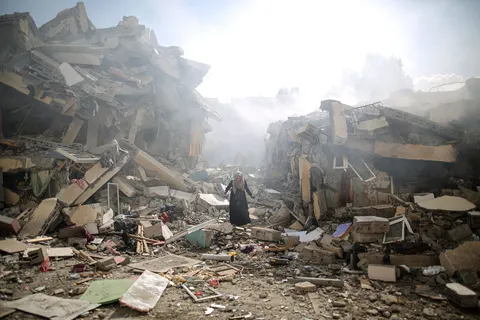
The award comes as Palestinian authorities report nearly 22,000 children killed in Gaza — an average of one child every 72 minutes for three years — while Washington targets the war crimes court and Marco Rubio threatens to “end the ICC”.
The jurist who led the United Nations inquiry that found Israel had committed genocide in Gaza has won the 2026 Nobel Peace Prize, bringing renewed international attention to its findings and provoking a furious denunciation from the Israeli government.
Hours later, the Trump administration unveiled sweeping sanctions against the International Criminal Court itself — an institution that has issued an arrest warrant for Benjamin Netanyahu over alleged crimes in Gaza. The court condemned the measures as “an assault on the rule of law” and vowed that it would not be deterred.
Navi Pillay, the 85-year-old South African former UN human rights chief, received the award on Friday for a career devoted to international justice. Her selection places one of the most prominent investigators of Israel’s conduct in Gaza at the centre of a wider confrontation over whether powerful states and their allies can be held accountable under international law.
The Norwegian Nobel Committee honoured Pillay “for her efforts to promote peace and international law”. Its citation recognised her work across several courts and human rights institutions, including the independent commission investigating the occupied Palestinian territory.
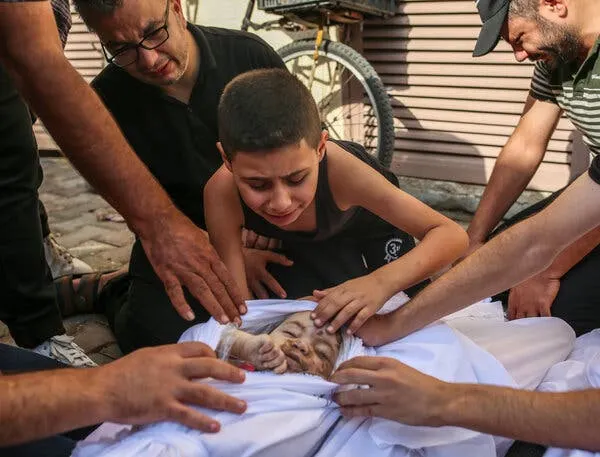
The scale of the loss facing Gaza was underlined by a Health Ministry report issued on 9 October. It recorded at least 21,976 Palestinian children killed in Israeli attacks over three years — roughly 20 children a day — and 71,846 children orphaned.
Among the children killed were 5,444 under five, including 1,125 infants who had not reached their first birthday. Palestinian reporting of the figures identified 612 infants who had been born and killed during the war. A further 45,569 children had been injured, with 1,134 cases of amputation recorded among them.
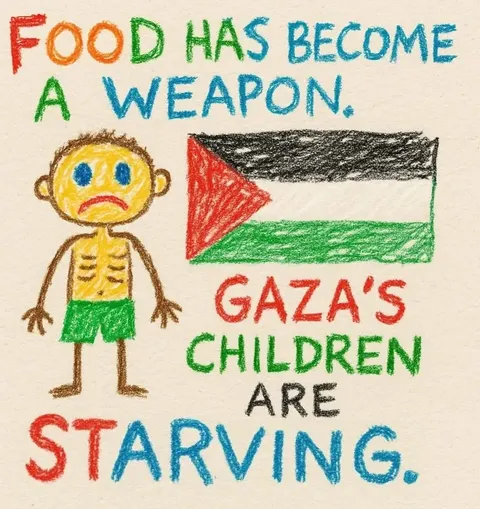
The ministry’s figures also included 466 deaths from malnutrition, of whom 157 were children, and 2,027 patients who died while awaiting medical evacuation, including 264 children.
Its account of the destruction of healthcare said all 38 hospitals and 158 primary healthcare centres had been targeted, with 19 hospitals and 64 centres out of service. It recorded 1,723 healthcare workers killed and 216 ambulances targeted.
These are figures reported by Palestinian health authorities, rather than findings of the Nobel committee or a court. They describe the continuing human consequences of the devastation that Pillay’s commission investigated.
Pillay heard the news while attending a gathering of lawyers and jurists in Nuremberg, at the site of the postwar trials of Nazi leaders. Colleagues told her after the committee had been unable to reach her before the announcement.
“I don’t know about it so much. The question is: is it true? Being a lawyer and a judge, I still want to verify it,” she said.
Her thoughts quickly turned to Gaza.
“The last thing I did was the report on Gaza naming what’s happening there as genocide,” she said.
Recalling the praise she had received for her courage, she added: “You can imagine how surprised I was. Why would you need courage to speak the truth. You interpret the law. You look at all the facts, so it’s an impartial decision.”
The commission’s September 2025 findings went beyond documenting individual atrocities. They concluded that Israeli authorities and security forces had committed four of the five categories of genocidal acts defined by the 1948 Genocide Convention, with the intent to destroy Palestinians in Gaza as a group.
Those acts included killing; causing serious bodily or mental harm; deliberately imposing conditions of life calculated to bring about physical destruction; and measures intended to prevent births.
The inquiry also concluded that Benjamin Netanyahu, President Isaac Herzog and former defence minister Yoav Gallant had incited genocide. Israel rejected the findings and refused to cooperate with the commission, which it accused of bias.
The report’s recommendations extended to other governments. It called for an end to arms and equipment transfers that could be used in genocidal acts, measures to prevent companies and individuals from assisting such crimes, and investigations and legal proceedings to secure accountability. That placed the conduct of Israel’s international supporters alongside its own actions under scrutiny.
Israel’s foreign ministry responded to the Nobel announcement by accusing Pillay of spreading lies and legitimising hatred of Israel.
“Awarding Pillay the Nobel Peace Prize isn’t a recognition of justice. It’s the grotesque weaponization of an award to legitimize anti-Israel hatred and prejudice,” it said.
The ministry escalated its attack with a reference to the Nazi propaganda minister: “Now that the Nobel commission has rewarded the biggest lie of the 21st century, Joseph Goebbels is certainly applauding from hell.”
The commission’s record also includes findings against Palestinian armed groups. In June 2024, it concluded that Hamas and other groups had committed war crimes during the 7 October attacks, including intentionally attacking civilians, murder and torture.
A separate CNN investigation broadcast on 8 October examined how Israeli military operations and political decisions affected the survival of captives held in Gaza. Drawing on interviews with families and Israeli military and government officials, it linked 24 of the 40 deaths among people taken into Gaza alive to Israeli military actions.
At least 11 were killed directly by Israeli strikes or ground operations. The broader figure also included deaths in circumstances where advancing Israeli forces prompted captors to kill those they held. It is not a finding that Israeli forces directly killed all 24; the investigation also documented killings by captors.
CNN examined the collapse of a potential agreement in July 2024 after Netanyahu demanded that Israeli troops remain along the Gaza–Egypt border. Israeli officials said Hersh Goldberg-Polin and four others subsequently killed by Hamas would have been released under that framework.
Retired Brigadier General Oren Setter, formerly deputy head of Israel’s task force dealing with the captives, said military operations had been changed or cancelled after assessments of the risks to them. But asked whether the delay in reaching a deal had been worthwhile, he replied: “In my personal judgment, it was not worth it.”
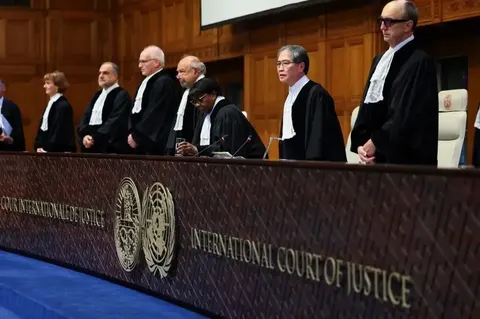
The Nobel award gives Pillay’s work greater prominence, but carries no judicial authority. The commission’s genocide finding is distinct from South Africa’s case against Israel at the International Court of Justice, which has not delivered a final judgment on the merits.
Pillay’s own current ICJ appointment concerns a separate case: she serves as an ad hoc judge in The Gambia’s genocide proceedings against Myanmar over the treatment of the Rohingya. She is not the judge presiding over the Gaza case.
The broader message of the Nobel announcement was a defence of international justice at a time when its institutions face mounting political pressure.
“The system of international law is under tremendous pressure, and its institutions are under attack,” the committee said. It acknowledged that powerful states had often escaped accountability and that the application of international law had been inconsistent.
That warning acquired fresh relevance within hours as Washington widened its sanctions campaign from individuals to the ICC as an institution, threatening the financial and operational infrastructure on which its investigations and prosecutions depend.
Secretary of State Marco Rubio said the measures were intended to defend American sovereignty and prevent prosecutions of US citizens.
“Either the ICC will end its threats, or we will end the ICC,” he said.
The sanctions prohibit transactions by US entities with the court, restricting access to American goods and services, including banking and software. The State Department said it had already sanctioned 17 people under its ICC sanctions programme; targeting the institution itself takes the confrontation considerably further.
Washington has provided a six-month grace period for some restrictions, allowing member states to continue funding operations temporarily. Rubio said the arrangements were intended to give the court and its supporters time to negotiate a solution addressing US concerns. He also called on allies belonging to the ICC, including Britain, to rein it in.
The administration has attacked the court over its past investigation into the conduct of American troops in Afghanistan and its pursuit of Israeli officials.
The ICC had issued arrest warrants for Netanyahu and Gallant in November 2024 over alleged war crimes and crimes against humanity, including starvation as a method of warfare. Those proceedings concern individual criminal responsibility and are separate from the ICJ case concerning Israel’s responsibility as a state. The warrants are not convictions.
Although Washington has repeatedly denounced the warrants against Israeli officials, the new sanctions do not explicitly make their withdrawal a condition for lifting the measures.
The ICC said the sanctions sought to obstruct its work and intimidate those who cooperated with it. It described them as an attack on the foundations of the international legal order, insisted that it “will not be deterred”, and warned: “History will judge this moment.”
It also appealed directly to the governments that created it to ensure it retained the means to operate.
“The Court cannot stand alone. Its fate now rests also in the hands of the states that created it,” it said.
UN secretary-general António Guterres called the American decision “a serious blow to our collective pursuit of international criminal justice, of which the ICC is a key pillar”.
Britain joined Canada, Denmark, Germany, France, Italy, Japan and the Netherlands in reaffirming their “continued and unwavering support” for the ICC. Their joint statement opposed the sanctions and warned of the consequences for the court’s work, its staff and their families.
The Netherlands, which hosts the court in The Hague and is a US Nato ally, faces particular pressure. Dutch foreign minister Tom Berendsen warned that the measures would seriously affect its ability to function.
Pillay’s career connects the struggle against apartheid with the development of the legal institutions now examining atrocities in Gaza and elsewhere.
Born in Durban into a family of Indian Tamil origin, she challenged racial discrimination through the courts and defended the rights of anti-apartheid prisoners. She later served on South Africa’s High Court, the International Criminal Tribunal for Rwanda and the ICC, before becoming UN high commissioner for human rights from 2008 to 2014.
Her role in the Rwanda tribunal helped establish that rape and sexual violence could constitute genocide when committed with the intent to destroy a protected group. The 1998 judgment against Jean-Paul Akayesu, a former mayor, became a landmark in recognising sexual violence as part of the machinery of mass destruction.
South African human rights lawyer Yasmin Sooka described that work as “a historic breakthrough that placed survivors’ experiences at the heart of international justice”.
South African President Cyril Ramaphosa said the award recognised Pillay’s contribution to peace, human dignity and hope. UN secretary-general António Guterres also welcomed the decision, saying she had shown that “the force of law must prevail over the law of force”.
Pillay dedicated the honour to “survivors of international crimes” and to those who continue defending international justice despite the obstacles they face.
There was also a moment of humour in Nuremberg.
“If you clap a little bit more, I may share this prize with Trump,” she joked, drawing laughter.
The remark recalled last year’s laureate, Venezuelan opposition leader María Corina Machado, handing her medal to the US president in January. The Nobel committee has maintained that the status of laureate cannot be transferred.
For Gaza, however, the question raised by Pillay’s recognition remains practical: whether governments will act on the commission’s recommendations, including those concerning arms supplies and accountability. An international honour can bring attention to the findings; enforcing the obligations they describe requires action by states.
The committee expressed the principle in three words: “Peace requires justice.”
SOURCE NOTES
Updated on the evening of 9 October 2026 to incorporate the supplied BBC report, the ICC and government responses, Palestinian child-casualty figures, and CNN’s investigation into deaths in captivity.
Quotations from the Guardian and BBC articles supplied by the user were checked against wider reporting where accessible. Additional material was drawn from the sources below.
The Nobel award is recognition of Pillay’s career, not a judicial determination or a separate adjudication of the Gaza inquiry’s conclusions. The sanctions followed the award in time; this article does not claim the award caused them.
Norwegian Nobel Committee, announcement of the Nobel Peace Prize 2026.
The Guardian, Julian Borger and Rachel Savage, “ICJ judge Navi Pillay wins Nobel peace prize for promoting international law”, 9 October 2026; supplied article.
Reuters, “Former ICC judge Navi Pillay wins 2026 Nobel Peace Prize”, 9 October 2026; dedication, Nuremberg reaction and international context.
Reuters, “US imposes sanctions on International Criminal Court, hours after former judge wins Nobel”, 9 October 2026, first published 14:02 UTC; sanctions and Rubio statement.
UN Commission of Inquiry/OHCHR, genocide findings and recommendations, 16 September 2025. UN republication.
UN Commission of Inquiry, full legal analysis, A/HRC/60/CRP.3.
UN Human Rights Council, commission findings concerning Israeli authorities and Palestinian armed groups, 19 June 2024.
International Court of Justice, current judges ad hoc and South Africa v. Israel case record.
ICC, announcement of Netanyahu and Gallant arrest warrants, 21 November 2024.
International Criminal Tribunal for Rwanda, “Historic judgement finds Akayesu guilty of genocide”, 2 September 1998.
Associated Press, international reaction to the award, 9 October 2026.
The Guardian, live coverage, 9 October 2026; Guterres reaction.
Anadolu, Pillay’s joke about sharing the prize with Trump, 9 October 2026.
BBC News, Florence Freeman, Anna Holligan and Tom Bateman, “US unveils sanctions on ICC in move court condemns as ‘assault on rule of law’”, 9 October 2026, published 17:06 BST and subsequently updated; article supplied by the user. Sanctions mechanics, grace period, Rubio threat, Guterres response and Dutch reaction.
US State Department, “Imposing Sanctions on the International Criminal Court”, 9 October 2026.
UK Government, “Joint statement on support for the International Criminal Court”, 9 October 2026.
ICC, “The ICC strongly rejects US sanctions against the institution”, 9 October 2026.
Reuters, “ICC urges members to make sure it can continue despite US sanctions”, 9 October 2026.
WAFA, “Medical sources: Gaza death toll reaches 74,254”, 9 October 2026; child deaths, injuries, amputations, orphanhood, and the identification of 612 infants born and killed during the war.
Drop Site News, Drop Site Daily, 9 October 2026; supplied summary of the Gaza Health Ministry report, including malnutrition, medical evacuation and health-service figures.
CNN, Jeremy Diamond investigation, broadcast 8 October 2026; original transcript for the deaths in captivity, July 2024 negotiations and Oren Setter interview.
EDITORIAL VERIFICATION NOTE
The supplied summary describes 612 children killed while seeking food or medicine. WAFA and Gaza’s government media office instead identify 612 infants born and killed during the war; the feature uses that description.
The phrase “one every 71 minutes” has been replaced with the approximate equivalent of 20 children a day, consistent with 21,976 deaths across three years.
CNN’s 24 linked deaths include direct and indirect relationships to military operations; 11 is the figure for deaths directly caused by Israeli strikes or ground operations. These categories are not added together.
Infant, malnutrition and medical-evacuation subgroups should not be added to the overall child toll as if they were disjoint categories.