Iran’s Lost Children: Sky News Investigation Traces the School Killing of 120 Pupils to a US Missile
A new documentary reconstructs how an Iranian primary school was struck on the opening day of Operation Epic Fury and asks whether obsolete intelligence, broken databases, accelerated targeting and weakened civilian safeguards turned a place of learning into a military target
In Minab, a small agricultural city in southern Iran, the faces of dead children look down from lampposts and billboards. Their portraits have become part of the landscape of a community that remains trapped in the morning of 28 February 2026, when a missile penetrated the roof of Shajareh Tayyebeh Elementary School and exploded inside the building.
The school was struck during the opening hours of Operation Epic Fury, the vast US and Israeli assault on Iran. For months, the Trump administration has refused to accept responsibility. President Donald Trump initially blamed Iran, Defence Secretary Pete Hegseth repeatedly insisted that the United States does not target civilians, and military officials have continued to shelter behind an investigation whose conclusions remain unpublished.
A major new Sky News documentary now presents the most detailed public reconstruction of the attack yet. Iran School Bombing: The Search for Truth, led by Sky News International Affairs Editor Dominic Waghorn and directed by Flora Bagenal for Full Story Films, combines reporting from inside Minab with archived school videos, survivor testimony, satellite imagery, weapons analysis and a three dimensional model produced with Forensic Architecture.
Sky News deserves considerable credit for the depth and persistence of this investigation. Its journalists spent months identifying the dead individually, travelled into a region rarely accessible to Western reporters, confronted American officials and tested witness accounts against physical and digital evidence. Standing inside the destroyed school, Waghorn said that viewing photographs from a distance could not convey what had happened: “It’s only when you walk through the rubble of a primary school classroom that it really hits you.”
Its conclusion is devastating. Every line of evidence examined by the documentary points towards a US strike, most probably involving a Tomahawk cruise missile. More disturbing still, the film suggests that the school may have been deliberately selected as a military target because American planners relied on obsolete intelligence that still described the building as part of an Iranian naval facility.
This was not, on the available evidence, a precision weapon that wandered away from its intended coordinates. It appears to have reached them, meaning the possible failure was in the coordinates themselves and in the military system that approved them for attack.
A school reduced to a crater
For years, Shajareh Tayyebeh had documented school life online. Archived videos recovered by Sky show pupils singing, taking part in lessons and gathering in a brightly decorated playground. The images record an ordinary primary school full of noise, colour and aspiration less than a year before it was torn open.
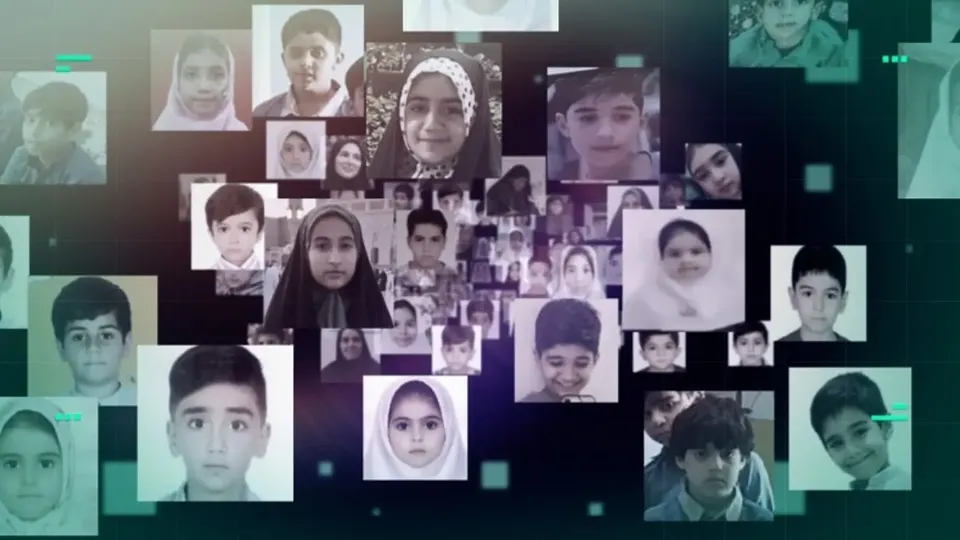
The building has often been described in international reports simply as a girls’ school, but Sky established that it served girls and boys in separate sections. The boys’ school occupied the ground floor. Of the 120 pupils killed, 73 were boys and 47 were girls, aged between six and 13.
Sky’s final reconstruction records 156 deaths in total, including the 120 pupils, 26 teachers, parents and other adults, and an unborn child. Earlier Iranian official accounts placed the toll above 175. The lower Sky figure is not an estimate. It is the result of months spent identifying victims individually, and it remains an extraordinary number for a single strike on a school.
There were 264 children enrolled at the site. Among them was Muhammad Taha, aged nine, the eldest child of his parents and a pupil in year four. Sky identified him in archived footage wearing a green jacket. Eight of the 15 children in his class were killed.
Another victim, Athareh Zarei, aged ten, loved learning English. Her parents described her as clever, affectionate and ambitious.
“She was a small girl but had big dreams,” her father told the documentary.
She wanted to become a doctor or dentist.
When Athareh’s body was recovered, a schoolbag and a small toy that had been clipped to it were found with her. Both were burned. Her mother later held the damaged belongings for Sky’s camera.
“Every time I look at these things, I just have one question,” she said. “Why?”
Witnesses told Sky that the school’s headteacher was found beneath the rubble with her arms around pupils she had apparently tried to protect.
Iranian authorities required the Sky team to obtain permission to travel to Minab, a region rarely opened to Western journalists even in peacetime. The government plainly wanted the devastation recorded. Waghorn nevertheless said his team was free to approach the victims and survivors on its list, and the physical evidence gathered at the site was tested against satellite data, archived material and specialist analysis outside Iran.
The documentary does not ask viewers to trust Tehran. It asks them to examine evidence that can be independently tested.
Ten seconds between warning and destruction
Sky and Forensic Architecture rebuilt the school and surrounding compound digitally, fitting classrooms, prayer rooms, corridors and playgrounds together from photographs and archived video. This allowed the investigators to place witnesses inside the building and reconstruct the order of the impacts.
Although early accounts gave varying times for the attack, Sky’s synchronised analysis of closed circuit footage placed a wave of nine strikes across the wider compound at about 11.22am. The first impact landed approximately 120 metres from the school. Ten seconds later, the school itself took a direct hit.
Teachers had reportedly begun calling parents about an hour earlier and asking them to collect their children. Some boys were in the playground, while many girls were gathered in a prayer room as they waited.
Muhammad Taha was apparently outside when the first explosion occurred. Terrified, he ran back into the school towards his classroom. The missile arrived seconds later.
Weapons specialists consulted by Sky said the shape and scale of the damage were consistent with a Tomahawk carrying a penetrator type warhead, intended to enter a hardened structure before detonating. The weapon passed through the roof and upper floor before exploding, leaving a crater approximately five metres wide.
Wes Bryant, a former US Air Force special warfare operator who later became the Pentagon’s chief of civilian harm assessments, examined the post strike imagery.
“You had points of impact that were near dead centre,” he told Sky, describing seven to nine buildings hit with remarkable precision.
He said this was consistent with a US targeting method intended to contain the blast inside a structure and kill those within it.
The accuracy is central to understanding the event. A weapon can function exactly as designed while the intelligence directing it is catastrophically wrong.
The attack did not end that morning. At about 2.30pm, while parents, medical staff and rescue workers were searching the ruins, three more missiles that Sky identified as Tomahawks struck elsewhere in the compound.
One hit a clinic and killed a medical worker who had returned to collect supplies. The school was not struck a second time, but the shock waves threw the rescue operation into renewed chaos and delayed efforts to reach people trapped in the rubble.
By then, Iranian media had already reported that a school had been hit. Sky’s investigators argue that this should at least have prompted additional caution before another wave was launched into the same area, even amid the confusion and misinformation of a rapidly expanding war.
Why the evidence points to the United States
The United States remains the only participant in the conflict known to operate Tomahawk missiles. Footage released by an Iranian state linked agency after the attack shows the distinctive tail fins of a Tomahawk during an afternoon strike on the compound.
Separate footage records the school being hit in the morning, although the weapon cannot be identified visually in that clip.
Sky also located the USS Abraham Lincoln carrier strike group in the Arabian Sea within range of Minab. The group included US warships capable of launching Tomahawks. Other reporting has established that the guided missile destroyer USS Spruance fired Tomahawks into Iran on 28 February.
The physical pattern was equally important. Seven to nine buildings were struck close to their centres, according to Bryant’s assessment, suggesting a coordinated series of precision attacks rather than an errant Iranian missile.
No secondary explosions were visible, weakening the argument that the school or neighbouring buildings held stored missiles or large quantities of ammunition.
Admiral Brad Cooper, the commander of US Central Command and the senior officer responsible for Operation Epic Fury, has told Congress that the school was located on an “active IRGC cruise missile base,” describing the investigation as unusually complex.
“As soon as we’re complete, I’m fully committed to transparency,” he said.
Sky’s reporting challenges that description. Buildings nearby had links to an Islamic Revolutionary Guard Corps naval missile brigade, and the school belonged to an educational network affiliated with the IRGC. Yet the school itself was separated from the military area by a wall, had direct civilian access from the street and was surrounded by the visible signs of daily community life.
Its institutional affiliation did not make its pupils combatants, and it did not remove the building’s protection as a school under the laws of war.
The distinction matters because the documentary does not suggest that American planners randomly selected a civilian building. It suggests that they may have believed, incorrectly, that they were destroying an Iranian naval headquarters.
The map that time forgot
Satellite imagery provides a possible explanation for the error.
In May 2015, the building that later became the school still appeared to be part of a secured military site. A perimeter wall enclosed the compound, watchtowers stood at its corners and an antenna was mounted on the roof.
Later imagery showed the building separated from the rest of the facility and accessible from the street. Over time, the watchtowers disappeared, football pitches and playground markings emerged, and brightly painted school walls became visible from above.
A car wash, shop and café were constructed at the edge of the wider complex. An IRGC administered cultural centre and clinic also served the local community. The school maintained a public website filled with photographs, names, classroom activity and information about its staff. It appeared on online maps.
Most strikingly, commercial satellite imagery from December 2025, only weeks before the attack, showed figures standing in the playground. Sky’s forensic team used the time of day and the length of their shadows to estimate their height.
“You can tell from the length of the shadows how tall those people are,” the investigators explained.
Most appeared to be children.
All these details were discoverable before a lethal targeting package was approved.
The documentary reports that an American analyst may have noticed the change as early as 2019 and entered a warning into an unclassified intelligence tool. The information was allegedly not transferred into the authoritative targeting database used by commanders.
When the target package reached Central Command, nobody appears to have performed the fresh verification that would have revealed a functioning primary school.
A US military source with knowledge of the internal investigation told Sky that the inquiry has concluded human error was responsible. The findings are said to be under senior review.
Another insider described a wider failure inside the Defense Intelligence Agency, claiming that many potential targets had not been reverified for years and that the problem was widely known.
Bryant’s assessment was blunt: “Their imagery was old and their targeting information was old.”
He said the signs of civilian use should have been detected by intelligence analysts performing even a basic fresh review of the site.
According to that account, Iran presented hundreds of thousands of possible sites, while only roughly one thousand had been developed into usable target packages. Those packages were supposed to be checked every three to five years.
In practice, the insider alleged, only 100 to 200 Central Command facilities were being reviewed annually, far too few to keep the database reliable.
“We all knew it wasn’t enough,” the source told Sky, but Defense Intelligence Agency leaders reportedly considered the pace acceptable.
Analysts reportedly assumed that, if war came, there would be time to update the information before it was used. Operation Epic Fury appears to have proved that assumption disastrously wrong.
Jessica Dorsey, an expert in military targeting and defence technology interviewed by Sky, said knowingly using outdated data for lethal strikes would raise profound legal and ethical problems.
“You’re using outdated information to effectuate lethal strikes,” she said. “This is legally problematic, ethically problematic.”
Once commanders know that a database is unreliable, she argued, every later safeguard depends upon how they respond to that knowledge.
A war fought at machine speed
The Minab disaster cannot be understood solely as one analyst’s missed annotation. Sky places it within a campaign designed around unprecedented speed and overwhelming force.
US commanders have boasted that more than one thousand targets were struck during the first 24 hours. The documentary reports that more strikes were delivered during the first five days in Iran than during the first six months of the campaign against Islamic State.
Officials celebrated completing planning in a fraction of the time required during earlier conflicts and achieving more than twice the previous daily strike rate.
Speed creates its own risk. Every target must still be characterised, validated, checked against protected sites and assessed under the legal requirements of distinction, proportionality and precaution. Compressing that work across hundreds of simultaneous targets makes meaningful human review increasingly difficult.
Artificial intelligence was used across Operation Epic Fury, although Sky was told that the Minab investigation will not blame an artificial intelligence system for the school strike. That does not end the question.
The more consequential issue is whether artificial intelligence accelerated the campaign to a tempo at which human analysts and military lawyers no longer had enough time to challenge faulty data.
Bryant told the documentary that, from his experience, there was no realistic way teams could properly develop and validate every target at the rate seen during the opening phase.
“There was really, literally, no way that teams could have properly characterised, developed and validated each target,” he said.
The danger was magnified by political decisions made before the war. The Pentagon had spent years building a Civilian Harm Mitigation and Response programme after repeated civilian casualty scandals in Iraq, Afghanistan and Syria.
A central component was the Civilian Protection Center of Excellence, which worked to improve protected site databases, commonly known as “no strike lists,” and to ensure that schools, hospitals and other civilian locations were recognised during targeting.
Under the Trump administration, that system was drastically weakened as Hegseth prioritised “lethality” and denounced what he called “stupid rules of engagement.”
Announcing the new military culture, Hegseth declared: “We fight to win. We unleash overwhelming and punishing violence on the enemy.”
The documentary says that a move to dismantle civilian protection work began as soon as Trump returned to office.
Of nearly 40 specialists in Bryant’s former Pentagon unit, only seven reportedly remain, and he says they are no longer integrated into current operations or civilian harm investigations. Although the centre continues to exist formally, Bryant described the remaining operation as “effectively doing nothing.”
In May, the Department’s inspector general warned that the erosion of civilian harm measures could violate US law. A safeguard required by Congress may still exist on paper while being unable to perform the work for which it was created.
Sky does not establish that a functioning civilian protection centre would certainly have prevented the Minab strike. Its investigation demonstrates, however, that the very system designed to catch outdated information about schools had been weakened before planners launched one of the fastest targeting campaigns in modern US warfare.
Denial, delay and an unpublished investigation
The Trump administration’s public response has shifted between denial, deflection and acknowledgement that a mistake may have occurred.
Asked shortly after the attack whether the United States had bombed the school, Trump replied: “My opinion, based on what I’ve seen, is that was done by Iran.”
Hegseth announced a formal investigation but insisted that the United States never targets civilians and that Iran was the only party that did so.
“The truth matters,” Hegseth said as he promised an inquiry. “We’ll get to the truth, and we’ll share it when we have it.”
Months later, that promised public accounting has still not appeared.
Pressed later about accountability, Trump said nobody would have attacked the school deliberately.
“Mistakes are made. The war is nasty,” he said, before suggesting a report might be available the following day. It was not.
He subsequently returned to doubt, arguing that missiles were flying throughout the region and saying he had seen nothing leading him to believe the weapon was American.
“I don’t think it was us,” he said.
Cooper has not publicly denied US responsibility. Before Congress, he acknowledged that Minab was the only one of a group of reported civilian casualty incidents he examined that correlated with a US strike, while continuing to describe the school as part of an active IRGC base.
Sky’s US correspondent Mark Stone repeatedly challenged officials over the delay.
“For how long can you hide behind ‘an investigation is ongoing,’ sir?” he asked Hegseth, telling him that Sky’s team had found no evidence that the school was operating as a missile base.
On 13 July, 25 Democratic senators led by Kirsten Gillibrand and Jack Reed demanded that the Pentagon release an unclassified account.
Their letter said the investigation was reportedly submitted in April and declared: “There is no justification for withholding an unclassified accounting of what happened, what went wrong” and how recurrence would be prevented.
The senators noted that, if the reported facts are accurate, Minab would be the US military’s largest single civilian casualty incident since the 1991 bombing of the Amiriyah shelter in Baghdad, where more than 400 people were killed.
As of 20 July, the Pentagon’s public position remained that its investigation was ongoing.
Sky’s military source said Trump’s repeated denials were undermining officials attempting to follow the established process and secure full disclosure. The longer publication is delayed, the greater the danger that an investigation presented as a route to truth becomes the means of burying it.
A potential war crime, but a legal question still unanswered
Schools are presumed to be civilian objects under international humanitarian law. They can lose that protection if they are being used for a military purpose, but proximity to a military site, ownership by a military affiliated institution or the presence of an old antenna does not by itself convert a school into a lawful target.
An attacker must do everything feasible to verify that a target is military, take precautions to minimise civilian harm and cancel or suspend an attack if new information shows that the expected civilian cost is excessive or the target is protected.
A catastrophic mistake is not automatically a war crime. Criminal responsibility would depend upon what commanders and analysts knew, what checks were available, whether warnings were ignored and whether the failure to verify was reckless or otherwise met the required legal threshold.
Without the chain of decision making and the full investigation, a final legal assessment remains difficult.
More than 100 US based international law experts have nevertheless warned that the wider US and Israeli initiation of war against Iran violated the United Nations Charter and that the conduct of all parties, including Iran, has raised serious concerns under international humanitarian law.
One legal expert interviewed by Sky emphasised that precaution is not optional.
“There is an obligation to take precautions,” the expert said, including a duty to ensure that proposed targets are genuinely lawful military objectives.
A serious failure to perform those checks can contribute to a finding that a war crime occurred.
Minab therefore presents two connected questions. The first is who fired the missile. Sky’s evidence points overwhelmingly towards the United States.
The second is whether the systems and decisions that placed a school in a lethal target package amounted to an individual error, institutional recklessness or criminal conduct. Only the withheld US file can begin to answer that.
Truth, propaganda and the graves of Minab
Iran’s government has placed the dead children at the centre of its national wartime narrative. Families from Minab were brought to Tehran for the funeral of Ayatollah Ali Khamenei, who was killed during the same opening assault.
The authorities that restrict foreign reporting were eager to show the school’s ruins to a Western broadcaster.
Sky also acknowledged the wider reality inside Iran. Iranian security forces have killed thousands of protesters and bystanders during the past year, while arrests and executions have continued.
For many Iranians, the war has strengthened a repressive state by allowing it to present itself as the defender of a nation under foreign attack.
That political exploitation does not alter the crater, the missile evidence, the archived school website or the names of the dead. A government can use civilian suffering for propaganda, and the suffering can still be real.
Iran’s record of repression cannot erase the obligations of an attacking military, just as American denials cannot transform a school back into a missile base.
Every evening in Minab, families continue to sit for hours beside the graves.
“Child after child, grave after grave,” Waghorn said as he walked through the cemetery. “This is actually quite overwhelming.”
Athareh’s mother keeps the burned schoolbag and toy recovered with her daughter’s body. Muhammad Taha’s parents are left with school videos of the child they sent to class that Saturday morning.
Bryant told Sky that the American personnel involved may carry guilt for the rest of their lives.
“We, as American war fighters, are supposed to be about humanity and honour,” he said, including safeguarding innocent people.
Responsibility, however, cannot end with those who launched the weapon or approved a screen of coordinates. Systems reflect the priorities imposed by leaders. Databases remain outdated because updating them is not treated as urgent. Legal review becomes compressed because speed is rewarded.
Civilian protection units become hollow because those in power decide they are an obstacle rather than a safeguard.
The documentary’s most disturbing finding is therefore larger than a single missile. The killing of Minab’s children may have been the foreseeable consequence of a military culture that pursued acceleration and lethality while allowing the machinery designed to protect civilians to decay.
The United States has promised transparency but delivered delay.
Through exceptional public interest journalism, Sky News has ensured that the children, teachers and families of Minab cannot be reduced to an anonymous casualty estimate or erased by an official investigation that never appears.
Its painstaking work has transformed scattered footage, damaged classrooms, satellite shadows and family testimony into a powerful evidential record.
That record now leaves Washington with a question it can no longer credibly avoid: if a US missile struck the school, why was Shajareh Tayyebeh still recorded as a military target, who approved the strike, and why has nobody accepted responsibility for the 156 lives lost?
In Minab, the families have been waiting nearly five months for that answer.
Sources
This feature is based principally on the Sky News documentary Iran School Bombing: The Search for Truth, broadcast on 19 July 2026, and the accompanying Sky News Data and Forensics investigation. Additional verification was drawn from Forensic Architecture’s reconstruction, Reuters reporting, the congressional demand for publication of the Pentagon inquiry, the Department inspector general’s findings on weakened civilian harm safeguards and an open letter signed by more than 100 international law experts.
Just Security: Letter from more than 100 international law experts
Sky News investigation: A catalogue of failures and the devastating aftermath
Sky Group: How the documentary and three dimensional reconstruction were produced
Forensic Architecture: Airstrikes on Minab Primary School
Reuters: Lawmakers demand release of the Pentagon findings
Senator Jack Reed: Congressional letter seeking an unclassified account