No Robbery in Atlanta: How England Gave Away a World Cup Semi-Final
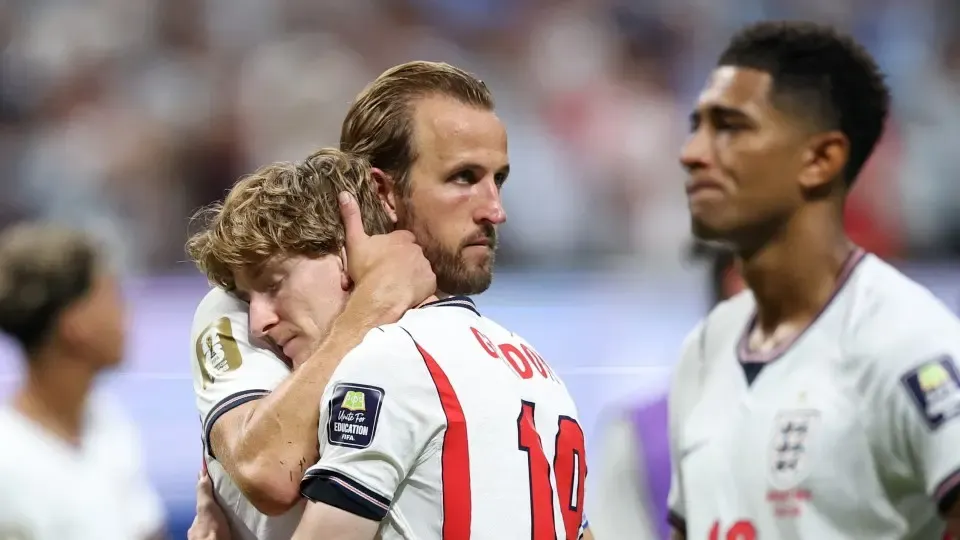
A disputed offside and a foul count that ran against Argentina will tempt England to cry injustice. The harder truth is that Thomas Tuchel's side led, then retreated, and were beaten by opponents who have made the late escape a habit.
For 35 minutes on Wednesday night England were the better team in a World Cup semi-final, and for a further five they were a goal to the good. That is the sentence Thomas Tuchel will turn over through the winter, because almost everything that followed it was of England's own making. Argentina's 2-1 win at Mercedes-Benz Stadium, settled by Lautaro Martínez's header in the second minute of stoppage time, was not taken from England by a referee, a video review or a run of bad luck. It was given away, the moment England decided that a one-goal lead was a thing to protect rather than to extend.
The lead itself had been a piece of genuine quality. Nine minutes into the second half Harry Kane dropped deep and clipped a pass into the channel, Morgan Rogers overlapped and crossed, and Anthony Gordon arrived at the back post to finish for the first World Cup goal of his career. It was England's second shot of the match and their first on target, in a game so wary that it became the first at any World Cup since 1966 to pass its opening half-hour without an attempt at goal. For a side that had fought its way past Mexico and Norway to reach Atlanta, a low-scoring semi-final decided by a single clean strike had the look of the perfect afternoon's work.
Then Tuchel reached for the handbrake. Off came Declan Rice and Gordon, on came defenders, and England rearranged themselves into a back five built to smother the space in front of their own penalty area. The manager was unrepentant afterwards, saying the gaps had grown too large and his players too exposed, and that the change was meant to make England stronger in the air and harder to open up. What it produced instead was surrender by degrees. From Gordon's goal until Martínez's winner, the Three Lions held the ball for something close to 12 per cent of the time. They invited Argentina onto them, and Argentina, who have never in this tournament needed much of an invitation, obliged.
The warnings arrived in sequence. Jordan Pickford threw out a hand to turn away a Nico González header from a Messi cross; Rodrigo De Paul found Alexis Mac Allister, whose diving header struck the inside of a post with the goalkeeper stranded. So by the time Enzo Fernández gathered the ball at the top of the box in the 85th minute and curled a low finish beyond Pickford, the equaliser felt less like misfortune than something long overdue. Seven minutes later Messi drifted to the byline, whipped a cross to the far post, and Lautaro Martínez climbed above a motionless defence to win it. Argentina have now scored 10 times at this World Cup after the 75th minute – two of them when they were, to all appearances, already beaten.
No case against the referee
And here the search for a villain runs dry. England will be tempted to point at the officials, because every ingredient of grievance was in the pot. This was the tie FIFA and the local police had marked as the highest-risk of the tournament, played beneath Malvinas banners, through an anthem lost in whistles, and in the wake of an Argentine vice-president who had spent the eve of the match calling the English 'usurping pirates'. The football matched the mood. There were 19 fouls in the fractious opening half alone, 12 of them Argentine, yet the referee Ismail Elfath produced only two yellow cards before the interval, one of them for Elliot Anderson's foul on Messi, and was accused by the former England goalkeeper Paul Robinson, among others, of leniency. If the whistle erred, it erred in Argentina's favour.
The offside claims are thinner again. Supporters fastened onto the suggestion that Messi had strayed beyond the last defender in the move that led to Fernández's goal, and the brevity of the television replay did nothing to settle them, but the video officials examined the phase and allowed the goal; the still image that circulated afterwards showed Messi level. The one flag that did fall England's way was academic, González nodding a Messi delivery wide when an earlier offside had already ended the move. There was no phantom goal and no modern Hand of God. England, it is worth recalling, had been beneficiaries of the same video system only days before, when a Norwegian equaliser was struck off for an Erling Haaland foul in the box before the corner had even been taken.
The inquest begins at home
The most damning testimony, then, is English. Michael Owen, who had watched Spain beat France so calmly a night earlier, drew the comparison at once: the Spanish had shown courage at 1-0 and England had shown fear, and for all that he still judged them the better side, he concluded that they had deserved to lose. Jamie O'Hara went further on Sky Sports News, calling the decision to send on three defenders with a lead to hold one of the worst he had seen, and demanding an inquest into it. Even Kane, who has carried England through two tournaments of near-misses, would not dress it up. He was 'gutted', he said, and his side had simply tried to hold on, which at this level, as he well knew, is never enough.
Tuchel maintained that he had 'no regrets', that England had been passive rather than mistaken, and that this had been among their better displays of the summer. The figures are less generous. England managed five shots to Argentina's 15 and an expected-goals return of 0.53 against 1.84, while Kane and Jude Bellingham, whose 12 goals between them had carried England to Atlanta, managed a single shot all evening. No team loses a semi-final on numbers like those because it has been robbed. It loses because, having found the nerve to go in front, it could not find the nerve to keep playing.
For Argentina the reward is a place in Sunday's final. Lionel Scaloni's champions travel to New Jersey with the chance to become the first nation in more than 60 years to retain the World Cup – and with Messi, still the decisive figure in the biggest matches of his career, set against the teenager Lamine Yamal for the first time. England go instead to Saturday's third-place play-off against France, their 60-year wait for a final still running, and their manager already talking of the home European Championship in 2028 he has confirmed he will stay to contest. They were not cheated in Atlanta; the question that will follow them home is one no referee can answer for them.