Gaza After the Ceasefire: Abbas, Hamas and the Battle for Palestine’s Future
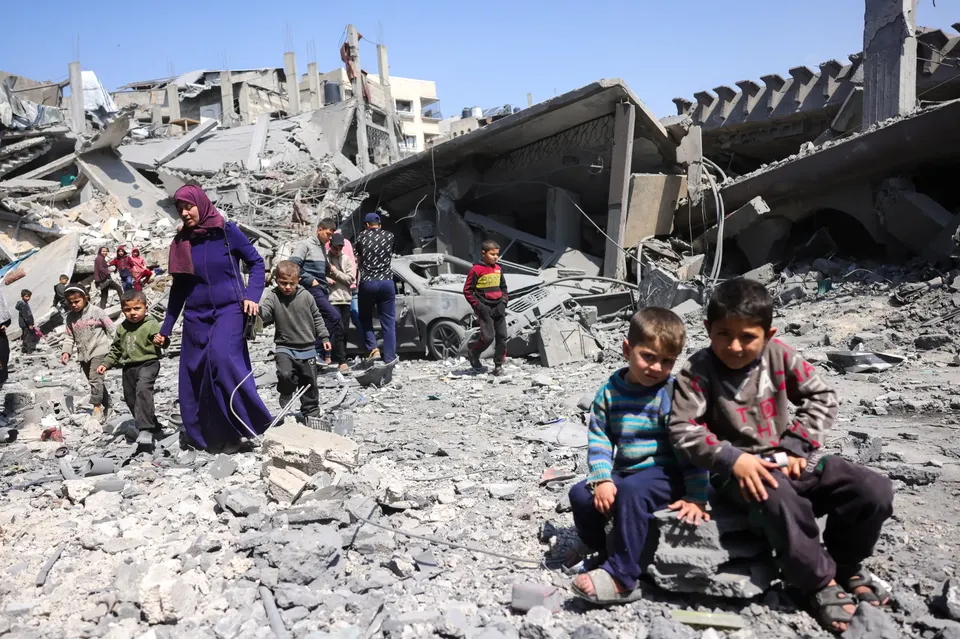
The ceasefire in Gaza was supposed to mark the beginning of recovery. Instead, seven months after the guns formally fell silent under the October 2025 agreement, Palestinians remain trapped in a landscape of devastation, displacement and continuing violence, while the political struggle over who will ultimately govern Gaza has become almost as consequential as the war itself.
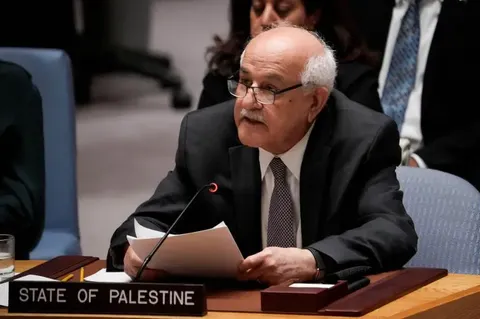
On 15 May 2026, as Palestinians commemorated the seventy eighth anniversary of the Nakba, Palestinian Authority President Mahmoud Abbas used the occasion to deliver one of the clearest statements yet about the future he envisages for Gaza after the war. The speech, read before the United Nations by Palestinian envoy Riyad Mansour, was framed both as an indictment of Israel’s conduct during the conflict and as a declaration that the Palestinian Authority intends to emerge from the catastrophe as the sole legitimate governing and armed authority within a future Palestinian state.
The timing was extraordinary. Only hours before the statement was delivered in New York, Abbas had been in Ramallah presiding over the first Fatah congress in a decade, where he was unanimously re elected as leader of the movement founded by Yasser Arafat. Only hours afterwards, Israeli aircraft struck a residential building in Gaza City’s Rimal neighbourhood, killing Ezzedine Al Haddad, one of Hamas’s most senior remaining military commanders, together with his wife and daughter.
That sequence of events captured the reality of Gaza in 2026 with brutal clarity. Diplomacy continues in conference halls and UN chambers, yet the war itself has not truly ended. Israeli strikes continue inside the enclave, Hamas remains armed despite immense losses, and Gaza’s civilian population continues to endure conditions that international agencies increasingly describe as catastrophic.
‘The ceasefire remains fragile’
The central accusation in Abbas’s speech came early and without ambiguity.
“Israel, the illegal occupying power, continues to commit crimes against our people and has committed genocide in the Gaza Strip,” Mansour declared before the UN chamber.
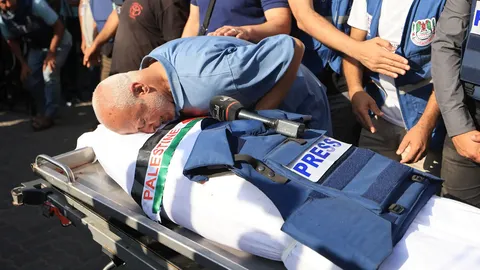
The statement accused Israel of destroying more than eighty five per cent of Gaza’s residential buildings, schools, hospitals, universities, churches and mosques during nineteen months of war. By mid May 2026, according to figures cited in the address, the death toll in Gaza had reached nearly seventy three thousand Palestinians. Entire districts of Gaza City, Khan Younis and northern Gaza had effectively ceased to function as habitable urban space.
Although a ceasefire formally took effect on 10 October 2025 under Security Council Resolution 2803, Palestinian officials insist Israel has repeatedly violated the agreement through continuing strikes, shootings and restrictions on humanitarian aid.
“The ceasefire remains fragile. Our people are being killed. Gaza’s geography is shrinking and aid delivery is still obstructed,” Mansour told delegates.
Reports referenced in the speech alleged that Israel violated the ceasefire more than 1,193 times during its first three months, while humanitarian deliveries reportedly reached only forty three per cent of the agreed level. More than 23,000 aid trucks entered Gaza between October 2025 and January 2026, far below the 54,000 stipulated under the ceasefire arrangements.
Three days after Abbas’s address, the United Nations Human Rights Office released findings that appeared to reinforce many of the accusations emerging from the Palestinian side. The report concluded that Israeli military operations in Gaza involved “gross violations” of international law amounting in many cases to “war crimes and other atrocity crimes”.
UN High Commissioner for Human Rights Volker Türk called on Israel to ensure “with immediate effect that its military does not engage in acts of genocide” and demanded compliance with International Court of Justice measures intended to prevent genocide in Gaza.
The significance of the wording was considerable. Israel has repeatedly rejected genocide allegations made by Amnesty International, Human Rights Watch and other organisations, yet the language emerging from senior UN institutions increasingly suggests that the diplomatic and legal ground beneath those denials is narrowing rapidly.
‘One state, one government, one weapon’
Yet the most politically consequential section of Abbas’s address concerned not Israel, but Hamas.
Buried within the speech was a phrase that may ultimately define the next phase of Palestinian politics.
“We reaffirm our vision of one state, one government, one law, and one weapon,” Mansour declared.
Those final words carried enormous significance. In effect, Abbas was publicly signalling that the Palestinian Authority supports the disarmament of Hamas as part of the post war settlement envisioned under Resolution 2803 and the internationally backed reconstruction framework now shaping negotiations over Gaza’s future.
The declaration represented the clearest public indication yet that the Palestinian Authority intends to position itself as the sole governing and armed authority in post war Palestine. Hamas, under this vision, would no longer exist as an independent military force.
The position aligns closely with the American backed second phase plan for Gaza, which calls for demilitarisation, reconstruction and governance transfer under international supervision. Hamas has indicated that it could accept relinquishing administrative control to a technocratic body, yet it has consistently rejected demands that it surrender its weapons.
On 5 April 2026, Hamas military spokesperson Abu Obeida described disarmament demands as “not acceptable” and accused Israel of continuing what he called a genocidal campaign against Palestinians.
Abbas’s statement therefore amounted to a remarkable political gamble. The Palestinian Authority was effectively presenting itself to Washington, the United Nations and regional mediators as the only Palestinian faction willing to guarantee a future Gaza without an independent armed movement.
The symbolism of making such a declaration on Nakba Day was deliberate. Abbas framed disarmament not as a concession to Israel or the United States, but as a necessary component of Palestinian sovereignty itself. According to this argument, a future Palestinian state cannot exist while rival armed authorities continue operating independently of a central government.
Assassinations and succession
Yet events unfolding on the ground immediately illustrated how uncertain such ambitions remain. The Israeli assassination of Al Haddad only hours after the speech demonstrated that Israel intends to continue targeting Hamas militarily regardless of ceasefire diplomacy. Hamas rapidly appointed Mohammed Awda as Al Haddad’s successor, underscoring that despite the scale of destruction inflicted upon Gaza, the movement’s military infrastructure and command structure remain operational.
The deeper problem for Abbas is that the Palestinian Authority itself faces a severe crisis of legitimacy.
The Fatah congress unfolding simultaneously in Ramallah exposed many of those weaknesses. The gathering, the first of its kind in ten years, was widely criticised by rival factions and independent analysts as an exercise in elite consolidation rather than democratic renewal.
Prominent Fatah figures boycotted the congress entirely. Rival factions associated with Mohammed Dahlan were excluded. Critics accused Abbas’s leadership of marginalising Gaza representation while consolidating authority around loyalists, security figures and political allies in the West Bank. Abbas, now ninety years old, has chaired Fatah since the death of Yasser Arafat in 2004.
For many Palestinians, the authority Abbas claims should govern post war Gaza is itself widely viewed as weak, stagnant and disconnected from the population it seeks to represent.
This legitimacy crisis lies at the heart of the “one weapon” doctrine. The Palestinian Authority may possess international recognition and diplomatic backing, yet whether it commands sufficient authority among Palestinians to disarm Hamas without provoking internal conflict remains profoundly uncertain.
Gaza’s shrinking geography
Meanwhile, Gaza itself continues to exist in conditions that scarcely resemble peace.
“The necessity of a complete Israeli withdrawal from the Gaza Strip,” Mansour told delegates, insisting that Gaza remains “an integral part of the state of Palestine.”
In practice, however, Resolution 2803 only envisions Israeli withdrawal in stages linked to demilitarisation benchmarks. Israeli forces continue controlling extensive areas of Gaza, including newly established buffer zones that have dramatically reduced the territory available to Palestinians. Israeli Prime Minister Benjamin Netanyahu has publicly declared that Israel currently controls approximately sixty per cent of the Strip.
At the same time, reconstruction efforts remain largely theoretical. United Nations estimates place the eventual rebuilding cost at more than fifty billion dollars, yet large portions of Gaza remain without adequate food supplies, functioning hospitals, reliable electricity or permanent shelter.
The diplomatic environment surrounding Palestine has nevertheless shifted significantly during the course of the war. Abbas’s speech highlighted the recognition of the State of Palestine by twenty one countries during 2024 and 2025, bringing the total number of states recognising Palestine to 160. France and the United Kingdom formally recognised Palestinian statehood in September 2025, while international conferences co chaired by Saudi Arabia and France increasingly promoted irreversible steps toward a two state settlement.
Yet these diplomatic advances have unfolded alongside intensifying repression in both Gaza and the West Bank. Abbas’s statement condemned expanding Israeli settlements, accelerating settler violence and new Israeli legislation authorising the death penalty for Palestinians convicted of fatal attacks while exempting Israeli citizens from equivalent punishment.
The Hind Rajab shadow
The emotional centre of the UN session came before Abbas’s statement was even delivered.
Wesam Hamada, mother of six year old Hind Rajab, addressed delegates about the killing of her daughter in Gaza City in January 2024. Hind became one of the defining symbols of the Gaza war after recordings emerged of the child pleading for rescue while trapped inside a car surrounded by the bodies of her dead relatives.
“One needs to breathe, you know, after that powerful testimony of the mother of Hind Rajab,” Mansour told the chamber before beginning Abbas’s statement.
By invoking Hind Rajab’s story at the opening of the speech, Abbas sought to place every subsequent political argument inside the broader moral catastrophe of Gaza itself. The grief came first. The diplomatic calculations followed afterwards.
The gamble over Gaza’s future
The central gamble behind Abbas’s strategy is now unmistakable. The Palestinian Authority is betting that international backing, diplomatic recognition and alignment with Washington’s post war framework will eventually position it as the sole governing authority in Gaza after the conflict ends.
Yet that strategy depends upon several assumptions that remain far from certain. It assumes Israel will ultimately withdraw from Gaza. It assumes Hamas can either be militarily neutralised or politically persuaded to disarm. Most importantly, it assumes Palestinians themselves will accept a post war political order led by a deeply unpopular leadership in Ramallah.
For now, Gaza remains suspended between ceasefire and continued war. Israeli strikes persist. Hamas remains armed. Reconstruction has barely begun. Entire neighbourhoods remain flattened. Hundreds of thousands of Palestinians continue living amid displacement, trauma and uncertainty.
“After all this death, destruction, displacement, and devastation, the time has come for life, recovery, and rebuilding,” Mansour declared before the United Nations.
Whether Gaza will see any of those things soon remains one of the defining political questions of 2026.