JM Coetzee Rejects Jerusalem Festival Invitation Over Israel’s Gaza Campaign
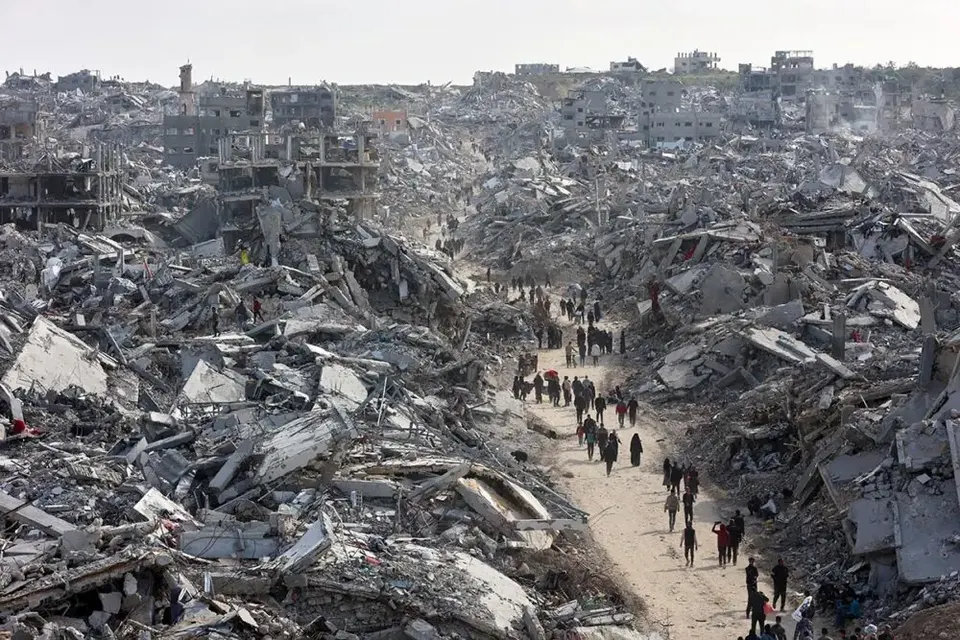
Nobel Prize-winning novelist J. M. Coetzee has publicly refused an invitation to attend the upcoming Jerusalem International Writers Festival, condemning Israel’s military campaign in Gaza as “genocidal” and warning that the country faces years of international isolation and moral disgrace.
The 86-year-old author, widely regarded as one of the most important living writers in the English language, issued the rebuke in a private letter sent in November to festival organisers. The correspondence has now emerged publicly after comments made by the festival’s artistic director, Julia Fermentto-Tzaisler, to Israeli media in April.
In the letter, Coetzee rejected the invitation to appear at the Jerusalem festival, scheduled for 25–28 May, while making clear that his decision was rooted in political and moral opposition to Israel’s actions in Gaza following the October 7 attacks.
“For the past two years the state of Israel has been conducting a genocidal campaign in Gaza that has been vastly disproportionate to the murderous provocation of 7 October 2023,” Coetzee wrote.
He went further by directly accusing broad sections of Israeli society of complicity in the destruction of Gaza, arguing that the military campaign had enjoyed widespread public support inside Israel.
“This campaign, conducted by the IDF, appears to have had the enthusiastic support of the vast majority of Israel’s population,” he wrote. “For this reason it is not possible for any considerable sector of Israeli society, including its intellectual and arts community, to claim that it should not share in the blame for the atrocities in Gaza.”
The remarks place Coetzee among a growing number of internationally recognised cultural figures distancing themselves from Israeli institutions amid mounting allegations of war crimes and genocide linked to the devastation in Gaza.
Coetzee’s intervention carries particular symbolic weight given both his global literary stature and his personal history as a South African writer shaped by the apartheid era. Born in Cape Town during white minority rule, Coetzee’s fiction frequently explored themes of state violence, colonialism, moral collapse and systemic oppression.
In his letter, the author revealed that he had once considered himself sympathetic toward Israel and had hoped the country would eventually seek justice for Palestinians displaced by decades of occupation and settlement expansion.
“Until recently Israel enjoyed a broad measure of support in the West,” he wrote. “I would number myself among such supporters.”
Coetzee recalled travelling to Jerusalem in 1987 to receive the Jerusalem Prize, an award recognising writers whose work explores freedom in society. At the time, he used his acceptance speech to denounce apartheid South Africa and warn that oppressive political systems inevitably deform cultural and intellectual life.
“South African literature is a literature in bondage,” he declared during that speech in 1987. “It is exactly the kind of literature you would expect people to write from prison.”
Now, nearly four decades later, Coetzee says Israel’s actions in Gaza have fundamentally transformed his view of the country.
“The campaign of annihilation in Gaza has changed all that,” he wrote. “Long-time supporters of Israel have turned away in revulsion at the actions of the Israeli military.”
“It will take many years for Israel to clear its name, assuming that it wishes to do so, and to re-establish itself in the international community.”
The publication of the letter has triggered debate within Israel’s cultural sector. According to Israeli outlet Ynet, Fermentto-Tzaisler described Coetzee’s response as “especially harsh” and admitted it had left her “shocked”.
In a reported reply to the author, she appealed to his anti-apartheid legacy and expressed disappointment that he had rejected engagement with Israeli intellectuals and artists.
“As a South African writer who fought apartheid, I would have expected — or perhaps dreamed — that you would extend a hand to me,” she reportedly wrote. “Fight, my daughter. Do not stop fighting. … You left me in despair.”
The controversy emerges as international scrutiny of Israel’s conduct in Gaza continues to intensify. Multiple human rights organisations and UN bodies have accused Israel of committing grave violations of international law during the war.
A United Nations special committee of inquiry previously concluded that Israel’s military operations, statements by senior officials and the scale of civilian destruction in Gaza provided “direct evidence of genocidal intent”. Meanwhile, Amnesty International has argued that Israel continues to commit genocide through the destruction of civilian infrastructure and restrictions on humanitarian aid and medical supplies entering Gaza.
The war has devastated large parts of the territory, with international agencies warning of catastrophic humanitarian conditions, mass displacement and famine risks among Gaza’s civilian population.
The Jerusalem International Writers Festival has historically attracted some of the world’s best-known literary figures, including Margaret Atwood, Salman Rushdie, Jonathan Franzen, Joyce Carol Oates and Karl Ove Knausgård.
But Coetzee’s refusal highlights the growing cultural and diplomatic fallout surrounding Israel’s war in Gaza, as artists, academics and public figures increasingly face pressure over participation in Israeli-sponsored events.
For many observers, the significance of Coetzee’s letter lies not only in its condemnation of Israeli military actions but in the moral authority of the man making it. As a writer whose career was forged in opposition to apartheid and state brutality, his comparison between historical systems of oppression and the destruction unfolding in Gaza is likely to resonate far beyond literary circles.