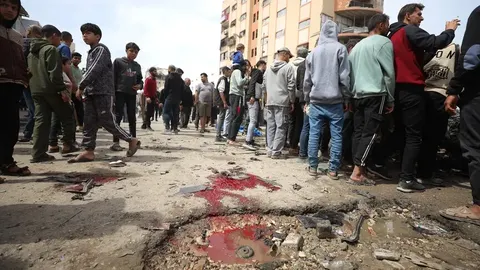
Israeli Commanders Behind Hind Rajab’s Killing Return to the Battlefield, and to the Docket at The Hague
The Israeli military unit at the centre of one of the most extensively documented civilian killings of the Gaza war has once again come under scrutiny, not only for its actions during the assault on Gaza but also for its continued role in Israel’s expanding regional operations.
A senior commander of the Israel Defense Forces’ 401st Armored Brigade, specifically its 52nd Battalion, has been seriously wounded during operations in southern Lebanon, prompting the reinstatement of an officer already named in a detailed international war crimes complaint related to the killing of five-year-old Hind Rajab.
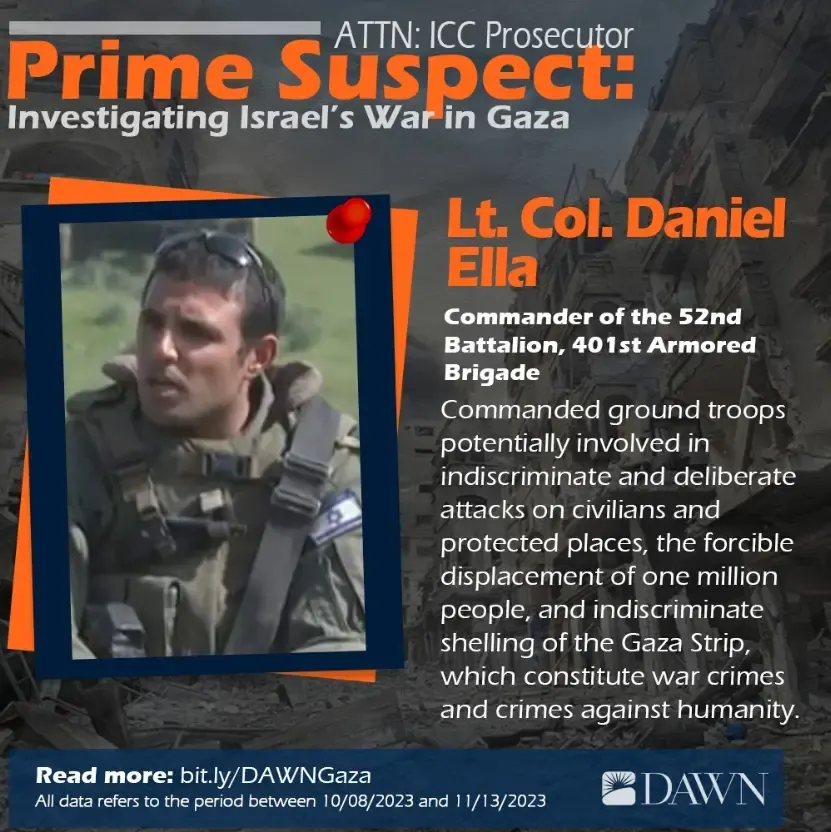
The wounded commander, whose name has not been publicly released, was evacuated by helicopter after sustaining severe injuries during what the IDF described as operational activity in southern Lebanon. In his absence, Lieutenant Colonel Daniel Ella has temporarily resumed command of the battalion. This development is particularly significant because Ella was leading the same unit during the January 2024 incident in Gaza City that resulted in the deaths of Hind Rajab, six members of her family, and two Palestinian Red Crescent paramedics. His return to a leadership role highlights a broader pattern within the Israeli military structure in which officers implicated in serious allegations continue to serve, even as legal pressure mounts internationally.
The Killing That Became a Global Symbol
The killing of Hind Rajab has become one of the most haunting and widely cited incidents of the Gaza war, not only because of the scale of violence involved but also due to the extensive evidence that has since emerged. On 29 January 2024, as Israeli forces advanced into Gaza City, Hind was travelling in a civilian vehicle with her relatives when the car came under sustained fire. According to forensic analysis later submitted to the International Criminal Court, Israeli tanks fired approximately 335 rounds into the vehicle, killing six of her family members.
Hind survived the initial barrage and remained trapped inside the car, surrounded by the bodies of her relatives, for several hours. During that time, she managed to contact rescuers from the Palestine Red Crescent Society using her mother’s phone. The recordings of her calls, in which she repeatedly pleaded for help while expressing fear and confusion, quickly circulated worldwide and became emblematic of the civilian toll of the conflict. An ambulance dispatched to rescue her, clearly marked and reportedly stationary at the time, was subsequently struck and destroyed, killing the two paramedics inside. Forensic analysis conducted later concluded that the ambulance had been deliberately targeted and that there was no evidence of combat activity in the immediate area, a finding that has become central to allegations that the attack constituted a war crime.
Paper Beats Tanks: A Forensic Counter-Offensive
The most detailed effort to establish accountability for the incident has been led by the Hind Rajab Foundation, a Brussels-based legal organisation co-founded by Dyab Abou Jahjah and directed legally by Natasha Brack. Unlike traditional advocacy groups, the foundation operates as a legal entity focused on collecting, verifying, and submitting admissible evidence to international and national courts. Its 120-page submission to the ICC reconstructs the events surrounding Hind Rajab’s death in extraordinary detail, drawing on satellite imagery, intercepted radio communications, geolocated photographs, ballistic analysis, and sworn witness testimony.
At the centre of the dossier is a chain of command that the foundation argues can be traced directly from brigade leadership to the individual personnel involved in the attack. Those named include Colonel Benny Aaron, commander of the 401st Armored Brigade; Lieutenant Colonel Daniel Ella, commander of the 52nd Battalion at the time; Major Sean, also known as Shaun, Glass, who led the so-called Vampire Empire Company; and Sergeant Ite Shurikov, identified as one of the tank gunners allegedly responsible for executing the order to fire. The inclusion of these individuals in a formal legal complaint represents a significant escalation, particularly given the level of detail provided and the extent to which the evidence attempts to establish command responsibility.
A Western Link Emerges
One of the most striking aspects of the case is the identification of Major Sean Glass as a dual national with prior service as a United States Navy SEAL. Open-source records indicate that he served for thirteen years with multiple combat deployments before later becoming affiliated with the leadership consultancy Echelon Front. His presence in the dossier marks the first time a dual-national officer with a background in a Western military has been named in connection with a potential ICC prosecution arising from the Gaza war. This development introduces additional legal and political complexity, as it raises the possibility of jurisdictional overlap and increased scrutiny from Western governments.
Legal Grounds and Expanding Jurisdiction
The legal argument advanced by the Hind Rajab Foundation is grounded in Article 8 of the Rome Statute, which prohibits deliberate attacks on civilians, attacks on humanitarian personnel, and the disproportionate use of force in civilian areas. The destruction of the ambulance, in particular, has been presented as clear evidence of intentional targeting, reinforcing the claim that the incident cannot be dismissed as collateral damage or the result of battlefield confusion. Despite this, the IDF has maintained that its forces were not present in the area at the time, a position that has been challenged by multiple independent investigations and the geospatial evidence included in the ICC submission.
In parallel with the ICC case, additional legal actions have been initiated under the principle of universal jurisdiction, allowing national courts to prosecute serious international crimes regardless of where they were committed. Cases have been filed in the Netherlands against Israeli officer Yehuda Vash and in Argentina against Sergeant Ite Shurikov, who is reported to hold dual citizenship. Further filings are being prepared in Brazil, Portugal, and Belgium, creating a multi-jurisdictional legal strategy designed to ensure that those named in the dossier face potential arrest if they travel abroad. This approach significantly increases the personal legal risk for the individuals involved, even in the absence of domestic prosecution in Israel.
Israel’s Response: Secrecy and Containment
The Israeli response to these developments has been notable. Efforts by the National Cyber Directorate and the Ministry of Diaspora Affairs to have the Hind Rajab Foundation’s website shut down on allegations of supporting terrorism were unsuccessful, and the attempt itself appears to have drawn additional attention to the organisation’s work. The Knesset Foreign Affairs and Defense Committee has since described the foundation as a threat to Israel’s security interests, reflecting growing concern within Israeli political and military circles about the potential consequences of its investigations.
In response to the exposure of individual officers, the IDF Censorship Division has introduced new rules restricting the publication of commanders’ names and images during operations, a move widely interpreted as an attempt to shield personnel from identification and potential legal action. This shift suggests that the legal pressure generated by cases such as Hind Rajab’s is already influencing military policy, even in the absence of formal prosecutions.
A War Expanding, A Case Unresolved
Against this backdrop, the continued deployment of the 52nd Battalion, including its recent involvement in operations in southern Lebanon, underscores the broader regional dimension of the conflict. The injury of its current commander and the reinstatement of Daniel Ella illustrate the extent to which operational demands and personnel shortages are intersecting with unresolved allegations of serious misconduct. Critics argue that this pattern reflects not only a failure of accountability but also a structural unwillingness to remove individuals under investigation from positions of authority.
More than a year after the killing of Hind Rajab, no Israeli soldier or officer has been charged in connection with the incident. Nevertheless, the accumulation of evidence and the expansion of legal proceedings across multiple jurisdictions suggest that the case is far from closed. The work of the Hind Rajab Foundation, combined with the ongoing involvement of the International Criminal Court and national courts, has transformed a single incident into a test case for the enforcement of international humanitarian law in the context of modern warfare.
As the same battalion continues to operate across multiple fronts and the officers named in the dossier remain active within the military hierarchy, the gap between documented evidence and legal accountability has become increasingly difficult to ignore. The question that now confronts international institutions is no longer whether the evidence exists, but whether there is sufficient political will to act upon it before the opportunity for justice is lost.